What Is The Difference Between Light And Dark Roast Coffee – Complete Comparison
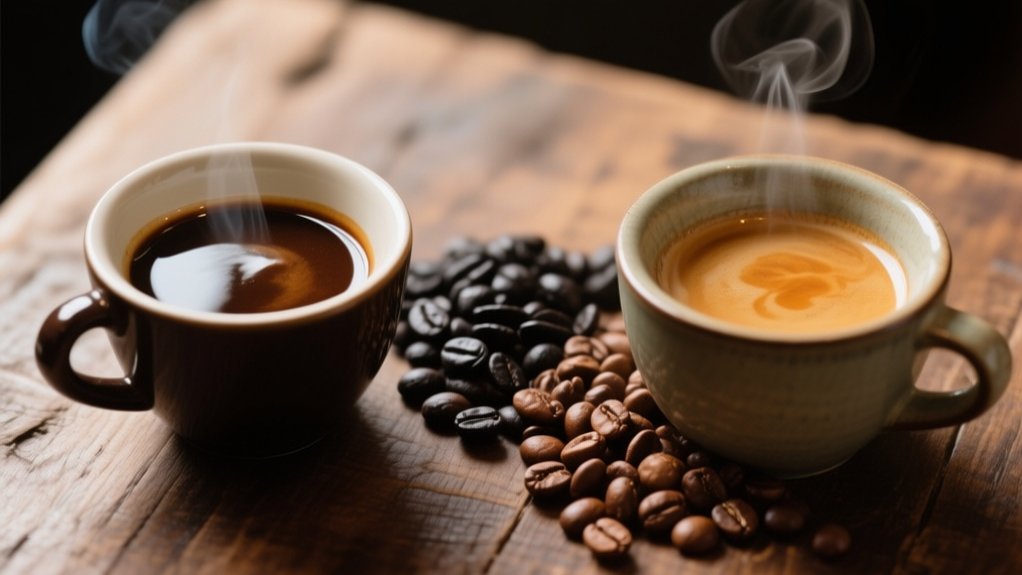
You’ll notice light and dark roast coffees differ mainly in roasting time and temperature. Light roasts are roasted at 380-400°F for 5-10 minutes, preserving acidity and caffeine. Dark roasts reach 440-480°F for up to 20 minutes, enhancing caramelized, bold flavors but lowering caffeine slightly.
Light roasts emphasize origin characteristics; dark roasts focus on rich, smooth profiles. Brewing methods and shelf life also vary. Keep exploring to uncover how terroir, processing, and brewing shape these distinctions.
Key Differences That Define Light Vs Dark Roast Coffee
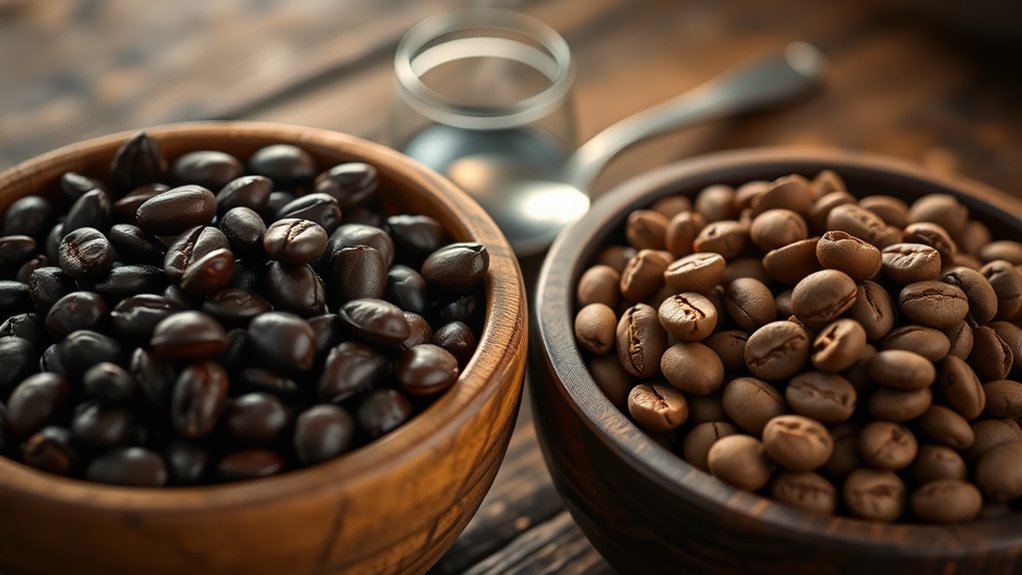
Roasting temperature and duration are the primary factors that distinguish light roast coffee from dark roast coffee.
Light roast coffee undergoes a roasting process at 380-400°F, ending soon after the first crack. This preserves its natural flavors and results in a light brown color. This retention highlights floral, fruity, and sweet flavor profiles and maintains higher caffeine levels due to the shorter roast time.
In contrast, dark roast coffee is roasted at 440-480°F, extending beyond the first crack to develop a deep brown to black color. This process emphasizes roast-driven flavor profiles like chocolate, smoke, and nuttiness while reducing caffeine levels as prolonged heat breaks down caffeine molecules.
Understanding these key differences helps you select the roast that best suits your taste and caffeine preferences.
How Roasting Time and Temperature Affect Coffee Flavor
You’ll notice that roasting time directly controls moisture loss and bean density. When the roasting time is shorter, more of the coffee’s original characteristics are preserved.
On the other hand, temperature plays a big role too—it dictates chemical reactions like sugar caramelization. As the temperature rises, these reactions intensify, which adds more complexity to the flavor.
Roasting Time Impact
Although the roasting process involves careful control of time and temperature, you mightn’t realize how each minute and degree directly alters the coffee’s chemical makeup.
Roasting time plays an essential role in defining the coffee’s flavor profile.
Light roast beans are typically roasted for 5–10 minutes at 380–400°F. This preserves acidity and complex aromatics by halting shortly after the first crack.
In contrast, dark roast beans undergo extended roasting times of up to 20 minutes at higher temperatures.
These longer roasts caramelize sugars and degrade moisture, emphasizing bold, smooth, roast-driven flavors over origin characteristics.
You’ll find that variations in roasting time impact moisture retention and chemical transformations.
This directly shifts acidity, sweetness, and body.
Mastering roasting time allows you to tailor flavor profiles precisely between light and dark roast spectrums.
Temperature Influence
Since temperature directly influences chemical reactions during coffee roasting, controlling it precisely is essential to developing desired flavor profiles. Light roast coffee is roasted at 380–400°F, preserving acidity and complex flavors by halting shortly after the first crack.
Dark roast coffee reaches 440–480°F, caramelizing sugars and surfacing oils, producing bolder, simpler flavors with reduced acidity. Roasting time, usually under 20 minutes, interacts with temperature to determine flavor depth and balance.
| Roast Type | Temperature (°F) | Flavor Characteristics |
|---|---|---|
| Light | 380–400 | Bright, acidic, complex |
| Medium | 410–430 | Balanced acidity and body |
| Dark | 440–480 | Bold, rich, lower acidity |
Mastering temperature control during roasting defines your coffee’s ultimate flavor.
How Terroir Influences Light and Dark Roast Coffee Profiles
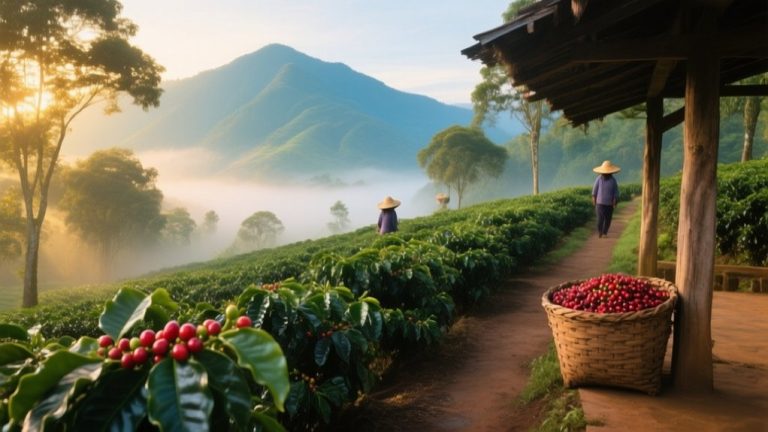
You’ll notice how terroir—that’s things like altitude, rainfall, sunlight, and soil—directly shapes the flavor profiles of coffee in both light and dark roasts.
For example, regional traits like Central America’s balanced sweetness or East Africa’s vibrant citrus notes really stand out in lighter roasts.
On top of that, the way the coffee is processed—whether washed or natural—affects its acidity and sweetness.
This means terroir expresses itself differently depending on the roast level, making each cup unique in its own way.
Terroir Elements Explained
When you examine how terroir shapes coffee profiles, you’ll find that factors like altitude, rainfall, sunlight, and soil composition directly affect the beans’ inherent flavors. Terroir influences the flavors of the bean’s origin, which light roast coffees preserve more distinctly than dark roasts.
Central American coffees, for example, benefit from balanced rainfall and volcanic soils, enhancing sweetness and body. Processing methods, such as washed or natural, further modify acidity and complexity.
| Terroir Element | Influence on Coffee Flavor |
|---|---|
| Altitude | Higher altitudes yield acidity |
| Soil Composition | Mineral-rich soils enhance sweetness |
| Rainfall | Ideal moisture balances sugars |
Understanding these elements helps you appreciate how terroir profoundly shapes coffee’s profile before roasting.
Regional Flavor Characteristics
Although terroir factors like altitude, rainfall, and soil composition shape the inherent flavor characteristics of coffee beans, their influence shows up differently in light and dark roasts.
When you evaluate regional flavor characteristics, keep these points in mind:
Light roast preserves the distinct terroir expression, showcasing brightness, acidity, and origin-specific notes such as Central America’s balanced sweetness or East Africa’s fruity, floral tones.
Dark roast diminishes these nuanced flavors because of intense heat exposure. It emphasizes roast-derived bitterness and body over terroir-driven complexity.
Processing methods interact with terroir to affect sweetness and acidity.
Light roasts retain these traits more clearly, while dark roasts often mask them under caramelization and roast flavors.
Processing Effects on Profiles
Since terroir shapes the intrinsic qualities of coffee beans, processing methods play a crucial role in modifying how these characteristics appear in light and dark roasts. Terroir factors like altitude and soil influence bean composition, but processing methods, washed or natural, further affect acidity, sweetness, and complexity.
In light roasts, these subtle terroir-driven flavor profiles remain prominent. This lets you detect the fruity, floral notes of East African coffees or the balanced sweetness of Central American beans.
Conversely, dark roasts often mask these nuances, emphasizing roast-derived bitterness and body instead. Consequently, processing methods interact with terroir to either preserve or suppress origin-specific attributes.
This makes their impact more pronounced in light roasts while altering the expression in dark roasts. Understanding this interplay helps you select beans and roasts that highlight desired flavor characteristics.
How Coffee Processing Affects Light and Dark Roast Flavor
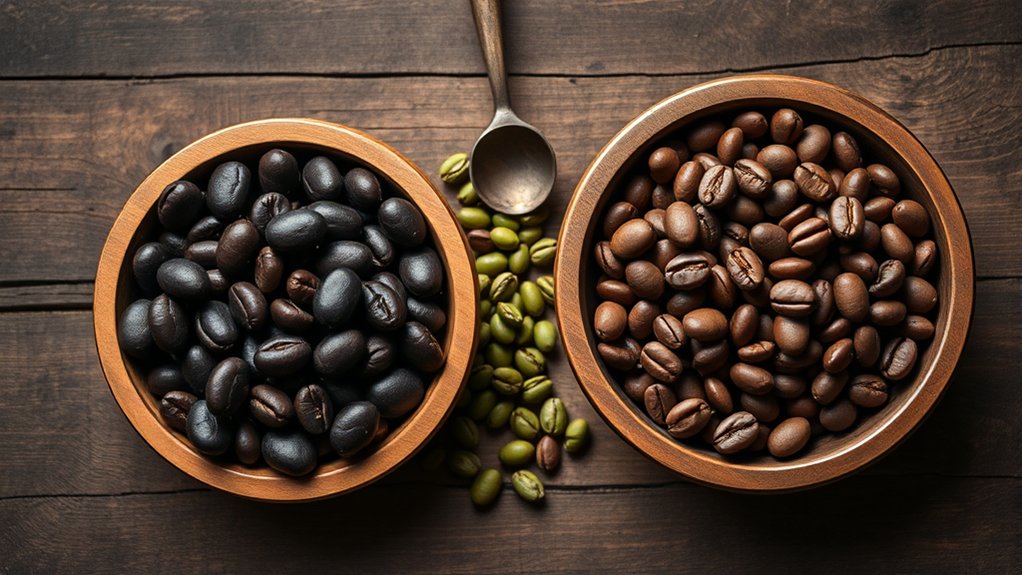
Because the processing method directly shapes the chemical composition of coffee beans, it plays an essential role in defining the flavor profiles you experience in light and dark roasts.
The interplay between processing method, terroir, and roasting temperature creates distinct sensory outcomes:
- Natural processing enhances sweetness and fruitiness, complementing the preserved acidity and complexity in a light roast.
- Washed processing results in cleaner, more consistent flavors, which dark roasts amplify through higher roasting temperatures (440–480°F), emphasizing caramelization and roasted notes.
- Terroir’s influence, including altitude, rainfall, and soil, is more pronounced in light roasts due to shorter roasting times (380–400°F). This preserves moisture and density, allowing regional characteristics to shine.
Understanding these factors helps you appreciate how processing intricately affects the final cup, differentiating light and dark roast flavor expression.
Flavor Differences Between Light and Dark Roasts
Two distinct roasting temperature ranges create the fundamental flavor differences between light and dark roast coffees.
Light roast coffee, roasted between 380-400°F, preserves inherent flavors, delivering vibrant, floral, and fruity notes with higher acidity that imparts a bright taste. Its body remains lighter and thinner due to minimal moisture loss.
In contrast, dark roast coffee undergoes roasting at 440-480°F, reaching the end of the second crack, which initiates caramelization and carbonization.
This process produces bold, smoky, and chocolaty flavors with reduced acidity, resulting in a richer, smoother profile. The dark roast’s body is significantly heavier and fuller, owing to prolonged roasting that diminishes moisture content.
Understanding these precise distinctions helps you select coffee based on your preferred flavor intensity, acidity, and mouthfeel.
Light Vs Dark Roast: Which Has More Caffeine?
You might think dark roast has more caffeine because of its bold, strong flavor. But actually, light roast beans hold onto a bit more caffeine since they’re roasted for a shorter time.
See, light roast beans stay denser and don’t go through as much chemical breakdown when roasted.
If you really want to compare caffeine levels, you have to consider not just the roast level but also how you measure it—whether by weight or by volume.
That makes a difference in what you end up with.
Caffeine Content Comparison
Although many assume dark roast coffee contains more caffeine, light roast coffee actually retains slightly higher caffeine levels due to its shorter roasting time. This difference comes from how roasting time and bean density influence caffeine content.
First, light roast undergoes less heat exposure, preserving more caffeine molecules compared to dark roast’s prolonged, intense roasting that breaks down some caffeine.
Second, light roast beans maintain higher density, so by volume, they pack more caffeine than the expanded, less dense dark roast beans.
Third, using volume-based scoops rather than weight skews perceived caffeine content. This often leads to the false belief that dark roast is stronger.
In terms of weight, light roast can contain 10-20% more caffeine, making it the technically superior choice if caffeine content is your priority.
Roast Impact On Caffeine
When comparing caffeine levels between light and dark roast coffee, it’s essential to evaluate how roasting temperature and duration affect caffeine preservation.
Light roast beans undergo shorter roasting times at lower roasting temperatures, which helps retain more caffeine. Their higher density and moisture content mean they contain more caffeine per ounce compared to dark roast.
In contrast, dark roast experiences prolonged exposure to higher roasting temperatures, which breaks down some caffeine molecules, reducing overall caffeine levels.
Misconceptions arise because caffeine is often measured by volume rather than weight; dark roast beans are less dense, so a scoop contains fewer caffeine molecules than the same weight of light roast.
Consequently, despite dark roast’s stronger flavor, light roast generally delivers a higher caffeine concentration, making it the more potent choice caffeine-wise.
Brewing Light Roast Coffee
Mastering the brewing of light roast coffee requires precise control over temperature, extraction time, and coffee-to-water ratio to highlight its delicate flavors and bright acidity.
You need to focus on these key factors:
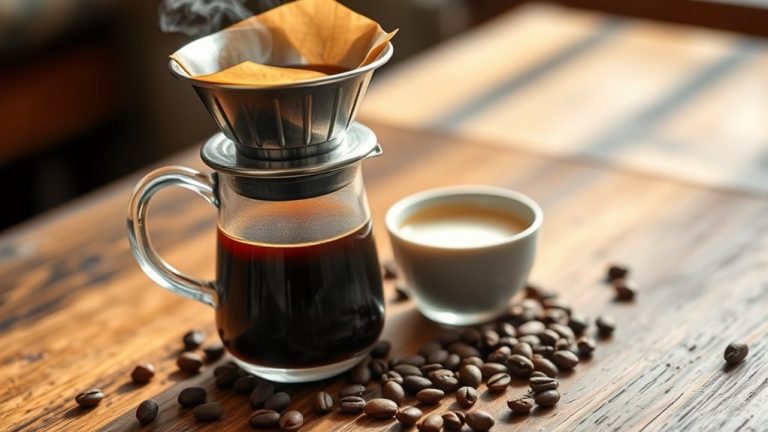
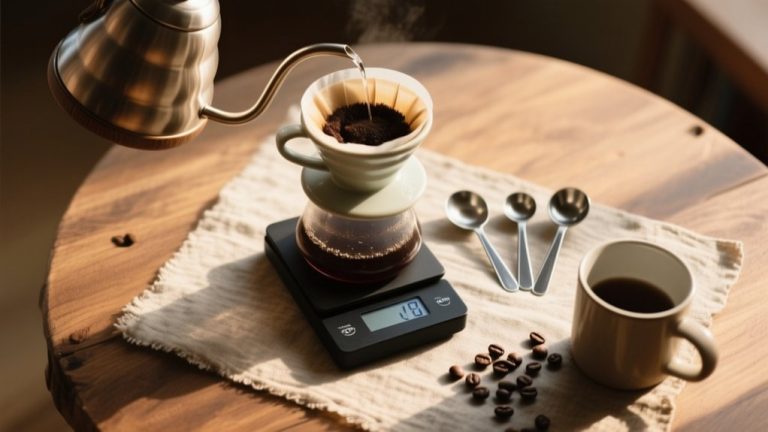
- Brewing methods: Use pour-over techniques like the V60 or Fellow Stagg to maintain control over flavor extraction. This helps prevent over-extraction or bitterness.
- Ideal brewing temperature: Keep water between 199-205°F (93-96°C) to preserve the coffee’s natural acidity and sweetness.
- Coffee-to-water ratio: Aim for 1:15 to 1:17 for drip brewing. For light roast espresso, use a lungo style with a 1:3 to 1:4 coffee-to-liquid ratio to keep flavors vibrant and balanced.
These parameters guarantee you extract the full complexity of your light roast coffee.
Brewing Dark Roast Coffee
Brewing dark roast coffee demands attention to grind size, water temperature, and brewing method to highlight its rich, bold flavors without introducing bitterness.
Use a slightly coarser grind to prevent over-extraction, which can cause harsh bitterness.
Maintain brewing temperatures between 188-194°F (87-90°C) to optimize caramelization while avoiding burnt notes.
For espresso, stick to the lower end of this range to reduce astringency, especially in milk-based drinks.
French press and espresso methods excel at capturing the depth and body of dark roast coffee.
Carefully adjust the coffee-to-water ratio; a 1:2 ratio often balances strength and flavor without overwhelming bitterness.
Roast Level Effects on Coffee Body and Acidity
Adjusting brewing variables helps you reveal the distinct flavor profiles of dark roast coffee, but understanding how roast level directly influences coffee’s body and acidity clarifies why these adjustments matter.
The roasting process alters chemical composition, affecting both sensory perception and mouthfeel.
Light roast coffee, roasted between 380–400°F, retains higher acidity and more natural oils. This produces a bright, crisp flavor with a thinner coffee body due to higher moisture content.
Dark roast coffee, exposed to 440–480°F, undergoes caramelization and moisture loss. This results in lower acidity and a thicker, velvety coffee body that delivers a bold, smooth taste.
These differences in acidity and body stem directly from the roasting process. They guide your brewing technique to optimize extraction and flavor balance.
Shelf Life and Storage Tips for Light Vs Dark Roasts
Because light roasts retain more moisture, they typically have a shorter shelf life of 2 to 3 weeks after roasting. Dark roasts last 2 to 4 weeks but risk rancidity from surface oils.
To maximize freshness, store both in airtight containers away from light and heat. Whole beans maintain shelf life better than ground coffee, especially for light roasts. Consume within a month of roasting for peak freshness.
| Aspect | Light Roast | Dark Roast |
|---|---|---|
| Shelf Life | 2–3 weeks | 2–4 weeks |
| Key Degradation | Moisture-induced staleness | Oil rancidity |
| Storage Tips | Airtight, cool, dark place | Airtight, cool, dark place |
| Form | Whole bean preferred | Whole bean preferred |
| Freshness Window | Consume within 1 month | Consume within 1 month |
Choosing Your Roast by Flavor Preferences
When selecting a roast, your flavor preference plays an essential role in determining whether light or dark roast suits you best.
Light roast coffee delivers vibrant coffee flavor and complexity, highlighting floral and fruity notes due to roasting temperatures between 356-401°F.
Dark roast, roasted at 464-482°F, emphasizes bold, rich flavors with smoky or chocolaty tones.
Consider these factors to choose your roast by flavor preferences:
- If you seek brightness and acidity with complex, nuanced flavors, opt for light roast.
- For a heavier, more straightforward profile featuring caramelized sugars and deep roast notes, prefer dark roast.
- Remember, caffeine content is denser in light roast beans despite dark roast’s stronger taste.
Your choice reflects the complexity and intensity you desire in your coffee.
Frequently Asked Questions
Can Light and Dark Roasts Be Blended Together?
Yes, you can blend light and dark roasts using precise blending techniques to create complex flavor profiles.
Combining these roasts balances brightness and acidity from light roasts with boldness from dark roasts.
When you brew the blend, caffeine content usually aligns closer to light roast levels.
Popular combinations vary ratios to suit your taste and preferred brewing methods, ensuring a harmonious cup that highlights both roast characteristics without overpowering any flavor.
How Do Light and Dark Roasts Differ in Health Benefits?
Think of light and dark roasts like two sides of a coin when it comes to health benefits.
You’ll find light roasts have higher antioxidant levels and caffeine content, boosting alertness and reducing inflammation.
Dark roasts feature lower acidity levels, ideal for sensitive stomachs.
Flavor profiles differ, and brewing methods can impact these traits too.
Which Roast Is Better for Cold Brew Coffee?
For cold brew, you’ll find light roast better due to its brighter acidity levels and complex flavor profile, which cold extraction highlights.
It offers higher caffeine content and a more vibrant aroma intensity compared to dark roast.
Brewing methods favor longer steeping times with a coarser grind for light roast to fully develop delicate flavors.
Dark roast’s muted flavors and heavier roast notes often overshadow subtleties in cold brew, making light roast preferable.
Are Light or Dark Roasts More Environmentally Friendly?
Light roasts tend to be more environmentally friendly because they use shorter roasting methods that consume less energy and reduce their carbon footprint.
However, your sourcing practices matter more. Choosing fair trade and shade-grown beans supports sustainable farming no matter the roast.
Also, pay attention to packaging materials to minimize waste.
Dark roasts often come from lower-grade beans with less sustainable farming, so prioritizing ethical sourcing and eco-friendly packaging is essential for both roast types.
How Does Grind Size Vary Between Light and Dark Roasts?
You’ll find grind consistency varies significantly between light and dark roasts.
Light roasts need a finer grind to optimize flavor extraction and aroma intensity due to their denser structure and higher caffeine content.
Dark roasts, being more brittle, require a coarser grind to prevent over-extraction and bitterness.
Adjusting grind size precisely enhances brewing methods like pour-over for light roasts and espresso for dark roasts, ensuring balanced flavor and ideal caffeine release.
Conclusion
Choosing between light and dark roast coffee is like selecting the perfect lens to view a rich, complex landscape. Light roasts capture bright acidity and nuanced terroir, while dark roasts unfold bold, smoky depths shaped by extended roasting.
By understanding how time, temperature, and processing sculpt flavor, you can precisely tailor your brew to your palate. Store your beans wisely to preserve these intricate profiles, ensuring each cup is a meticulously crafted sensory experience.