
What Is In Decaf Coffee – Ingredients Explained
Decaf coffee contains most natural compounds found in green beans, like carbohydrates, lipids, proteins, and antioxidants, but with 96-98% of caffeine removed through water, chemical, or CO₂ extraction methods. These processes retain key flavor and health-related compounds while reducing bitterness and caffeine content to about 2–15 mg per cup.
You get a smoother taste and preserved nutrients without the stimulant effects. Explore how these methods influence decaf’s profile and benefits further.
Natural Components in Green Coffee Beans Before Decaffeination
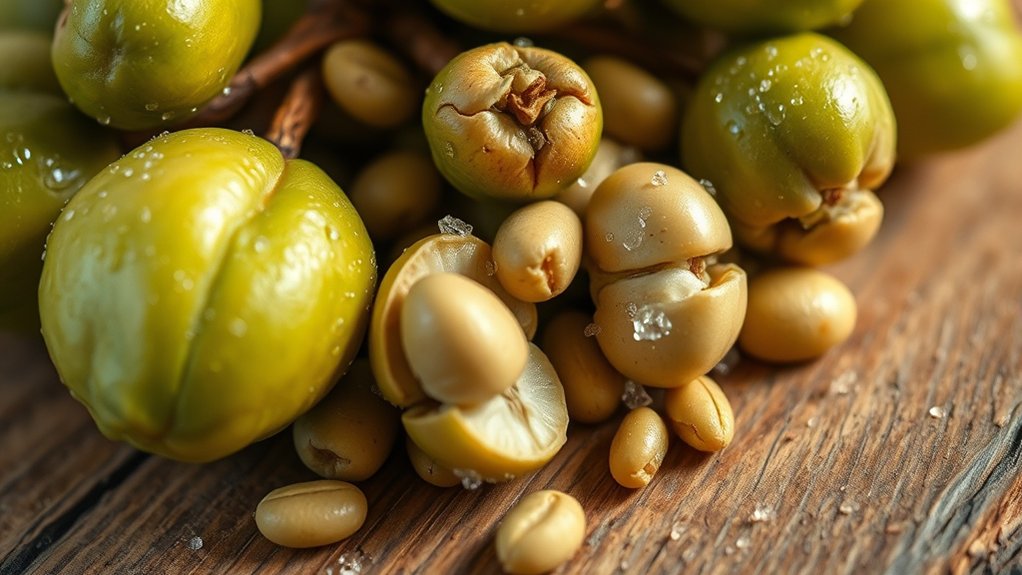
Green coffee beans contain a complex matrix of natural components that set the foundation for their flavor and aroma before decaffeination. You’ll find carbohydrates make up about 70% of the dry weight, primarily as polysaccharides, which influence the coffee’s body and mouthfeel.
Lipids, constituting 10-15%, play an essential role in flavor retention during roasting and contribute to crema formation in brewed coffee.
Proteins, ranging from 8-12%, supply amino acids that affect taste and overall quality.
Importantly, green coffee beans are rich in antioxidants like chlorogenic acids, which not only impact flavor compounds but also offer health benefits.
Green coffee beans are packed with antioxidants like chlorogenic acids that enhance flavor and promote health.
Understanding this intricate composition helps you appreciate the natural basis for decaf coffee’s sensory profile, even before caffeine is removed.
How Water Extracts Caffeine From Decaf Coffee Beans
The rich composition of coffee beans sets the stage for how caffeine is extracted during decaffeination. Water plays a critical role because caffeine dissolves readily in it.
In the Swiss Water Process, you soak green beans in warm, flavor-saturated water. This opens pores and dissolves caffeine while preserving taste compounds.
Then, the water passes through activated charcoal filters that selectively trap caffeine molecules, leaving flavor intact. This solvent-free method guarantees a natural decaffeination.
| Step | Action | Outcome |
|---|---|---|
| 1. Soaking | Warm water opens bean pores | Caffeine dissolves into water |
| 2. Filtration | Activated charcoal filters water | Caffeine selectively removed |
| 3. Re-soaking | Beans reintroduced to filtered water | Flavors preserved, caffeine reduced |
| 4. Drying | Beans dried post-process | Decaffeinated, flavor-rich beans |
How Chemical Solvents Remove Caffeine From Decaf Coffee
Although chemical solvents might raise concerns, they remain a highly effective option for removing caffeine from coffee beans. In the decaffeination process, solvents like methylene chloride and ethyl acetate selectively bond with caffeine molecules, extracting them efficiently.
The direct method steams beans to open pores before applying solvents to dissolve caffeine. Conversely, the indirect method soaks beans in hot water, transfers caffeine-laden water to solvent treatment, then returns flavor-rich water to the beans.
Both methods guarantee minimal residual solvents through additional steaming, addressing health concerns.
While chemical solvents offer cost-effective and rapid decaffeination, the Swiss Water Process presents a non-chemical alternative by relying solely on water extraction. This method avoids solvents altogether, appealing to those prioritizing chemical-free processing.
Still, solvent-based approaches remain prevalent due to their efficiency and established use.
Using Carbon Dioxide to Decaffeinate Coffee Beans
You’ll find that the carbon dioxide extraction method uses high-pressure CO₂ to specifically target and remove caffeine.
What’s great is that it doesn’t strip away the key flavor compounds. This selective process helps keep the beans’ taste intact because it preserves the carbohydrates and proteins that add to the aroma and body.
When you understand how this technique works, it’s clear why CO₂ decaffeination is seen as a cleaner, solvent-free option.
Plus, it has minimal impact on the overall quality of the coffee.
Carbon Dioxide Extraction
When you want to remove caffeine without compromising flavor, carbon dioxide extraction offers a highly effective solution. This method uses supercritical CO₂, which behaves as both a gas and a liquid, to selectively bind with caffeine molecules in coffee beans.
Before extraction, the beans are soaked in water to expand their cell structures, facilitating caffeine removal. Carbon dioxide extraction typically eliminates 96% to 97% of caffeine, producing decaffeinated coffee that still contains trace amounts.
The process is environmentally friendly since the CO₂ is reusable and leaves no harmful residues.
Flavor Preservation Benefits
Because carbon dioxide targets caffeine molecules specifically, it preserves the essential flavor compounds in coffee beans more effectively than other decaffeination methods.
When you decaffeinate coffee beans using this method, the process involves soaking them to expand cell structures. This allows supercritical CO₂ to selectively extract caffeine without compromising flavor.
This precision offers clear benefits:
- Maintains the coffee’s original aromatic and taste profile by avoiding flavor loss.
- Minimizes chemical residues compared to solvent-based methods, ensuring safer consumption.
- Delivers consistent, high-quality decaf coffee that closely mirrors regular coffee’s flavor integrity.
Why Decaf Coffee Still Contains Small Amounts of Caffeine
Although decaffeination removes most caffeine from coffee beans, small amounts remain due to the beans’ natural composition and the limitations of current processing methods.
Decaf coffee contains about 2 mg to 15 mg of caffeine per 8-ounce cup, varying by the decaffeination technique used.
These methods, whether solvent-based or non-solvent-based, typically eliminate 97% or more of the caffeine, but trace amounts persist because caffeine is deeply embedded in the coffee’s cellular structure.
The FDA doesn’t mandate disclosure of exact caffeine levels in decaffeinated products, so the caffeine content can differ between brands.
You’d need to drink over ten cups of decaf coffee to consume the caffeine found in a single regular cup.
This shows that while decaf coffee contains caffeine, its levels are considerably reduced but not entirely eliminated.
How Decaffeination Affects Decaf Coffee’s Flavor and Aroma
Since decaffeination extracts caffeine along with some aromatic compounds, you’ll notice that decaf coffee’s flavor and aroma differ from regular coffee.
When you decaffeinate coffee, the flavor profile changes due to the loss of volatile compounds that contribute to its complexity. Here’s what you should understand:
Decaffeination alters coffee’s flavor by removing volatile compounds that add depth and complexity.
- The Swiss water method minimizes flavor loss by using water to selectively remove caffeine, helping preserve more aromatic compounds compared to chemical processes.
- Caffeine removal reduces bitterness, which can make decaf taste smoother but sometimes less robust.
- Roasting still plays a crucial role in enhancing the remaining flavor profile, compensating for compounds lost during decaffeination.
Natural Compounds That Remain in Decaf Coffee
Understanding how decaffeination alters flavor and aroma helps you appreciate what remains in decaf coffee.
Despite caffeine removal, essential natural compounds like hydrocinnamic acids and polyphenols persist, contributing to remarkable health benefits.
These antioxidants support your body’s defense mechanisms without compromising the coffee’s profile. Furthermore, key nutrients such as vitamins B2 (riboflavin) and B3 (niacin) stay intact, further enhancing decaf’s nutritional value.
The process also preserves various aromatic compounds responsible for the characteristic aroma and flavour, ensuring decaf coffee offers a sensory experience closely resembling regular coffee.
Although caffeine levels drop considerably, typically between 2 mg and 15 mg per cup, these retained compounds maintain decaf’s appeal, balancing health benefits with enjoyable taste and aroma.
Antioxidants and Nutrients Preserved in Decaf Coffee
While decaf coffee undergoes caffeine removal, it preserves about 97% of the original antioxidants, such as hydrocinnamic acids and polyphenols. These compounds play an essential role in combating oxidative stress.
These antioxidants, along with preserved nutrients, contribute to notable health benefits. Here’s what you should know:
- Decaf retains similar nutrient levels to regular coffee, supplying beneficial compounds without caffeine’s stimulating effects.
- Its antioxidant content supports reduced inflammation and improved metabolic health.
- Studies link regular decaf consumption to lower risks of heart disease and certain cancers, emphasizing its protective role.
Frequently Asked Questions
Is Decaf Coffee Safe for Pregnant Women?
Yes, decaf coffee is generally safe for pregnant women when you monitor its decaf caffeine content.
Since decaf still contains small amounts of caffeine, staying within pregnancy nutrition guidelines is essential.
If you have coffee cravings, decaf offers a lower-caffeine alternative that helps limit your intake to the recommended 200 mg daily.
Always consult your healthcare provider to tailor advice based on your specific health needs and caffeine sensitivity.
How Does Decaf Coffee Affect Sleep Quality?
Decaf coffee effects on sleep quality are generally minimal due to its low caffeine content, usually 2 to 15 mg per cup.
You’re unlikely to experience significant sleep disturbances unless you’re highly sensitive to caffeine.
Studies show moderate decaf intake doesn’t disrupt sleep like regular coffee does.
To minimize any potential issues, try drinking decaf earlier in the day. This way, you maintain your coffee habit without compromising restful sleep.
Can Decaf Coffee Cause Allergies or Sensitivities?
Decaf coffee can be a hidden minefield for your immune system, triggering allergic reactions or caffeine sensitivity. Although it’s low in caffeine, the small amounts left might still rattle your nerves if you’re sensitive.
Plus, compounds like antioxidants and residues from decaffeination solvents could spark allergies.
If you notice headaches, skin irritation, or digestive issues after drinking decaf, it’s wise to consult a healthcare professional and pinpoint what’s causing your reaction.
What Is the Environmental Impact of Decaffeination Processes?
When you compare decaf methods, you’ll see their environmental footprint varies widely.
Solvent-based methods risk chemical pollution, while the Swiss Water Process uses lots of water and energy. This challenges sustainable sourcing in drought-prone regions.
The CO₂ method’s reuse of gas reduces waste but demands high energy for pressurization.
To minimize impact, you need to prioritize decaf producers committed to sustainable sourcing and transparent decaf methods comparison for a lower environmental footprint.
Does Decaf Coffee Have the Same Health Benefits as Regular Coffee?
Yes, decaf coffee offers many of the same health benefits as regular coffee, thanks to its similar nutritional content and antioxidants.
You might notice taste differences due to the decaffeination process, but these don’t impact the health effects greatly.
If you’re sensitive to caffeine or experiencing caffeine withdrawal, decaf provides a gentler option without the jitters.
However, some benefits linked strictly to caffeine may be reduced, so results can vary individually.
Conclusion
Decaf coffee is like a carefully tuned instrument, retaining much of its original character despite caffeine removal. You should know that decaffeination preserves key antioxidants and nutrients, even though small caffeine traces remain.
Whether water, solvents, or CO2 methods are used, the process selectively targets caffeine while maintaining natural compounds that shape flavor and aroma. Understanding these ingredients helps you appreciate decaf as a deliberate, scientifically refined choice, not just “coffee without caffeine.”