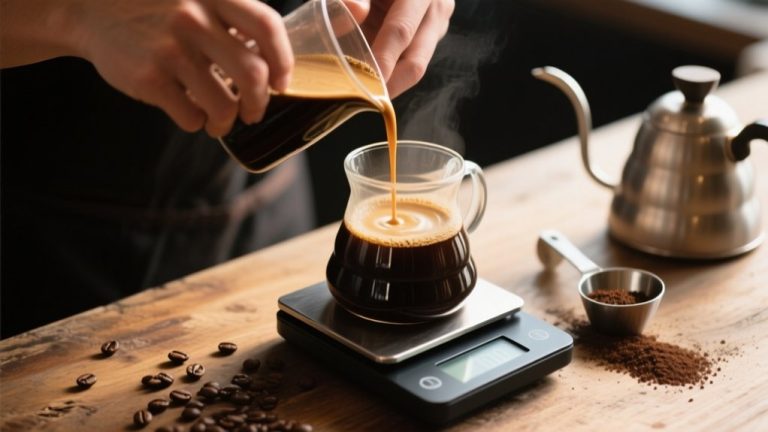
How To Make Coffee Without A Machine – Simple Brewing Methods
You can easily brew coffee without a machine by using simple methods like pour-over, cowboy brewing, or a DIY French press with a jar and cloth. Start with fresh, quality beans and grind them coarsely. Then pour hot water evenly over the grounds and let it steep for 4–5 minutes.
Using tools like a gooseneck kettle and filters helps improve control and clarity in your brew. Cold brew and instant coffee enhancements can add some nice variety to your coffee routine.
Make sure to store your beans well to preserve their flavor. There’s a lot more to explore with these techniques, so have fun experimenting!
Why Brew Coffee Without a Machine?
Although coffee machines offer convenience, brewing coffee without one lets you control every step of the process. This way, you get a fresher and more personalized cup.
Brewing coffee by hand puts you in control for a fresher, more personalized cup every time.
When you roast your own coffee beans or pick freshly roasted ones, you really maximize the flavor potential—something machines just can’t guarantee.
You get to experiment with different roast levels, uncovering unique taste profiles that suit your own preference.
Plus, storing your coffee properly, like keeping beans airtight and away from light, heat, and moisture, helps preserve those flavors longer. This makes each brew more satisfying.
Without a machine, you engage directly with the coffee’s essence and appreciate the subtle nuances that machines often mask.
This hands-on approach deepens your connection to coffee and enhances both the ritual and the taste in ways automated methods simply can’t replicate. It’s a whole different experience.
What You Need to Brew Coffee Without a Machine
To brew coffee without a machine, you’ll need a few essential tools like a grinder, a kettle, and a brewing method such as a French press or pour-over. It’s pretty straightforward once you have these basics.
Choosing quality coffee beans is just as important. Fresh, well-roasted beans really make all the difference in flavor. So, don’t skip on picking good beans!
With the right equipment and beans, you’re all set to craft a great cup every time. It’s a simple process that’s totally worth it.
Essential Coffee Brewing Tools
Before you start brewing coffee without a machine, you’ll want to gather a few essential tools that make the process straightforward and enjoyable. A reliable kettle, preferably with a gooseneck spout, helps you control water flow, which directly affects coffee flavor extraction.
A quality grinder is vital. Freshly ground coffee preserves the nuances that define brewing history’s best methods.
You’ll also need a sturdy brewing vessel, like a French press or pour-over dripper, to hold your grounds and water. Don’t forget a fine mesh filter or paper filters to guarantee clarity.
Finally, a kitchen scale and timer will help you maintain consistency, allowing you to replicate the perfect cup.
These tools honor the rich traditions of coffee brewing while enhancing your daily ritual. It’s all about making your coffee experience both enjoyable and reliable every single time.
Choosing Quality Coffee Beans
Gathering the right tools sets the stage, but the quality of your coffee beans ultimately shapes the flavor you’ll enjoy. Start by selecting freshly roasted beans. Their freshness is essential since coffee begins to lose flavor soon after roasting.
Look for roast dates on the packaging and aim to use beans within two to three weeks of that date. Proper coffee storage preserves this freshness. Store your beans in an airtight container away from light, heat, and moisture.
Avoid keeping them in the fridge or freezer, as condensation can degrade quality.
By prioritizing fresh beans and maintaining ideal coffee storage, you guarantee every cup you brew without a machine bursts with rich, vibrant flavor.
Your careful choice here directly impacts the success of your simple brewing methods.
Brew Coffee Without a Machine Using a Coffee Sock or Cloth Filter
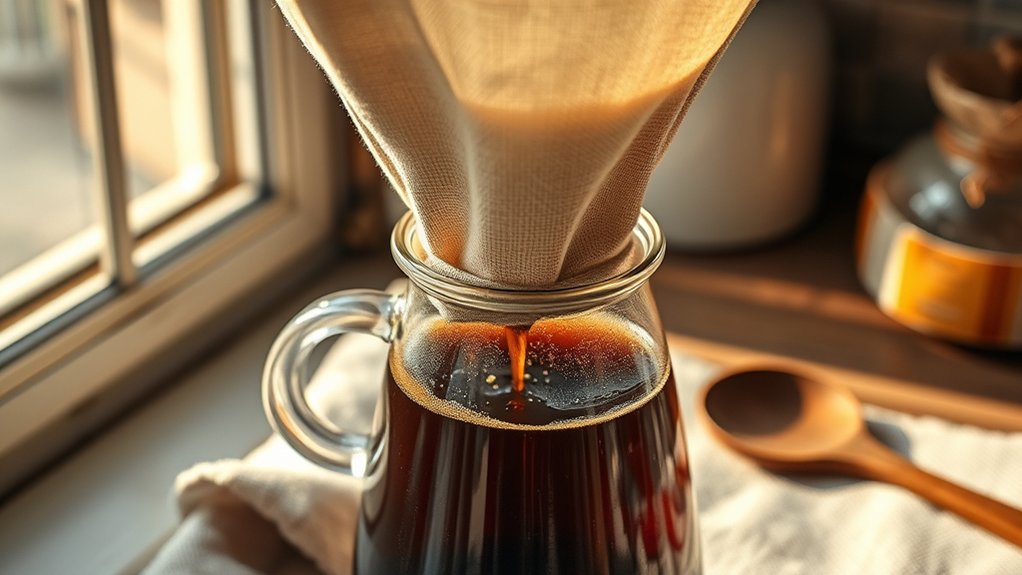
To brew coffee with a coffee sock or cloth filter, start by choosing a natural, tightly woven fabric that won’t change the flavor.
First things first, give the cloth a good rinse before you add your coffee grounds.
Then, pour hot water evenly over the grounds to get the best extraction.
Just follow a few simple steps, and you’ll end up with a smooth, rich cup of coffee—all without needing a machine.
Choosing The Right Cloth
What makes the perfect cloth for brewing coffee without a machine? You want a fabric that balances durability with effective filtration. Natural fibers like cotton or hemp work best. They’re sturdy enough to withstand repeated use and washing without losing integrity.
Avoid synthetic materials because they can impart unwanted flavors and degrade faster.
When choosing your coffee sock or cloth filter, look for a tight weave that holds fine grounds but still lets water flow smoothly.
Fabric cleaning is essential. Rinse your cloth thoroughly after each use and occasionally boil it to remove oils and residues. This ensures your coffee tastes fresh every time.
Brewing Steps And Tips
Once you’ve selected and prepared the right cloth filter, brewing your coffee becomes a straightforward process. Start by boiling fresh water, then let it cool slightly, around 90–96°C is ideal. This matches brewing science and helps avoid bitterness.
Place your ground coffee into the coffee sock, making sure it’s evenly spread out. Slowly pour the hot water over the grounds and let it drip naturally into your vessel below. Patience is key here because this method honors coffee history by replicating traditional techniques that bring out clear flavors.
Try not to press or stir aggressively, as this can cause over-extraction. After brewing, rinse the cloth filter thoroughly to keep it lasting longer and prevent residue buildup.
Mastering these steps means you’ll enjoy a balanced, rich cup without needing a machine. It’s a great way to connect with coffee’s timeless art.
Brew Coffee Without a Machine With a Simple Pour-Over and Kettle
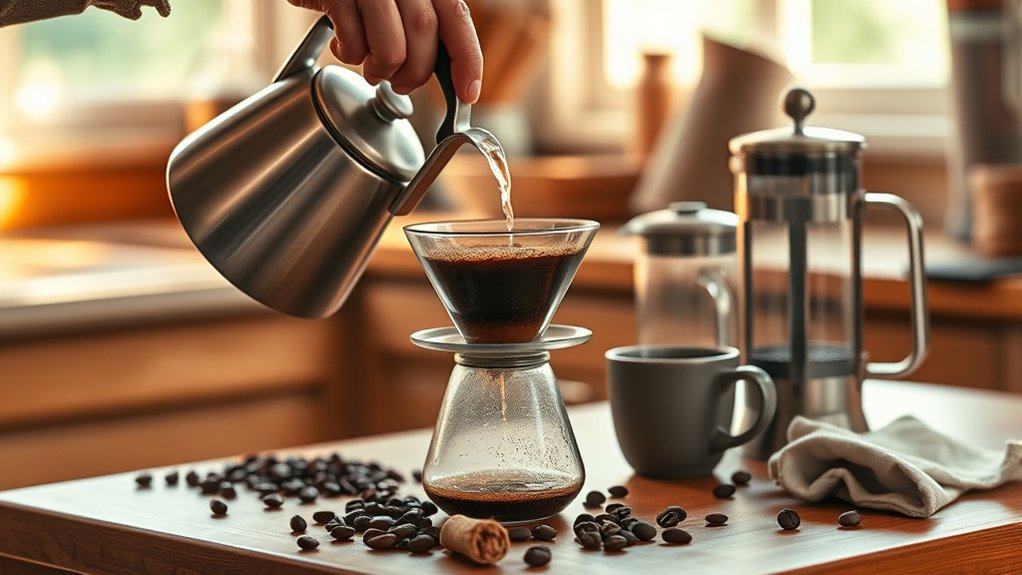
Although you don’t need a fancy machine to enjoy a great cup of coffee, mastering the simple pour-over method with just a kettle and a filter can really step up your brewing game.
Start by placing a paper filter in a cone dripper over your cup or carafe. Rinse the filter with hot water to get rid of any paper taste and to warm up your vessel.
Next, add freshly ground coffee, then pour hot water slowly in a circular motion, making sure every bit of coffee gets evenly wet. This careful pouring helps you get the most flavor out of the grounds without any bitterness.
Be patient and let the water bloom with the grounds before you keep pouring.
With this method, you’re in control of the water temperature and flow, which brings out rich, nuanced flavors. It’s a simple and effective way to make coffee that can easily rival a machine-made brew.
Try the Cowboy Method: Boil and Steep Coffee
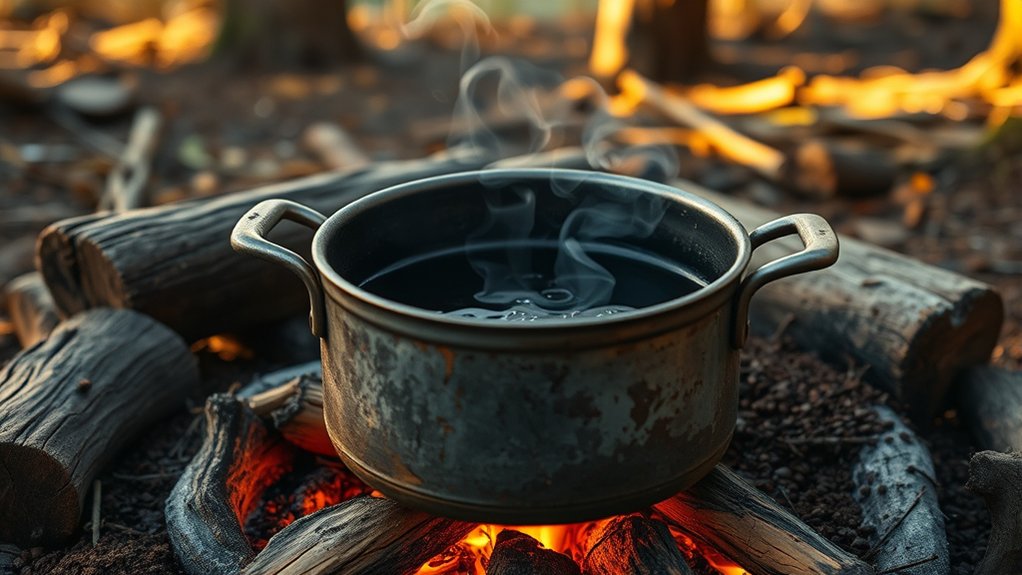
You’ll start by boiling water right along with your coffee grounds. Just keep an eye on the heat so you get a clean flavor.
Then, pay close attention to how long you let it steep—if it’s too short, your coffee will be weak; if it’s too long, it might turn bitter.
Once you get the hang of these steps, you’ll be able to brew rich, bold coffee using nothing but a pot and a fire.
Boiling Water Techniques
When you don’t have a coffee machine, boiling water techniques like the Cowboy Method offer a straightforward way to brew rich coffee. Start by bringing fresh water to a rolling boil, reaching the ideal brewing temperature of about 200°F (93°C) once off the heat.
Pour the hot water over your coarsely ground coffee directly in a pot or heat-resistant container.
This method lets you capture the full coffee aroma as the grounds steep in the boiling water. Just be sure not to reuse boiling water immediately after boiling because the temperature can be too high and risk a bitter taste.
Mastering this balance ensures you extract robust flavors without compromising the coffee’s natural fragrance.
Steeping Time Tips
Mastering the steeping time is essential to perfecting the Cowboy Method and revealing the full depth of your coffee’s flavor. The steeping duration directly influences flavor extraction, so you want to aim for a balance. Too short, and your coffee will taste weak; too long, and it becomes bitter.
Start by letting your coffee grounds steep in boiling water for about 4 to 5 minutes. This timeframe allows ideal extraction of oils and aromatic compounds without over-extracting harsh elements.
If you prefer a stronger brew, extend the steeping duration by a minute or two. Just keep tasting to avoid bitterness.
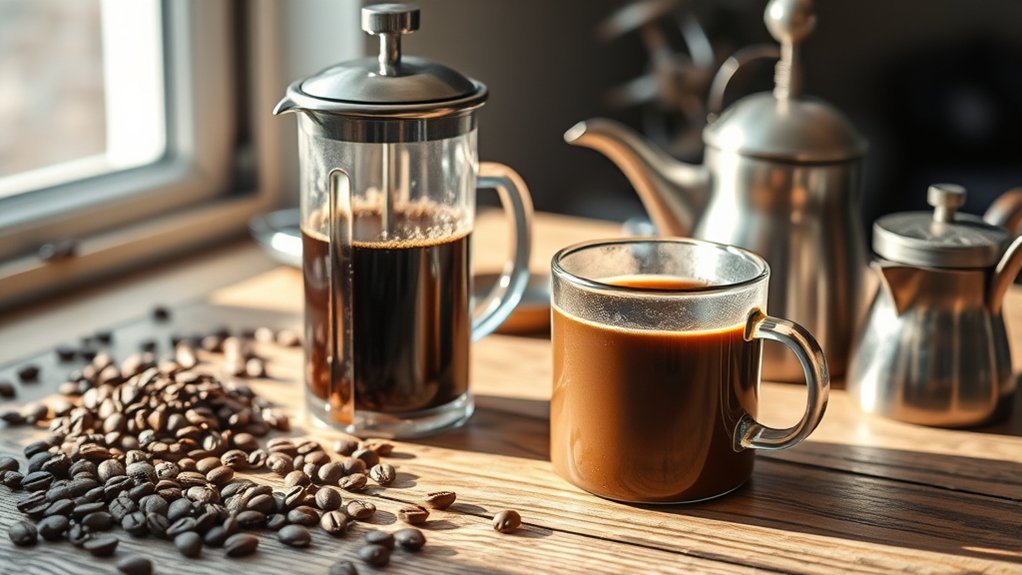
Make French Press Coffee Without a Press: DIY Alternatives
Although you mightn’t have a French press on hand, you can still enjoy its rich, full-bodied coffee by using simple household items as substitutes.
Start by placing coarsely ground coffee in a heatproof jar or bowl. Pour hot water, ideally around 195-205°F, to optimize extraction and preserve coffee flavor profiles.
Place coarsely ground coffee in a heatproof jar, then pour hot water at 195-205°F for optimal flavor.
Stir gently to combine, then let it steep for about four minutes.
To separate grounds from liquid, use a fine mesh sieve, a clean cloth, or even a tightly woven tea towel.
Press down carefully to minimize sediment in your cup.
This DIY method respects the essential French press principle of full immersion brewing, allowing you to extract deep, balanced flavors without specialized equipment.
Feel free to adjust your steeping time and brewing temperature to fine-tune the taste to your liking.
How to Enhance Instant Coffee With Fresh Grounds
If you’re looking to boost your instant coffee beyond its usual convenience, adding fresh coffee grounds offers a simple yet effective upgrade. This instant enhancement technique works as a powerful flavor booster, enriching your cup with aromatic notes and deeper complexity.
Start by preparing your instant coffee as usual, then sprinkle a small amount of freshly ground coffee on top. Stir gently to blend the flavors without overwhelming the instant base.
The fresh grounds release essential oils that elevate the overall taste, giving you a richer and more satisfying brew. This method requires no special equipment but dramatically improves your coffee’s profile.
It’s a perfect trick when you want a quick yet flavorful cup without a machine.
Brew Cold Brew Coffee Without Special Gear
While you don’t need fancy equipment to enjoy cold brew coffee, a few simple steps can help you create a smooth, revitalizing cup right at home. Start by coarsely grinding your coffee beans, then combine about one cup of grounds with four cups of cold, filtered water in a large jar or pitcher. Stir gently to ensure all grounds are saturated.
No fancy gear needed—just coarsely ground beans and cold water for a smooth, revitalizing cold brew at home.
Cover it and let it steep in the fridge for 12 to 18 hours. This low brewing temperature extracts rich coffee flavor while minimizing bitterness.
After steeping, strain the mixture through a fine mesh sieve or a clean cloth to remove grounds.
You’ll get a concentrated cold brew you can dilute with water or milk. This method maximizes flavor without special gear. It’s perfect for invigorating, homemade coffee.
How to Grind Coffee Beans Without a Grinder
Cold brew starts with coarsely ground beans, but you don’t need a grinder to get there. To achieve the right grind consistency, place your coffee beans in a sturdy plastic bag and crush them using a rolling pin or a heavy pan. Apply firm, even pressure, and roll over the beans until they break down into coarse pieces.
Alternatively, you can use a mortar and pestle, grinding in small batches to maintain control over the size.
Remember, uneven grind size can affect coffee flavor by causing over-extraction or under-extraction. While it won’t be as uniform as a grinder, this method preserves the essential coffee flavor you want in your brew.
With patience and practice, you’ll master grinding without a machine. It might take a little time, but it’s totally doable and worth it for that fresh coffee taste. Just keep at it!
Adjust Coffee Strength and Flavor When Brewing Without a Machine
Since brewing without a machine requires more hands-on control, you’ll need to adjust coffee strength and flavor by tweaking variables like coffee-to-water ratio, grind size, and steeping time.
Start by experimenting with your coffee-to-water ratio. More grounds give you a bolder flavor, while fewer make a milder cup.
Begin by adjusting your coffee-to-water ratio for a bolder or milder brew to suit your taste.
Next, think about grind size. Finer grounds extract flavors faster, which makes your coffee taste stronger and more aromatic. But be careful—if you over-extract, it can get bitter. Coarser grounds slow things down and give you a lighter body.
Finally, play around with steeping time. Longer steeping adds richness but might bring out some bitterness. Shorter steeping means lighter flavors.
Frequently Asked Questions
How Long Does Brewed Coffee Stay Fresh Without Refrigeration?
Brewed coffee stays fresh without refrigeration for about 30 minutes to an hour before it starts losing flavor and freshness.
For better coffee storage and freshness preservation, keep it in a covered container at room temperature, away from heat and sunlight.
If you want to enjoy your coffee longer, it’s best to transfer it to a thermal carafe or refrigerate it within two hours to maintain its taste and quality.
This way, you can savor your brew without it tasting stale or bitter.
Just remember, the sooner you act, the better your coffee will taste!
Can You Use Tea Leaves Instead of Coffee Grounds?
Funny enough, you can use tea leaves instead of coffee grounds, but don’t expect the same kick. Tea infusion delivers a lighter, more delicate flavor compared to coffee’s bold, roasted notes.
If you’re craving caffeine but only have tea, go for it! Just remember the flavor comparison shows tea offers floral or earthy tones, not the rich bitterness coffee lovers crave.
Experiment to find what suits your taste best.
What’s the Best Water Temperature for Brewing Coffee Manually?
The best water temperature for brewing coffee manually is between 195°F and 205°F. You want to hit that sweet spot to extract the right flavors without burning the grounds.
This temperature range gives you brewing precision, ensuring balanced acidity and richness.
If the water’s too hot, you’ll get bitterness. Too cool, and your coffee will taste weak.
How Do You Store Coffee Beans to Maintain Freshness?
Did you know coffee loses 60% of its flavor within a week after grinding? To keep your beans fresh, store them in an airtight container away from light, heat, and moisture.
It’s best to keep the container in a cool, dark place like a pantry, rather than the fridge.
Also, try not to expose the beans to air too often. Just grind what you need each time.
Proper coffee storage helps preserve the rich flavors you love in every cup. That way, every sip stays as delicious as possible.
Are There Health Benefits to Brewing Coffee Without a Machine?
Yes, you’ll enjoy health advantages when you brew coffee without a machine. This method often preserves more of coffee’s antioxidant content because it typically involves gentler extraction processes, reducing exposure to high heat and pressure.
Those antioxidants help fight inflammation and may reduce your risk of certain diseases.
Conclusion
Brewing coffee without a machine lets you dance with the raw essence of your beans, crafting each cup like a skilled artist. Whether you’re steeping cowboy-style or coaxing flavors with a simple cloth filter, you hold the power to shape your perfect brew.
Embrace these hands-on methods. They’re your ticket to rich, authentic coffee moments anytime, anywhere. So, grab your gear and awaken your senses. Your next great cup is just a few careful steps away.