Does Coffee Go Bad If Left Out – Safety And Storage Guide
You can leave black coffee out safely for 4-6 hours, but its flavor and aroma start to degrade after the first hour. Once you add milk or cream, though, you should consume it within 2 hours to avoid bacteria growth and spoilage risks.
Cold brew lasts longer, about 14-18 hours unrefrigerated, but keeping it in the fridge extends its freshness. When reheating, make sure to do it quickly and thoroughly for safety.
If you want to protect the taste and avoid any health hazards, it’s important to understand how to store coffee properly and recognize the signs of spoilage.
How Long Does Coffee Last at Room Temperature?
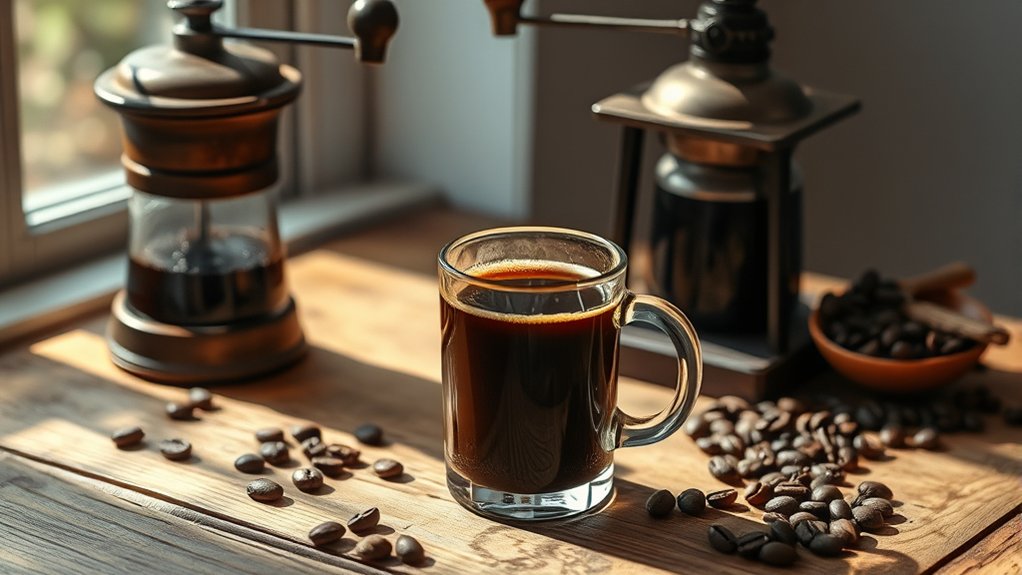
Although brewed coffee can remain safe to drink for up to 4-6 hours at room temperature, its flavor starts to degrade sharply after the first hour. You’ll notice the coffee aroma fading quickly, which really diminishes the whole sensory experience. The caffeine content stays pretty stable during this time, so the stimulating effect is still there even as the taste quality drops.
If you leave coffee out beyond two hours, you’re increasing the risk of bacterial growth, especially if it has milk or dairy in it. That kind of coffee should be consumed within about two hours to stay safe. Cold brew coffee does better, lasting 14-18 hours before the flavor starts to go downhill.
Still, refrigerating cold brew is a safer bet if you want to keep it longer. Knowing these time frames helps you balance safety with getting the best flavor and caffeine kick when you enjoy coffee at room temperature.
How to Tell If Coffee Has Gone Bad
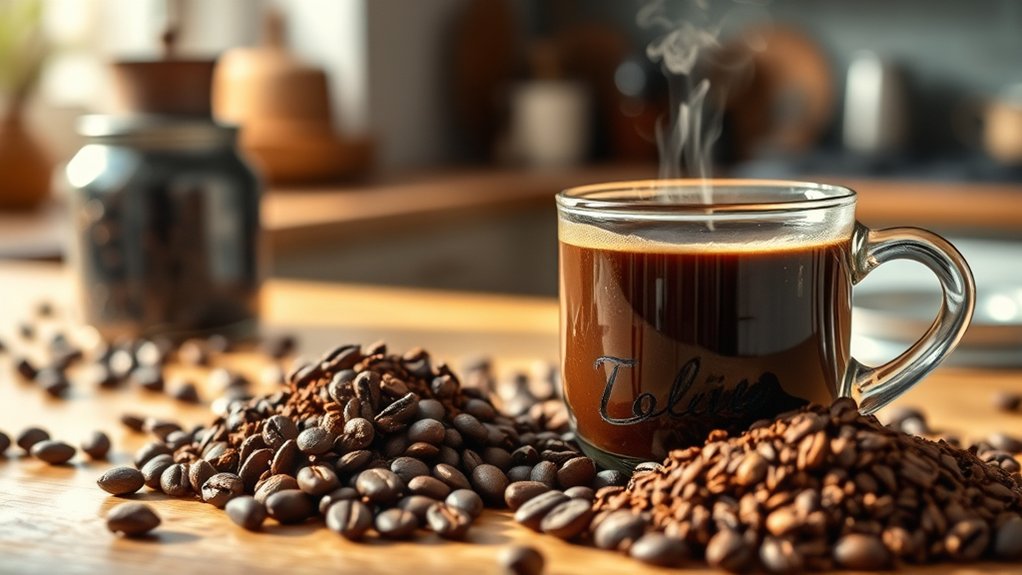
When you’re evaluating whether coffee has gone bad, look closely for visible mold, fuzzy patches, or any unusual color changes. These are clear indicators of spoilage and unsafe consumption.
Additionally, assess the aroma. Sour, vinegary, or musty odors signal that the coffee brewing process has been compromised, and the flavor profile has deteriorated.
Taste the coffee carefully. If it presents a flat, dull taste or excessive bitterness, it’s likely stale or spoiled.
Check any milk or creamer added for separation, curdling, or unusual appearance, as these further confirm spoilage.
Finally, a rancid smell or cloudy, murky appearance in brewed coffee serves as a warning sign. These evidence-based markers help you confidently determine if your coffee remains safe and enjoyable.
What Happens to Coffee When It Sits Out Too Long?
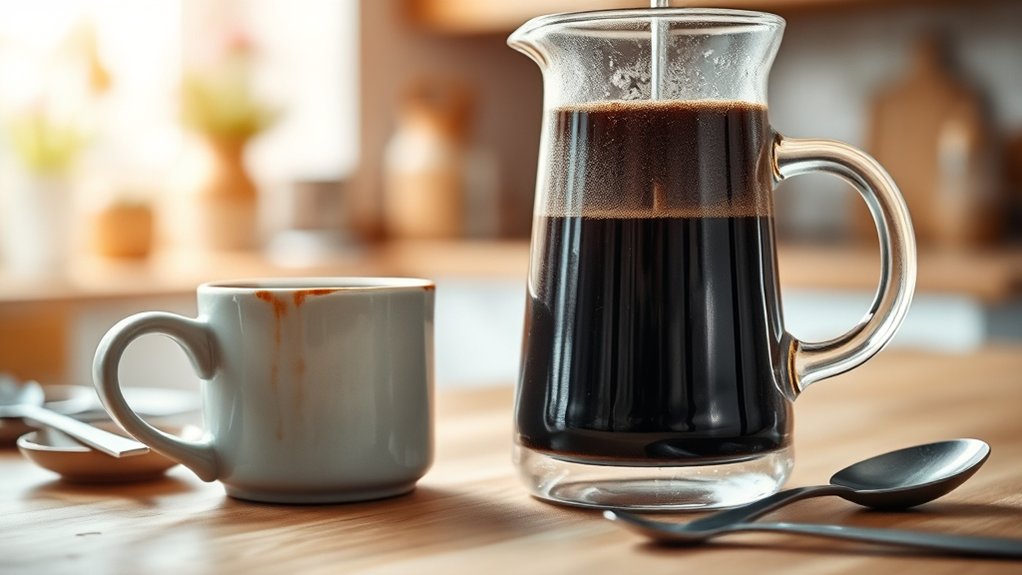
When coffee sits out too long, you’ll start to notice its flavor changing—it often turns sour and bitter because of oxidation.
After about 12 to 24 hours, bacteria can start to grow, which is especially true if you’ve added milk or other ingredients.
You might even see mold or a cloudy film on top, which is a clear sign that it’s time to toss it out.
Flavor Degradation Over Time
As coffee sits out, its volatile compounds begin to evaporate, stripping away the fresh aroma and nuanced flavors you initially enjoyed. This loss considerably alters the coffee aroma and overall flavor profile. Oxidation further intensifies bitterness and dulls the taste.
At the same time, acidity rises, making the brew sour or vinegary. Exposure to air, heat, and light speeds up these changes. You’ll start noticing flavor degradation within 3 to 4 days, and it only gets worse after a week.
| Time Left Out | Aroma Impact | Flavor Profile | Acidity Level | Bitterness |
|---|---|---|---|---|
| 0-1 day | Fresh, vibrant | Balanced | Normal | Low |
| 2-3 days | Slightly faded | Mildly altered | Slight rise | Moderate |
| 4-7 days | Noticeably dull | Sour, vinegary | Increased | High |
| 1+ week | Faint, stale | Harsh, unpleasant | High | Very high |
Bacterial Growth Risks
Although plain black coffee contains compounds that slow bacterial growth, leaving it out at room temperature for more than a few hours allows bacteria to multiply rapidly. Microbial contamination becomes a considerable risk, especially when coffee includes dairy or other perishables. These can harbor bacteria within just two hours.
The acidity in coffee only partially inhibits this growth, so relying on it without proper storage hygiene isn’t safe. If coffee sits out for days, harmful bacteria and mold can develop, particularly in warm, moist environments.
To minimize these risks, you should refrigerate coffee promptly and use airtight containers. This approach notably slows microbial contamination, reducing the likelihood of foodborne illness. Good storage hygiene is essential to keep your coffee safe beyond initial consumption periods.
Visual Spoilage Indicators
If you leave brewed coffee out too long, visible signs of spoilage will show up, letting you know it’s no longer safe to drink. Mold usually starts to grow after about seven days in warm, moist conditions. You might see fuzzy patches on the coffee’s surface or grounds.
Other signs include discoloration, like lightening, darkening, or a murky cloudiness. An oily film can also develop over time.
When you add dairy or plant-based milks, separation or curdling becomes an easy way to tell something’s off.
These changes aren’t just about looks; they mean microbes and chemical breakdown are happening. That makes the coffee unsafe to drink.
Does Black Coffee Spoil Faster Than Cold Brew?
How quickly does black coffee spoil compared to cold brew? Black coffee, when brewed hot, starts to lose its coffee flavor considerably after 3-4 days, even if refrigerated. Its shelf life in the fridge extends up to 42 days, but with noticeable flavor degradation.
Cold brew, however, maintains its coffee flavor much longer, often up to 10-14 days in refrigeration. This extended shelf life is due to cold brew’s lower acidity, which slows bacterial growth and oxidation processes responsible for spoilage.
How Dairy and Additives Affect Coffee’s Shelf Life
When you add dairy or flavored syrups to your coffee, it doesn’t last as long as plain coffee. That’s because the dairy and sugars create the perfect environment for bacteria to grow faster, which means the coffee can spoil more quickly.
Dairy, especially, has fats and proteins that encourage mold and harmful bacteria to multiply. This can cut down the safe window to just a few days before you start noticing sour smells or curdling.
So, it’s really important to keep these things in mind if you want to avoid any unpleasant tastes or even the risk of foodborne illness.
Just a little extra care can go a long way!
Dairy’s Impact On Freshness
Because dairy contains fats and proteins that speed up spoilage, adding milk or cream to your coffee really cuts down its shelf life. Dairy spoils faster because of bacterial growth and milk curdling, especially if you leave it out at room temperature.
Even pasteurized cream, once mixed into coffee, should be finished within 2-3 days if kept in the fridge. Here’s what you need to know:
Coffee with dairy tends to develop sour flavors and rancidity from fat breakdown. At room temperature, milk can start curdling in just a few hours, which means spoilage and potential health risks.
Keeping it refrigerated helps, but you only get about 2-3 days of freshness before the dairy goes bad.
Additives And Spoilage Risks
Adding dairy to your coffee considerably shortens its shelf life because the fats and proteins promote bacterial growth and spoilage. Flavor stability takes a hit too, as the interactions with these additives speed up degradation, especially when milk or cream is involved.
You should try to consume dairy-added coffee within 2-3 days if it’s refrigerated to avoid any health risks. Flavored syrups also reduce shelf life—down to about 12 days—but they aren’t as prone to rapid spoilage as dairy.
| Additive Type | Shelf Life (Refrigerated) |
|---|---|
| Black Coffee | Up to 1 week |
| Coffee + Dairy | 2-3 days |
| Coffee + Syrups | Up to 12 days |
| Dairy Spoilage Risk | High |
For the best safety and flavor, add perishables like dairy only when you’re ready to drink.
Is It Safe to Drink Day-Old Coffee With Milk?
How safe is it to drink day-old coffee with milk left out at room temperature? Unfortunately, it’s unsafe. Once milk is added, the coffee becomes perishable.
Drinking day-old coffee with milk left out at room temperature is unsafe due to spoilage risks.
At room temperature, bacterial growth speeds up, especially after 2 hours, which can pose health risks. Unlike black coffee brewed using coffee filters or other methods, milk really cuts down the shelf life.
Here are some things to keep in mind: Coffee with milk left out for over 2 hours can harbor harmful bacteria. You might notice spoilage signs like a sour smell, curdling, or a slimy texture.
If you want to keep it safe, refrigerate the coffee within 2 hours. Then, it should be fine to drink for 1-2 days.
How to Store Coffee to Keep It Fresh Longer
You’ll want to store your coffee in airtight, opaque containers. This helps keep out oxygen, light, and moisture — all the things that can speed up spoilage.
If you have whole beans, try to keep them in a cool, dark spot. This way, they stay fresh for a longer time. It’s also best to grind your coffee right before you brew it to get the best flavor.
If you need to store coffee for a longer period, freezing it in moisture-proof containers is a good option. Just be careful not to thaw and refreeze it too many times, as that can affect the quality.
Airtight Container Benefits
Because exposure to oxygen accelerates coffee’s degradation, storing it in an airtight container is essential for preserving its flavor and aroma. An airtight container slows oxidation by preventing oxygen from reaching your coffee. This is crucial for maintaining the distinct profiles of different coffee bean varieties.
It also safeguards against moisture and humidity, reducing risks of mold and spoilage that can ruin your brewing techniques’ outcomes. So, keeping your coffee in the right container really makes a difference.
Key benefits include:
- Blocking oxygen to preserve volatile oils and nuanced flavors
- Using one-way valve containers to release CO2 without letting air in
- Minimizing light exposure that degrades coffee oils, ensuring freshness
Optimal Storage Conditions
Although coffee’s freshness naturally declines over time, storing it properly can considerably slow this process and preserve its flavor complexity. Use airtight, opaque storage containers to shield coffee from oxygen and light, which are major factors in flavor degradation. Keep your coffee in a cool, dark place away from heat sources.
For long-term storage, freeze whole beans in vacuum-sealed bags, and try to minimize thaw cycles. Avoid refrigeration because moisture and odor absorption can harm the taste. Proper storage really boosts your coffee brewing by maintaining aroma and flavor integrity.
| Condition | Recommendation |
|---|---|
| Container Type | Airtight, opaque |
| Location | Cool, dark, away from heat |
| Freezing | Vacuum-sealed bags, minimal thawing |
| Refrigeration | Avoid |
| Container Size | Small, to reduce air exposure |
How to Store Coffee With Dairy or Additives Safely
When dairy or flavored additives enter your coffee, prompt refrigeration becomes essential to inhibit bacterial growth and spoilage. Unlike black coffee brewed from fresh coffee beans using proper brewing techniques, coffee mixed with milk or cream requires stricter handling.
You should refrigerate any coffee with dairy within two hours of brewing to maintain safety. Keep it below 40°F (4°C) to slow bacterial proliferation.
Remember these key points:
- Add dairy or flavors only when ready to serve to minimize time at room temperature.
- Consume refrigerated coffee with dairy within 3-4 days to avoid sourness or curdling.
- Discard immediately if you notice sour smells, curdling, or mold to prevent health risks.
Following these guidelines ensures your coffee stays safe without compromising quality. It’s really about keeping things fresh and tasty!
Can You Reheat Coffee Without Losing Flavor or Safety?
After storing your coffee properly, especially if it contains dairy or additives, you might wonder how reheating affects its flavor and safety. Reheating coffee can cause flavor loss because volatile compounds evaporate at high temperatures, which messes with the taste. To minimize this, reheat your coffee quickly using a microwave or stovetop. Just avoid heating it too much since that can lead to a burnt taste.
If you’ve refrigerated your coffee and reheat it within 24 hours, it’s generally safe, assuming you cooled and stored it properly. But don’t reheat coffee that’s been sitting out at room temperature for more than two hours—that’s a risk for bacteria growth.
Also, try not to reheat your coffee multiple times because that can make the flavor worse and raise safety concerns.
What Are the Risks of Drinking Spoiled Coffee?
If you drink spoiled coffee, you risk food poisoning caused by bacteria or mold that can lead to nausea, vomiting, and diarrhea. Improper coffee bean preservation and poor brewing techniques increase the chance of harmful microbial growth.
Spoiled coffee may also trigger allergic reactions or respiratory issues, especially if mold is present. Additionally, perishable additives like milk can curdle, raising the risk of stomach cramps and gastrointestinal infections.
Here are key risks to consider:
- Food poisoning symptoms from bacteria and mold contamination
- Allergic or respiratory reactions due to mold spores
- Gastrointestinal distress from spoiled additives
Knowing these risks really shows why it’s so important to store your coffee beans properly and keep your brewing process clean. That way, you can enjoy your daily cup safely and fresh every time.
How to Extend Cold Brew Coffee’s Freshness at Home
Although cold brew coffee can stay safe at room temperature for up to 14-18 hours, drinking it within 12 hours ensures you get the best freshness and flavor. To keep your cold brew tasting great at home, it’s all about the right brewing and storing techniques.
Make sure to store your cold brew in airtight containers, keep it away from light, and store it in a cool place. Freezing it in ice cube trays is also a smart trick because it preserves the flavor with very little loss.
| Action | Impact on Freshness |
|---|---|
| Airtight container | Prevents oxidation |
| Cool, dark storage | Slows spoilage |
| Consume within 12 hours | Ideal flavor retention |
| Freeze in ice trays | Extends shelf life ~2 weeks |
| Avoid dairy until serving | Reduces bacterial growth |
Using these simple steps will help your cold brew stay fresh and safe to enjoy for longer.
How to Enjoy Leftover Coffee Safely
When you want to enjoy leftover coffee safely, understanding how time and storage conditions affect its quality is essential. Coffee brewing methods and added ingredients influence how long your coffee stays safe and flavorful. For optimal flavor preservation and safety, keep these tips in mind.
Discard hot coffee left out over 2 hours because bacterial growth risks increase. Cold brew coffee can sit at room temperature for 14-18 hours, but make sure to refrigerate it afterward.
Discard hot coffee after 2 hours; cold brew lasts 14-18 hours unrefrigerated before chilling.
Coffee with dairy drastically reduces safe storage to about 2 hours at room temperature.
Always store leftover coffee in airtight containers and refrigerate it to extend freshness for several days. Before consuming, check for sour smells, mold, color changes, or off-taste. These signs mean the coffee has spoiled.
Following these evidence-based precautions helps you enjoy your leftover coffee without health risks. Simple steps like these go a long way in keeping your coffee delicious and safe.
Frequently Asked Questions
Can Coffee Grounds Go Bad if Stored Improperly?
Yes, coffee grounds can go bad if you neglect proper storage. To extend their shelf life, make sure to store them in an airtight, opaque container. Keep them away from heat and moisture too.
These simple storage tips really help keep your coffee grounds fresh and prevent spoilage. It’s all about creating the right environment for them to stay good longer. Just a little care goes a long way!
Does Coffee Lose Caffeine Potency Over Time?
You won’t notice significant caffeine loss over storage duration. Coffee flavor degrades faster because of exposure to air and heat.
If you store your coffee properly, the caffeine stays pretty stable. So, it’s better to focus on keeping the flavor fresh instead of stressing about caffeine potency dropping over time.
How Does Grind Size Affect Coffee Freshness?
Grind preservation profoundly protects freshness impact; finer grinds expose more surface area, accelerating oxidation and staling, while coarser grinds slow deterioration.
You’ll keep coffee fresher by grinding just before brewing, balancing flavor and longevity effectively. It’s all about timing and the size of those coffee bits. The smaller they are, the faster they lose their kick.
Can Flavored Coffee Beans Spoil Faster Than Regular Beans?
Yes, flavored coffee beans spoil faster than regular beans because flavor retention declines quickly due to added oils and preservatives. You’ll notice reduced bean quality as these compounds degrade, especially if exposure to heat, light, or air isn’t minimized.
Does Decaffeinated Coffee Have a Different Shelf Life?
Decaffeinated coffee doesn’t have a markedly different shelf life, but you’ll preserve flavor better by storing it in airtight containers away from heat and light. Proper storage containers are essential for maximum freshness and flavor preservation.
Keeping your coffee sealed tight is key. Heat and light can sneak in and mess with the taste, so try to keep your beans or grounds in a cool, dark spot. This way, you get the best flavor for longer.
Conclusion
If you leave coffee out too long, it can turn as bitter as a Monday morning without a caffeine fix. While black coffee lasts a few hours at room temperature, additives like milk shorten its lifespan drastically.
Reheating won’t save flavor or safety once spoilage sets in. To avoid risks, consume leftovers within hours or refrigerate promptly.
Following these guidelines keeps your coffee fresh, safe, and enjoyable every single time.