Can You Use Regular Coffee Beans For Espresso – Brewing Tips And Results
You can use regular coffee beans for espresso, but you’ll need to grind them very finely to get a proper extraction. Coarser grinds lead to weak, sour shots with little crema.
Regular beans, often lighter roasted, may lack the intense flavor and oils espresso beans have, so your shots might taste less rich. Using a burr grinder and fresher beans will help improve quality.
Keep adjusting your grind and technique, and you’ll uncover how to craft a better espresso with any beans.
What Is Espresso And How Is It Different?
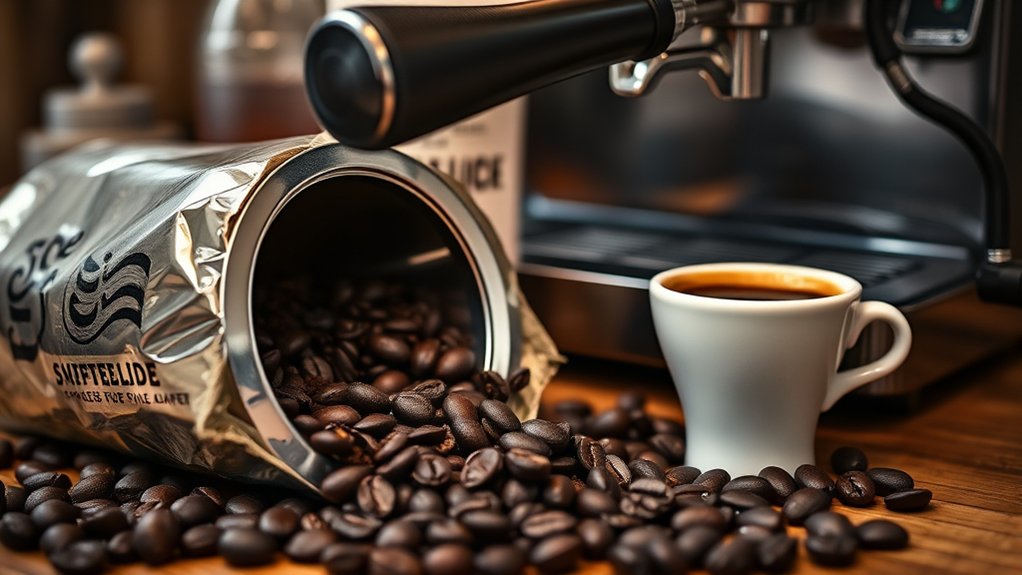
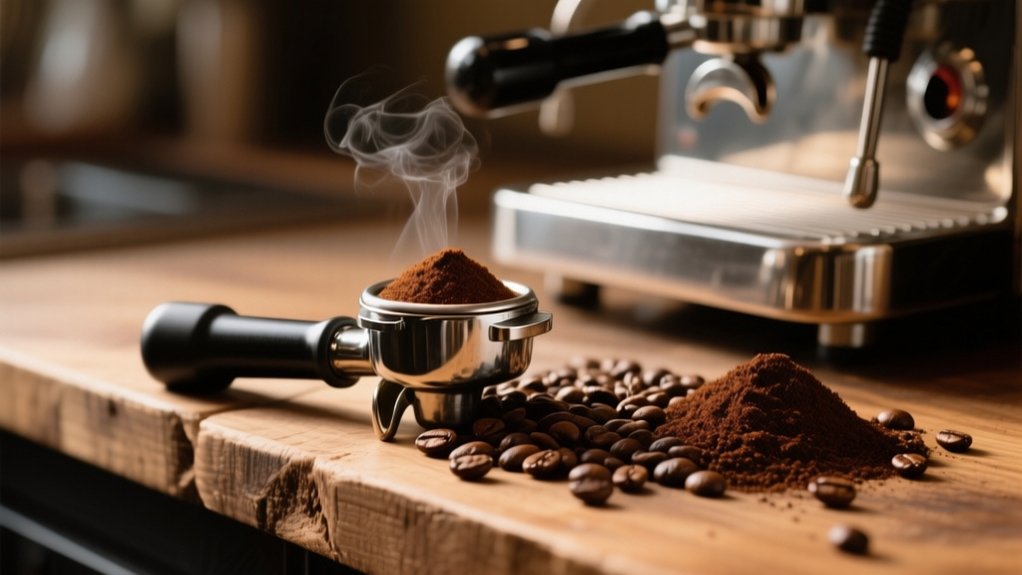
Espresso is a concentrated coffee brewed by forcing hot water through finely ground beans at high pressure. When you make espresso, the grind size plays a vital role. It needs to be very fine and uniform, unlike the coarser grind used in other brewing methods like drip or pour-over.
This fine grind allows hot water, pushed at about 9–10 atmospheres of pressure, to extract rich flavors and oils quickly within 20–30 seconds. The result is a small, intense 25–35ml shot with a velvety texture and a thick crema on top.
Compared to other brewing methods, espresso delivers a more concentrated and complex flavor profile, giving you a unique coffee experience that regular brewing techniques can’t replicate.
Can You Use Regular Coffee Beans For Espresso?
You can definitely use regular coffee beans for espresso, but nailing the grind size is super important to get a good extraction.
If your grind is too coarse, your shot will end up tasting weak and watery, and you won’t get that nice, rich crema you’re looking for.
Just remember, beans that aren’t roasted specifically for espresso mightn’t deliver as intense flavors when brewed under pressure.
Grind Size Importance
Although regular coffee beans can be used for espresso, you’ll need to grind them very finely to get the best results. The grind size is essential because espresso requires a fine grind to allow ideal extraction under high pressure, usually 9 to 10 atmospheres.
Regular coffee beans are typically ground coarser for drip or French press, so you’ll have to adjust to a much finer grind for espresso. Using a burr grinder helps achieve the consistent fine grind necessary.
If your grind size is too coarse, your espresso may turn out weak, sour, or lacking crema. Also, getting the grind size right prevents clogging and guarantees proper extraction.
Extraction Challenges
When using regular coffee beans for espresso, you’ll face extraction challenges that can affect flavor and texture.
Regular beans are often roasted lighter and ground coarser, which makes achieving the fine grind size essential for espresso difficult. Without this, your espresso might come out weak and watery because the extraction process lacks the necessary resistance.
Pre-ground regular coffee usually proves too coarse, leading to insufficient pressure and little to no crema.
Espresso beans, specially roasted and ground finely, are designed to withstand high pressure and temperature, ensuring proper extraction. If you skip this, you risk flavors turning overly acidic or flat, diminishing your shot’s quality.
Adjusting grind size helps, but regular beans inherently present extraction challenges that make brewing true espresso tricky.
Flavor Differences
Extraction challenges with regular coffee beans naturally lead to noticeable differences in flavor when used for espresso. When you opt for regular coffee beans instead of espresso beans, you’ll likely find the flavor profile less robust and balanced.
This is because regular beans are often lighter roasted and not tailored to withstand the high-pressure brewing of espresso.
Here’s what you can expect using regular coffee beans for espresso:
- Weaker, sour, or overly acidic taste
- Lack of crema due to lower oil content
- Less richness and depth in flavor profile
- Potentially watery shots from coarser pre-ground beans
To get the rich, bold flavor you want, espresso beans are your best bet. They’re roasted specifically to enhance extraction and flavor intensity.
How Grind Size Affects Espresso Extraction With Regular Beans
Because espresso relies on high pressure to draw out rich flavors, you need a very fine grind to create enough resistance during brewing.
When using regular coffee beans, achieving the right grind sizes is essential since these beans are often ground coarser than espresso beans.
If your grind is too coarse, the water flows through too quickly, producing weak, sour shots lacking crema.
Inconsistent grind size can also clog your portafilter, disrupting extraction and ruining flavor.
To get the best results, use a burr grinder to achieve a consistent, powdery grind.
Adjusting your grind size carefully allows you to adapt brewing techniques for regular beans, ensuring proper extraction and a richer, smoother espresso despite the beans not being specifically roasted for espresso.
How Espresso Roasting Differs From Regular Coffee
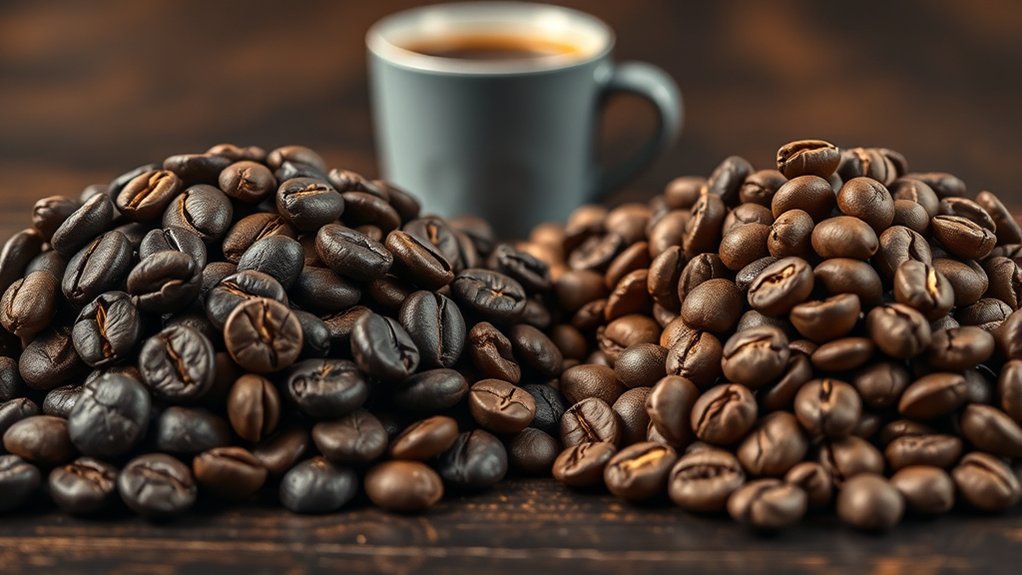
When you’re roasting for espresso, you’ll find the process takes a bit longer. This extra time helps develop deeper flavors and pulls more oils out of the beans.
Those oils are what give espresso beans that shiny surface and help create the rich crema you love in your shot.
On the other hand, regular coffee roasting usually skips this longer stage. That’s why you end up with a lighter roast and beans that aren’t as oily.
It’s all about how the roast affects the flavor and texture in the cup.
Roasting Duration Differences
Although both espresso and regular coffee start as the same beans, the roasting process for espresso takes a different path. You’ll notice this in the flavor and appearance.
Espresso beans undergo a longer roasting duration at higher temperatures, resulting in a darker roast that intensifies flavor and aroma. This extended process produces a richer, more concentrated profile compared to regular coffee’s lighter roast.
Key differences in roasting duration include:
- Espresso beans roasted longer for deeper, robust flavors
- Dark roast common in espresso to enhance boldness
- Regular coffee roasted shorter for lighter, varied tastes
- Extended roasting promotes complex Maillard reactions in espresso
Understanding these roasting duration differences helps you appreciate why espresso stands out in taste and character.
Oil Content Variations
As espresso beans roast longer at higher temperatures, their natural oils rise to the surface, giving them a glossy sheen you won’t usually see on regular coffee beans.
These oil content variations are key to espresso’s rich flavor and velvety texture. The oils enhance the crema when brewing, contributing to that thick, concentrated mouthfeel you expect from a good shot.
In contrast, regular coffee beans are roasted shorter, resulting in a drier appearance with less surface oil. This difference impacts how they perform under pressure, often yielding a lighter, less intense flavor.
How Espresso Bean Oils Affect Flavor And Crema
Because espresso beans are roasted longer, they develop a higher oil content that plays an essential role in creating the rich, velvety crema you expect from a great shot.
These natural oils emulsify under pressure, forming that thick, flavorful layer of crema that enhances both texture and taste.
When you use regular coffee beans, which have less oil, your espresso lacks this signature crema and the depth in flavor profile that comes with it.
The oily sheen on espresso beans signals a more intense, rich mouthfeel that regular beans can’t match.
- Oils emulsify under pressure, creating crema
- Higher oil content intensifies flavor profile
- Crema adds velvety texture and richness
- Regular beans lack oils, leading to weaker crema and taste
Choosing the right beans means better crema and a fuller espresso experience.
Can You Use Pre-Ground Coffee For Espresso?
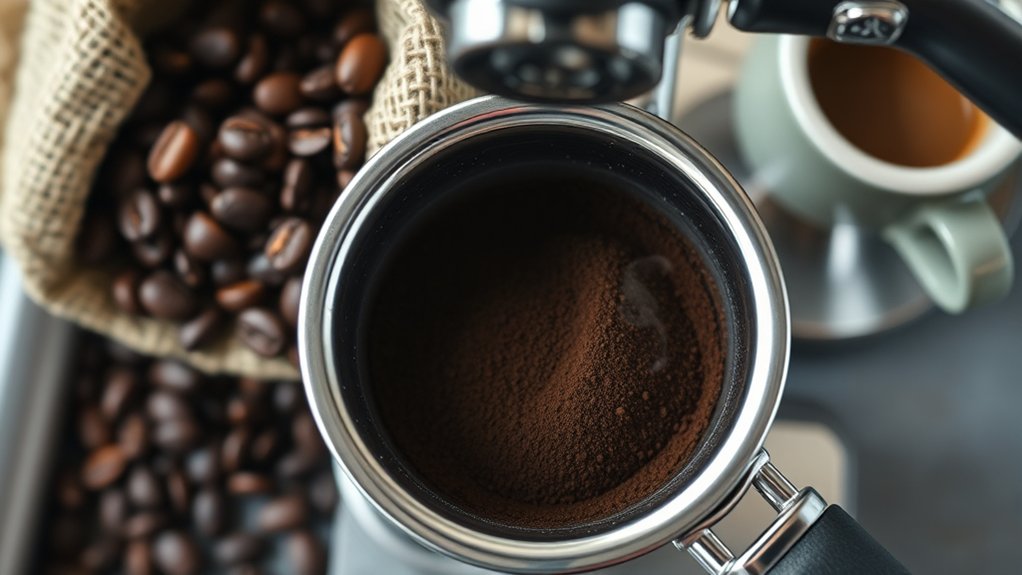
You might be tempted to use pre-ground coffee for espresso, but the grind size and freshness can really impact your shot’s flavor.
See, pre-ground coffee often isn’t fine enough, which can lead to weak extraction and less crema.
On top of that, if it’s not stored properly, the quality drops pretty quickly.
That’s why grinding fresh beans just before brewing makes such a big difference.
Freshness Impact On Flavor
Although pre-ground coffee offers convenience, it often compromises the flavor of your espresso by losing essential aromatic compounds. When you rely on pre-ground coffee, the espresso shot tends to be flat and less vibrant compared to using freshly ground beans.
Freshness plays a vital role in preserving the rich flavors and aroma that define a great espresso. Here’s why freshness matters:
- Pre-ground coffee oxidizes quickly, losing flavor and aroma.
- Stale grounds produce weak, sour, or overly acidic espresso shots.
- Freshly ground beans provide better resistance for peak extraction.
- Grinding just before brewing enhances both flavor and crema quality.
To enjoy a full-bodied espresso shot, always opt for freshly ground beans over pre-ground coffee.
Grind Size Importance
When dialing in your espresso, grind size plays an important role in extracting the full flavor and achieving the perfect crema. Using espresso beans freshly ground with a burr grinder guarantees a consistent, fine, and powdery grind size, which is vital for high-pressure extraction.
Pre-ground coffee usually falls short because its coarser grind causes weak, watery shots with minimal crema. Inconsistent grind size can also clog your portafilter, ruining the shot quality.
| Grind Type | Consistency | Result |
|---|---|---|
| Fresh Burr Grind | Fine, uniform | Rich, full-bodied espresso |
| Pre-Ground Coffee | Coarse, uneven | Weak, watery espresso |
| Inconsistent Grind | Mixed particle size | Clogged portafilter, poor extraction |
Always opt for fresh grinding your espresso beans for the best results.
Storage Effects On Quality
Since pre-ground coffee loses its freshness quickly, how you store it plays an essential role in maintaining its flavor and aroma for espresso.
Coffee grounds exposed to poor storage conditions lose freshness, leading to weak or sour shots without a good crema.
To keep your pre-ground coffee viable for espresso, you need to control air, light, and moisture exposure carefully.
Use airtight containers to block air and moisture. Store coffee grounds in a cool, dark place away from sunlight.
Avoid frequent opening to minimize oxidation.
Also, buy smaller amounts to guarantee you use fresh grounds quickly.
Tips For Grinding Regular Beans To Make Better Espresso
A burr grinder is your best tool for achieving the consistent, fine grind size needed to make better espresso from regular beans. Aim for a grind size similar to table salt. Too coarse, and your espresso will taste weak and sour with little crema.
Always grind your regular coffee beans just before brewing to preserve freshness and aroma. When tamping, apply firm, even pressure to compact the grounds properly. This helps enhance flavor extraction.
Consistency in both grind size and tamping pressure is key to balanced shots. Avoid pre-ground coffee since it quickly loses quality and impacts taste.
How To Adjust Tamping And Extraction When Using Regular Beans
Although regular coffee beans can be a bit trickier to work with, you can improve your espresso by adjusting tamping pressure and extraction time carefully.
Focus on balancing these factors to get the best flavor from your beans.
Use firm, even tamping pressure around 30-40 pounds to guarantee consistent extraction.
Adjust grind size finer than usual to compensate for regular beans’ coarser texture.
Monitor extraction time closely, aiming for 20-30 seconds to avoid bitterness.
Experiment with a slightly longer extraction time to develop a thicker crema and richer taste.
When To Choose Espresso-Specific Beans Over Regular Ones
When you want a truly rich and consistent espresso, choosing espresso-specific beans makes all the difference. These beans are roasted longer and at higher temperatures, boosting their oil content and flavor complexity. This is key for high-pressure extraction.
Espresso-specific beans also guarantee a consistent grind size and richer crema, delivering that concentrated taste you expect.
On the other hand, regular coffee beans often produce weaker flavors and less crema because of their coarser grind and lower oil content.
If you’re aiming for reliable results and want to fine-tune your brew, espresso-specific beans respond better to adjustments in extraction time and tamping.
Use these brewing tips to know when it’s time to switch from regular coffee beans to espresso-specific ones for a superior cup every time.
Experimenting To Find Your Ideal Espresso Blend
Since every palate is different, experimenting with various coffee beans and grind settings is essential to find your perfect espresso blend.
Start by trying different espresso beans, including single origins and blends, to uncover unique flavors.
Pay close attention to grind size. Using a burr grinder helps keep it consistent for better extraction and a rich crema.
Don’t shy away from dark roasts if you prefer bold, intense flavors, but lighter roasts might reveal subtle notes you enjoy.
Keep track of your experiments to refine your blend over time.
- Test various coffee bean types under espresso conditions
- Adjust grind size meticulously for best extraction
- Explore roast levels, especially dark roasts for bolder taste
- Use a quality burr grinder for consistency in grind size
Frequently Asked Questions
Can I Use Espresso Machines With Regular Coffee Beans?
Yes, you can use regular coffee beans with an espresso machine, but you’ll need to adjust your bean grind size to a very fine level for proper espresso extraction techniques.
Make sure your grind is consistent to avoid clogging and weak shots.
You might also need to tweak brewing pressure adjustments to get a better flavor since regular beans aren’t optimized for espresso.
For best results, consider beans roasted specifically for espresso.
How Does Water Temperature Affect Espresso Made With Regular Beans?
Think of water temperature as the conductor of an orchestra in your brewing techniques.
If it’s too low, you’ll miss the crescendo of extraction efficiency, leaving your espresso sour and weak.
Too high, and you risk over-extraction, creating a bitter, harsh flavor profile.
To master espresso with regular beans, you’ve got to experiment and find that perfect temperature range, usually between 195°F and 205°F, to reveal balanced, rich flavors every time.
What Is the Ideal Espresso Shot Time for Regular Coffee Beans?
The ideal espresso shot time for regular coffee beans is 20 to 30 seconds. You’ll want to adjust your grind size and brewing techniques to hit this window.
A finer grind helps extract robust flavor profiles without bitterness, while coarser grounds can cause sourness if extraction drags.
Keep experimenting with tamping pressure and shot timing to balance the flavors perfectly. This way, your espresso stays rich and smooth despite using regular beans.
Can Regular Coffee Beans Cause Damage to Espresso Equipment?
Yes, regular coffee beans can cause damage to your espresso equipment if you’re not careful.
The coffee bean differences mean they often require different grinder settings to achieve the right fineness.
Using coarser grounds from regular beans can disrupt brew pressure, leading to clogs and strain on the machine.
Over time, this improper extraction stresses your equipment, possibly causing premature wear or failure.
Adjust your grind and pressure accordingly to protect your espresso machine.
How Do Different Coffee Origins Impact Espresso Flavor Using Regular Beans?
Think of your espresso as a symphony, where each coffee origin plays its unique instrument. When you use regular beans, the flavor profiles shift like melodies.
Ethiopian beans sing bright, fruity notes, while Brazilian ones hum chocolatey undertones.
The origin characteristics shape your espresso’s body, and tasting notes become the stories you uncover with every sip.
Conclusion
Think of making espresso with regular beans like tuning a guitar. You can get great sound, but it takes careful adjustment. Just as a musician tweaks strings for the perfect note, you’ll need to fine-tune grind size, tamping, and extraction time to hit that rich, bold flavor.
Remember, 70% of espresso lovers start with regular beans and find their groove. With patience, your shot can sing just as beautifully as one made with espresso-specific beans.