Is Blonde Espresso Stronger – Strength And Caffeine Facts
You’ll find Blonde Espresso stronger in taste due to its vibrant acidity and brighter floral notes, giving a clean, lively finish without bitterness. It has slightly more caffeine per volume than regular espresso because lighter roasts retain more caffeine density.
But grinding and brewing methods influence caffeine levels more than roast type alone. This nuanced flavor profile offers perceived strength beyond caffeine content. Explore more to understand how extraction and roasting shape your perfect shot.
What Is Blonde Espresso And How Is It Made
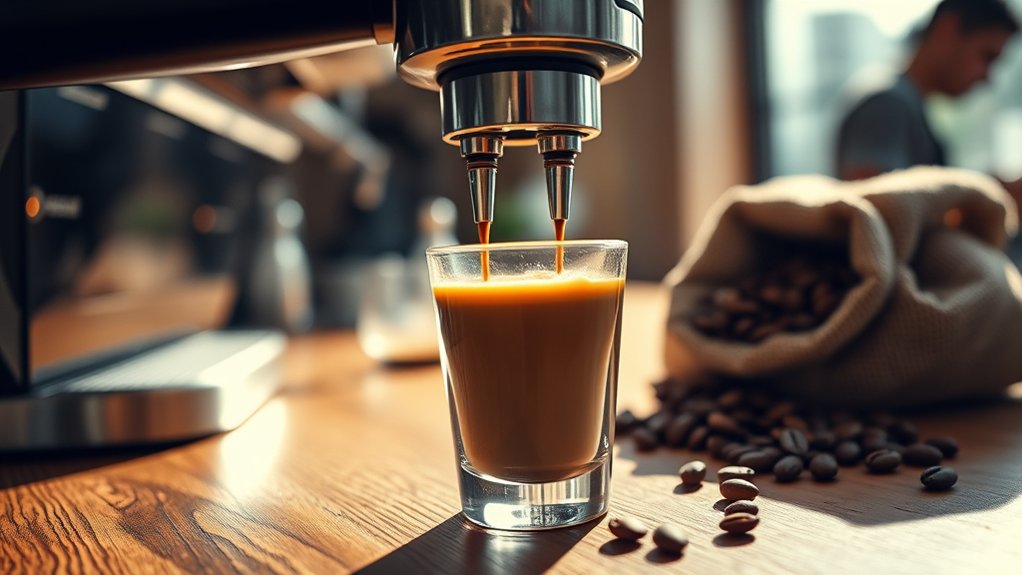
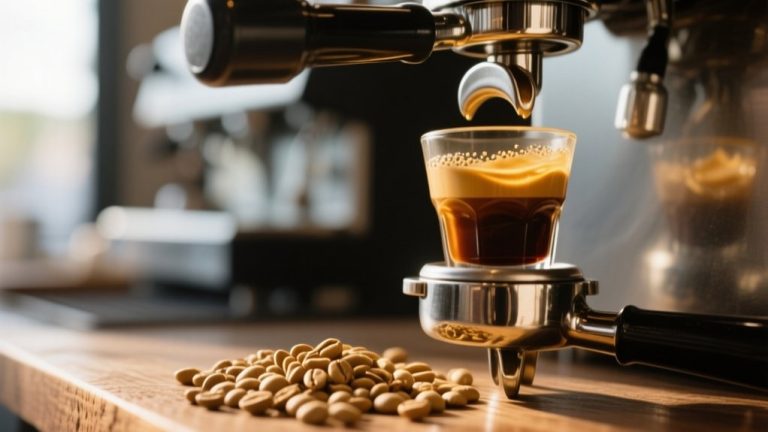
Blonde espresso comes from lightly roasted coffee beans, typically roasted for under 10 minutes at temperatures between 355-400°F. This gives them a light brown color while preserving their natural flavors.
This roasting method highlights floral notes and imparts a smooth body with higher acidity than darker roasts.
You’ll use finely ground beans, often high-altitude Arabica varieties, for the brewing process, requiring precise temperature control.
Extraction time is critical; typically, you’ll extract blonde espresso at 195-205°F for about 20-25 seconds to balance brightness and depth.
Despite its lighter taste, blonde espresso has slightly more caffeine by volume, around 4.7 mg/ml compared to 4.2 mg/ml in regular espresso.
Mastering these details guarantees a refined cup that showcases blonde espresso’s unique profile.
How Does Blonde Espresso Taste Compared To Regular Espresso?
You’ll notice that blonde espresso has a vibrant, crisp flavor with floral and fruity notes.
On the other hand, regular espresso tends to lean into richer, bolder chocolate and nut tones.
Because blonde espresso has higher acidity, it creates a smoother, brighter taste. It can actually feel surprisingly strong, even though it’s lighter.
This difference in flavor profiles really shapes how you perceive the strength of each espresso style.
Flavor Profile Differences
Although it may seem lighter at first sip, this espresso variety delivers a crisp, vibrant flavor with bright citrus and floral notes that set it apart from the bold, chocolatey richness of regular espresso.
Blonde espresso’s lighter roast preserves more of the bean’s natural flavors, resulting in a nuanced flavor profile marked by higher acidity and a sweet, nutty aroma.
In contrast, regular espresso offers smoother, richer, and often bitter notes dominated by bold flavors like chocolate and nuts.
Despite its lighter taste, blonde espresso contains slightly more caffeine per volume, adding complexity without overwhelming intensity.
When you choose blonde espresso, you experience a revitalizing brightness that contrasts distinctly with the heavier, more robust profile typical of regular espresso.
Perceived Strength Variations
The way you perceive espresso strength often depends more on flavor intensity than caffeine content.
Blonde espresso, a lighter roast espresso, presents a brighter flavor profile with pronounced acidity and floral notes. This vibrant acidity, a result of its unique roasting process, can make blonde espresso feel more intense or “stronger” to your palate, despite having similar caffeine content to regular espresso.
Regular espresso, by contrast, offers a deeper, bolder taste featuring nutty and chocolate undertones with a heavier body.
Your sense of perceived strength varies based on whether you favor the crisp, clean finish of blonde espresso or the rich, robust character of regular espresso.
Ultimately, the lighter roast espresso’s nuanced flavor profile shapes how strong you think it tastes, rather than actual caffeine differences.
Does Blonde Espresso Have More Caffeine Than Regular Espresso?
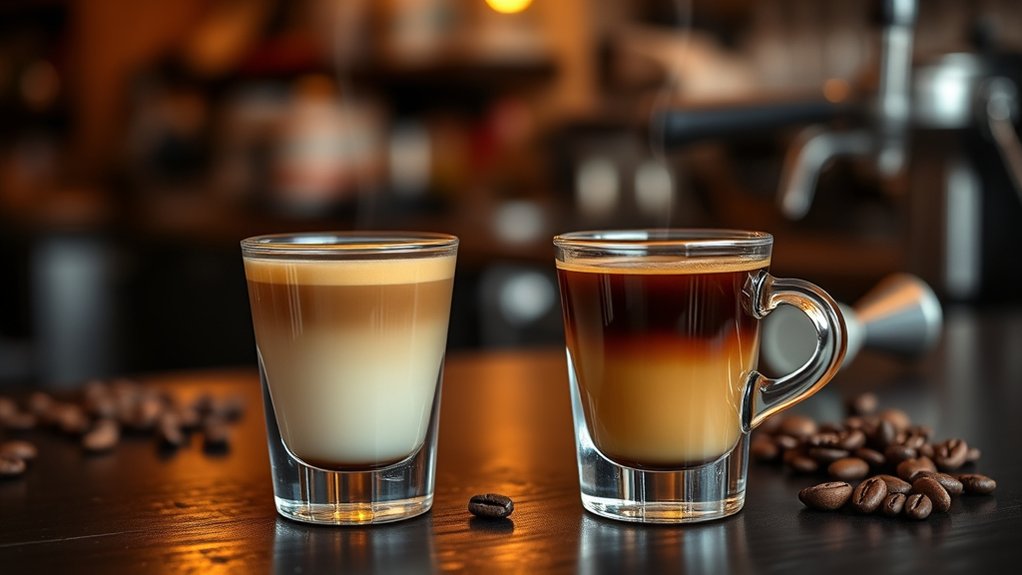
How much caffeine does blonde espresso really pack compared to regular espresso?
Blonde espresso, made from lighter roasts, typically has slightly higher caffeine levels by volume, about 4.7 mg/ml versus 4.2 mg/ml in regular espresso. This difference arises because lightly roasted beans retain more caffeine density.
Blonde espresso has slightly more caffeine per milliliter than regular espresso due to lighter roasting.
However, when measured by weight, caffeine content between blonde espresso and regular espresso is nearly identical, making the difference minimal.
The brewing method, shot size, and grind size influence caffeine levels far more than roast type alone.
While blonde espresso’s brighter flavor profile might make you perceive it as stronger, its caffeine content remains comparable.
Understanding these nuances helps you appreciate how caffeine levels vary more with preparation than bean roast.
Why Blonde Espresso Tastes Stronger Without More Bitterness
You’ll notice that blonde espresso’s bright, floral flavors give you a sense of strength without that heavy bitterness.
Plus, its smooth acidity balances out those vibrant notes, so the shot feels crisp and intense on your palate.
Because of this combo, you get to enjoy a powerful flavor that’s both clean and easy to drink.
Bright Flavor Perception
Why does blonde espresso taste stronger even though it isn’t more bitter? Blonde espresso’s bright acidity and vibrant flavor profile give it a unique perceptual strength.
Being lighter roasted, it preserves the coffee bean’s natural citrus and floral notes, creating a crisp, clean finish.
This bright acidity enhances flavor intensity without adding bitterness, making the taste feel more pronounced. While caffeine levels are slightly higher, the flavor experience dominates your perception of strength.
- Blonde espresso features a lighter roasted profile with vibrant, crisp notes
- Bright acidity amplifies perceived flavor intensity
- Clean finish contrasts with heavier dark roasts
- Slightly higher caffeine levels minimally impact taste perception
- Floral and citrus elements heighten perceptual strength without bitterness
This balance makes blonde espresso taste stronger without bitterness.
Smooth Acidity Balance
Although blonde espresso carries a higher acidity than darker roasts, this acidity is remarkably smooth and well-balanced. It enhances its vibrant flavors without introducing bitterness. Thanks to lighter roasting, it preserves the bean’s natural acidity and floral notes, enriching its complex flavor layers.
This smooth acidity shapes a flavor profile that tastes stronger, even though caffeine levels are similar or only slightly higher. You won’t find the harsh bitterness typical of darker roasts here. This allows you to savor the lively, buttery caramel hints alongside bright, crisp notes.
| Aspect | Blonde Espresso | Dark Roast Espresso |
|---|---|---|
| Acidity | Smooth, vibrant | Low, muted |
| Bitterness | Minimal | Pronounced |
| Flavor Profile | Complex, layered | Rich, heavy |
| Caffeine Levels | Slightly higher or equal | Standard |
Common Misconceptions About Blonde Espresso Strength
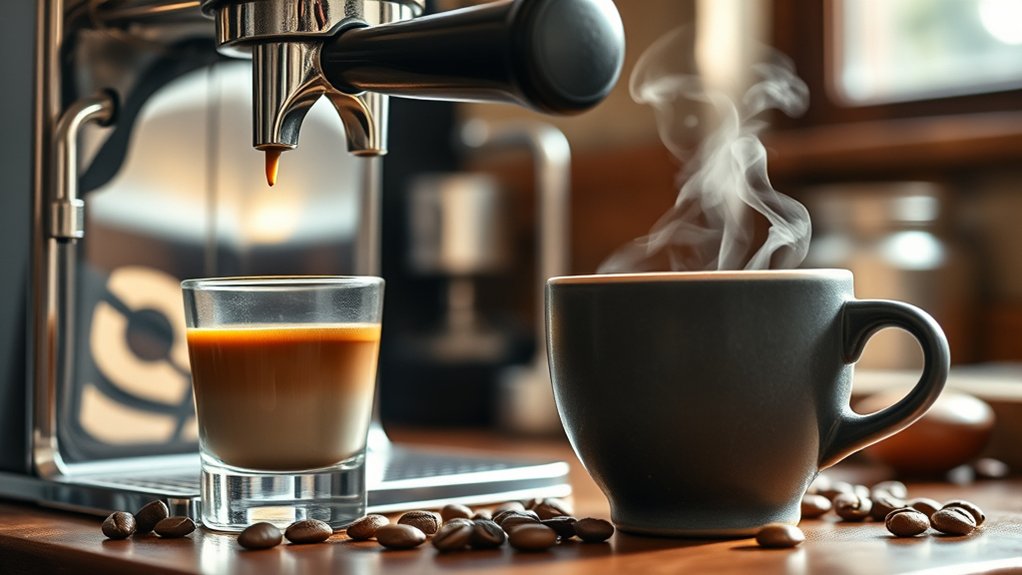
How often have you heard people claim that blonde espresso packs a stronger punch than its darker counterpart? This common misconception arises because blonde espresso’s lighter profile delivers a brighter, more vibrant flavor, not more strength.
Despite containing slightly more caffeine than regular espresso by volume, about 10 mg, the difference is minimal and depends on brewing methods.
Blonde espresso has about 10 mg more caffeine per volume, but the difference is minimal and brewing-dependent.
The roasting process preserves the natural characteristics of roasted coffee beans, resulting in smoother, floral, and citrus notes, unlike the bold bitterness of darker roasts.
Many confuse this nuanced flavor with higher caffeine strength.
- Blonde espresso offers a lighter flavor, not stronger caffeine.
- Caffeine content difference is minimal compared to regular espresso.
- Roasting level influences flavor more than caffeine strength.
- Bright, clean taste contrasts with darker roasts’ bitterness.
- Flavor intensity often mistaken for espresso strength.
Brewing Tips To Balance Blonde Espresso Strength
If you want to balance the strength of your blonde espresso, a good place to start is by adjusting your grind size just a bit finer than usual. This helps boost extraction without making the shot taste bitter.
Next, keep an eye on your extraction time. Aim for around 20 to 25 seconds—that’s usually the sweet spot to bring out the best flavors.
And don’t forget about tamping! Applying consistent pressure ensures the water flows evenly through the grounds, which helps avoid channeling and keeps your espresso nice and strong.
Grind Size Adjustments
When dialing in your blonde espresso, adjusting the grind size plays a critical role in balancing its brightness and acidity. A finer grind size than regular espresso increases surface area, enhancing extraction and complementing blonde espresso’s lighter flavor profile.
To achieve a smooth, flavorful shot, target a grind size that supports a 20-25 second extraction time. Consistent, uniform grind particles guarantee even extraction, preventing over- or under-extraction that could skew perceived strength.
Experiment with grind size alongside other variables, but focus on these key grind size adjustments:
- Use a finer grind than regular espresso for better extraction
- Aim for uniform particle size to stabilize extraction
- Adjust grind size to control brightness and acidity
- Match grind size with desired extraction time (20-25 seconds)
- Fine-tune based on flavor profile feedback during brewing
Optimal Extraction Time
Adjusting grind size sets the stage, but nailing the best extraction time guarantees your blonde espresso achieves its ideal balance of brightness and strength. Aim for a prime extraction time between 20-25 seconds to prevent over-extraction, which often causes sourness.
Use a brewing temperature of 195-205°F to accentuate the bright acidity and floral notes unique to blonde espresso. Since you’re using finely ground coffee, slightly finer than dark roast settings, your espresso machine must be calibrated precisely to maintain consistent extraction times.
Dose 18-22 grams of coffee to pull a balanced shot that highlights nuanced flavor profiles.
Regularly checking your grind size and espresso machine calibration guarantees each shot maintains the delicate strengths and brightness that define a perfect blonde espresso.
Tamping Pressure Techniques
Although blonde espresso features a lighter roast, you’ll want to apply firmer tamping pressure, around 30 pounds, to create a uniform coffee bed that guarantees ideal extraction. This pressure helps prevent channeling and ensures a balanced shot that captures the smooth, floral characteristics unique to blonde espresso.
Adjust your grind size slightly finer to complement this tamping pressure, enhancing extraction and flavor clarity. Consistency in your tamping technique is key because uneven pressure leads to under-extracted, sour notes.
Experimenting with tamping pressure and timing can further refine your brew.
- Apply firm tamping pressure (~30 pounds) for an even coffee bed
- Adjust grind size finer to improve extraction
- Maintain consistent tamping to avoid channeling
- Balance acidity and flavor with precise tamping pressure
- Highlight blonde espresso’s floral characteristics with a balanced shot
How Grind Size And Extraction Time Affect Blonde Espresso
Since grind size and extraction time directly influence the espresso’s flavor, dialing them in for blonde espresso is vital to reveal its unique brightness and clarity.
You should use a grind size slightly finer than for dark roast to optimize extraction and enhance the flavor profile.
Use a grind size slightly finer than dark roast to unlock the best flavor in blonde espresso.
Aim for an extraction time between 20-25 seconds at 195-205°F to balance caffeine release and taste. If your extraction time is too short, under-extraction causes sourness; too long, over-extraction leads to bitterness.
Small adjustments in grind size affect flow rate, so precise calibration is essential during brewing.
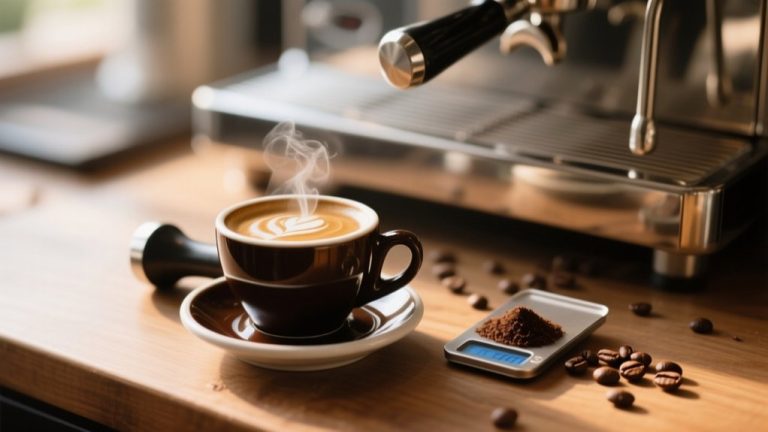
Using a coffee scale and timer helps you maintain consistency, ensuring each blonde espresso shot delivers the vibrant, balanced flavor and caffeine content you expect.
Are Blonde Espressos Healthier? Antioxidants Compared
Beyond optimizing grind size and extraction time for flavor, you might wonder how these factors affect the health benefits of blonde espresso.
Because it’s a lighter roast, blonde espresso preserves more antioxidants, especially chlorogenic acids, which contribute to notable anti-inflammatory benefits.
This higher antioxidant content means you get more health benefits compared to darker roasts, without sacrificing caffeine levels.
The lighter roast also maintains a brighter acidity, enhancing the flavor profile while supporting overall wellness.
Here’s what you should know:
- Blonde espresso retains more antioxidants due to shorter roasting.
- Chlorogenic acids in blonde espresso promote anti-inflammatory effects.
- Lighter roast preserves natural flavor compounds and nutrients.
- Antioxidant levels in blonde espresso surpass dark roasts.
- Its bright acidity complements both taste and health benefits.
Choosing blonde espresso supports both your palate and your wellbeing.
Choosing Blonde Or Regular Espresso For Your Taste And Caffeine Needs
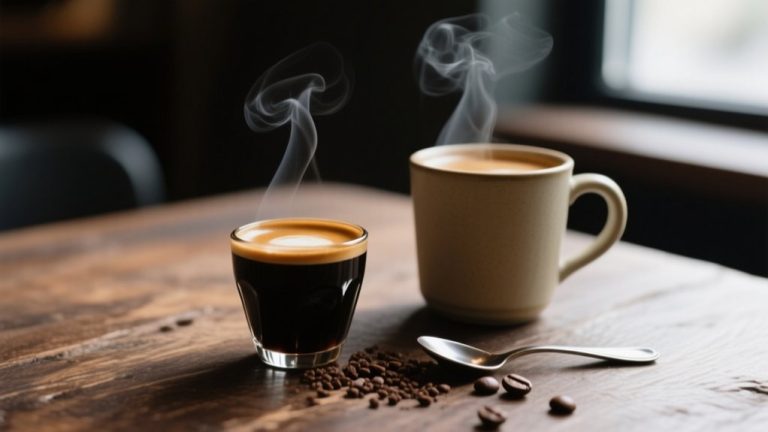
How do you decide between blonde and regular espresso when balancing taste and caffeine needs? Both offer similar caffeine content, with blonde espresso delivering a slightly higher amount by volume. Your choice should hinge on taste preferences and brewing method, which greatly affect caffeine levels.
Blonde espresso features a lighter body and less bitter flavor profile with floral and citrus notes, ideal if you prefer a smoother cup. Regular espresso contains richer, chocolatey tones, appealing if you want a bolder taste.
| Aspect | Blonde Espresso |
|---|---|
| Flavor Profile | Floral, citrus, lighter |
| Body | Lighter |
| Bitterness | Less bitter |
| Caffeine Content | Slightly higher by volume |
Choose based on what suits your palate and caffeine needs best.
Which Espresso Should You Try: Blonde Or Regular?
Which espresso you should try depends largely on your flavor preferences and desired coffee experience.
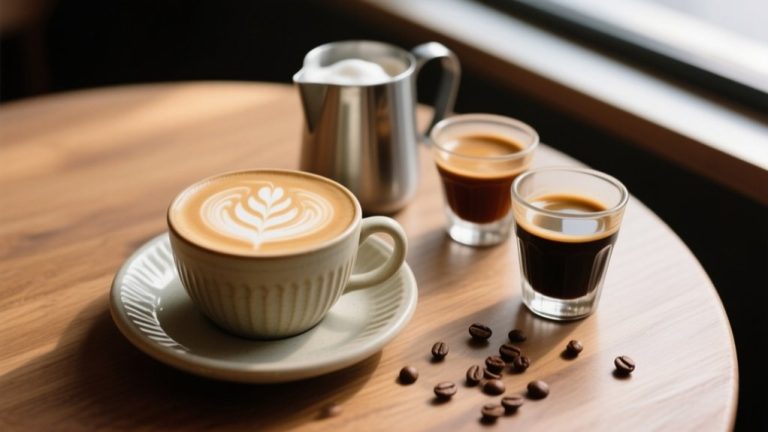
Blonde espresso offers a smoother, brighter flavor profile with floral and fruity notes, while regular espresso delivers a bolder, richer taste with chocolate and nut undertones. Though blonde espresso contains slightly more caffeine by volume, the difference is minimal. Your choice hinges on how you perceive strength, whether that’s flavor intensity or caffeine content.
Blonde espresso is bright and floral, while regular espresso offers bold, rich chocolate and nut flavors with similar caffeine levels.
- Blonde espresso features lighter roast levels and higher acidity
- Regular espresso has a darker roast and fuller body
- Blonde espresso suits coffee drinkers who prefer a nuanced, vibrant taste
- Regular espresso appeals to those favoring robust, intense flavors
- Caffeine differences between them are minor and unlikely to affect strength perception
Ultimately, select the espresso aligning with your taste and strength preferences.
Frequently Asked Questions
Can Blonde Espresso Be Used in Iced Coffee Recipes?
Yes, you can definitely use blonde espresso in iced coffee recipes. Its bright flavor profiles and slightly higher caffeine content make it ideal for iced coffee variations.
By adjusting brewing techniques, you highlight its floral notes and acidity, which contrast nicely with cold ingredients.
Coffee shop trends embrace blonde espresso for taste comparisons and serving suggestions, often pairing it with sweeteners or milk alternatives to craft vibrant, invigorating drinks.
How Does Water Temperature Affect Blonde Espresso Extraction?
Oh, sure, just ignore water temperature and hope for the best. Your blonde espresso will taste like burnt disappointment!
You’ve got to nail that water temperature to control extraction time and reveal the subtle flavor profile tied to bean origin.
Too hot, and acidity levels spike, wrecking taste balance.
Too cool, and caffeine content dips.
Adjust brewing methods precisely, or your shot won’t highlight those delicate floral notes blonde espresso is famous for.
Is Blonde Espresso More Expensive Than Regular Espresso?
Yes, blonde espresso usually costs more than regular espresso. The price difference reflects the bean selection, often coming from unique origins like Central America or East Africa, which changes the flavor profile.
Brewing blonde espresso requires precision because baristas need to manage delicate extraction to highlight its nuanced tastes.
Consumer preferences and market trends favor lighter roasts, which drives demand and price.
Baristas also mention the extra care needed when preparing blonde espresso, which helps justify the premium cost.
Can Blonde Espresso Be Combined With Dark Roast in One Shot?
Combining blonde espresso flavor with dark roast compatibility in one shot is like releasing a flavor explosion in your cup.
Espresso shot blending lets you explore flavor profile differences, balancing the bright, fruity notes of blonde with the rich, bold depth of dark roast.
You’ll want to master brewing techniques comparison, tweaking grind and tamp for perfect extraction.
Roast level impact and caffeine content analysis reveal how this mix suits your taste preference variations beautifully.
How Does Milk Frothing Differ With Blonde Espresso?
When frothing milk with blonde espresso, you’ll notice the milk texture becomes creamier thanks to its acidity, enhancing crema quality.
Its delicate flavor profile demands gentler frothing techniques. Use a lower steaming time and temperature (around 140-150°F) to preserve sweetness balance and avoid bitterness.
This temperature sensitivity helps highlight blonde espresso’s natural floral notes, improving drink aesthetics and flavor clarity.
Conclusion
When deciding between blonde and regular espresso, remember that strength isn’t just about caffeine. It’s about flavor depth and personal preference. Blonde espresso offers a gentler wake-up call with a bright, nuanced profile that might surprise you without overwhelming bitterness.
So if you’re seeking a smooth yet lively experience, give blonde a try. It’s a subtle but confident choice that respects your palate and keeps your caffeine fix comfortably invigorating.