Why Is My Espresso Bitter – Common Causes And Fixes
Your espresso tastes bitter because you’re likely over-extracting, using too fine a grind, or brewing at too high a temperature. Bitter shots often result when water flows slowly through tightly packed coffee, or when dark, stale beans pull harsh flavors.
Uneven tamping and dirty equipment can worsen bitterness, too. Adjust your grind coarser, maintain proper temperature, and keep your machine clean for smoother shots. If you want to get closer to espresso perfection, there’s more to explore.
Why Does My Espresso Taste Bitter?
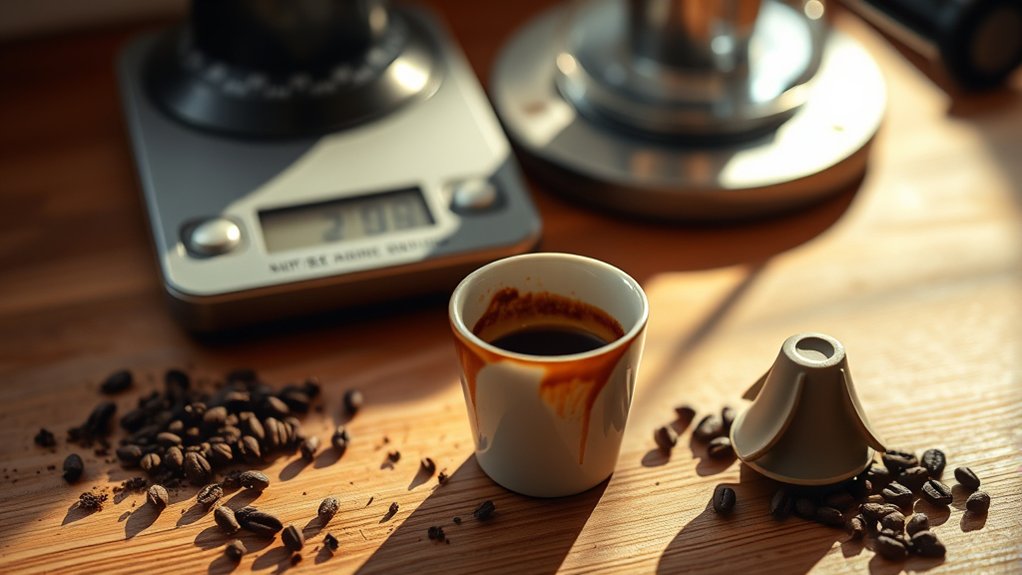
If your espresso tastes bitter, it’s likely due to over-extraction. That’s when water stays in contact with the coffee grounds too long and pulls out harsh compounds. This often happens when you use too fine a grind. It restricts water flow and prolongs espresso extraction, resulting in a bitter espresso.
Bitter espresso usually means over-extraction caused by too fine a grind slowing water flow.
Maintaining the right grind size, which should be slightly coarser, helps water flow evenly and reduces bitterness.
Also, watch your brewing temperature. Water hotter than 205°F can scorch the grounds and intensify bitter flavors.
Using fresh, medium-roasted beans is essential. Stale or dark-roasted beans tend to amplify bitterness.
Uneven tamping or grind distribution causes channeling, which leads to inconsistent extraction and bitterness.
How Over-Extraction Causes Espresso Bitterness
When you let your espresso extract for too long, it ends up pulling out bitter compounds that mess with the flavor.
So, it’s easy to overdo it without realizing.
Also, if your grind is too fine, it slows down the water flow, which makes over-extraction even more likely.
Paying attention to these little details can help you dodge that bitterness and enjoy a nicely balanced shot every time.
Extraction Time Impact
Because water lingers too long on coffee grounds during extraction, you end up pulling bitter compounds that ruin your espresso’s balance.
Extraction time plays a vital role in how your espresso tastes. If it exceeds 30 seconds, you risk over-extraction, which brings out harsh bitterness and masks the coffee’s natural sweetness and acidity.
Ideally, you want to keep your extraction time between 25 to 30 seconds to achieve a harmonious flavor profile.
Factors like water temperature, which should stay below 205°F, and the coffee dose affect this timing.
If your espresso tastes bitter, check your extraction time first. It’s often the culprit.
Adjusting your setup to maintain the correct extraction time will help you avoid bitterness and enjoy a smoother, well-balanced espresso shot.
Grind Size Role
Extraction time and grind size work hand in hand to shape your espresso’s flavor.
When your grind size is too fine, the increased surface area slows water flow, causing over-extraction. This means water spends too long in contact with the grounds, pulling out bitter compounds that make your shot harsh and unpleasant.
Ideally, your espresso should extract within 20-30 seconds. If it consistently takes longer and tastes bitter, try adjusting to a coarser grind size to improve flow and prevent extracting those harsh flavors.
Also, check your tamping pressure and regularly calibrate your grinder to match your coffee’s roast and freshness.
Managing grind size effectively helps you avoid bitterness and enjoy a balanced, smooth espresso every time.
Water Flow Restriction
How does water flow restriction turn your espresso bitter? When water flow restriction happens, water lingers too long on the coffee grounds, causing over-extraction. This means bitter compounds get pulled out, ruining your espresso’s balance.
Overly fine grind size or tamping too tightly often causes this restriction, extending extraction beyond the ideal 20-30 seconds. If extraction drags on, bitterness intensifies.
Also, water hotter than 205°F (96°C) can worsen over-extraction by drawing out harsh flavors.
To fix this, adjust your grind size coarser or tamp lighter to improve flow. Regularly clean your espresso machine to prevent blockages that restrict water flow.
Why Water Temperature Affects Espresso Bitterness
You want to keep your water temperature between 195°F and 205°F.
If it gets too hot, it starts pulling out bitter compounds from your espresso. That’s what ruins the balance and gives you those harsh flavors.
To avoid this, try flushing your machine before brewing and consider using a PID controller.
These little tricks help you maintain the perfect temperature and keep bitterness at bay.
Optimal Brewing Temperature Range
Although it might seem subtle, water temperature plays an essential role in shaping your espresso’s flavor. The ideal brewing temperature range is between 195°F and 205°F (90.5°C to 96°C). Staying within this window helps you extract sweet, balanced flavors while minimizing bitterness.
If the temperature’s too high, you risk over-extraction, which brings out unwanted bitter compounds. Keep in mind, different coffee beans may require slight temperature tweaks for the best results. Using a PID controller or flushing your machine before brewing stabilizes temperature, ensuring a smooth extraction and less bitterness.
| Temperature (°F) | Extraction Effect | Flavor Outcome |
|---|---|---|
| Below 195 | Under-extraction | Sour, weak |
| 195-205 | Ideal extraction | Balanced, sweet |
| Above 205 | Over-extraction | Bitter, harsh |
Effects Of Excess Heat
When water temperature exceeds 205°F (96°C), it causes over-extraction that pulls out bitter compounds from your espresso grounds. This happens because higher water temperature increases the solubility of these bitter compounds, making your espresso taste harsh and unpleasant.
To avoid this, aim to keep your water temperature within the ideal range of 195°F to 205°F (90.5°C to 96°C). Staying within this range helps you extract balanced flavors without turning your espresso bitter.
It’s also important to maintain consistent water temperature throughout the brewing process to prevent fluctuations that can cause uneven extraction.
Temperature Control Techniques
Because water temperature directly influences the extraction process, controlling it’s vital to prevent bitterness in your espresso. Ideal brewing temperatures range between 195°F and 205°F, balancing flavors without extracting bitter compounds.
Using effective temperature control techniques helps you maintain this range consistently. A PID controller is invaluable here. It precisely regulates water temperature, avoiding fluctuations that cause over-extraction and bitterness.
Before brewing, flushing your espresso machine stabilizes the water temperature and prevents residual heat from affecting your shot.
Furthermore, adjusting the temperature based on your bean type and roast level is essential. Darker roasts need slightly lower temperatures to avoid bitterness.
How Grind Size Affects Espresso Bitterness
If you want to avoid bitterness in your espresso, paying close attention to grind size is essential. The grind size directly impacts extraction time and flavor balance. Too fine, and you risk over-extraction, which leads to bitterness. Too coarse, and you might under-extract, losing flavor depth.
Here’s what you should remember about grind size and bitterness:
- A grind that’s too fine increases resistance, causing over-extraction and bitter flavors.
- Channeling can happen with very fine grinds, leading to uneven extraction and bitterness.
- Adjusting to a slightly coarser grind improves water flow, promoting balanced extraction and reducing bitterness.
Fine-tuning your grind size helps you control bitterness and enjoy a smoother espresso every time.
How Coffee Roast And Freshness Influence Bitterness
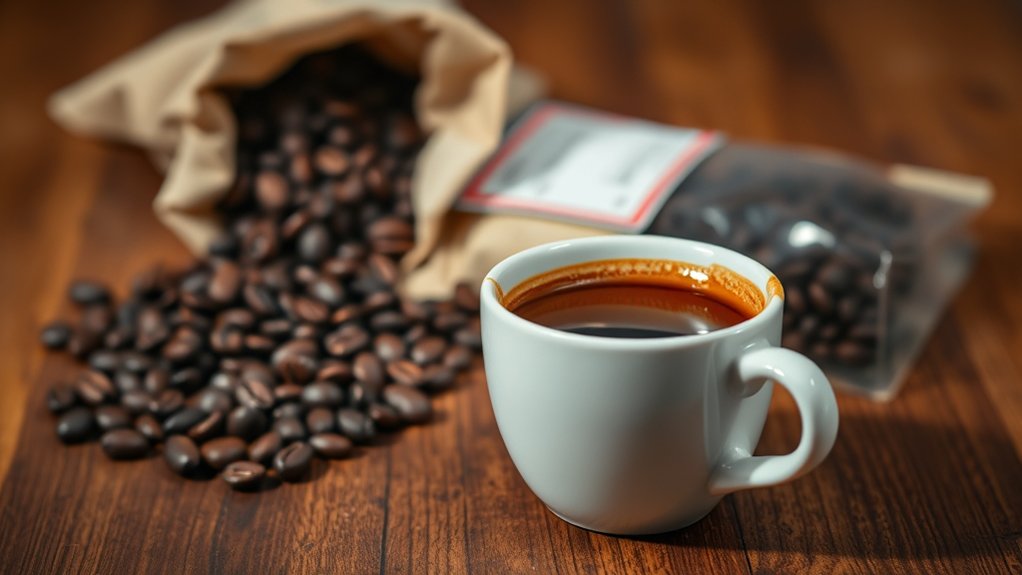
You’ll notice that darker roasts often bring more bitterness because the sugars break down and burnt flavors take over.
So, if you like your coffee less bitter, you might want to steer clear of really dark roasts. Using fresh coffee beans is key too—ideally within a month of roasting.
That way, the flavor stays balanced and doesn’t get too bitter. On the other hand, if your beans are stale or over-roasted, bitterness can easily overpower your espresso, making it less enjoyable.
Roast Level Impact
While the roast level plays a major role in shaping your espresso’s flavor, it also directly influences its bitterness. Darker roasts break down sugars and develop bitter compounds, making your espresso more bitter.
Lighter roasts preserve acidity, which can balance bitterness but may taste sour if under-extracted. Medium roasts often provide a balanced flavor without too much bitterness or acidity.
Consider these key points about roast level and bitterness:
- Dark roasts increase bitterness and can add smoky notes.
- Medium roasts offer a smoother, balanced taste with less bitterness.
- Lighter roasts retain acidity, which helps counter bitterness but requires careful brewing.
Understanding roast level helps you control bitterness and enjoy a well-rounded espresso.
Freshness And Bitterness
Because coffee freshness plays an essential role in flavor, using beans within 3-4 weeks of their roast date helps prevent bitterness from developing. When you use stale coffee, the volatile compounds that add sweetness and acidity fade, leaving behind a flat, bitter taste.
As beans age, water extracts more bitter compounds during brewing, upsetting the flavor balance. Dark roasts, already prone to bitterness due to longer roasting, can taste even harsher if the beans aren’t fresh.
To keep bitterness in check, choose fresher beans and consider medium or light roasts. They preserve more natural sweetness and acidity.
Paying attention to freshness guarantees your espresso stays vibrant and well-balanced, avoiding the harsh bitterness stale coffee often brings.
How Dirty Equipment Causes Bitter Espresso
If you neglect regular cleaning, your espresso machine and grinder will accumulate coffee oils and residues that turn your espresso bitter.
Neglecting regular cleaning leads to oily residue buildup that makes your espresso taste bitter.
Dirty espresso equipment disturbs the balance of flavors, making your shots unpleasant. To keep bitterness at bay, focus on proper cleaning and maintenance.
Here’s what you need to do:
- Backflush your machine weekly with Cafiza if you use it heavily, preventing buildup in the group head.
- Keep your portafilter and shower screen spotless to guarantee even water flow and avoid uneven extraction.
- Clean your grinder every couple of months with Grindz and disassemble the burrs to remove stale coffee particles.
How To Adjust Your Espresso Dose To Reduce Bitterness
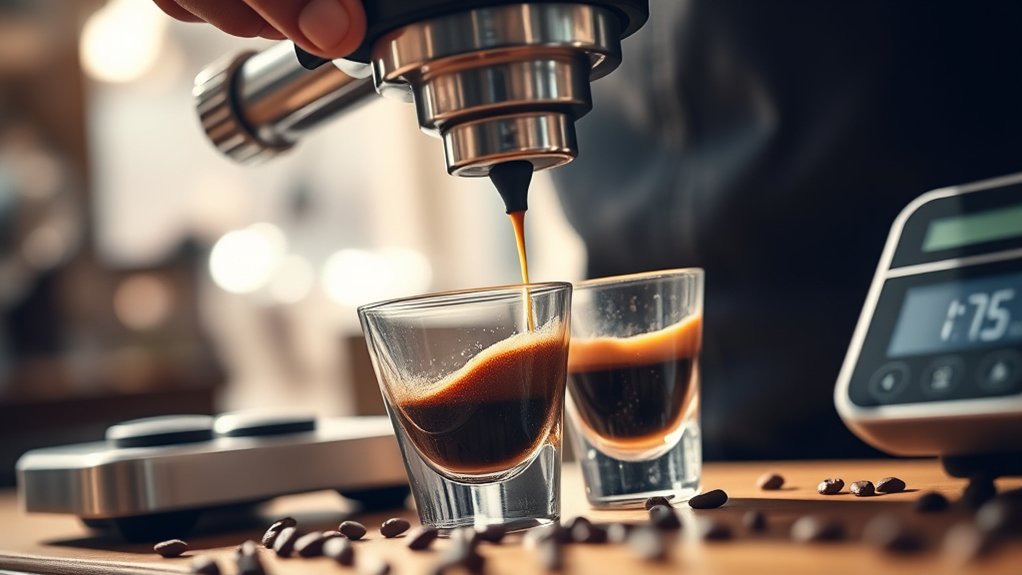
When bitterness creeps into your espresso, adjusting the coffee dose can make a significant difference. Start by reducing your espresso dose by 0.5 to 1 gram to lower extraction pressure, which often helps minimize bitterness.
A standard double shot uses 18-20 grams of coffee, so try dialing in within that range to find the right balance.
Keep an eye on extraction times; shots lasting over 30 seconds usually signal over-extraction, which you can correct by reducing the dose.
Experiment with different doses since some beans respond better to slightly more or less coffee.
Always use a calibrated scale to guarantee consistent dosing. Uniform shots make it easier to troubleshoot and reduce bitterness effectively.
Fine-tuning your espresso dose is key to smoother, less bitter espresso.
How To Fix Channeling And Uneven Extraction
Several factors can cause channeling and uneven extraction, leading to a bitter espresso shot.
Channeling happens when water takes the easiest path through the coffee puck, causing inconsistent espresso taste and often spraying from the portafilter.
To fix this, focus on these key steps:
- Use the Weiss Distribution Technique (WDT) to evenly spread grounds before tamping. This helps prevent water from bypassing dense spots.
- Tamp evenly with about 30 lbs of pressure to create a uniform coffee bed. This minimizes the chances of channeling.
- Make sure your basket is properly filled. Too little coffee can damage the puck and make channeling worse.
Also, keep your brew group and portafilter clean by regularly backflushing and scrubbing.
This avoids residue buildup that can affect extraction quality.
How Water Quality Impacts Espresso Bitterness
Because water makes up the majority of your espresso shot, its quality plays a vital role in shaping the flavor. Hard water with high mineral content can pull out unwanted bitter compounds from your coffee grounds, intensifying bitterness.
Ideally, your water should have a balanced mineral composition with about 150-300 mg/L of total dissolved solids (TDS) to guarantee ideal extraction.
Tap water often contains chlorine and other chemicals that can add off-flavors and increase bitterness.
Using softened water might reduce minerals too much, causing under-extraction and a sour taste if not carefully managed.
Regularly testing and adjusting your water quality helps you maintain consistent flavor and minimize bitterness in every espresso shot you pull.
Paying attention to water is essential for a balanced, enjoyable espresso.
Using Taste To Perfect Your Espresso Shots
How can you tell if your espresso shot is just right? It all comes down to taste. You want a balanced flavor featuring sweetness, acidity, and minimal bitterness.
The perfect espresso shot balances sweetness, acidity, and just a touch of bitterness for a delicious taste.
Focus on your brew time. Aim for 20 to 30 seconds to avoid over-extraction because that causes bitterness. Use taste testing to guide your adjustments.
Here’s how you can perfect your espresso shots:
- If your espresso tastes bitter, try a coarser grind to improve water flow and reduce over-extraction.
- Keep water temperature between 195°F and 205°F to prevent extracting too many bitter compounds.
- Regularly cup your espresso to detect bitterness and tweak grind size, brew time, or coffee-to-water ratio accordingly.
Frequently Asked Questions
Can Milk or Sugar Mask Espresso Bitterness?
Yes, you can mask espresso bitterness with milk or sugar. Adding milk, especially whole or steamed, brings creaminess that softens bitterness.
If you prefer, try milk alternatives like almond or oat milk. They create unique flavors that might reduce bitterness too.
Sugar boosts sweetness levels, balancing the harsh notes and making your espresso taste smoother.
Keep experimenting with different milk options and sweetness levels until you find the perfect blend for your palate.
Does Espresso Bitterness Affect Caffeine Content?
No, espresso bitterness doesn’t affect caffeine content. During caffeine extraction, caffeine is drawn out early in the brewing process, so even if your shot tastes bitter due to over-extraction, the caffeine amount stays pretty consistent.
What bitterness really impacts is flavor balance, not caffeine levels.
How Does Tamping Pressure Influence Bitterness?
Tamping pressure directly influences bitterness by affecting how water flows through your coffee grounds. If your tamping technique is too light, water channels unevenly, causing under-extraction and sour flavors.
But if it’s too hard, water struggles to pass, leading to over-extraction and bitterness.
Adjusting your grind size alongside consistent tamping guarantees balanced extraction, preventing bitter shots.
Using a calibrated tamper can help you maintain the right pressure every time.
Can Using Different Espresso Machines Change Bitterness?
Yes, different espresso machine types can definitely change bitterness in your shot.
Machines with better temperature control and consistent pressure help you manage extraction time more precisely, preventing over-extraction that causes bitterness.
If your machine allows you to adjust settings like pressure and temperature, you can fine-tune extraction time to get a smoother flavor.
Is Bitterness in Espresso Harmful to Health?
Bitterness in espresso isn’t harmful to your health. While bitterness causes include compounds like caffeine and chlorogenic acids, these actually have antioxidant properties that might benefit you.
The health implications of drinking bitter espresso are generally positive when consumed moderately, possibly lowering risks of diseases like Parkinson’s and Type 2 diabetes.
Conclusion
Bitter espresso ruining your morning? It’s often a sign your extraction, grind, or water needs tweaking. By adjusting grind size, dialing in the dose, or checking water temperature and quality, you can reveal smoother, balanced shots.
Remember, even small changes make a big difference. So, why settle for bitter when a perfect, rich espresso is just a few adjustments away? Keep tasting and refining. Your ideal shot is within reach.