How Much Is A Shot Of Espresso – Average Cost And Price Guide
A single shot of espresso typically costs you between 29 cents and 37 cents in raw coffee value, but prices usually range from $2 to over $5 depending on bean quality, location, and café expenses.
Higher-grade or ethically sourced beans, skilled barista labor, and urban overhead push prices up. Your coffee’s flavor and your café’s costs all play a role.
If you want to understand how these factors shape your espresso’s final price, keep exploring what goes into that perfect shot.
What Is the Average Cost of a Single Espresso Shot?
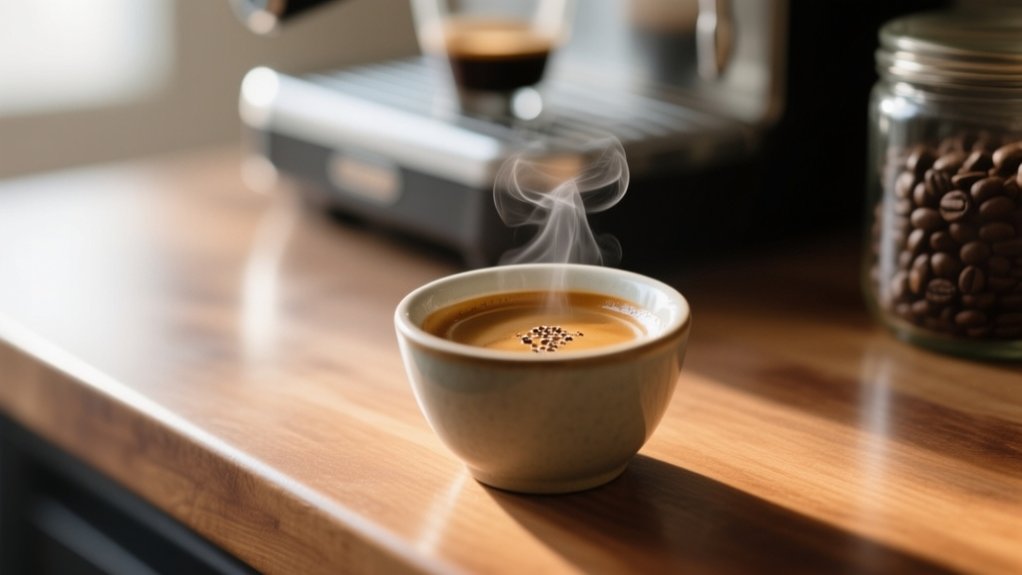
When you order a single shot of espresso, you can typically expect to pay between $0.29 and $0.37. This depends largely on the coffee’s quality and the pricing strategy of the café. The average cost reflects factors like the 7 grams of coffee used per shot and the café’s overhead expenses.
The raw coffee cost per shot is around $0.20, based on roughly 50-58 shots per pound. But the total cost also includes labor, equipment, and location-specific market conditions.
The raw coffee cost per shot is about $0.20, but total costs include labor, equipment, and location factors.
Urban cafés may charge considerably more, sometimes up to $5.60 per shot, due to higher operating costs.
Understanding these variables helps you grasp why the cost per espresso shot varies. It gives you insight into what influences the total cost you pay for your daily caffeine fix.
How Does Espresso Shot Size Affect the Cost Per Cup?
Although the average cost of a single espresso shot falls between $0.29 and $0.37, the size of the shot you order directly impacts the cost per cup. A standard shot uses about 7 grams of coffee, but when you opt for a double shot, you’re consuming roughly 17 to 20 grams.
This increase in coffee quantity raises the cost per shot of espresso and, consequently, the cost per cup you pay. Moreover, factors like up to 15% coffee wastage can further influence pricing.
Understanding how shot size affects dosing helps cafes set accurate prices and manage expenses.
What Factors Influence Espresso Pricing?
You’ll notice that espresso pricing breaks down into a few key cost components like labor, ingredients, and equipment.
On top of that, prices can vary quite a bit depending on market factors and location. For example, urban shops often charge more because their overhead costs are higher.
When you understand these influences, it’s easier to see why a shot of espresso can cost anywhere from under a dollar to over five.
Cost Components Breakdown
Because several factors come into play, understanding what influences the cost of a shot of espresso can help you appreciate its price.
The cost per shot of espresso depends heavily on the coffee beans used, which typically cost around $12.80 per pound for premium quality. Since one pound yields about 50-58 shots, the raw ingredient cost is a significant component.
However, you also need to take into account labor, overhead, equipment maintenance, and even wastage during preparation, which can be 10-15%.
These operational costs, combined with the level of customer service provided, add to the final price you pay.
Geographic location further influences pricing, as urban areas often have higher expenses, pushing the cost per shot slightly upward.
Understanding these components helps you see why espresso prices vary.
Market Pricing Variability
When you look at espresso prices across different locations, you’ll notice a wide range, typically from $2 to $6 per shot. Several factors influence this variability. The cost of high-quality beans, averaging about $12.80 per pound, directly affects espresso prices.
Coffee shops invest heavily in espresso machines and skilled baristas. Their labor adds to the cost per shot of espresso. Location plays a role too. Urban areas often have higher overhead than rural spots.
Seasonal fluctuations in coffee crop yields impact supply, causing price shifts. Furthermore, consumer demand for specialty options like flavored syrups or alternative milks can push prices higher.
Understanding these elements helps you see why a shot of espresso doesn’t have a fixed price but reflects a complex market dynamic.
How Does Coffee Bean Quality Affect Espresso Shot Costs?
You’ll notice that the grade of coffee beans plays a big role in how much an espresso shot costs. Specialty beans tend to be pricier compared to the more common, commodity options.
Then there’s the roast level—it changes the flavor and even how much coffee you get from each batch. All of this affects the cost per shot.
When you understand these factors, it’s easier to see why high-quality beans usually come with a higher price tag. But at the same time, they often deliver a richer, more enjoyable coffee experience.
Bean Grade Impact
Three key factors drive the cost of an espresso shot: bean quality, origin, and processing. When you choose higher-grade beans, expect to pay between $12.80 to $20 per pound. This translates to a higher cost per ounce and ultimately a pricier shot of espresso.
Premium beans, often used in specialty coffee shops, can push the price to an average of $4.36 per shot of espresso. In contrast, lower-grade beans reduce costs but sacrifice flavor complexity and aroma.
Organic or ethically sourced beans add to the cost due to certification and sustainable farming practices. Single-origin beans also influence price per ounce because of their unique profiles and limited availability.
Understanding bean grade impact helps you appreciate why some espresso shots cost more and deliver richer taste experiences.
Specialty vs Commodity
Although both specialty and commodity coffee beans can produce espresso shots, the quality difference directly impacts the cost you pay. Specialty beans, often sourced through meticulous methods from specific regions, come with unique flavor profiles that commodity beans lack.
These premium beans typically cost between $12.80 and $20.00 per pound, nearly doubling commodity prices, which hover around $5.00 to $10.00 per pound.
Because specialty espresso demands precise brewing techniques and skilled preparation, the labor and equipment costs also rise.
While both bean types yield similar shot quantities per pound, specialty shots command higher retail prices, averaging $5.60, reflecting their superior taste and quality.
Understanding how sourcing methods and brewing impact flavor helps explain why you pay a premium for specialty espresso over commodity alternatives.
Roast Level Effects
Because roast level directly influences bean quality and flavor complexity, it plays an essential role in determining the cost of your espresso shot.
Lighter roasts, prized for their nuanced flavors, demand higher-quality beans, often increasing costs due to careful sourcing and processing.
Meanwhile, darker roasts use premium beans that create rich, robust shots but can also elevate wholesale prices.
This roast level influence shapes consumer preferences, as many are willing to pay more for espresso showcasing unique single-origin profiles or enhanced aroma.
Specialty coffee shops capitalize on this by charging premiums reflecting the distinct flavor complexity different roast levels offer.
Ultimately, the quality linked to roast level drives price variations, with high-quality espresso shots averaging between $0.29 and $0.37, balancing bean cost and preparation wastage.
Why Do Equipment and Labor Costs Matter for Espresso Pricing?
Understanding the impact of equipment and labor costs is essential when you consider the price of a shot of espresso. Espresso machine maintenance and barista training costs are significant expenses that coffee shops must factor in.
Skilled labor guarantees quality shots, but wage fluctuations and ongoing training demand pricing strategy adjustments. Efficient use of equipment reduces waste, improving profitability.
| Cost Factor | Impact on Pricing | Notes |
|---|---|---|
| Espresso Machine | High initial & upkeep | Essential for consistent quality |
| Labor (Barista Training) | Variable and ongoing | Directly affects shot quality |
| Pricing Strategy Adjustments | Reacts to cost changes | Balances profit and customer value |
How Do You Calculate Your Espresso Cost at Home?
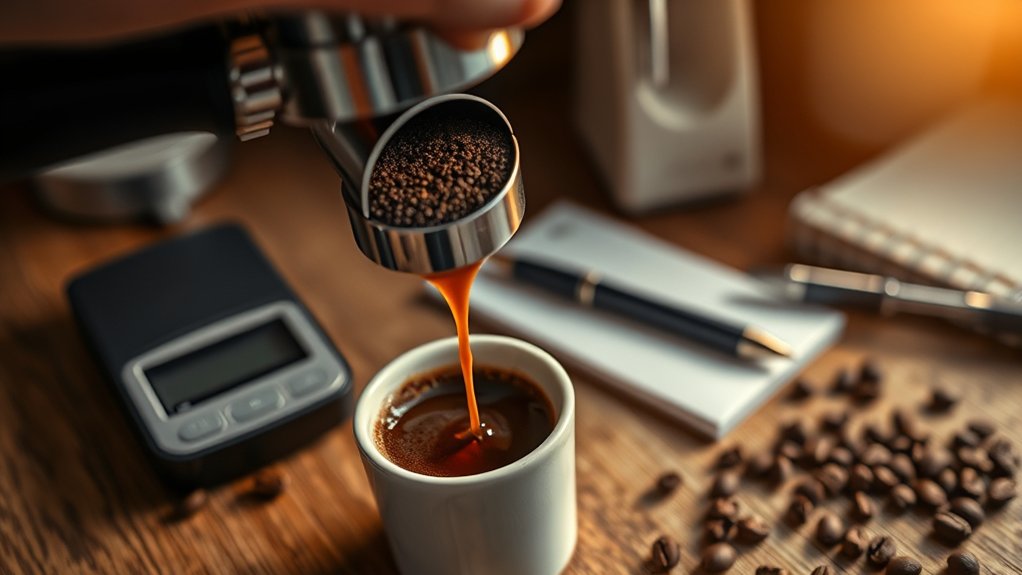
To figure out how much your espresso costs at home, start by measuring your coffee dose carefully—usually about 7 grams for a single shot. This helps keep things consistent and avoids wasting coffee.
Then, take a look at the cost of your coffee beans and think about how many shots you can get from a pound. This way, you can work out the price per shot pretty easily.
And don’t forget to include other costs like water and energy. When you add those in, you’ll get a clearer idea of what each espresso really costs you.
Measuring Coffee Amount
Calculating your espresso cost at home starts with measuring your coffee accurately, typically about 7 grams per single shot. Mastering this step guarantees you control your brew and expenses effectively.
Here are key coffee measurement tips to help:
- Use a precise espresso scale to weigh your coffee, avoiding overfilling and wastage.
- Adjust for 10-15% coffee loss during grinding and tamping for realistic cost tracking.
- For double shots, measure between 17-20 grams, noting the proportional cost increase.
- Regularly monitor your measurements to maintain consistency and maximize brewing accuracy benefits.
Calculating Ingredient Costs
One key step in figuring out your espresso cost at home is breaking down each ingredient’s expense, starting with coffee beans. With coffee priced around $12.80 per pound, each shot using 7 to 20 grams costs roughly $0.20.
Weigh your coffee precisely with a gram scale to avoid waste. This is an essential detail in espresso preparation techniques.
Don’t forget to factor in water, equipment upkeep, and labor, which add to your total.
If you enjoy flavor pairing suggestions like syrups or alternative milks, include those costs too.
Proper coffee storage tips will help maintain bean freshness, guaranteeing flavor and minimizing losses.
Tracking every element guarantees you know exactly what you spend per shot, giving you a clear, accurate espresso cost at home.
How Does Location Influence Espresso Pricing?
How much you pay for a shot of espresso often depends on where you are. Location influences pricing through several factors:
- Urban density increases costs. Higher rent and labor in cities like Los Angeles push prices up, with espresso shots averaging around $5.60.
- Local competition shapes pricing strategies. Specialty shops in affluent areas charge premiums to meet consumer preferences for quality and ambiance.
- Geographic access to coffee beans affects cost. Regions with fresher or higher-grade beans can offer better or more expensive espresso.
- Consumer demand for artisanal coffee experiences drives prices higher in coffee-centric communities valuing craft and uniqueness.
Understanding these elements helps you appreciate why espresso prices vary considerably between neighborhoods and cities.
What Are Tips to Lower Espresso Costs Without Sacrificing Quality?
Although espresso quality is paramount, you can lower costs by focusing on precise dosing and machine maintenance. Use a gram scale to measure coffee accurately, reducing waste and ensuring consistent espresso quality.
Regularly calibrate your machine to optimize extraction efficiency, which enhances flavor and cuts down on excess coffee use. Explore cost-saving strategies by sourcing high-quality blends that produce more shots per pound, especially when buying in bulk.
Train your staff on proper grinding and tamping to avoid over-extraction, maintaining both taste and cost-effectiveness.
Furthermore, monitor ingredient sourcing for milk and flavorings, considering local or seasonal options that keep costs down without sacrificing quality.
These steps help you balance cost control with exceptional espresso quality.
What Is the Cost Breakdown of Espresso Drinks?
Keeping espresso quality high while managing costs naturally leads to examining the detailed expenses behind each drink.
When you break down the cost of espresso drink variations, several factors come into play:
- Coffee Beans: A single shot costs around $0.20 to $0.37 depending on bean quality and shot size.
- Milk and Flavorings: Adding milk and flavoring options, like in a flavored latte, raises the cost to about $0.89.
- Serving Supplies: Cups, lids, and stirrers add to the total expense.
- Serving Styles: Double shots use more coffee, increasing costs compared to single shots.
Understanding these components helps you price drinks competitively while offering diverse espresso serving styles that customers enjoy.
How Does Espresso Pricing Impact Coffee Shop Profit Margins?
Since espresso forms the foundation of many coffee shop menus, pricing it correctly directly influences your profit margins.
With espresso costing between $0.20 and $0.37 per shot and wastage rates reaching 15%, you need smart markup strategies to maintain a food cost percentage around 30-35%.
Pricing psychology plays a key role here; customers often associate higher prices with quality.
Balancing customer perception with competitive pricing guarantees you don’t undercut your revenue.
Location impacts average prices too, with shots averaging $4.36, so adjusting your pricing strategy accordingly is essential.
Frequently Asked Questions
Can I Reuse Espresso Grounds to Reduce Costs?
You can reuse espresso grounds, but it’s not ideal for maintaining quality.
Espresso extraction methods rely on fresh grounds and proper coffee grind size to extract peak flavors.
Reusing grounds leads to significant flavor profile differences. Your second shot will taste weak and bitter.
Instead, focus on adjusting grind size or experimenting with extraction time to improve cost-efficiency without sacrificing taste.
Reusing grounds compromises your espresso’s richness and won’t save much money.
How Long Does a Shot of Espresso Stay Fresh?
Like a telegram from the past, your shot of espresso delivers its message best within 30 seconds to 1 minute for peak flavor.
Espresso freshness tips emphasize avoiding delays since crema fades after 10 minutes.
For ideal storage methods, keep it sealed at room temperature, away from light, but don’t refrigerate because it alters the taste.
Espresso shelf life tops at 24 hours in a cool, dark place, but brewing fresh each time guarantees the best experience.
What Is the Environmental Impact of Espresso Production?
Espresso production impacts the environment considerably, mainly through water usage and coffee farming practices.
You’ll find that conventional coffee farming often leads to deforestation and water pollution.
However, sustainability practices like shade-grown coffee and organic farming can reduce these effects by preserving biodiversity and cutting chemical runoff.
If you want to support eco-friendly espresso, look for certifications promoting sustainable farming. These help protect ecosystems and reduce water waste in the process.
Are There Cheaper Alternatives to Traditional Espresso Beans?
You’ll find cheaper alternatives to traditional espresso bean varieties by exploring robusta beans, which cost up to 30% less than arabica.
For budget brewing, blends combining robusta and arabica offer balanced flavor profiles without breaking the bank.
Roasting green beans at home or buying in bulk also cuts costs.
Plus, local roasters often provide quality beans at competitive prices, making it easier for you to enjoy rich espresso flavors affordably.
How Does Espresso Caffeine Content Compare to Other Coffee Types?
You’ll find espresso packs a stronger caffeine punch per ounce than most coffee types, thanks to its concentrated brewing methods.
While a single shot has about 63 mg of caffeine, brewed coffee delivers less per ounce but more overall in larger servings.
This concentration also influences espresso flavor profiles, offering rich, bold notes.
Plus, the espresso health benefits come from its antioxidants and quick caffeine boost, making it a popular choice for energy and taste.
Conclusion
You might think a shot of espresso is just a quick, simple cost, but there’s more behind the price than you realize. Factors like bean quality, equipment, labor, and location all play their part, shaping what you pay.
Understanding these elements helps you appreciate the true value in your cup and spot smart ways to save without losing quality. So next time, you’ll see that espresso pricing isn’t random; it’s a carefully brewed balance.