How Much Caffeine In An Espresso Bean – Caffeine Content Explained
You get about 2 to 13 mg of caffeine per espresso bean, depending on the bean type. Arabica has less while Robusta packs nearly double the caffeine.
Espresso beans are usually dark roasted, which doesn’t change caffeine but boosts bold flavor. Eating whole beans lets you absorb caffeine faster than brewed coffee.
Chocolate-covered beans contain even more caffeine, so it’s smart to enjoy them in moderation. Keep going to discover how to safely enjoy espresso beans and their effects.
What Makes Espresso Beans Different From Regular Beans?
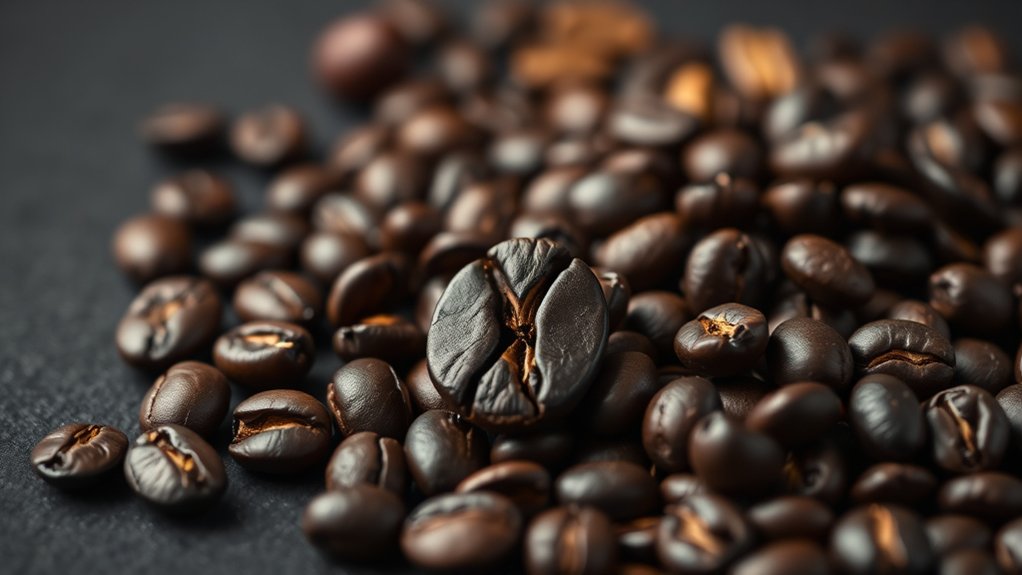
Although espresso beans are often marketed as a special variety, there’s actually no difference between them and regular coffee beans. The key distinction lies in the brewing technique, not the beans themselves.
Espresso uses a high-pressure extraction method to produce a concentrated coffee shot with a richer flavor.
Typically, espresso beans are dark roasted to emphasize bold flavors, but this doesn’t markedly affect caffeine levels. Most espresso is made from Arabica beans, known for their smooth taste, unlike the more bitter Robusta variety.
How Much Caffeine Does One Espresso Bean Contain?
How much caffeine do you get from a single espresso bean? An espresso bean contains approximately 2 mg of caffeine per bean, though this amount can vary by bean type and roast level.
If you enjoy chocolate-covered espresso beans, keep in mind that their caffeine content in chocolate-covered varieties ranges from 6 to 12 mg per bean, thanks to the concentrated espresso bean inside. This makes them a potent source of caffeine.
When you consider a typical serving size, like eleven espresso beans, you’re consuming an amount of caffeine comparable to two cups of coffee.
Eating whole espresso beans also allows your body to absorb caffeine more efficiently than brewed coffee, making them a powerful and convenient energy boost.
Coffee Bean Type and Caffeine Content
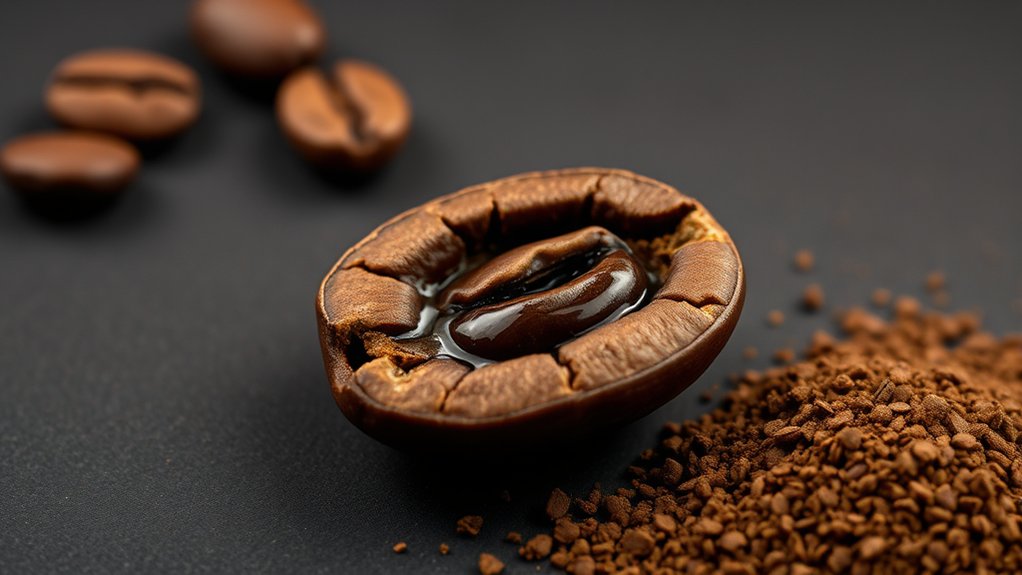
Understanding the caffeine content in a single espresso bean is a great start, but the type of coffee bean you choose plays a significant role in how much caffeine you actually get.
Arabica beans typically contain about 12 mg of caffeine per gram, while Robusta beans pack nearly double, around 22 mg per gram.
This means espresso beans made from Robusta will deliver more total caffeine compared to Arabica. If you enjoy dark chocolate covered espresso beans, keep in mind each contains 10-20 mg of caffeine due to the added chocolate.
Since caffeine levels vary by coffee bean type, it’s important to practice moderation when consuming espresso beans to avoid negative effects from too much caffeine.
Being aware of bean type helps you control your total caffeine intake effectively.
Does Roasting Level Affect Espresso Bean Caffeine?
Even though many believe that darker roasts pack more caffeine, roasting level doesn’t actually change the caffeine content in espresso beans. Caffeine is stable during roasting, so whether you choose light or dark roast, the caffeine content remains consistent.
Both Arabica and Robusta maintain their caffeine levels regardless of roasting level, with Robusta naturally having more caffeine. While darker roasts may look stronger, their caffeine concentration per bean doesn’t increase.
| Roast Level | Bean Type | Caffeine Content (mg/bean) |
|---|---|---|
| Light | Arabica | 1.2 |
| Medium | Arabica | 1.2 |
| Dark | Arabica | 1.2 |
| Light | Robusta | 2.2 |
| Dark | Robusta | 2.2 |
Roasting level affects bean size, not caffeine content.
Why Dark Roasts Suit Espresso Beans
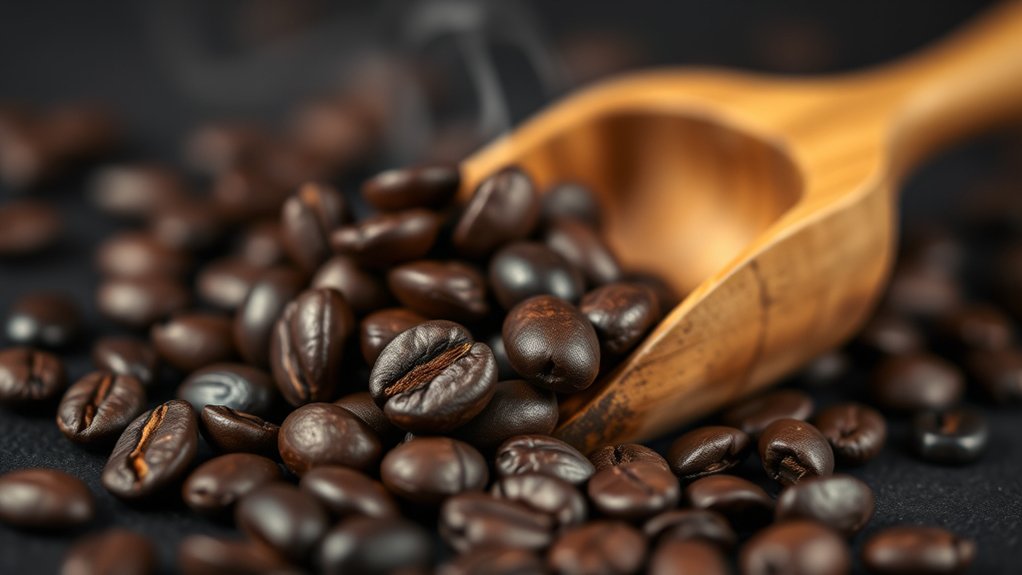
Because espresso relies on high-pressure extraction, dark roasts suit it well by offering an intense, bold flavor that stands up to the brewing method.
When you choose dark roast espresso beans, the roasting process caramelizes the sugars, giving your espresso a rich, robust taste with lower acidity.
Dark roast espresso beans caramelize sugars, creating a rich, robust flavor with smooth, lower acidity.
This smoother profile makes your shot more palatable and balanced. Even though the caffeine content doesn’t change much during roasting, the strong flavor of dark roasts makes the caffeine feel more pronounced.
Plus, dark roast beans produce a thicker crema, enhancing your espresso’s texture and aroma.
Caffeine in Espresso vs. Regular Coffee
Although both espresso and regular coffee come from the same beans, their caffeine content and concentration differ considerably due to the brewing methods. Espresso uses high pressure to extract a stronger flavor and caffeine, delivering about 63 mg per 1-ounce shot.
In contrast, a standard cup of coffee contains roughly 95 mg caffeine over 8 ounces, making it less concentrated but higher in total caffeine.
| Beverage | Serving Size | Approximate Caffeine Content |
|---|---|---|
| Espresso (shot) | 1 oz | 63 mg |
| Standard Coffee (cup) | 8 oz | 95 mg |
| Chocolate-covered Beans | 1 bean | 10-20 mg |
If you need an energy boost, chocolate-covered espresso beans combine caffeine from both chocolate and espresso beans for a potent punch.
Caffeine Absorption From Eating Whole Espresso Beans
You get more than just caffeine when you eat whole espresso beans. They offer a direct and efficient way for your body to absorb caffeine. Unlike brewed coffee, eating the entire bean maximizes caffeine absorption, giving you a quicker energy boost.
Keep in mind, chocolate-covered espresso beans have varying caffeine content, often higher due to the chocolate coating. To enjoy this energy boost safely, practice moderation and be mindful of consuming too much caffeine.
Here’s what you should know:
- A single espresso bean contains about 2 mg of caffeine.
- Eating 11 beans equals the caffeine in two cups of coffee.
- Whole beans provide faster, more efficient caffeine absorption.
- Moderation prevents the risks linked to consuming too much caffeine.
Caffeine Content and Effects of Chocolate-Covered Espresso Beans
Each chocolate-covered espresso bean packs between 6 to 12 mg of caffeine, with dark chocolate varieties containing the most.
So, when you snack on these, you’re getting a nice little energy kick from both the caffeine and the sugar.
It’s a quick way to perk up, but here’s the thing—you’ve got to watch yourself because it’s easy to sneak past the daily 400 mg caffeine limit without realizing it.
Let’s dive into how much you should enjoy, along with the benefits and risks that come with these tasty treats.
Caffeine Levels Per Bean
Between 6 and 12 mg of caffeine hides inside every espresso bean, varying with the bean type and roast level. When chocolate-covered, caffeine content in chocolate-covered espresso beans increases, giving you a stronger energy boost.
Keep in mind, espresso beans can vary, so your caffeine boost without checking labels might surprise you. Here’s what you should know:
- Chocolate-covered espresso beans contain about 10 to 20 mg of caffeine each.
- Dark chocolate-covered beans have more caffeine than milk chocolate versions.
- Eating eleven chocolate-covered espresso beans equals the caffeine in two coffee cups.
- The average caffeine content per 100 grams is around 800 mg, so moderation due to high caffeine levels is essential.
Enjoy your caffeine boost wisely!
Health Benefits And Risks
Knowing the caffeine content in chocolate-covered espresso beans helps you understand how they affect your body. Each bean contains about 5-10 milligrams of caffeine, offering a quick energy boost in a convenient snack form.
Besides caffeine, these beans have antioxidants from both the espresso and chocolate, which contribute to health benefits like reducing the risk of certain diseases.
However, you should consume them in moderation to avoid the risks linked to excessive caffeine intake. Eating too many can cause jitters, anxiety, and disrupt your sleep.
Monitoring your overall caffeine intake is especially important if you’re sensitive to caffeine, pregnant, or giving these treats to children.
Enjoying chocolate-covered espresso beans wisely lets you benefit without unwanted side effects.
Recommended Consumption Limits
While chocolate-covered espresso beans offer a tasty energy boost, you should keep your caffeine intake in check to avoid negative effects. Each bean contains about 6 to 13 mg of caffeine, and the recommended daily limit for most adults is 400 mg.
To enjoy these treats safely, consider these consumption limits:
- Limit yourself to 40 to 50 grams of chocolate-covered espresso beans per day.
- Monitor total caffeine intake from all sources, including coffee and snacks.
- Be cautious if you’re sensitive to caffeine, as overconsumption can cause jitters and sleep problems.
- Consult a healthcare provider if you’re unsure about your recommended caffeine limits.
Following these guidelines helps you enjoy espresso beans without risking your health.
How Many Espresso Beans Should You Eat for a Safe Caffeine Boost?
How many espresso beans should you eat to get a safe caffeine boost? Each espresso bean contains about 6 to 12 mg of caffeine, making them a powerful energy source.
For a safe caffeine boost, you should stick to around 5 to 10 chocolate-covered espresso beans. This amount provides enough caffeine without pushing you past daily limits, which are generally about 400 mg for most adults.
Keep in mind, individual tolerance varies, so you should monitor how your body reacts. Eating 11 beans roughly equals the caffeine in two cups of coffee, so it’s easy to consume too much.
To stay safe, consider all caffeine sources throughout your day and adjust your intake accordingly to avoid side effects like jitters or insomnia.
Safe Consumption Tips for Espresso Beans
Because espresso beans pack a significant caffeine punch, you should control your intake to enjoy their benefits without unwanted side effects.
Espresso beans deliver a strong caffeine boost, so moderate your intake for maximum benefits without side effects.
Whether you prefer plain or chocolate-covered beans, managing your consumption is key to avoiding jitters and sleep disturbances.
Here are some safe consumption tips:
- Limit chocolate-covered espresso beans to 5-10 per serving to stay within a moderate caffeine range.
- Monitor your caffeine sensitivity. If you’re prone to anxiety or sleep issues, reduce intake accordingly.
- Keep total daily caffeine below 400 mg to prevent overconsumption risks.
- Enjoy espresso beans earlier in the day to minimize sleep disturbances caused by caffeine.
Frequently Asked Questions
Can Espresso Beans Cause Insomnia if Eaten Late at Night?
Yes, eating espresso beans late at night can cause insomnia because caffeine absorption happens quickly and acts as a strong insomnia trigger.
Your sleep cycles might get disrupted, especially if you have low tolerance to caffeine. Late night consumption of espresso beans increases the risk of restlessness and difficulty falling asleep.
To avoid this, you could try alternative snacks that won’t interfere with your sleep, helping you maintain better rest and overall health.
Do Espresso Beans Have Any Health Benefits Besides Caffeine?
Yes, espresso beans offer health benefits beyond caffeine.
You’ll enjoy their antioxidant properties, which help protect your cells and support heart health.
Eating them can boost your mood, thanks to natural compounds in both the beans and chocolate coatings.
Plus, they may give your metabolism a gentle boost and aid digestive support.
How Should Espresso Beans Be Stored for Maximum Freshness?
You should store espresso beans in airtight storage containers to maintain maximum freshness.
Keep them at an ideal temperature, cool but not refrigerated, to avoid moisture and off-flavors.
Control humidity levels by using dry containers and avoid light exposure by choosing opaque or vacuum-sealed bags. This helps preserve the beans’ shelf life, ideally within two weeks to a month after opening.
Vacuum sealing is especially effective for locking in freshness and flavor.
Are Espresso Beans Safe for Children or Pregnant Women?
When it comes to child safety and pregnancy guidelines, you should remember, “Better safe than sorry.”
Because of caffeine sensitivity, children and pregnant women face health risks from espresso beans.
You shouldn’t give espresso beans to kids due to age restrictions and their developing bodies.
If you’re pregnant, follow moderation advice and consult your healthcare provider before consuming caffeine.
Staying cautious helps protect both you and your little one from potential harm.
Can Espresso Beans Be Used in Cooking or Baking Recipes?
Yes, you can definitely use espresso beans in your cooking and baking recipes. They add amazing flavor enhancement, especially in coffee-infused dishes and chocolate pairing desserts.
Try crushing them for dessert toppings or mixing ground espresso beans into cookie dough for a crunchy caffeine kick.
Don’t forget savory applications. Espresso beans work great in rubs or marinades, giving your meats a unique, rich taste that balances perfectly with smoky or grilled flavors.
Conclusion
You might wonder if one espresso bean packs enough caffeine to kickstart your day. The truth? Each bean holds less caffeine than a shot of espresso but still gives a noticeable boost when eaten.
Dark roasts don’t actually mean less caffeine, so don’t be fooled. Just remember, moderation is key. Snacking on a handful can energize you safely without the jitters.
So, enjoy your beans wisely and savor that smooth caffeine lift!