What Are Espresso Beans – Definition And Characteristics Explained
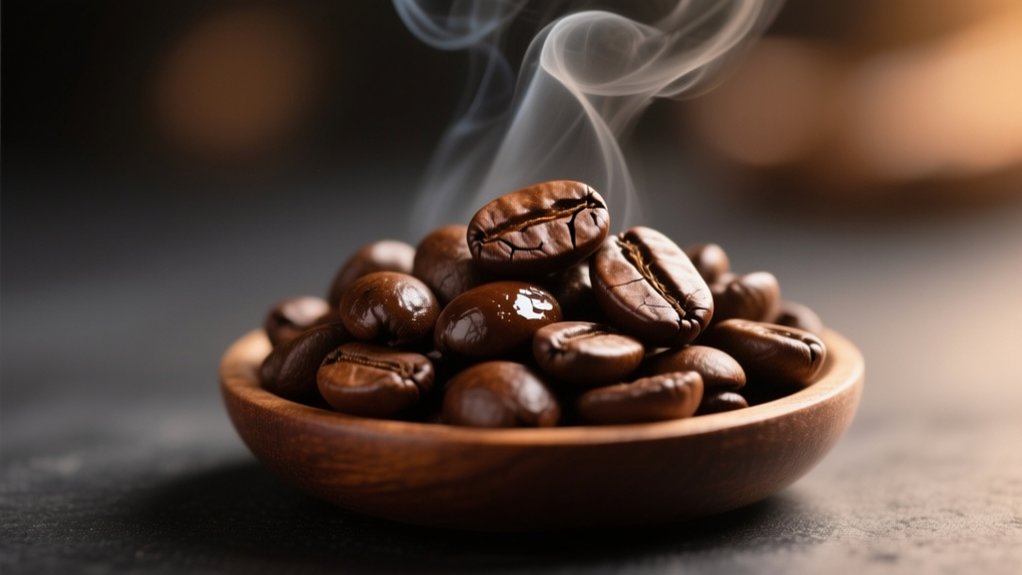
Espresso beans are coffee beans roasted longer and hotter to develop a dark, oily surface and bold, concentrated flavors. You’ll notice their fine grind size helps extract rich oils and create that thick crema espresso is known for.
Unlike regular beans, which have lighter roasts and varied flavors, espresso beans deliver a robust, intense taste with a bitter edge. If you want to understand how bean type, roast, and grind influence your espresso’s strength and flavor, there’s plenty more to explore.
What Are Espresso Beans?
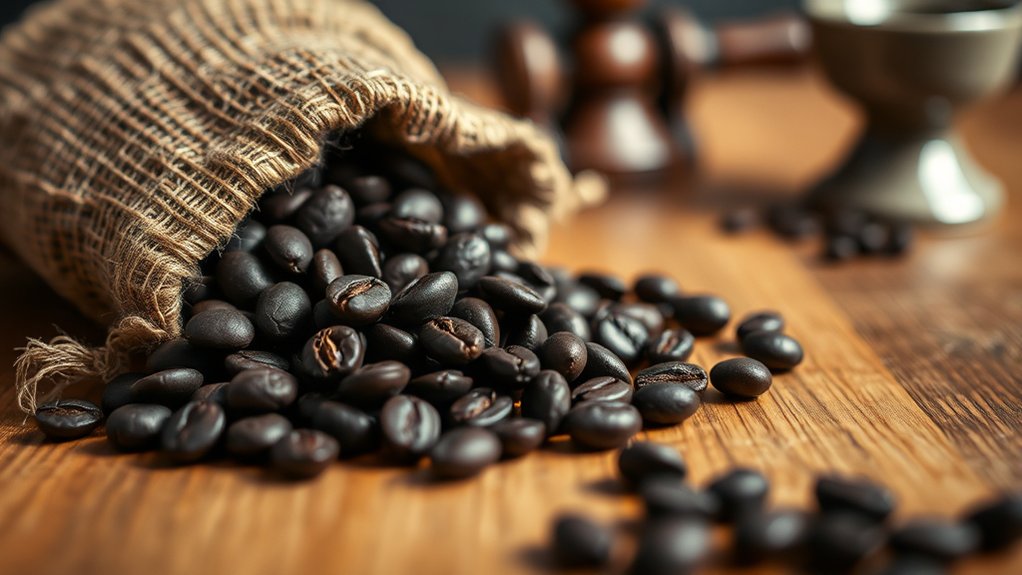
Espresso beans are coffee beans roasted longer and hotter to bring out rich oils and bold flavors. You’ll notice these beans have a darker roast with a shiny, oily surface, which sets them apart from regular coffee beans.
Espresso beans are roasted longer and hotter, resulting in a darker, oily surface that highlights bold, rich flavors.
This roasting process enhances their concentrated flavor profiles, giving your espresso that signature bold taste and thick crema.
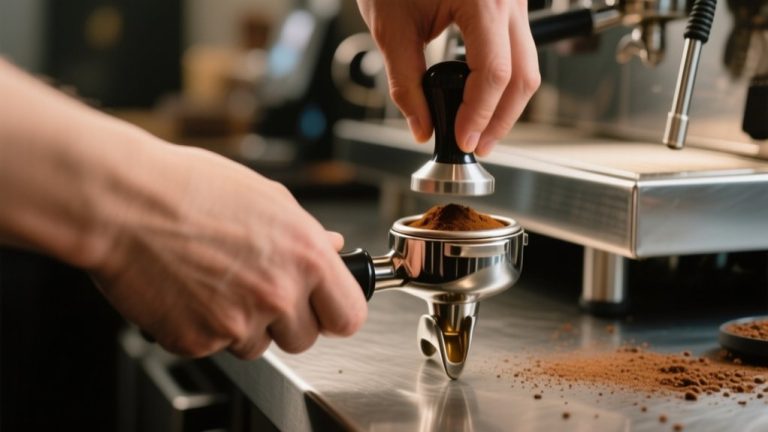
When preparing espresso, grind size is essential. You need a fine grind to extract the full depth of flavor during the high-pressure brewing.
While any coffee bean can work for espresso, specially roasted espresso beans guarantee you get consistent, ideal results.
Choosing the right espresso beans and grind size makes all the difference in crafting your perfect espresso shot.
Espresso Beans vs. Regular Coffee Beans: Key Differences
Although both come from the same coffee plant, beans intended for espresso and those for regular coffee differ markedly in roast, grind, and flavor profile. You’ll notice these key differences:
- Roast: Espresso beans are roasted longer and hotter, producing a dark, oily surface that helps extract richer flavors. Regular coffee beans have lighter, varied roasts.
- Grind Size: Espresso demands a fine grind to withstand pressurized brewing, while regular coffee beans are ground coarser for methods like drip or French press.
- Flavor Profile: Espresso beans deliver a bolder, more bitter taste with a thicker body, while regular beans offer diverse profiles, from fruity to nutty, suited to varying preferences.
Understanding these distinctions helps you appreciate why espresso coffee beans create such a uniquely intense and consistent coffee experience.
Can You Use Regular Coffee Beans for Espresso?
Wondering if you can use regular coffee beans to make espresso? You can, but the results might surprise you.
Regular coffee beans, often roasted lighter, don’t deliver the bold flavor profile that espresso beans provide.
When brewed under the high pressure of espresso machines, coffee made from regular beans tends to lack the characteristic crema and intensity.
While you can grind and use regular coffee beans for espresso-style drinks, they usually fall short of the depth and richness you’d expect.
Espresso beans are specifically roasted to enhance flavor and crema during extraction.
Still, feel free to experiment with regular coffee beans, but remember, if you want that authentic espresso taste and texture, espresso beans are your best bet.
How Roasting Affects Espresso Bean Flavor
When you roast coffee beans longer and at higher temperatures, you reveal a richer, bolder flavor that’s perfect for espresso. The roasting process transforms the beans’ flavor profile by highlighting natural oils and creating a distinctive bitter taste that balances the brew.
Here’s how roasting affects espresso bean flavor:
- Darker roasts develop complex compounds through the Maillard reaction, adding depth and richness.
- Extended roasting extracts oils, producing a shiny surface and enhancing espresso’s crema.
- Increased roasting time usually raises bitterness, which complements espresso’s bold flavor.
Why Espresso Beans’ Natural Oils Matter
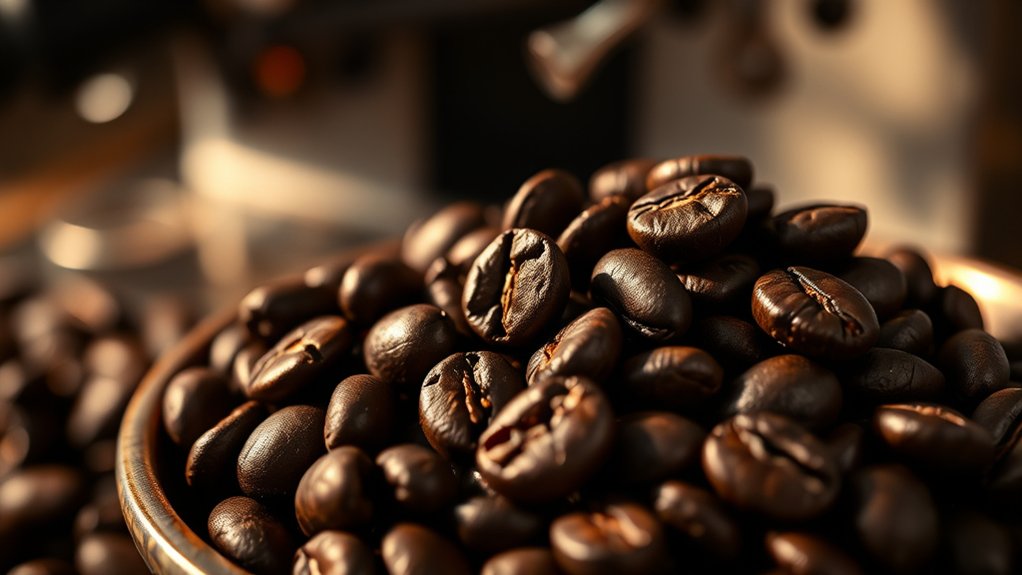
Because natural oils play an essential role in espresso beans, they directly impact the rich flavor and creamy texture you experience in every shot. These oils, released during roasting, enrich your coffee’s flavor profile and contribute to that signature velvety mouthfeel.
When brewing, natural oils emulsify, enhancing aroma and complexity without overpowering bitterness. This balance is what sets espresso apart from lighter coffee brews.
| Aspect | Impact of Natural Oils |
|---|---|
| Flavor Profile | Adds depth, richness, and balanced bitterness |
| Texture | Creates creamy, smooth mouthfeel |
| Aroma | Enhances complexity and inviting scent |
Understanding natural oils helps you appreciate why espresso beans deliver such a satisfying, full-bodied coffee experience every time.
How Espresso Beans Create the Perfect Crema
The natural oils in espresso beans don’t just enrich flavor and texture. They also play a key role in creating the perfect crema. When you brew espresso, these oils emulsify, forming that signature golden foam atop your shot.
To achieve this, focus on three key factors:
- Maintain an extraction temperature between 190°F and 205°F to optimize oil release.
- Use finely ground espresso beans to increase surface area, enhancing emulsification.
- Aim for a crema thickness of 1 to 2 centimeters, signaling a well-extracted shot with balanced bitterness and richness.
Crema isn’t just visual appeal. It enhances the espresso’s aroma and deepens its taste, giving you a richer, more satisfying experience with every sip.
Why Espresso Beans Are Ground More Finely
Although espresso beans contain rich oils that define the drink’s flavor, you need to grind them more finely to release their full potential. Finely ground espresso beans increase the surface area, allowing water to extract oils and flavors quickly during the pressurized brewing process.
This fine grind guarantees water flows at the right pace, avoiding under-extraction that causes sour or weak taste. When espresso beans aren’t ground finely enough, the water rushes through, missing the chance to pull out that concentrated, rich flavor you expect.
By grinding espresso beans finely, you also help create the crema, an essential golden foam that adds aroma and complexity.
Best Coffee Varieties for Espresso Flavor
When you’re picking out espresso beans, it helps to know how Arabica and Robusta varieties influence the flavor.
Plus, the origin of the beans makes a big difference in their taste profiles.
Arabica Vs Robusta
Two main coffee bean varieties dominate the espresso world: Arabica and Robusta.
You’ll notice that Arabica beans deliver a sweeter, more complex flavor profile with higher acidity, making your espresso taste balanced and nuanced. On the other hand, Robusta beans pack more caffeine and offer a stronger, earthier flavor that boosts the body and crema of your shot.
Here’s what you should know:
- Arabica beans make up about 60-70% of global coffee and are prized for their refined taste.
- Robusta beans contribute richness and crema stability, often included in small amounts.
- Combining both beans creates a harmonious espresso with sweetness, acidity, and a full-bodied finish.
Bean Origin Influence
Because coffee’s origin shapes its flavor, choosing the right bean variety is key to crafting a memorable espresso. When selecting beans for espresso, consider that Arabica offers sweetness and acidity, while Robusta delivers a stronger, earthier punch with more caffeine.
Regional origins also influence the flavor profile: Ethiopian beans often bring fruity notes, whereas Brazilian beans lean toward nutty and chocolatey tones.
Processing methods further affect taste; washed beans give clarity, while natural processing adds fruitiness.
By understanding these factors, you can pick beans that match your desired espresso character.
Blends For Balance
Selecting the right beans is just the start; blending those beans brings out the best in your espresso.
When you focus on blending for balance, you combine Arabica and Robusta to create a flavor profile that’s both rich and complex. Here’s how you can achieve that:
- Use Arabica beans for sweetness and bright acidity, which add delicate, nuanced flavors.
- Add Robusta beans to introduce earthiness, increased body, and a caffeine boost.
- Adjust the ratio depending on your taste preference. Use more Robusta for strength, or more Arabica for smoothness.
How Espresso Beans Influence Coffee Strength and Concentration
When you choose espresso beans, you get a brew that’s thicker and richer thanks to their longer, hotter roasting process, which brings out more natural oils.
These oils boost coffee strength, giving your espresso a bold, robust flavor.
The fine grind of espresso beans maximizes oil extraction, intensifying the taste and creating a concentrated coffee experience.
Plus, brewing under high pressure enhances flavor extraction, making every shot packed with rich, bitter notes you won’t find in regular coffee.
This combination of roasting, grinding, and brewing guarantees espresso beans deliver a consistent, strong coffee profile.
Choosing the Right Espresso Beans for Your Brewing Method
How do you pick the perfect espresso beans for your brewing method? Start by understanding how different factors influence your coffee’s flavor profile and extraction. Here’s what to focus on:
- Choose medium to dark roasted espresso beans to get bold flavors and rich oils that boost crema formation. This is ideal for classic espresso brewing methods.
- Select Arabica for sweetness and complexity or add Robusta for more body and caffeine, depending on your taste preference and brewing style.
- Make sure your beans are freshly roasted and ground fine for maximum extraction. This is especially important for methods like espresso machines or stovetop brewers.
Experiment with blends balancing acidity and bitterness to suit milk-based drinks too.
Frequently Asked Questions
How Should Espresso Beans Be Stored for Maximum Freshness?
You should store espresso beans in airtight storage containers to keep oxygen out and maintain freshness.
Make sure the containers provide good humidity control, as moisture can ruin the beans.
Keep them in a cool, dark place to minimize temperature impact. Avoid heat and sunlight.
Don’t refrigerate or freeze them, since fluctuating humidity damages quality.
Label your containers with the roast date to track freshness and enjoy the best flavor within a few weeks.
Can Espresso Beans Go Stale Faster Than Regular Coffee Beans?
Espresso beans can go stale faster than regular coffee beans, even though both start fresh.
You’ll notice espresso freshness fades quickly because of higher oil content and a finer grind, which speed up bean oxidation.
While regular beans may last longer, espresso needs careful storage in airtight containers away from light and moisture to slow staling.
Are There Specific Espresso Beans for Decaffeinated Espresso?
Yes, you’ll find specific espresso beans crafted for decaf brewing.
These decaf espresso beans are carefully selected from particular bean origins to preserve rich flavor profiles even after caffeine removal.
Roasters often dark roast them to boost the boldness you expect from espresso.
While the flavor might differ slightly from regular beans, these decaf options let you enjoy espresso’s depth without caffeine, maintaining the essential oils and complexity in every shot.
How Do Espresso Beans Differ in Caffeine Content From Other Beans?
You might expect espresso beans to pack the most caffeine punch, but here’s the twist: their caffeine content varies based on espresso bean origins and extraction methods.
Because espresso uses finely ground beans and a quick, high-pressure espresso extraction method, you get intense espresso flavor profiles with concentrated caffeine per volume.
However, a single shot often contains less caffeine than a full cup of regular coffee, so don’t be fooled by espresso’s bold taste!
What Equipment Is Best for Grinding Espresso Beans at Home?
You’ll want to use a burr grinder for grinding espresso beans at home because it delivers consistent grind size essential for espresso.
Avoid blade grinders since they create uneven particles and can overheat the beans, ruining flavor.
Focus on grinding techniques that produce a medium-fine to fine grind, and choose a burr grinder with adjustable settings.
This lets you fine-tune your grind to match your espresso machine perfectly for the best results.
Conclusion
Think of espresso beans as the heart of a symphony, where every note—roast, grind, and oil—plays its part to create a powerful, rich melody. Just like a skilled conductor, choosing the right beans and grind brings out the bold intensity you crave.
So, whether you’re brewing a quick shot or savoring a slow sip, remember: espresso beans aren’t just coffee. They’re the vibrant soul that transforms your cup into an unforgettable experience.