How Hard To Tamp Espresso – Proper Tamping Techniques Explained
You need to apply firm, consistent pressure, about 25 to 30 pounds, when tamping espresso to guarantee even extraction and balanced flavor. Focus on pressing straight down with an aligned wrist, elbow, and shoulder to avoid uneven compression or channeling.
Confirm your tamper fits your portafilter perfectly and distribute coffee grounds evenly before tamping. Perfecting this technique takes practice, but mastering it will greatly improve your espresso quality, and there’s more to explore on achieving consistent results.
What Is Espresso Tamping and Why It Matters
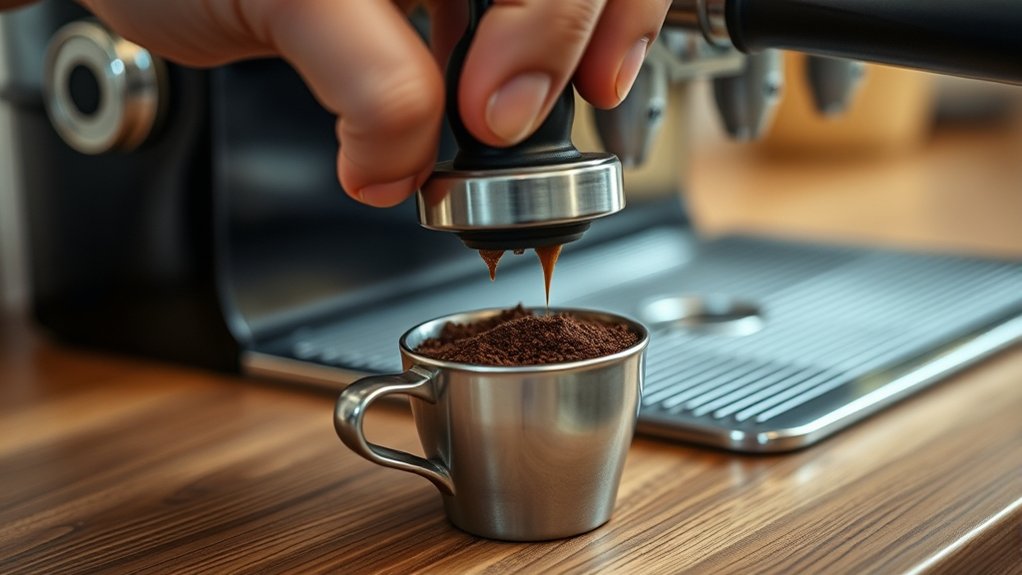
Espresso tamping is the essential step where you compress ground coffee evenly in the portafilter to create a uniform bed. This even density is vital because it guarantees water passes through the coffee evenly, avoiding uneven extraction that can ruin your shot’s flavor.
When you apply tamping pressure, your goal isn’t just force but consistent pressure, steady and controlled in a single motion. This uniform compression prevents channeling, where water finds weak spots and flows too quickly, leading to sour or bitter notes.
By mastering espresso tamping, you control the resistance water meets, balancing extraction of oils, acids, and sugars.
No matter your beans or machine, the quality of your espresso depends heavily on how well you tamp.
Ideal Tamping Pressure for Consistent Espresso
Although it might seem tricky at first, applying the right tamping pressure, usually between 25 and 30 pounds, ensures your coffee grounds compress evenly for a balanced extraction.
Consistency matters more than exact force because uneven tamping pressure leads to channeling and poor espresso preparation.
Consistent tamping ensures even extraction, preventing channeling and enhancing your espresso’s flavor every time.
Remember, finer grinds need lighter pressure, while coarser ones require firmer tamping to create a dense, evenly distributed coffee bed.
To avoid common tamping mistakes, follow these steps:
- Apply steady, controlled pressure in a single motion.
- Maintain consistent pressure every time for uniform puck density.
- Practice regularly to build muscle memory and perfect your technique.
This approach guarantees your espresso tastes balanced and rich every shot.
How Even Compression Affects Extraction Quality
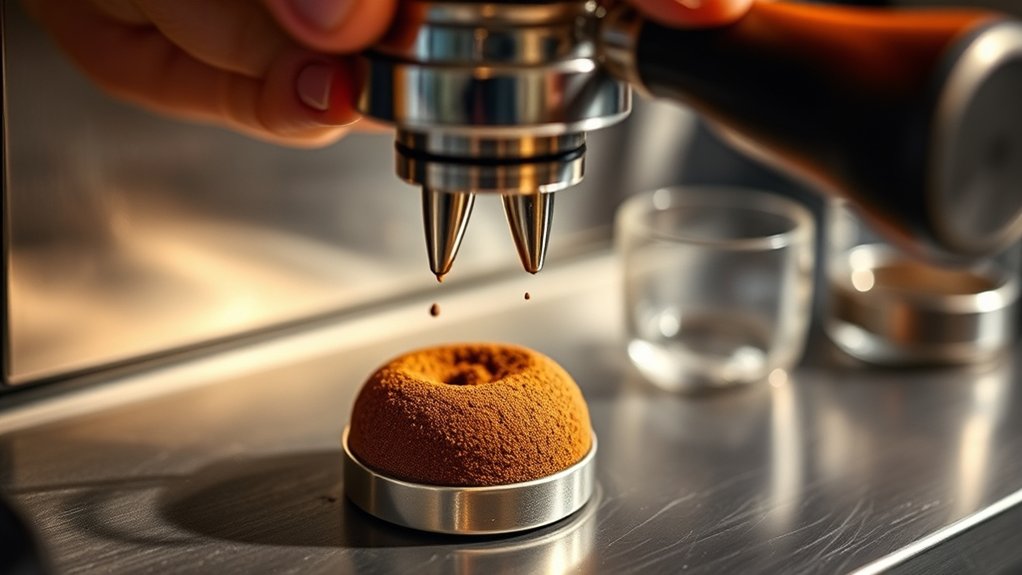
When you compress coffee grounds evenly during tamping, you create a uniform coffee bed that allows water to flow consistently through the puck.
Using a proper tamping technique with even pressure prevents uneven density, which can cause water to channel through weak spots. This channeling leads to uneven extraction, producing a shot that’s either over- or under-extracted on different sides.
Ensuring your tamp is level eliminates voids and air pockets, promoting balanced extraction of oils, acids, and sugars.
Consistent water flow through the puck is essential for achieving a balanced espresso with rich flavor and smooth texture.
Choosing the Right Tamper for Your Espresso
Even compression sets the stage for a great shot, but your choice of tamper plays a big role in achieving that uniform puck. First, make certain your tamper size matches your portafilter—usually 58mm—to guarantee a snug fit and even pressure.
Next, consider calibrated tampers; they give consistent feedback at the ideal pressure, helping you build muscle memory for repeatable results.
Finally, ergonomics matter. Choose a tamper designed to reduce wrist strain and promote vertical pressure for better puck symmetry.
Before tamping, use distribution tools to level the grounds evenly, preventing channeling and uneven extraction.
Keep these in mind:
- Match tamper size for a perfect seal
- Use calibrated tampers for consistent pressure
- Prioritize ergonomic design for comfort and control
Step-by-Step Tamping Technique for Beginners
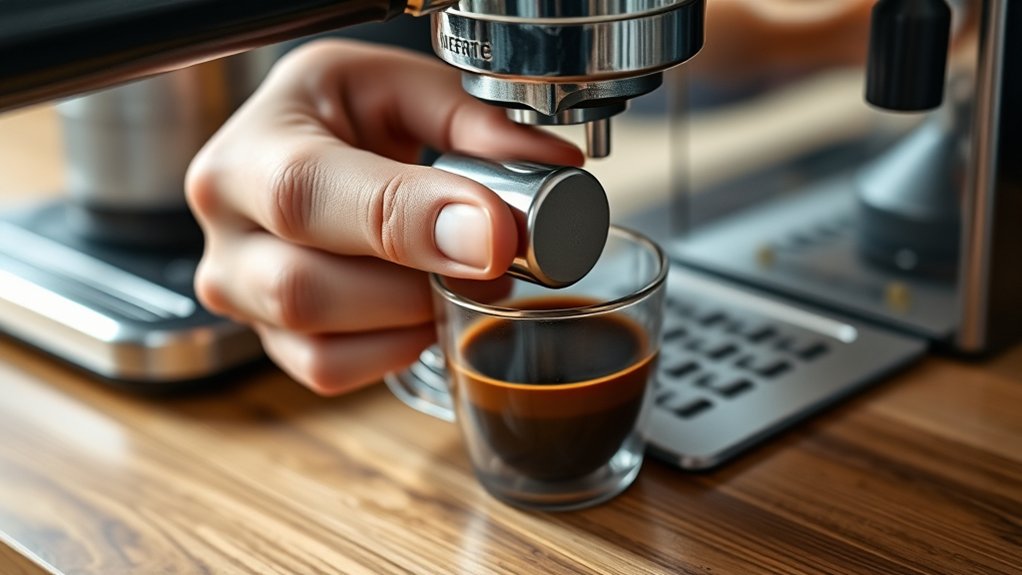
Mastering the tamping technique involves a few key steps that set the foundation for a great espresso shot.
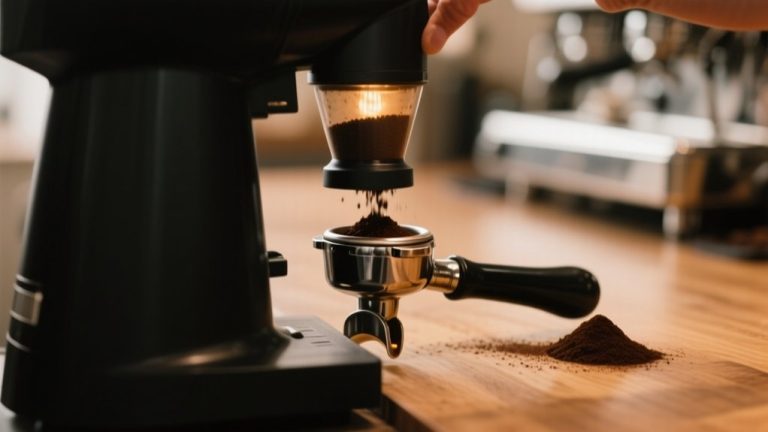
Start by distributing the coffee grounds evenly in the portafilter to create a level surface.
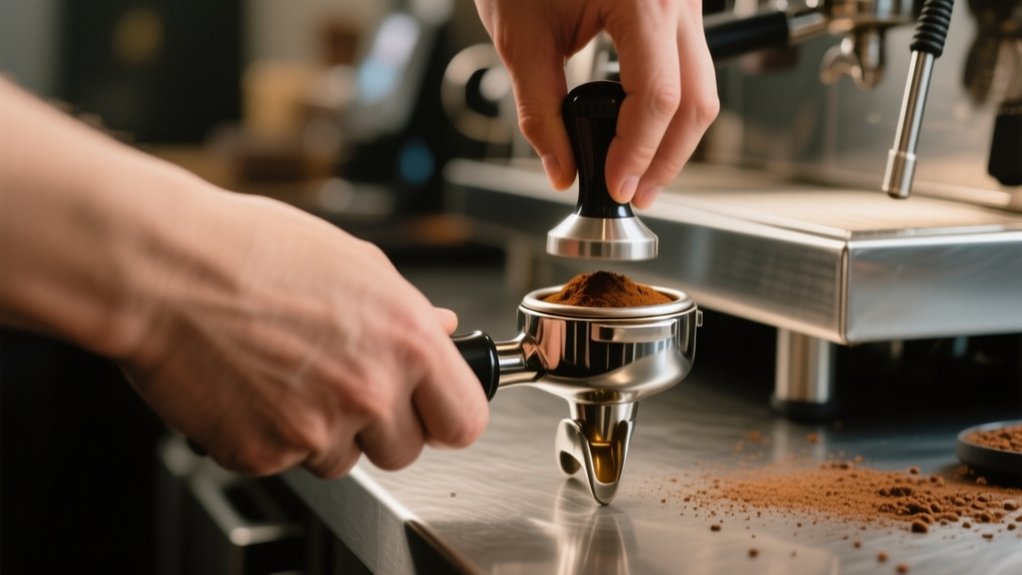
Choose an espresso tamper that fits snugly, typically 58mm, and hold it with a straight wrist, aligning your elbow and shoulder over the portafilter.
Apply tamping pressure consistently, aiming for 25 to 30 pounds, focusing on even compression rather than force.
After tamping, check the puck’s flatness to guarantee uniform water flow during extraction.
Practicing this step-by-step tamping technique regularly helps you develop muscle memory, leading to more consistent, high-quality espresso shots every time.
Common Tamping Mistakes to Avoid
You’ll want to avoid uneven pressure when tamping because it can cause inconsistent extraction and weaken your shot.
Applying too much force isn’t great either—it can choke the puck and lead to bitter flavors.
Also, make sure to check your puck’s alignment so the water flows evenly through the coffee bed.
Uneven Pressure Issues
When tamping espresso, applying uneven pressure can cause water to flow through weak spots in the coffee bed. This leads to channeling and inconsistent extraction. You need to focus on creating a uniformly compacted bed by applying pressure straight down with your tamper.
Avoid these common issues:
- Tamping at an angle, which creates a slanted bed and uneven saturation.
- Leaving stray grounds around the portafilter edges, preventing a proper seal.
- Inconsistent pressure that results in weak spots, causing channeling and poor extraction.
Over-Tamping Consequences
Although it might seem like applying more pressure guarantees a better espresso, over-tamping can actually restrict water flow and cause bitter, over-extracted shots. When you tamp too hard, especially above 30 pounds, you compress the coffee puck excessively, making it too dense for even extraction.
This slows water flow and hinders flavor balance. Double tamping makes this worse by disrupting the puck’s structure, creating channels where water flows unevenly. That results in inconsistent extraction.
Uneven tamping also causes localized over-extraction or under-extraction, leading to harsh or watery espresso.
To avoid these issues, focus on applying firm yet consistent pressure. Practicing proper tamping techniques helps maintain an even coffee bed, ensuring balanced extraction and a smoother, better-tasting shot every time.
Ignoring Puck Alignment
Failing to align the tamper properly with the portafilter can cause uneven compression of the coffee puck. This leads to inconsistent water flow and a harsh, unbalanced espresso. Ignoring puck alignment during tamping increases the risk of uneven extraction because water finds weak spots and creates channeling effects.
To avoid this, focus on placing the tamper directly over the center of the coffee bed for consistent pressure. Use a level tamper or a visual aid like a mirror to confirm proper puck alignment.
Also, check alignment before and after tamping to maintain shot consistency.
Why You Should Avoid Knocking the Portafilter
Because knocking the portafilter can disrupt the even seal of the coffee bed, you should avoid it to prevent channeling and inconsistent extraction.
When you tamp, your goal is to create a uniform coffee bed that allows water to flow evenly.
The aim of tamping is to form a consistent coffee bed for even water flow.
Knocking can create weak spots or paths of least resistance, causing water to bypass parts of the puck and ruin the flavor. Instead of knocking, focus on applying steady, controlled pressure to maintain puck integrity.
Techniques like the Staub tamp help by evenly compressing the coffee bed without the need for knocking.
Adjusting Tamping Pressure for Dose and Grind
Maintaining a consistent tamping pressure is key to achieving a balanced espresso shot, but the exact force you apply should vary with your grind size and dose.
For finer grinds, use a lighter tamping pressure (20-25 pounds) to avoid restricting water flow. Coarser grinds need firmer pressure (25-30 pounds) to compress evenly.
Adjusting for dose matters too; an 18-gram dose often requires 25-30 pounds of pressure.
Always use a distribution tool to level the coffee bed before tamping, ensuring uniform density for consistent extraction.
- Lighter tamp for fine grind to prevent bitterness
- Firmer tamp for coarse grind to avoid channeling
- Level coffee bed for balanced water flow and flavor extraction
Building a Reliable and Ergonomic Tamping Routine
To build a reliable tamping routine, aim to apply consistent pressure between 25 and 30 pounds every time. It might sound a bit technical, but once you get the feel for it, it becomes second nature.
Make sure to keep your wrist, elbow, and shoulder lined up directly over the portafilter. This alignment helps you spread the force evenly and also reduces strain on your arm.
Consistent Pressure Application
Although tamping might seem straightforward, applying consistent pressure is key to getting the perfect espresso shot. To achieve uniform extraction and avoid common pitfalls like channeling, you need consistent pressure application. Aim for 25–30 pounds of pressure each time.
Before tamping, use a distribution tool to level the grounds, guaranteeing an even surface.
Here’s how to build consistency:
- Use a flat, ergonomic tamper to evenly apply pressure across the coffee bed.
- Align your wrist, elbow, and shoulder over the portafilter for controlled, steady force.
- Practice regularly to build muscle memory and replicate the same pressure with every shot.
Mastering these steps guarantees your espresso shots are smooth and balanced every time.
Ergonomic Hand Positioning
Ergonomic hand positioning plays an essential role in building a reliable tamping routine that protects your wrist and maximizes efficiency.
To achieve consistent pressure during tamping, keep your wrist, elbow, and shoulder aligned directly over the portafilter. This ergonomic stance helps you apply a steady, controlled force in one smooth motion without twisting or lifting the tamper prematurely.
Hold the tamper with your palm and fingers to distribute weight evenly, reducing strain and promoting uniform pressure across the coffee bed.
Using a flat tamper further guarantees even pressure, preventing channeling and improving extraction quality.
Regularly practicing this ergonomic positioning builds muscle memory, making your tamping more consistent and reducing fatigue over time.
This approach solidifies a dependable tamping routine every time you brew.
Tips to Perfect Your Espresso Tamping Skills
When you aim for a tamping pressure of 25–30 pounds, you create a uniform coffee bed that encourages even extraction without blocking water flow.
To perfect your espresso tamping skills, focus on these essentials:
To perfect your espresso tamping skills, focus on even distribution, proper alignment, and consistent pressure.
- Distribute coffee grounds evenly before tamping to prevent channeling and guarantee even extraction.
- Maintain proper alignment by keeping your wrist, elbow, and shoulder in line over the portafilter. This allows you to apply consistent pressure in one smooth motion.
- Check the tamped puck for flatness and uniform compression. This ensures water flows evenly through the coffee bed.
Practice regularly to build muscle memory and avoid mistakes like over-tamping or tilted tamps.
Mastering these steps helps you achieve a consistent, high-quality espresso every time.
Frequently Asked Questions
Can Tamping Pressure Affect the Crema Thickness?
Yes, tamping pressure directly affects crema formation. When you maintain pressure consistency, you guarantee an even coffee bed, which promotes balanced extraction time and enhances flavor balance.
If you apply too much pressure, you risk over-extraction, leading to bitterness and thin crema.
Too little pressure causes under-extraction and weak crema.
Also, consider your grind size. Finer grinds need lighter tamping to avoid clogging and preserve crema thickness.
How Often Should I Replace My Tamper?
You should replace your tamper when its base shows wear or dents that affect tamping ergonomics and puck consistency. Different tamper materials wear differently, so check often.
Also, if your tamper size no longer fits your portafilter or you switch machines, consider upgrading.
Regular tamper maintenance helps, but if you notice uneven extraction or inconsistent pressure despite that, it’s time for a new tamper.
Trusted tamper brands offer durable options.
Does Tamping Pressure Vary by Coffee Origin?
You might think tamping pressure stays the same regardless of coffee origin, but it actually varies to preserve coffee flavor.
Different bean freshness, grind size, and brewing time impact extraction balance.
For denser, high-altitude beans, you’ll need firmer tamping to get even extraction.
Lighter roasts from Africa often need a gentler press to avoid bitterness.
Adjusting tamp pressure helps you highlight each coffee’s unique profile perfectly.
Can Tamping Technique Influence Espresso Temperature?
Yes, your tamping technique directly influences espresso temperature by affecting tamping consistency.
When you apply even pressure, you create a uniform coffee bed, ensuring consistent espresso extraction.
If your pressure varies, water flows unevenly, causing temperature drops and extending brew time.
Also, your tamping works with grind size; if uneven, it disrupts flow and temperature stability.
Is Tamping Necessary for All Espresso Machines?
Yes, tamping is necessary for all espresso machine types to guarantee tamping consistency.
Even if your machine has an automatic tamper, understanding manual tamping helps you control grind size and extraction time better.
Using proper tamping tools, you create a uniform coffee bed, preventing channeling and uneven extraction.
Without consistent tamping, your espresso shot may suffer in flavor, no matter what machine you’re using.
Conclusion
So, tamping espresso isn’t rocket science, but it’s not exactly a lazy Sunday either. You might think pressing coffee grounds is as simple as pushing a button, yet nailing the perfect tamp pressure and evenness can transform your shot from “meh” to magnificent.
Remember, it’s not about brute force, it’s about finesse. Mastering this small step means you’re halfway to barista greatness, proving even the tiniest details demand your full attention.