How Long Do Green Coffee Beans Last – Storage And Shelf Life Guide
You can keep green coffee beans fresh for 6 to 12 months if you store them in airtight containers with stable temperatures around 20°C (68-77°F) and humidity between 60-65%. Avoid high humidity, light, oxygen, and temperature spikes to prevent mold, off-flavors, and faster aging.
Specialty beans may need extra care since they’re more sensitive. Proper packaging and storage are key to preserving flavor. Understanding these factors helps you extend your beans’ shelf life effectively.
How Long Do Green Coffee Beans Stay Fresh?
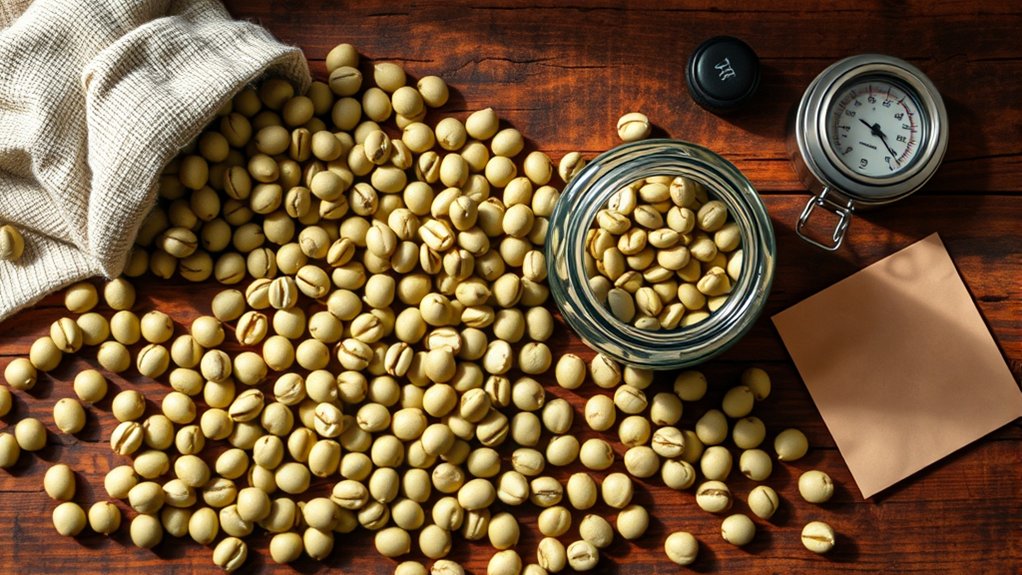
How long can you expect green coffee beans to stay fresh? Typically, green coffee freshness lasts about 6 to 12 months when you keep the beans under proper storage conditions.
To maximize the shelf life of green coffee, maintain moisture levels between 8% and 12.5% and store the beans at an ideal temperature around 20°C, plus or minus 5°C.
Keep green coffee fresh by maintaining 8-12.5% moisture and storing near 20°C ± 5°C.
If you don’t control these factors, you risk reducing freshness quickly.
Within the first 5-6 months after arrival, the flavor can already start to degrade, so timely use is key.
Although green coffee beans don’t have a strict expiration date, poor storage or high humidity can spoil them.
Properly stored, they might remain safe for years, but their quality and taste will inevitably decline over time.
Which Environmental Factors Cause Green Coffee to Lose Quality?
When you expose green coffee beans to the wrong environmental conditions, their quality quickly deteriorates. High humidity levels above 70% cause moisture absorption, which promotes mold growth and spoilage.
Temperature fluctuations, especially extremes, lead to condensation that harms flavor and overall quality. Oxygen exposure triggers oxidation, resulting in flat, stale flavors that rob your beans of freshness.
Furthermore, light exposure causes photodegradation, breaking down essential organic compounds and diminishing flavor profiles.
To keep your green coffee beans at their best, focus on proper storage by maintaining stable temperatures around 20°C and humidity between 60-65%.
Controlling these environmental factors prevents moisture buildup and protects the beans’ integrity, helping you preserve their quality for a longer shelf life.
How Does Coffee Variety Affect Green Bean Longevity?
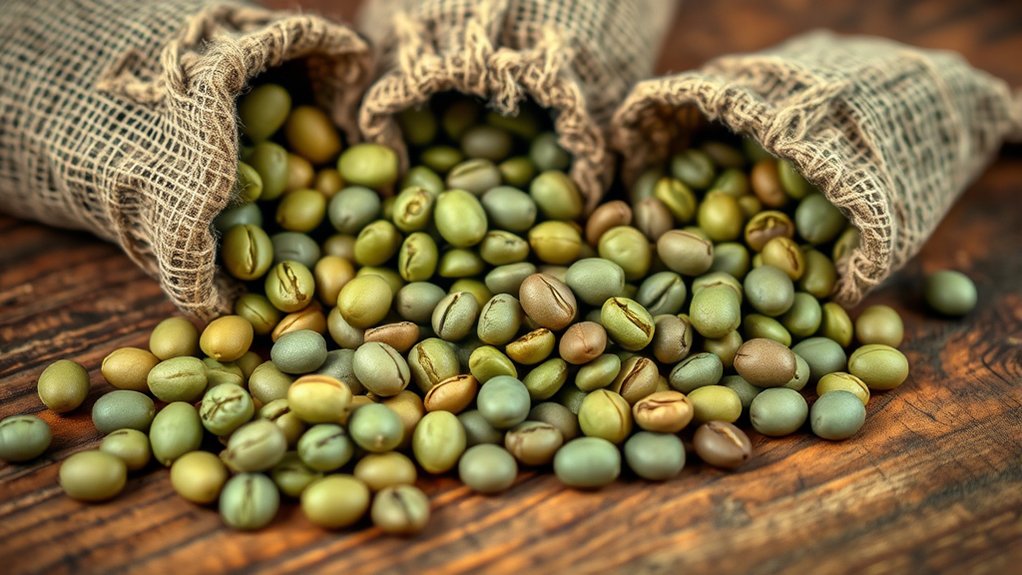
You’ll notice that different coffee varieties don’t age the same.
Take Arabica beans, for example—they tend to lose freshness faster than Robusta because of their unique composition.
How the beans were processed also makes a big difference.
Dry and washed methods can affect how the flavor changes over time.
Knowing these factors can really help you manage your green coffee’s shelf life more effectively.
Varietal Freshness Variability
Because each coffee variety ages at a different rate, you’ll notice that some green beans lose their freshness and flavor sooner than others.
Varietal differences, such as moisture content and chemical makeup, play a key role in how quickly green coffee quality declines.
For example, varieties with higher moisture content often experience faster flavor deterioration.
Specialty coffee, benefiting from superior processing and storage, tends to maintain its freshness longer—sometimes up to a year.
Understanding these differences helps you decide when to use your beans for the best taste.
By recognizing how each variety behaves over time, you can optimize your storage methods and guarantee your coffee delivers peak flavor when brewed.
This knowledge is essential for both roasters and enthusiasts aiming to preserve quality.
Processing Method Impact
The way coffee beans are processed plays a major role in how long they stay fresh. Your choice of processing method directly impacts green coffee storage and the quality of green beans over time.
Here’s what you should consider:
Dry-processed beans age faster because they’ve lower moisture and are exposed to more air.
On the other hand, wet-processed beans last longer since fermentation stabilizes them and cuts down on off-flavors.
Environmental humidity during processing affects moisture content. Higher humidity can speed up degradation.
Varieties like Arabica, which have lower oil content, generally last longer than Robusta.
Flavor Aging Differences
While different coffee varieties age at varying rates, understanding these differences can help you choose beans that maintain their best flavor longer.
For example, dry-processed coffees tend to lose their fruity notes faster than others, illustrating clear flavor aging differences.
Specialty-grade green coffee usually holds on to its quality longer due to better processing and proper storage.
Some aged varieties like Sumatran and Javan still attract enthusiasts because their flavors evolve uniquely over time.
To maximize green coffee longevity, your storage facility should control humidity and temperature carefully.
Proper storage slows flavor degradation and preserves the beans’ unique profiles.
How Does Storage Temperature Affect Green Coffee Shelf Life?
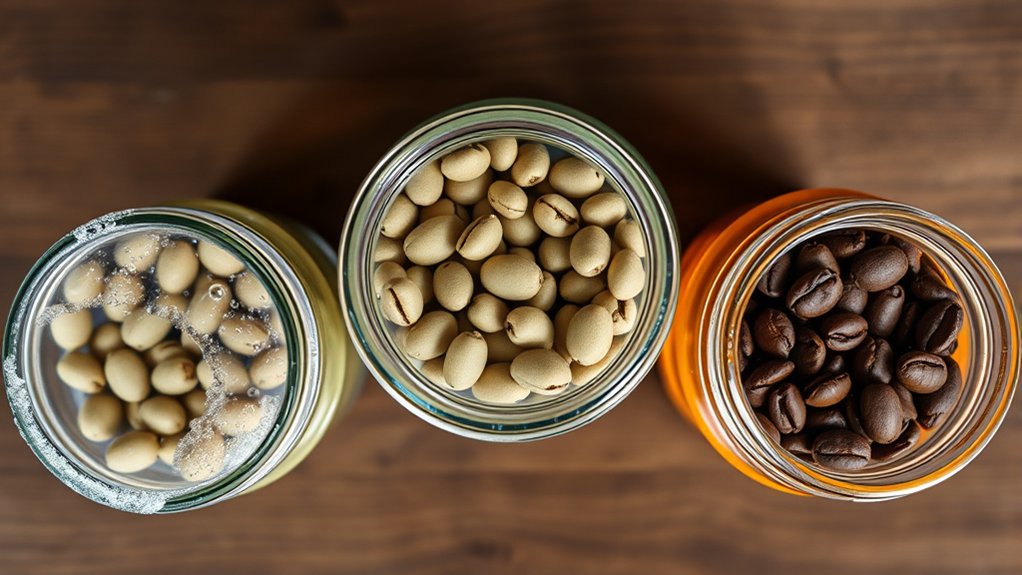
If you want to keep your green coffee beans fresh for as long as possible, controlling the storage temperature is key. Proper temperature management directly affects the freshness and shelf life of your green coffee. Here’s what you should know:
Controlling storage temperature is essential to preserving the freshness and longevity of your green coffee beans.
- Store green coffee between 68-77°F (20-25°C) to maintain ideal freshness.
- Avoid high temperature fluctuations to prevent condensation and mold growth.
- Temperatures above 75°F (24°C) speed up aging, causing off-flavors.
- Stable temperature and airtight storage can extend freshness up to 12 months.
Why Is Humidity Control Crucial for Green Coffee Storage?
Because green coffee beans are highly sensitive to moisture, controlling humidity is essential to preserving their quality. You need to maintain humidity levels between 60% and 65% to prevent moisture absorption, which can cause fermentation and mold growth.
If humidity rises above 70%, the risk of spoilage increases dramatically, leading to off-tastes and compromised flavor integrity. Proper humidity control keeps the beans’ moisture content below 14%, helping you prevent mold and musty odors that ruin the batch.
Using a moisture meter regularly lets you monitor the beans’ condition. Readings above 0.70 signal a high mold risk.
What Packaging Options Best Preserve Green Coffee Freshness?
Maintaining the right humidity is just one part of keeping green coffee beans fresh. Choosing the right packaging plays a big role too.
When you store green coffee, the packaging must protect against moisture, air, and light to preserve flavor and quality. Here are the best coffee packaging options:
- Hermetic packaging like Ecotact bags offers multi-layer protection against moisture and air.
- GrainPro bags prevent moisture migration, making them ideal for long-term storage and transport.
- Airtight containers, including vacuum-sealed ones, minimize air exposure for smaller quantities.
- Opaque containers block light, which prevents degradation of organic compounds.
Using these methods, you can keep your green coffee fresh for up to 12 months under suitable conditions.
How To Identify Old or Stale Green Coffee Beans?
How can you tell when green coffee beans have gone stale or old?
First, stale green coffee often develops off-flavors like cereal-like, musty, or cardboard notes, signaling a drop in quality. Beans older than 6 to 12 months may taste baggy or burlap-like, especially if stored improperly.
Check the moisture content. If it’s above 0.70, the risk of mold increases, indicating old or spoiled beans.
You can also notice changes in aroma and flavor intensity during regular cupping sessions; a decline here suggests aging.
Beans labeled as “past crop” are typically over a year old and often discounted due to quality deterioration.
Can Green Coffee Be Stored Long-Term Without Losing Flavor?
You can keep green coffee beans fresh for up to a year if you store them in airtight packaging.
It’s important to keep the temperature stable and maintain proper humidity. Aging does affect the flavor, so making sure the moisture levels stay just right and avoiding big temperature swings really helps preserve the taste.
Using vacuum sealing or hermetic bags can even extend that freshness beyond the usual timeframe.
Optimal Storage Conditions
Although green coffee beans can stay fresh for up to a year under the right conditions, storing them long-term without losing flavor requires careful attention.
To maintain ideal storage conditions, focus on these key factors:
- Keep humidity levels between 50-70% to prevent mold and spoilage.
- Maintain moisture content around 8-12.5% to preserve bean quality.
- Use airtight packaging methods, like hermetic barrier bags, to block oxygen, moisture, and light.
- Store beans at a stable temperature of 68-77°F (20-25°C).
For longer storage, consider cold or deep freezing but expect some flavor loss.
Effects Of Aging
Maintaining the right storage conditions can help preserve green coffee beans, but their quality still changes over time. The effects of aging cause flavor degradation, especially after 6 to 12 months. Even with proper storage, like stable temperatures around 20°C and moisture between 8% and 12.5%, you’ll notice some loss.
Specialty-grade coffees are particularly vulnerable and best used fresh to keep their distinctive profiles. Aging can introduce musty or stale notes, reducing overall quality.
| Storage Duration | Flavor Quality |
|---|---|
| 0-6 months | Ideal freshness |
| 6-12 months | Slight degradation |
| 12-18 months | Noticeable off-flavors |
| 18+ months | Significant flavor loss |
Long-term storage without flavor loss is difficult, so plan accordingly.
What Are the Best Practices for Storing Green Coffee at Home?
When storing green coffee at home, keeping your beans in an airtight container at a stable temperature between 68-77°F (20-25°C) is crucial to prevent moisture buildup and preserve freshness.
To guarantee good storage and extend the life of green coffee, keep in mind these key tips:
- Store green coffee beans in food-grade packaging like GrainPro or Ecotact liners to protect from moisture and light.
- Maintain humidity levels around 60-65% to avoid mold and spoilage.
- Reseal bags tightly after each use and follow a first-in, first-out system to use older beans first.
- Aim to consume your green coffee within 12 months for the best flavor and quality.
How Is Ecommerce Changing Green Coffee Storage and Buying?
You’ve probably noticed how ecommerce is changing the way green coffee is stored and sold.
There are new packaging innovations popping up all the time, designed to keep those beans fresh during shipping.
Online sellers are also tweaking their supply chains to handle higher demand and offer customizable options that protect your coffee even better.
What does this mean for you as a buyer?
Simply put, you get fresher beans and more control over how they arrive at your door.
Ecommerce’s Role Expansion
As ecommerce continues to grow, it’s changing how you buy and store green coffee beans by putting freshness and customization front and center.
Online platforms let you tailor your green beans order, selecting packaging options that best preserve quality.
Thanks to efficient shipping, your beans arrive quickly, locking in flavor and aroma.
Here’s how ecommerce expands its role:
- You get more packaging choices designed to maintain freshness during transit and storage.
- Customized orders allow you to pick the exact green beans and packaging you want.
- Faster delivery reduces time beans spend in less-than-ideal conditions, preserving quality.
- Growing demand pushes sellers to innovate storage solutions to meet your expectations.
Ecommerce makes buying green coffee easier, fresher, and more personalized than ever.
Packaging Innovations Demand
Ecommerce’s growth has sparked a demand for smarter storage solutions that keep green coffee beans fresh from shipment to your doorstep.
Packaging innovations like hermetic packaging have become essential, protecting green coffee from moisture and oxygen during transit.
You’ll find advanced options such as Ecotact bags with nine layers of hermetic protection, which maintain freshness while being fully reusable and recyclable.
As you shop online, transparent shipping choices let you pick packaging that suits your freshness needs.
With more people brewing café-quality coffee at home, suppliers prioritize these innovations to uphold quality control from roaster to consumer.
Ultimately, ecommerce is reshaping how green coffee stays fresh, making your buying experience more reliable and sustainable.
Supply Chain Adaptations
While the surge in online coffee shopping has made specialty green beans more accessible, it’s also pushed suppliers to rethink storage and delivery methods.
To keep green coffee fresh through longer shipping times, the supply chain has adapted in key ways:
- Using hermetic packaging like Ecotact bags to block moisture and oxygen exposure.
- Offering customizable packaging and shipping options on ecommerce platforms.
- Implementing first-in, first-out inventory systems to prevent older stock from degrading.
- Educating customers on proper green coffee storage and handling to preserve quality.
These shifts guarantee your green coffee retains freshness despite the complexities of online buying.
It’s now easier than ever to enjoy café-quality beans at home.
Frequently Asked Questions
Can Green Coffee Beans Be Frozen to Extend Shelf Life?
Yes, you can freeze green coffee beans to extend their shelf life. Using proper freezing techniques like vacuum sealing helps control moisture and keeps the flavor intact.
Make sure you use airtight storage containers to prevent freezer burn and moisture absorption.
When you’re ready to use the beans, let them reach room temperature before opening the container. Avoid repeated thawing and refreezing to maintain their quality longer.
How Does Roasting Affect the Longevity of Green Coffee Beans?
Roasting considerably shortens the longevity of green coffee beans because it triggers chemical changes that release moisture and oils.
Depending on roasting methods, these changes alter the flavor profile and make beans more fragile, speeding up flavor degradation.
To preserve freshness, you’ll need airtight storage techniques and should consume roasted beans within weeks.
Unlike green beans, roasted coffee won’t last long, so roasting impacts both shelf life and taste quality.
Are There Any Health Risks Associated With Consuming Old Green Coffee Beans?
You won’t face major health risks from consuming old green coffee beans if they’re stored properly and free from mold growth. They still retain some health benefits and antioxidant properties, but expect noticeable flavor changes.
Often, the coffee tastes stale or unpleasant.
However, if moisture isn’t controlled, mold can develop, which is harmful. So, always check for mold and keep beans dry to enjoy their benefits safely.
What Impact Does Bean Size Have on Storage Duration?
Coincidentally, larger beans often outlast smaller ones thanks to their higher bean density and lower moisture content.
You’ll find that under ideal storage conditions, these factors slow down aging, letting your beans stay fresh longer.
Smaller beans, with more surface area, expose more to oxygen, speeding up staleness.
How Often Should Green Coffee Beans Be Inspected for Quality?
You should inspect your green coffee beans monthly for quality assessment. Regular checks let you evaluate storage conditions and catch any early signs of spoilage.
Perform a visual inspection to spot discoloration or mold, and conduct aroma evaluation to detect off-smells that indicate degradation.
Staying consistent with these inspections helps you maintain bean freshness, ensuring you catch issues before they affect flavor or shelf life.
Don’t skip these essential monthly checks.
Conclusion
If you don’t store your green coffee beans right, they’ll turn into tasteless rocks faster than you can say “espresso!” But with the right temperature, humidity, and care, you can keep them fresh for ages, almost like they’ve been frozen in time.
So don’t let your precious beans go stale; treat them like the gold they are. Remember, mastering storage isn’t just smart, it’s your secret weapon for perfect coffee every single time!