Are Coffee Beans Actually Beans – The Truth Explained
You might assume coffee beans are true beans, but they’re actually pits of coffee cherries, making them seeds rather than legumes. Unlike true beans from the Fabaceae family, coffee seeds belong to the Rubiaceae family and don’t grow in pods or fix nitrogen.
Their bean-like name comes from their appearance and historical trade terms. These seeds develop inside cherries through a detailed process, with differences between Arabica and Robusta impacting flavor and caffeine. Exploring their unique traits reveals much more.
What Exactly Are Coffee Beans Botanically?
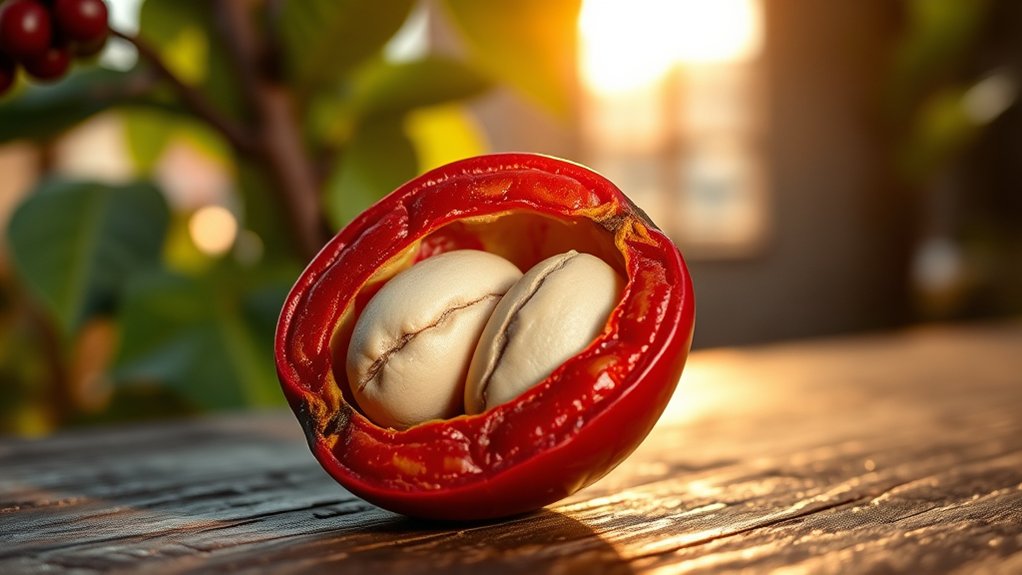
Although we commonly call them beans, coffee seeds aren’t true beans botanically; they’re actually the pits of the Coffea plant’s fruit, known as coffee cherries. Each coffee cherry typically contains two seeds, which resemble beans in shape but are technically pits.
Occasionally, about 5% of coffee cherries carry only one seed, called a peaberry, noted for its distinct sweetness.
The Coffea species most relevant to production are Coffea arabica and Coffea canephora (robusta), with arabica making up roughly 60% of global output. These seeds usually weigh between 300 and 330 mg once dried.
Understanding that coffee beans are seeds within coffee cherries clarifies their botanical classification, setting the foundation for grasping why the term “bean” is a misnomer.
Why Coffee Beans Are Not True Beans
You might think coffee beans are true beans, but actually, they’re seeds inside the coffee cherry fruit.
Unlike true beans, which grow in pods like peas or lentils, coffee seeds are more like the pits you find in stone fruits such as cherries or peaches.
Understanding this difference helps explain how coffee plants grow and why coffee is classified differently in the world of plants.
Botanical Classification
How exactly do coffee beans fit into the botanical world? Despite their name, coffee beans aren’t true beans. They’re seeds found inside coffee cherries, the fruit of the Coffea plant. Botanically, these seeds resemble the pits of stone fruits like peaches, not legumes.
Consider these key points:
- Coffee beans come from coffee cherries, typically two seeds per fruit.
- True beans belong to the Fabaceae family; coffee seeds are part of the Rubiaceae family.
- A small fraction of coffee cherries produce peaberries, containing a single seed.
Understanding this classification clarifies why these “beans” differ fundamentally from true beans. The term “bean” refers to their shape rather than botanical lineage, highlighting coffee’s unique position in plant biology.
Seed Vs. Bean
Since coffee beans come from the fruit of the Coffea plant rather than the legume family, they are technically seeds, not true beans. You’ll find these seeds inside the coffee cherry, a small, round fruit that ripens to bright red or purple.
Unlike true beans, which belong to the legume family and have an oval shape, coffee seeds resemble pits found in stone fruits. Each coffee cherry usually contains two seeds, but occasionally a single peaberry forms.
Understanding this distinction helps clarify why coffee “beans” aren’t true beans despite their name.
| Feature | Coffee Seed (Bean) | True Bean |
|---|---|---|
| Origin | Coffee cherry (fruit) | Legume pods |
| Shape | Resembles stone fruit pit | Oval |
| Family | Rubiaceae (Coffea plant) | Fabaceae (legumes) |
Where Does the Term “Coffee Bean” Come From?
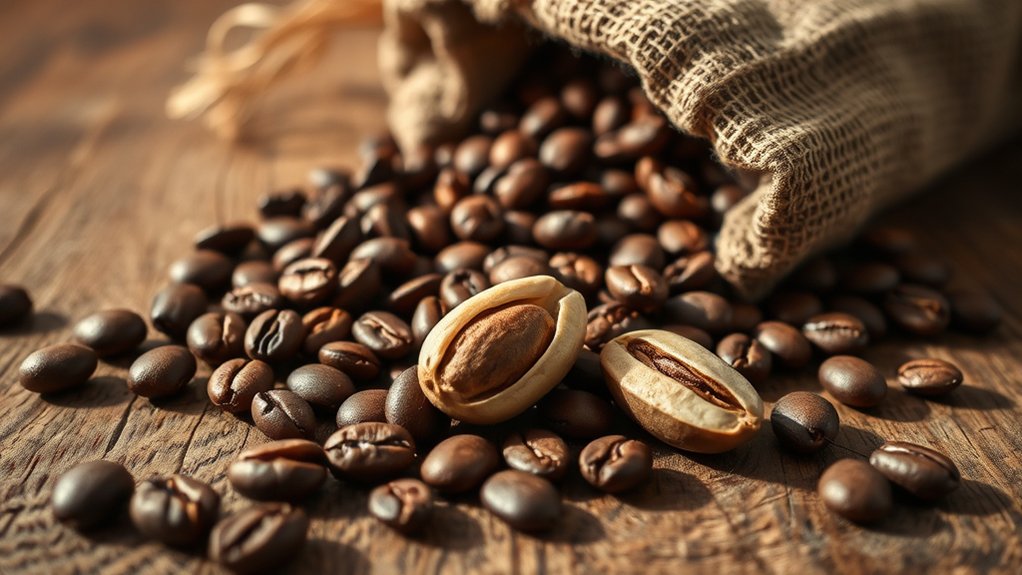
You might wonder why we call them “coffee beans” when, botanically speaking, they aren’t true beans at all. Actually, they’re seeds inside coffee cherries. The term “coffee bean” comes from the fact that these seeds look a lot like real beans. This name has been around and widely used since the early 19th century.
Knowing this little detail helps clear up how coffee cherries produce their seeds. Sometimes, instead of the usual pair, there’s just a single seed called a peaberry.
It’s pretty interesting once you dive into it!
Origin Of The Term
Although coffee seeds aren’t true beans, the term “coffee bean” arose because their shape closely resembles that of actual beans. The seeds come from coffee cherries, which usually contain two seeds, giving rise to this visual association.
The Coffea plant belongs to the Rubiaceae family, separating it botanically from legumes, making “bean” a misnomer. This term gained popularity in the 17th century as coffee cultivation and trade expanded worldwide.
Consider these points to understand the origin of the term:
- Coffee cherries typically hold two seeds shaped like kidney beans.
- About 5% of cherries produce a single seed called a peaberry, often prized for flavor.
- Coffee seeds resemble pits of stone fruits, not true beans.
This explains why “coffee bean” remains common despite botanical inaccuracies.
Botanical Bean Comparison
Understanding why coffee seeds are called “beans” requires examining their botanical characteristics compared to true beans. Coffee beans are actually seeds found inside coffee cherries, which are fruits of the Coffea plant.
Unlike true beans, which belong to the legume family, coffee seeds come from the Rubiaceae family and are technically pits of stone fruits. The term “bean” arises from the seeds’ shape, which resembles that of leguminous beans, leading to the common misnomer.
Each coffee cherry typically contains two seeds, though occasionally a single seed, known as a peaberry, develops.
This botanical distinction clarifies that despite their name, coffee beans aren’t true beans but rather seeds encased within the fruit of coffee cherries, highlighting the difference between their classification and their appearance.
Coffee Cherry Seeds
Because coffee seeds closely resemble the shape of common beans, people began calling them “coffee beans,” even though they’re technically the seeds inside the fruit of the Coffea plant, known as coffee cherries.
These coffee cherry seeds develop inside the fruit, which takes nearly a year to mature from flowering to ripeness.
Typically, each cherry contains two seeds, but about 10-15% contain a single seed called a peaberry, notable for its distinct flavor profile.
The term “bean” persists due to the seed’s appearance, despite their closer botanical relation to pits of stone fruits.
- Coffee cherries house the seeds, which we call coffee beans.
- Most cherries contain two seeds; some have one peaberry.
- Coffee cherry seeds mature over nearly a year before harvest.
How Do Coffee Beans Develop Inside the Cherry?
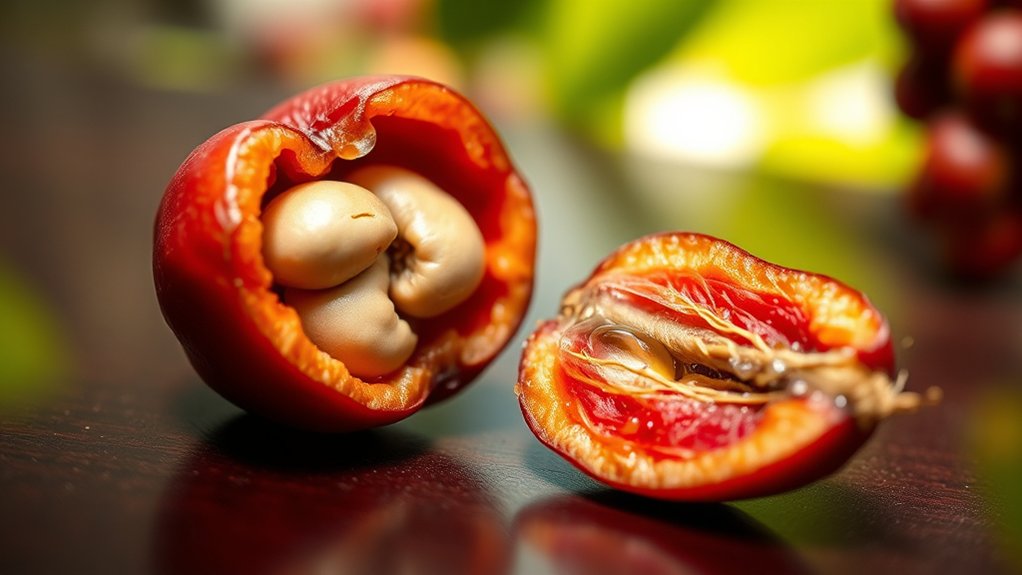
When coffee trees reach about three years old, they start producing cherries that house the coffee beans you’re familiar with. Inside each coffee cherry, two seeds typically develop, though about 5% contain a single seed called a peaberry.
The cherry undergoes a nearly year-long maturation process after flowering, allowing the seeds to fully develop. Each cherry consists of three layers: the exocarp (outer skin), mesocarp (juicy pulp), and endocarp, which protects the beans.
Within the beans themselves, the endosperm holds carbohydrates, proteins, and lipids vital for the coffee’s flavor and aroma.
Understanding this development process is essential since the coffee cherry’s structure and maturation directly influence the quality and characteristics of the beans you eventually brew.
How Arabica and Robusta Beans Differ
Although both Arabica and Robusta beans serve as the foundation of global coffee production, they differ markedly in flavor, growing conditions, and physical characteristics.
The Arabica bean, prized for its sweeter, more complex flavor, grows best at higher altitudes with cooler temperatures. Robusta, on the other hand, thrives in warmer, lowland areas and offers a stronger, more bitter taste with almost double the caffeine content.
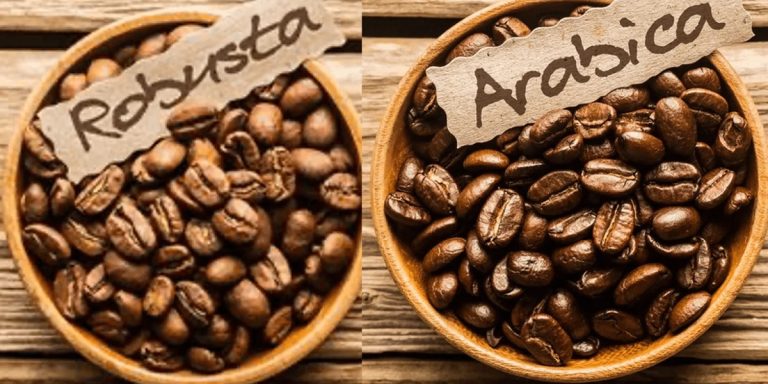
Visually, you’ll notice Arabica beans are oval with a curved crease, contrasting with Robusta’s rounder shape and straighter crease.
Understanding these differences helps you appreciate why Arabica beans dominate specialty coffee markets while Robusta often features in blends requiring robustness and higher caffeine.
- Arabica beans: oval shape, curved crease, delicate flavor
- Robusta beans: round shape, straight crease, higher caffeine
- Growing conditions: Arabica prefers cooler, high altitudes; Robusta tolerates heat and pests
How Coffee Processing Changes Bean Characteristics
Since coffee beans are seeds extracted from the cherry of the Coffea plant, the way you process these cherries directly shapes the beans’ flavor, aroma, and chemical makeup. The processing method, whether dry, washed, or semi-washed, determines key characteristics.
For example, the washed method removes the cherry pulp before fermentation, producing a cleaner, brighter taste and preserving chlorogenic acids critical for flavor and health benefits. In contrast, the dry method retains more fruity flavors but may result in higher waste and a different chemical profile.
Each processing method also affects environmental impact. Washed processing consumes more water, while dry processing generates more organic waste.
Understanding these nuances helps you appreciate how the processing method transforms raw seeds into the complex coffee beans you brew.
How Coffee Beans Differ From Other Seeds
While coffee beans are commonly called beans, they’re actually seeds extracted from the fruit of the Coffea plant. They more closely resemble the pits of stone fruits than true legumes.
When you examine seeds from a coffee tree, you’ll notice they differ fundamentally from other seeds in several ways.
Coffee seeds have unique characteristics that set them apart from typical seeds in many important ways.
Unlike legumes, coffee seeds don’t fix nitrogen in the soil and belong to the Coffea genus, which is distinct from true beans. The coffee cherry typically contains two seeds, but occasionally produces a peaberry, a unique single seed.
Furthermore, coffee seeds are rich in chlorogenic acids and alkaloids, compounds that influence flavor and health benefits.
- Coffee seeds come from coffee cherries, not pods like true beans.
- They don’t belong to the legume family or fix nitrogen.
- Peaberries, single seeds, offer a distinct flavor profile compared to regular coffee seeds.
Common Coffee Bean Misconceptions
Many people assume coffee beans are true beans because of their name and appearance. But this common misconception overlooks their botanical classification as seeds from coffee cherries.
As a coffee drinker, you should know these “beans” are actually seeds resembling stone fruit pits rather than legumes. Misunderstandings often arise about their origin, shape, and classification.
Here’s a concise comparison to clarify:
| Misconception | Reality |
|---|---|
| Coffee beans are legumes | They’re seeds inside coffee cherries |
| All cherries contain two beans | About 5% yield a single peaberry |
| Beans grow quickly | Cherries take nearly a year to mature |
| Arabica and Robusta are equal | Arabica accounts for ~60%, Robusta ~40% |
Understanding these facts helps coffee drinkers appreciate the true nature of their brew.
Frequently Asked Questions
What Is the Best Way to Store Coffee Beans for Freshness?
To keep your coffee beans fresh, use airtight storage containers that block moisture, light, and oxygen.
Store these containers in a cool, dark place between 15-24°C (59-75°F) to maintain ideal flavor.
Avoid refrigerators since temperature changes cause condensation.
Always grind beans just before brewing to preserve aroma.
Consuming beans within two weeks of opening guarantees peak freshness, as prolonged air exposure accelerates oxidation and flavor loss.
How Does the Roast Level Affect Coffee Flavor?
You’ll notice flavor complexity shifts with roast level. Lighter roasts highlight acidity and fruity brightness, while darker roasts reveal deeper, bolder, and sometimes smoky tones.
As roasting progresses, chemical reactions enhance sweetness and reduce acidity, transforming flavor profiles. Lighter roasts preserve floral notes; darker roasts develop chocolatey and nutty qualities.
Understanding this helps you choose coffee that matches your taste, balancing brightness and richness precisely to suit your preference.
Can Coffee Beans Go Bad or Expire?
Yes, coffee beans can go bad or expire, especially roasted ones. To guarantee flavor preservation, you need to store them properly in airtight containers, away from light, heat, and moisture.
Roasted beans start losing their volatile compounds within weeks, so consume them quickly for the best taste.
Green beans last much longer but still benefit from cool, dry storage.
If beans smell rancid or taste dull, they’ve likely expired and lost their flavor quality.
What Are the Health Benefits of Drinking Coffee?
You’ll benefit from drinking coffee mainly through caffeine effects that boost your alertness and cognitive function. The caffeine stimulates your central nervous system, improving focus and reducing fatigue.
Furthermore, coffee’s antioxidants, like chlorogenic acids, may lower inflammation and protect against type 2 diabetes and neurodegenerative diseases.
Regular consumption also supports liver health by combating oxidation.
How Do Grind Size and Brewing Method Influence Taste?
Your grind size and brewing method directly shape the taste dynamics of your coffee. A finer grind increases extraction speed, yielding a stronger, more intense flavor. This is ideal for espresso.
Coarser grinds slow extraction, producing milder, balanced notes. They work perfectly for French press or cold brew.
Adjusting grind size along with brewing time and temperature optimizes flavor, acidity, and body. This lets you precisely control your coffee’s taste profile for a personalized experience.
Conclusion
Now that you know coffee beans aren’t true beans but seeds inside a cherry, you can appreciate the science behind your cup. The term “bean” is more a nod to tradition than botany.
Understanding the differences between Arabica and Robusta, plus how processing shapes flavor, reveals how complex coffee really is. So next time you sip, remember: you’re enjoying a seed’s journey, not just a simple bean.