Do Worms Like Coffee Grounds – Gardening Facts Explained
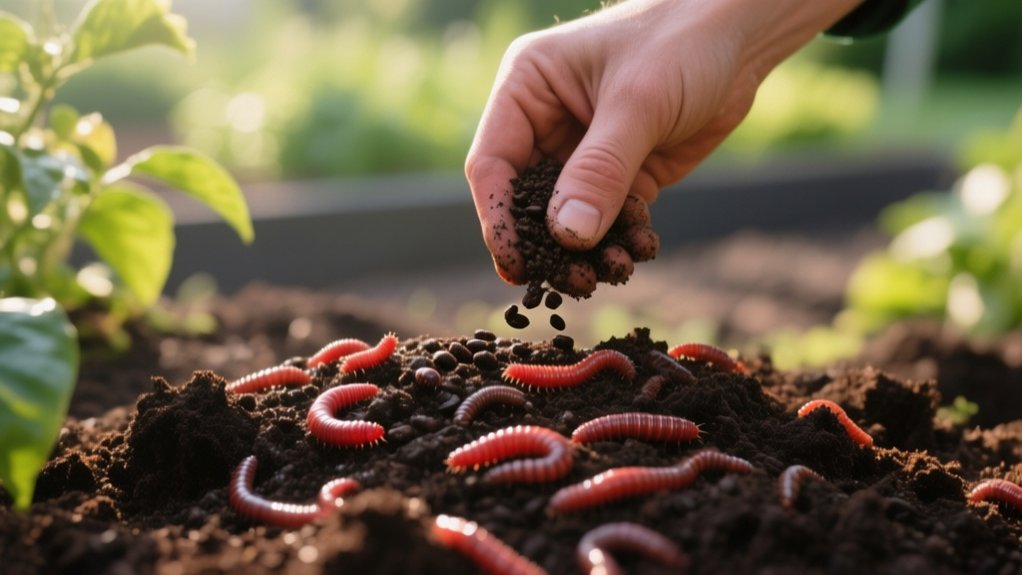
You can safely add coffee grounds to your worm bin, but don’t overdo it. Keep grounds under 25% of the mix for worm health. Worms are attracted to used grounds because they’re low in caffeine and rich in nitrogen, which supports digestion and reproduction.
Fresh grounds can harm worms due to caffeine and acidity, so it’s best to age or compost them first. Balancing grounds with carbon materials helps maintain moisture and temperature. There’s more to know about optimizing your worm bin with coffee grounds.
Can Worms Safely Eat Coffee Grounds?
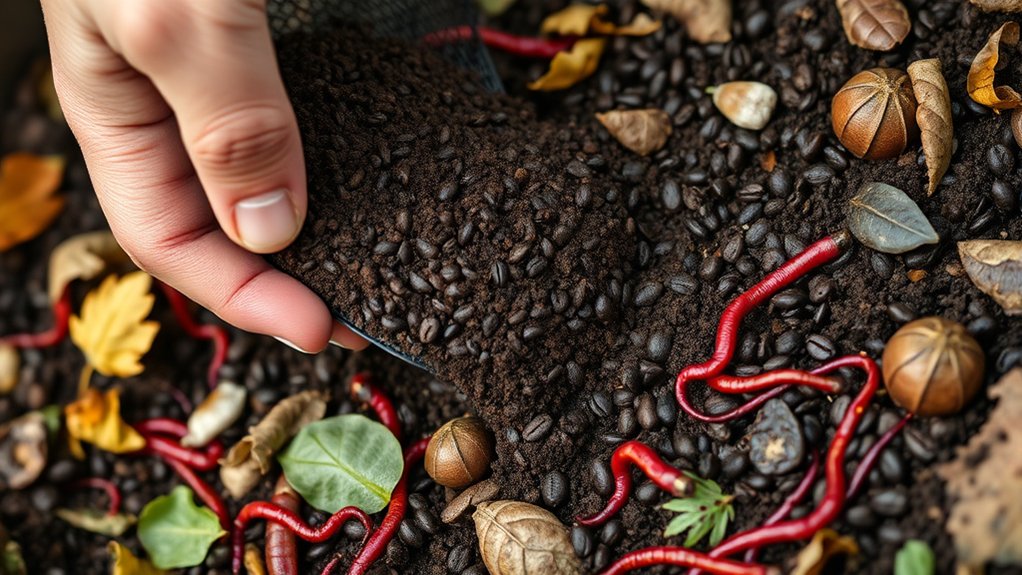
Although worms are naturally drawn to coffee grounds for their nitrogen content, you should be cautious about how much you add to your worm bin. Spent coffee grounds can benefit worm health and reproduction, but too much caffeine from these grounds may harm or even kill your worms.
Experts recommend keeping coffee grounds to no more than 25% of the worm bin’s content. To protect your worms, mix spent coffee grounds with carbon-rich materials like shredded cardboard or dried leaves.
Moreover, aging or composting the coffee grounds before adding them can help reduce negative effects and improve worm activity.
Why Worms Are Attracted to Coffee Grounds
Understanding why worms are drawn to coffee grounds can help you manage your worm bin more effectively.
Worms are attracted primarily because coffee grounds are rich in nitrogen, which supports their health and reproduction.
The fine texture of coffee grounds makes them easy for worms to consume and provides essential grit to aid digestion.
Furthermore, coffee grounds can generate warmth in compost, creating a moist environment that encourages worms to gather.
To maintain a balanced habitat, mix coffee grounds with materials like shredded cardboard.
However, you should keep coffee grounds to no more than 25% of your worm bin’s contents to avoid harm.
Caffeine’s Impact on Worm Health
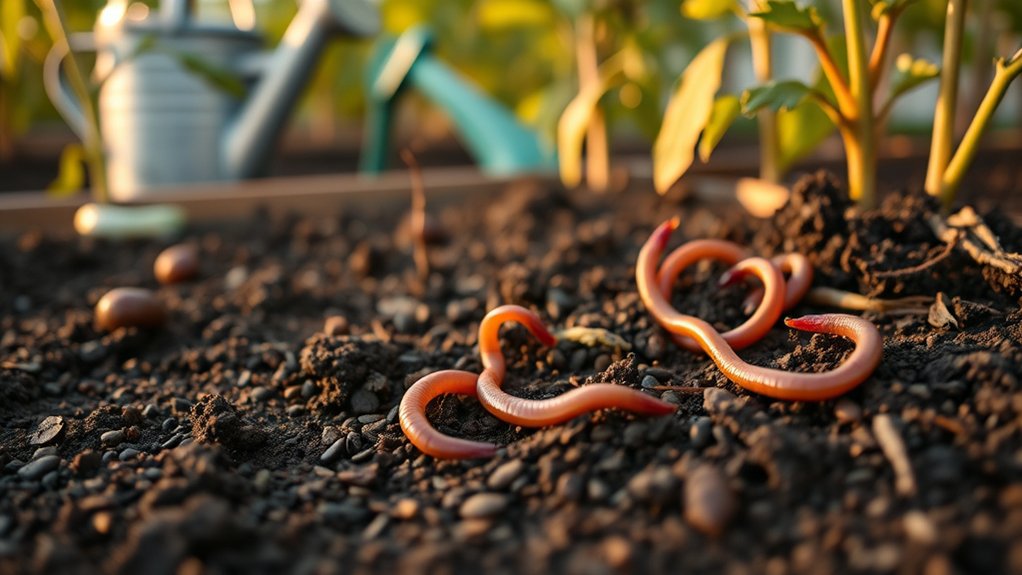
When you add coffee grounds to your worm bin, keep in mind that caffeine can affect worm health if it accumulates beyond safe levels. Worms absorb up to 72% of caffeine, but too much can harm or even kill them.
To maintain a healthy worm composting environment, limit coffee grounds to 25% of the total material and mix them with carbon-rich substances. Aging grounds also reduces caffeine’s impact on worm health, ensuring your worms thrive.
| Coffee Grounds Ratio | Worm Health Effect | Composting Tip |
|---|---|---|
| Below 25% | Safe, promotes health | Mix with carbon-rich materials |
| Above 25% | Harmful, lethal risk | Avoid excessive additions |
| Aged Grounds | Reduced caffeine | Improves worm survival |
Fresh vs. Used Coffee Grounds for Worms
You should avoid adding fresh coffee grounds to your worm bin because their high caffeine levels can actually harm the worms’ health and slow down their reproduction.
But when it comes to used coffee grounds, those are much safer. They offer valuable nutrients that worms can break down more easily.
So, to keep your worms happy and your compost in great shape, it’s best to stick with aged or spent coffee grounds—and use them in moderation.
This way, you’re giving your worms a nutritious treat without any risk.
Fresh Grounds Toxicity
Why should you be cautious about adding fresh coffee grounds to your worm bin? Fresh grounds toxicity is a real concern because these grounds contain high caffeine levels, which can slow worm growth and harm their health.
Worms absorb up to 72% of caffeine, making fresh grounds potentially toxic if added in large amounts. To protect your worms, limit coffee grounds to no more than 25% of the bin’s content.
Also, mix fresh grounds with carbon-rich materials like shredded cardboard to reduce caffeine’s negative effects and enhance worm survival.
Benefits Of Used Grounds
While fresh coffee grounds pose risks due to their high caffeine content, used grounds offer a safer and more beneficial alternative for your worm bin.
Used coffee grounds contain considerably less caffeine, reducing harm to worms and promoting healthier growth and reproduction.
They also boost microbial activity, enriching the nutrient profile essential for worm health.
To maximize benefits, mix used coffee grounds with carbon-rich materials like shredded cardboard, maintaining a balanced environment.
Incorporate used coffee grounds moderately, up to 25% of your bin’s volume, to enhance compost quality without overwhelming your worms.
Optimal Amounts of Coffee Grounds in Worm Bins
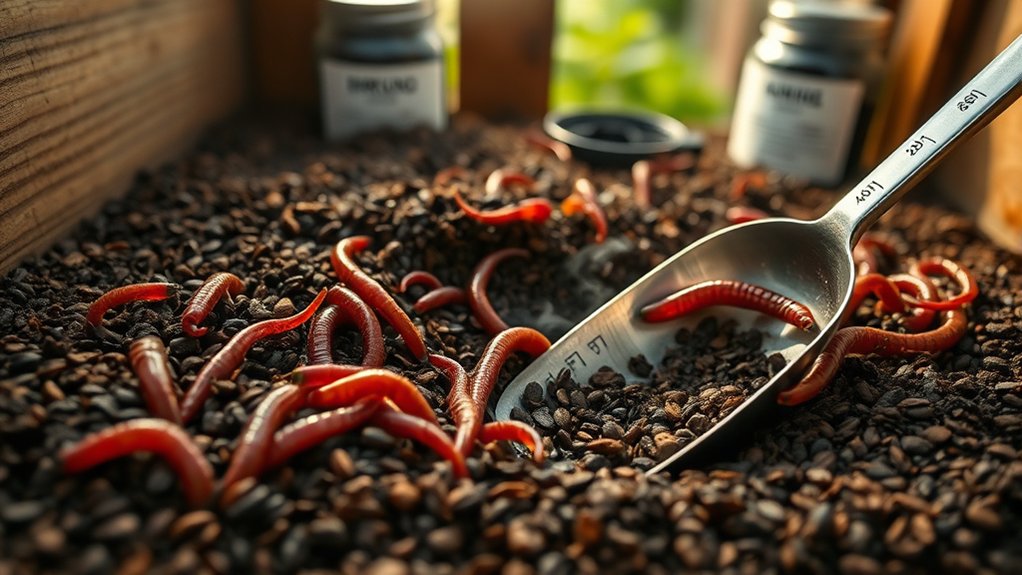
Although worms are attracted to coffee grounds for their nitrogen content, you should limit their amount to no more than 25% of your worm bin’s total volume.
Limit coffee grounds to 25% of your worm bin to keep worms healthy and active.
Adding too many coffee grounds can raise caffeine levels, which harms worms and may cause them to avoid the bin altogether.
Excessive coffee grounds also risk overheating your compost, threatening worm survival.
To maintain a healthy environment, mix coffee grounds with carbon-rich materials like shredded cardboard or dried leaves. This balance supports worm activity and sustains the compost process.
Before adding coffee grounds, confirm they’re moist to prevent drying out and encourage worm feeding.
Preparing Coffee Grounds for Worm Bins
Managing the amount of coffee grounds in your worm bin is only part of the process; how you prepare those grounds before adding them can greatly impact worm health and compost quality.
First, verify the coffee grounds are moist to keep them palatable and prevent drying out. You might want to age or compost the coffee grounds briefly to reduce acidity and potential overheating, making them more appealing to your worms.
Avoid adding fresh, dry coffee grounds directly, as this can harm your worms. Before mixing, check that the grounds aren’t too compacted to allow airflow.
Always monitor your worm bin’s temperature and worm health after adding coffee grounds to catch any issues early. Proper preparation verifies your worm bin thrives with coffee grounds included.
Balancing Coffee Grounds With Carbon Materials
Because coffee grounds are high in nitrogen, you need to balance them with carbon-rich materials like dry leaves or shredded cardboard to keep your worm bin healthy. This 4:1 carbon-to-nitrogen ratio prevents overheating and creates a perfect environment for worms.
Adding paper filters with coffee grounds boosts carbon content, diversifying the compost mix. Keep coffee grounds moist before adding them to avoid drying out worms.
| Material Type | Example | Purpose |
|---|---|---|
| Nitrogen (Green) | Coffee grounds | Provides protein-rich food |
| Carbon (Brown) | Dry leaves | Regulates temperature |
| Carbon (Brown) | Shredded cardboard | Adds bulk and aeration |
| Carbon (Brown) | Paper filters | Enhances carbon diversity |
| Ratio | 4:1 (C:N) | Best compost balance |
Balancing coffee grounds with carbon materials promotes worm health and efficient composting.
Problems From Too Many Coffee Grounds in Worm Farms
If you add too many coffee grounds to your worm farm, you might end up with overheating and too much moisture. This can create a harmful environment for your worms.
Plus, the high caffeine levels in coffee grounds can actually slow down their growth or even be fatal.
Overheating And Moisture Issues
When you add too many coffee grounds to your worm bin, the high nitrogen content can cause the compost to overheat. This harms your worms and slows down the entire process.
Coffee grounds also retain moisture. If you don’t balance them with carbon-rich materials like shredded cardboard or dry leaves, they can create anaerobic conditions. This lack of oxygen produces foul odors and makes the environment unfavorable for worms.
You’ll notice worms avoiding areas with excessive coffee grounds, and studies link high concentrations to increased worm mortality.
To prevent overheating and moisture issues, maintain a proper ratio of coffee grounds to carbon materials. This balance guarantees your worm farm stays healthy and efficient without compromising the composting process.
Worm Health And Survival
Excessive coffee grounds don’t just cause overheating and moisture problems. They can directly threaten worm health and survival. High caffeine levels in coffee grounds can kill worms or slow their activity, so you should limit grounds to 25% of the bedding.
Mixing grounds with carbon-rich materials like shredded cardboard balances nitrogen and supports worm health. Also, always moisten coffee grounds before adding them to maintain proper moisture levels.
| Problem | Impact on Worm Health |
|---|---|
| Excessive caffeine | Worm mortality, slowed growth |
| Imbalanced nitrogen | Stress, reduced worm survival |
| Dry coffee grounds | Decreased worm activity |
Following these guidelines guarantees your worm farm stays healthy and productive.
How Worms Break Down Caffeine and Other Pollutants
Although caffeine can harm plant roots at higher concentrations, worms play an essential role in breaking down coffee grounds and reducing caffeine levels in soil. Studies show worms absorb up to 72% of caffeine, appreciably lowering its toxicity and helping plants thrive.
When you add coffee grounds to your compost, fungi help decompose the cellulose into sugars, making it easier for worms to digest. This collaboration accelerates the breakdown of caffeine and other organic pollutants.
However, using coffee grounds in moderation is key, since excessive amounts can harm worms. By relying on worms to process coffee grounds thoughtfully, you improve soil health while minimizing caffeine’s negative effects, creating a balanced, nutrient-rich environment for your garden to flourish.
Improving Worm Compost Quality With Coffee Grounds
You can boost your worm compost’s nutrient content by adding coffee grounds, which are packed with nitrogen and great for worm health.
Just make sure to keep the grounds under 25% of the bin’s volume.
It’s also a good idea to mix them with carbon-rich materials to keep everything balanced.
This way, your worms will thrive, and your compost will turn out even better.
Coffee Grounds Nutrient Boost
When you add coffee grounds to your worm bin, you provide a rich source of nitrogen that supports worm health and boosts their reproduction.
Coffee grounds enhance the nutrient profile of worm compost, making it richer and more beneficial for your garden.
However, to avoid caffeine toxicity, keep coffee grounds under 25% of your worm bin’s content.
Aging or partially composting the grounds before adding them increases their nutritional value and makes them more appealing to worms.
Mixing coffee grounds with carbon-rich materials like shredded cardboard helps maintain balance, improving worm survival rates.
Studies confirm worms effectively process coffee grounds, resulting in higher-quality compost.
Use coffee grounds thoughtfully to maximize worm health and compost quality in your vermicomposting system.
Balancing Grounds For Health
Maintaining the right balance of coffee grounds in your worm bin plays a vital role in keeping worms healthy and producing quality compost.
Coffee grounds are a nitrogen-rich “green” waste, but too much can harm your worms and disrupt composting. Here’s how to balance them effectively:
- Limit coffee grounds to 25% of the total worm bin content to prevent overheating and stress on worms.
- Mix coffee grounds with carbon-rich materials like shredded cardboard or paper to maintain moisture and create a balanced diet.
- Use properly aged or composted coffee grounds, which are easier for worms to digest and boost nutrient availability.
Maintaining Moisture and Temperature in Worm Bins
Although coffee grounds are a valuable addition to worm bins, they can dry out quickly and generate heat, so you’ll need to monitor moisture and temperature closely.
Dry coffee grounds discourage worms and reduce their activity, so keeping them moist is essential.
Keeping coffee grounds moist is crucial to encourage worm activity and maintain a healthy worm bin.
Before adding coffee grounds to your bin, dampen them to improve acceptance. Since coffee grounds can raise the bin’s temperature, regularly check for overheating to protect your worms.
Mixing coffee grounds with shredded cardboard or layering wet waste over them helps maintain balanced moisture and temperature levels.
By managing these factors carefully, you guarantee a healthy environment that supports worm activity and efficient composting.
Staying proactive with moisture and temperature control keeps your worm bin thriving and responsive to coffee grounds.
Combining Coffee Grounds With Other Kitchen Waste
To keep your worm bin healthy, you’ll want to combine coffee grounds with other kitchen waste thoughtfully. Coffee grounds are rich in nitrogen but can be too acidic or heavy if used alone. Here’s how to mix them effectively:
- Mix coffee grounds with carbon-rich materials like shredded cardboard or dry leaves to balance nutrients and support worm health.
- Combine coffee grounds with vegetable scraps to boost microbial activity, speeding up decomposition.
- Keep coffee grounds below 25% of the total waste volume to avoid harming your worms.
Before adding, moisten the coffee grounds to prevent dryness and encourage worm feeding.
Layering them with finished compost can also make coffee grounds more appealing to worms, promoting a thriving worm population.
Frequently Asked Questions
Can Coffee Grounds Help Repel Garden Pests Naturally?
Yes, coffee grounds act as a natural pest deterrent in your garden. Their caffeine content helps repel pests like slugs, snails, and ants, creating an unwelcoming barrier around your plants.
When you mix coffee grounds into your soil or compost, they boost microbial activity and support beneficial organisms that outcompete harmful pests.
Using coffee grounds is a practical, eco-friendly way to protect your plants without relying on chemicals.
Do Different Types of Coffee Grounds Affect Worm Activity?
Imagine a garden bed buzzing with life where worms enthusiastically tunnel through rich soil.
Yes, different types of coffee grounds do affect worm attraction.
Dark roast grounds, with lower caffeine, draw worms more than lighter roasts. Finer grounds are easier for worms to consume, boosting their activity.
Using aged, used coffee grounds mixed with organic scraps enhances worm health and encourages them to thrive, turning your compost into a worm-friendly haven.
How Do Coffee Grounds Influence the Smell of Worm Compost?
Coffee grounds can improve odor management in your worm compost by promoting healthy microbial activity that breaks down organic matter efficiently.
Their nitrogen content supports bacteria that reduce unpleasant smells.
To keep odors in check, mix coffee grounds with carbon-rich materials and avoid adding too much moisture.
Aging the grounds before use also helps.
Can Coffee Grounds Be Used for Other Composting Methods?
You might think coffee grounds are only for worm bins, but you can definitely use them in alternative composting methods. They add valuable nitrogen but remember to mix them with carbon-rich materials like dry leaves or shredded paper to balance moisture and acidity.
In traditional or aerobic compost piles, keeping coffee grounds under 25% by volume prevents overheating and supports effective decomposition.
Are There Seasonal Considerations When Adding Coffee Grounds to Worm Bins?
Yes, you need to make seasonal adjustments when adding coffee grounds to worm bins. In colder months, add them sparingly to avoid overheating and moisture buildup.
During warmer months, worms find coffee grounds more appealing, but balance them with carbon-rich materials to prevent overwhelm.
Aging coffee grounds before spring or summer helps reduce caffeine and improves palatability.
Always observe your worms’ behavior to fine-tune how much and when you add coffee grounds.
Conclusion
Think of coffee grounds as a gentle wake-up call for your worms, not too much caffeine or they get jittery. Like Sarah, a gardener who added small amounts of used grounds and saw her worm bin thrive within weeks, you can boost compost quality by balancing coffee with other kitchen scraps.
Keep moisture and temperature steady, and your worms will happily break down those grounds. They’ll turn your waste into rich, fertile soil for your garden’s success.