What Is Blended Coffee – Explained Simply
Blended coffee combines beans from multiple origins to give you a balanced, consistent flavor that single-origin coffees can’t always deliver. You’ll find blends crafted by carefully selecting beans based on altitude, climate, and processing methods to harmonize acidity, body, and flavor complexity.
Roasters may blend before or after roasting to fine-tune taste and mask defects. This technique also balances cost and quality, ensuring a reliable cup year-round. Exploring how blends work reveals even more about their unique crafting.
Why Coffee Blends Matter
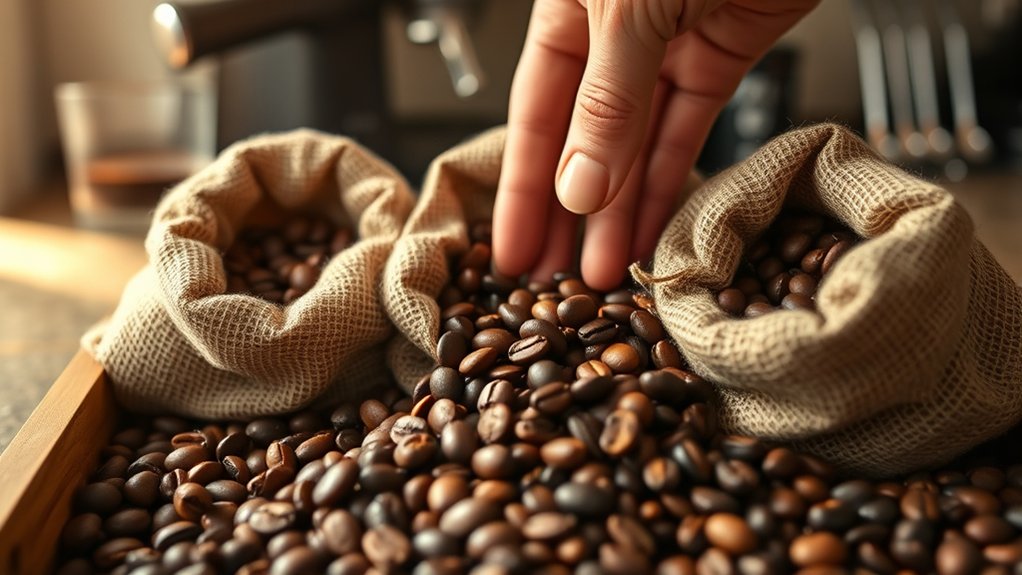
Although single-origin coffees offer unique flavors, blends matter because they combine beans from multiple origins to create a consistent, balanced profile that appeals to a broader range of tastes.
When you work with coffee blends, you achieve flavor profiles that maintain quality despite seasonal fluctuations in individual crops. This consistency guarantees every cup meets expectations.
Blending also masks potential defects in single beans, elevating overall cup quality. You’ll find that crafting these blends requires precise selection and proportioning, demanding deep knowledge of how diverse beans interact during roasting.
This expertise lets roasters develop distinctive, harmonious flavor profiles that showcase their skill.
Ultimately, coffee blends provide you with a reliable, nuanced experience you can enjoy year-round, transcending the variability inherent in single-origin coffees.
What Are Coffee Blends and How Are They Made
Coffee blends combine green beans sourced from multiple origins to achieve a balanced and consistent flavor profile that highlights the roaster’s expertise. You’ll find that these blends are crafted either by mixing green beans before roasting or by combining roasted beans afterward, each method influencing the final flavor profile differently.
When creating coffee blends, roasters select beans based on altitude, climate, and processing techniques to complement one another precisely. Typically, blending ratios vary, with common examples including 70%/30% or 50%/30%/20%.
Blenders usually recommend using two to four components to optimize complexity and balance. This technical approach allows you to experience nuanced, layered flavors while maintaining consistency, ensuring each cup reflects the roaster’s refined skill in merging diverse origins into a harmonious coffee blend.
Reasons Roasters Choose to Blend Coffee
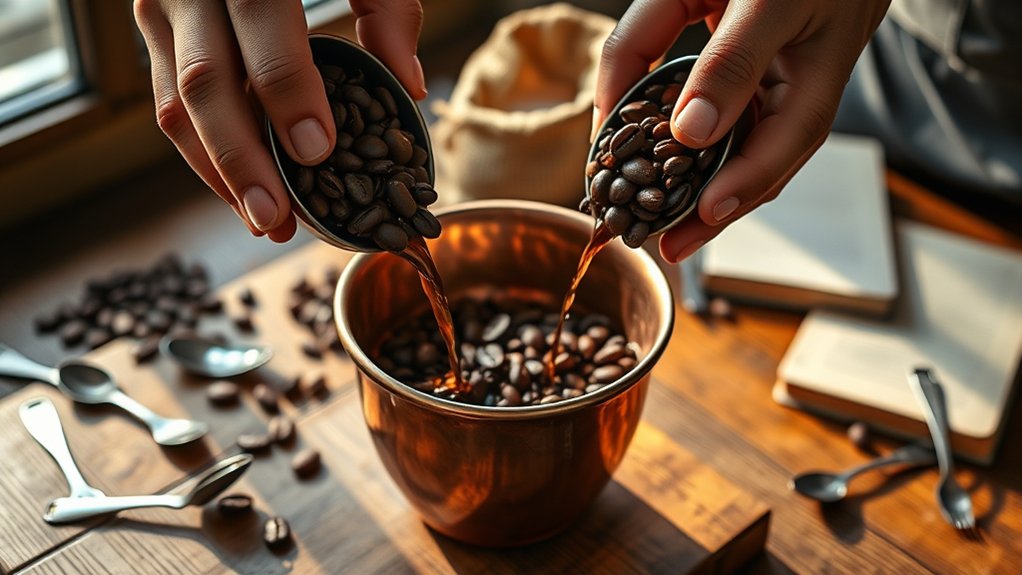
When you blend coffee, you’re actually optimizing cost efficiency. By combining beans strategically, you can balance quality and price in a way that makes sense.
Plus, blending helps guarantee flavor consistency. That means you get to maintain a stable profile, even when the availability of certain beans changes with the seasons.
On top of that, blending lets you create unique flavor profiles. It’s all about harmonizing diverse regional characteristics into one cohesive, delicious cup.
Cost Efficiency Benefits
Because sourcing high-quality single-origin beans can be costly and inconsistent, roasters blend coffee to optimize cost efficiency while maintaining flavor standards. By combining beans from multiple regions, you reduce reliance on expensive single-origin stocks, lowering overall procurement costs.
Blended coffees allow you to mask minor defects in lower-grade beans without sacrificing palatability, preserving profitability. Furthermore, blending mitigates seasonal quality fluctuations by balancing variable harvests, stabilizing your input costs throughout the year.
This approach not only streamlines inventory management but also enhances your ability to offer competitively priced products. Ultimately, cost efficiency achieved through blending lets you maintain quality standards while maximizing financial sustainability in a dynamic market environment, making blended coffees an essential strategy for roasters focused on operational and economic optimization.
Flavor Consistency Goals
Although individual single-origin beans can vary considerably between harvests, roasters blend coffee to guarantee you experience a consistent flavor profile with every cup.
Blended coffee allows roasters to counteract seasonal and regional fluctuations by combining beans with complementary characteristics, ensuring stable flavor consistency.
This process balances acidity, body, and aroma, masking undesirable notes from particular batches. By expertly selecting beans from diverse origins, roasters maintain the sensory attributes you expect, reinforcing brand reliability.
Flavor consistency is essential for building consumer trust, encouraging repeat purchases by delivering the same taste experience time after time.
Ultimately, blended coffee isn’t just about complexity; it’s a strategic approach to preserve the integrity of flavor profiles despite natural agricultural variability, giving you dependable quality in every brew.
Unique Profile Creation
A carefully crafted blend allows roasters to create unique flavor profiles by balancing the distinct characteristics of beans sourced from different regions.
When you explore blends, you’ll notice how roasters strategically combine beans to highlight complementary flavors, ensuring no single note dominates.
This precision lets them mask flaws in lower-quality beans, delivering a consistently enjoyable cup. As a result, each blend showcases a harmonious complexity that you can’t achieve with single-origin beans alone.
Seasonal blends further enhance this artistry by introducing flavors that resonate with specific times of the year, keeping your palate engaged.
Ultimately, blending demands a technical mastery of bean traits, where roasters fine-tune proportions to craft distinct, balanced flavors tailored to your taste.
How Roasters Craft Unique Coffee Blend Recipes
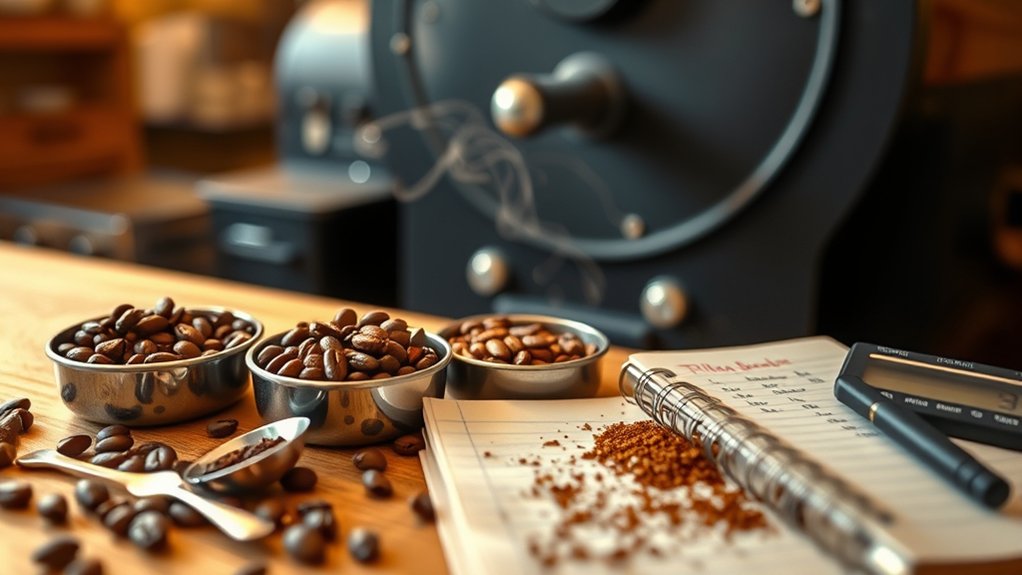
You start by picking beans that have complementary acidity, body, and flavor notes to create a specific taste profile.
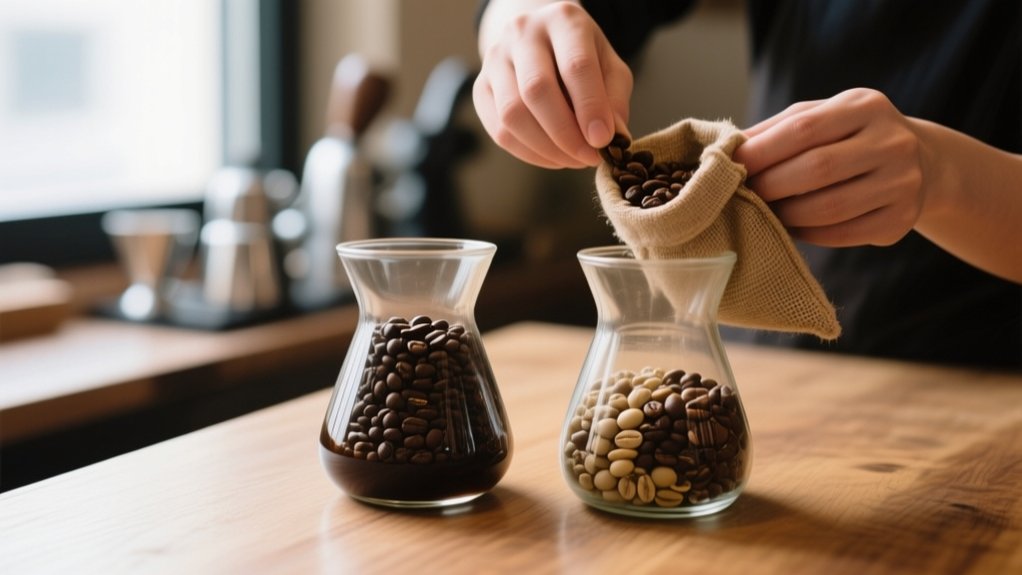
Then, you can blend them either before roasting by mixing the green beans or after roasting to adjust the flavor balance more precisely.
Mastering these techniques helps you consistently create harmonious blends that really bring out the best in each component.
Blending Techniques Explored
Two primary blending techniques dominate the craft of creating unique coffee blends: pre-roasting and post-roasting.
With pre-roasting blending techniques, you mix green beans before roasting, which can streamline production but may cause uneven coloration due to varying bean densities and moisture levels.
Post-roasting blending involves combining roasted beans, allowing you to fine-tune the flavor profile immediately and adjust ratios for precision. The method you choose depends on the desired flavor profile and bean characteristics.
Master blenders balance base, mid, and high flavor components methodically, documenting ratios and brewing specs meticulously.
This documentation guarantees consistent quality and reproducibility across batches.
Blending techniques are a foundational element in crafting harmonious, distinctive coffee blends that meet specific taste goals.
Balancing Flavor Profiles
Master blenders move beyond selecting blending techniques to focus on balancing flavor profiles that define each unique coffee blend. You’ll find they carefully select beans from diverse origins, combining bright acidity with rich body to achieve harmony.
They design blends using base, mid, and high flavor components, ensuring complexity and balance. Whether pre-roasting or post-roasting, each method enhances flavors differently. Transparency about ratios and sourcing further refines your experience.
Below is a snapshot of how flavors are balanced in blends:
| Flavor Component | Role in Blend |
|---|---|
| Base | Provides body |
| Mid | Adds sweetness |
| High | Contributes acidity |
| Roasting Method | Influences flavor |
| Origin | Defines character |
This precise balancing crafts the distinctive, harmonious flavors you enjoy.
Pre-Roast vs. Post-Roast Blending Explained
Although both pre-roast and post-roast blending aim to create balanced coffee profiles, they differ markedly in process and outcomes.
Pre-roast blending involves combining green beans before roasting, which streamlines production but risks uneven roast levels due to differing bean densities and moisture content. This method offers efficiency yet less control over individual bean development.
Pre-roast blending boosts efficiency but may lead to uneven roasting due to bean density and moisture differences.
Conversely, post-roast blending mixes roasted beans, enabling you to assess and adjust flavor immediately. However, variations in roast degree can cause inconsistent extraction during brewing.
Choosing between pre-roast blending and post-roast blending hinges on your desired flavor precision and operational priorities.
Industry standards favor blends with 2-4 components, balancing complexity and manageability. Understanding these distinctions helps you optimize blending strategies for targeted taste profiles.
How Blending Affects Coffee Flavor and Consistency
When you blend coffee beans from different origins, you create a complex interplay of acidity, sweetness, and body that results in a harmonious flavor profile.
Blended coffee allows you to balance and enhance flavors that single-origin beans might lack.
To master this, consider these factors:
- Bean Selection: Choose beans with complementary acidity and sweetness based on their growing conditions.
- Blending Technique: Decide between pre-roast blending for integrated flavors or post-roast blending for precise flavor adjustments.
- Flavor Masking: Use bold beans to offset undesirable notes in lower-quality beans, improving overall consistency.
Popular Types of Coffee Blends Explained
Blending coffee involves more than just mixing beans; it’s about crafting specific flavor experiences that suit various preferences and brewing methods. Popular blends like Breakfast Blend offer mild, smooth flavors ideal for gentle mornings, while French Roast delivers bold, dark profiles with smoky undertones.
Espresso blends combine Arabica and Robusta beans, enhancing body and sweetness while boosting crema. Mocha Java, a historic 50/50 mix of Yemen and Indonesian beans, balances fruity and earthy notes precisely.
House blends focus on consistency, blending beans from multiple origins to maintain stable flavors year-round.
Seasonal blends highlight distinct flavor profiles linked to particular times, allowing roasters to experiment creatively.
Understanding these blends helps you appreciate the nuanced flavors and purposes behind each expertly crafted combination.
Blends vs. Single-Origin Coffee: What’s the Difference?
How do blends and single-origin coffees differ in their approach to flavor and sourcing? Blends combine beans from multiple origins to craft a balanced, complex profile. Single origins focus on beans from a specific region, emphasizing unique characteristics. Consider these distinctions:
- Sourcing: Blends pull from various regions or producers; single origins come from one defined area.
- Flavor Complexity: Blends mix roast levels and flavor notes for harmony; single origins highlight distinct regional traits.
- Consistency: Blends aim for uniform taste year-round; single origins vary seasonally due to climate changes.
While some blends may qualify as single origins if sourced regionally, blends typically involve multiple lots to enhance complexity.
Understanding these nuances helps you appreciate how blends and single origins meet different flavor and sourcing goals.
How Freshness and Roasting Affect Coffee Blends
Because coffee starts to lose its prime flavor soon after roasting, freshness plays a critical role in the quality of blends you enjoy. Coffee ages rapidly, risking bitterness and diminished aroma within weeks.
Roast levels influence the flavor spectrum: light roasts retain bean-specific notes, while dark roasts amplify boldness. Blends often combine varied roast levels for complexity, balancing smooth Arabica qualities with robust profiles.
Ensuring delivery within a week post-roast preserves peak freshness.
| Aspect | Impact on Flavor | Best Practice |
|---|---|---|
| Freshness | Prevents bitterness, retains aroma | Consume within 1 week of roast |
| Light Roast | Preserves unique bean characteristics | Use for clarity and brightness |
| Medium Roast | Balances acidity and body | Best for blended harmony |
| Dark Roast | Enhances bold, rich flavors | Adds depth and intensity |
| Roast Level Mix | Creates complex, balanced profiles | Combine varying roast levels |
Brewing Tips for Enjoying Coffee Blends
Maintaining peak freshness and selecting the right roast levels set the foundation, but extracting the full spectrum of flavors from your coffee blend depends on your brewing technique.
Freshness and roast matter, but your brewing method unlocks the full flavor potential of your coffee blend.
To optimize your experience, focus on these key areas:
- Experiment with brewing methods like pour-over or French press to emphasize unique flavor notes inherent to your blend.
- Adjust the coffee-to-water ratio precisely; blended coffees often require more grounds to balance taste without over-extraction.
- Modify grind size, favoring a coarser grind to enhance extraction and yield a smoother profile.
Additionally, use freshly roasted beans within a week and document parameters such as water temperature and steeping time.
This technical approach helps you refine and consistently reproduce your ideal cup.
Finding the Perfect Coffee Blend for Your Taste
Where should you start when searching for the perfect coffee blend to suit your taste? Begin by experimenting with different roast levels: light, medium, and dark. Each one brings out distinct flavor characteristics.
Next, explore blends combining beans from varied origins. For instance, Ethiopian beans contribute fruity notes, while Colombian beans add nutty undertones, creating a balanced profile.
Focus on blends that emphasize complexity, as layered flavors reveal multiple tasting notes and enrich your experience. Pay close attention to the blend’s intended flavor profile, making sure no single element overwhelms the cup.
Finally, don’t hesitate to consult baristas who can recommend blends tailored to your palate.
Frequently Asked Questions
Can I Blend Coffee Beans at Home Myself?
Yes, you can blend coffee beans at home yourself by applying precise blending methods.
Start by selecting beans with complementary flavor profiles. Then use consistent coffee grinding techniques to achieve uniform particle size.
Adjust grind size based on your brewing method, finer for espresso and coarser for French press.
Experiment with post-roasting blending for immediate flavor evaluation. Make sure to meticulously record your ratios to replicate successful blends.
This technical approach guarantees a balanced, customized coffee experience.
How Should I Store Blended Coffee for Best Freshness?
To maintain ideal freshness, you should focus on precise coffee storage. Store your blended coffee in an airtight container to prevent oxygen and moisture exposure, which degrade flavor.
Keep it in a cool, dark place away from heat and sunlight. For longer shelf life, use vacuum-sealed bags.
Grind only what you need immediately, since ground coffee loses freshness faster.
Follow these freshness tips to enjoy your blend at its peak flavor.
Do Blended Coffees Have Different Caffeine Levels?
Yes, blended coffees definitely have different caffeine content. The caffeine level depends on the ratio of Arabica to Robusta beans, with Robusta containing about twice the caffeine of Arabica.
Roasting degree also affects caffeine content. Lighter roasts retain more caffeine than darker ones.
These factors influence not only caffeine content but also the flavor profiles you experience, making each blend unique.
Always check the blend specifics if caffeine is a concern for you.
Are Blended Coffees More Expensive Than Single-Origin?
Think of blended coffee quality and single-origin flavor profiles as apples and oranges; blended coffees usually cost less.
You won’t find blended coffees more expensive than single-origin because blends mix beans from various sources, lowering production costs.
Single-origin beans have unique flavor profiles tied to specific regions, which often drive their price up.
While some high-quality blends approach single-origin prices, on average, blended coffees remain the more budget-friendly choice.
Can Blended Coffee Help Reduce Bitterness or Acidity?
Yes, blended coffee can help reduce bitterness and acidity by combining beans with complementary flavor profiles. You’ll notice master blenders select origins like sweeter Colombian beans to balance more acidic varieties, creating a harmonious cup.
Furthermore, darker roast levels in blends diminish harsh acidity, enhancing richness.
Depending on your brewing methods, experimenting with blends lets you tailor flavor nuances precisely, optimizing smoothness while minimizing unpleasant bitterness or acidity in each brew.
Conclusion
Blended coffee is like a symphony, where each bean plays a unique note to create a harmonious flavor. By understanding how blends are crafted, whether pre or post roast, you can appreciate the precision behind every cup.
Roasters carefully balance origin, roast level, and freshness to deliver complex taste profiles. When you brew a blend, you’re not just drinking coffee; you’re experiencing a meticulously engineered flavor composition tailored to your palate.