Is Espresso Stronger Than Coffee – Key Differences Explained
You might think espresso is stronger than coffee because it’s more concentrated and packs intense flavor in a small shot. However, espresso contains about 63 mg of caffeine per ounce, while an 8-ounce cup of drip coffee usually has around 95 mg total.
The brewing method, serving size, and bean type all affect strength perception. Your energy boost depends on what you need, whether a quick kick or sustained release.
Keep exploring to uncover more about these differences.
What Is Espresso and How It’s Made
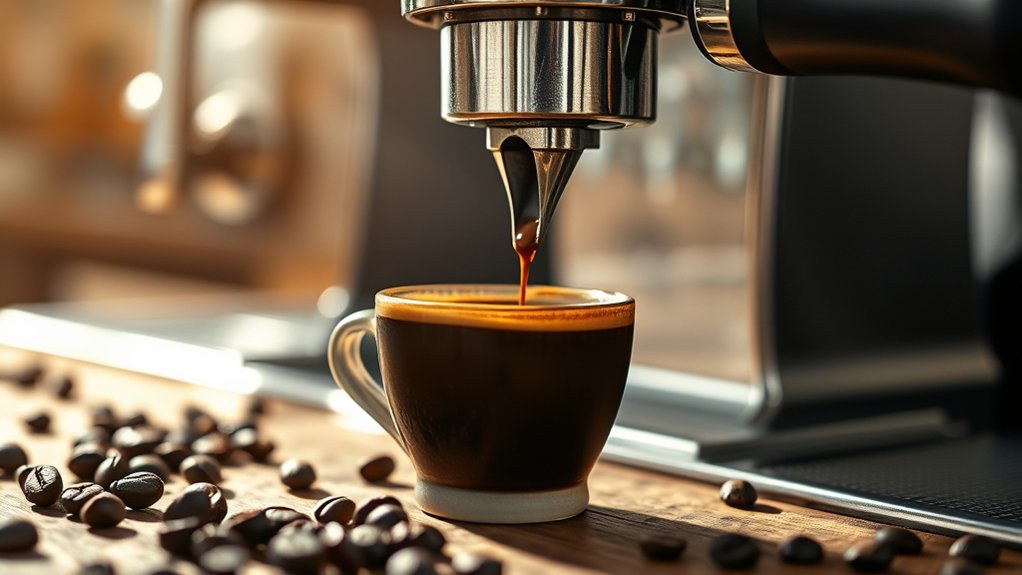
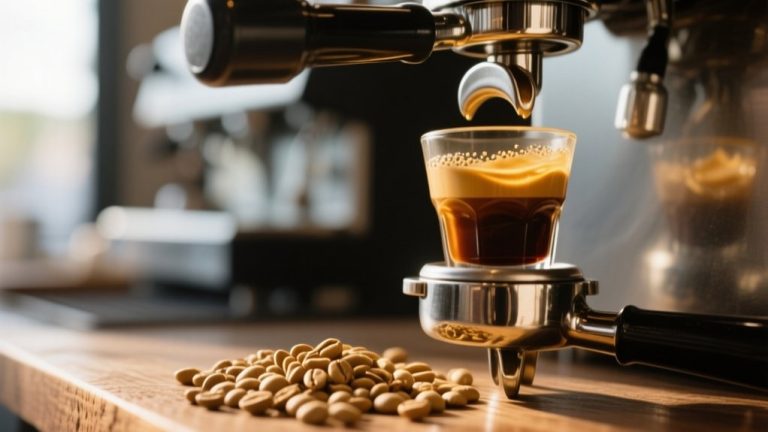
Espresso is a concentrated coffee beverage you get by forcing hot water at high pressure, around 9 bars, through finely ground coffee. This brewing process takes about 25–30 seconds, extracting oils and flavors efficiently to produce a rich, syrupy shot topped with crema.
Precision is key: the water temperature should range between 195°F and 205°F, and the pressure must be consistent to achieve the perfect espresso. A standard espresso shot is roughly 1–2 ounces and contains about 63 mg of caffeine, resulting in a higher caffeine concentration compared to regular coffee.
While various methods like Moka pots exist, true espresso requires a machine capable of delivering the necessary pressure, ensuring that each shot maintains its distinctive strength and flavor profile.
How Regular Coffee Brewing Differs From Espresso
You’ll notice that espresso uses high pressure—around 9 bars—to force hot water through finely ground coffee.
On the other hand, regular coffee relies on gravity to drip water through coarser grounds.
Because of this difference in pressure, espresso’s extraction time is much shorter, usually about 25 to 30 seconds.
Meanwhile, drip coffee takes several minutes to brew.
Knowing these differences makes it easier to understand why espresso gives you a more concentrated shot, while regular coffee tends to be larger and milder.
Brewing Methods Compared
Although both espresso and regular coffee start with ground beans and hot water, the way they’re brewed differs markedly, impacting flavor and strength.
When you pull an espresso shot, you force hot water through finely ground coffee at high pressure, completing brewing in just 25-30 seconds. This rapid brewing time creates a concentrated extraction profile, emphasizing bold flavors and higher caffeine concentration per ounce.
In contrast, brewing a cup of regular coffee involves dripping hot water over medium-coarse grounds using gravity, which takes several minutes. This slower process yields a different extraction profile, producing a milder, less intense flavor with a larger volume.
Furthermore, espresso demands a specialized machine, while regular coffee can be brewed with simpler methods, reflecting their distinct approaches to revealing coffee’s essence.
Water Pressure Impact
The key difference between espresso and regular coffee brewing lies in how water interacts with the coffee grounds. Espresso brewing uses high-pressure extraction, forcing hot water through finely ground coffee at about 9 bars of water pressure. This method contrasts sharply with regular coffee, which relies on gravity and a slower drip process.
Here’s how water pressure impacts the brew:
- Espresso’s high-pressure extraction rapidly extracts concentrated flavors and oils.
- This pressure creates a rich crema, enhancing texture and aroma.
- Regular coffee’s lower pressure allows for a longer, gentler extraction, resulting in a different flavor profile.
- The intense water pressure in espresso brewing affects caffeine delivery, producing a robust, quick caffeine hit.
Understanding this pressure difference clarifies why espresso and regular coffee taste and feel so distinct.
Extraction Time Differences
Since espresso brewing relies on high pressure and finely ground coffee, it extracts flavors and caffeine much faster than regular coffee methods. The extraction time for espresso is typically 25-30 seconds, compared to several minutes for drip coffee.
This shorter brew time, combined with water heated between 195°F to 205°F, allows for rapid saturation and efficient extraction. In contrast, drip coffee uses medium-coarse grounds and a gravity-driven process, slowing flavor and caffeine release.
As a result, espresso versus regular coffee differs markedly in caffeine levels per volume. The quick extraction yields a concentrated shot with robust flavor, though total caffeine may be lower than a larger drip coffee serving.
Understanding these extraction time differences clarifies why espresso feels stronger despite shorter brew times.
Comparing Caffeine Content: Espresso vs. Coffee
You’ll notice espresso packs more caffeine per ounce because of its concentrated brewing method.
But since the serving size is smaller, a regular cup of coffee often ends up having more total caffeine.
Plus, the type of bean you choose makes a big difference. For example, Robusta beans have nearly twice the caffeine of Arabica beans.
Knowing these things can help you figure out how each drink impacts your caffeine intake.
Caffeine Concentration Differences
How much caffeine are you really getting when you choose espresso over regular coffee? Understanding caffeine concentration differences helps you make an informed choice.
- Espresso contains about 63 mg of caffeine per 1-ounce shot, showcasing a higher caffeine concentration per ounce.
- A typical 8-ounce cup of coffee has roughly 95 mg of caffeine, offering a greater total caffeine content due to its larger volume.
- Espresso’s brewing method uses high pressure to extract caffeine quickly, boosting its concentration.
- The caffeine content can vary depending on bean type. Robusta beans have nearly twice the caffeine of Arabica beans.
Serving Size Impact
Although espresso packs a higher caffeine concentration per ounce, the much smaller serving size compared to regular coffee means you actually consume less total caffeine with a single shot. A standard 1-ounce espresso delivers about 63 mg of caffeine, while an 8-ounce cup of regular coffee contains roughly 95 mg.
This difference highlights how serving size impacts your caffeine intake more than caffeine per ounce. Espresso’s caffeine per ounce is around 40 mg, considerably denser than the 10 mg per ounce in brewed coffee.
However, because regular coffee is served in larger volumes, you end up ingesting more caffeine overall.
Bean Type Influence
When selecting your coffee beans, the type you choose greatly affects the caffeine content in your espresso or regular coffee. Understanding the influence of bean type is essential for caffeine levels.
Espresso primarily uses Arabica beans, prized for nuanced flavor but moderate caffeine. Regular coffee can include both Arabica and Robusta beans; Robusta contains nearly twice the caffeine.
Some espresso blends incorporate Robusta to boost caffeine and intensify flavor. A finer grind size for espresso enables efficient caffeine extraction despite smaller serving.
While espresso boasts about 63 mg caffeine per ounce, regular coffee’s 8-ounce serving with Arabica or Robusta beans can deliver around 95 mg or more.
Your choice between Arabica and Robusta beans directly shapes the caffeine punch in your cup.
Why Serving Size Changes Your Caffeine Intake
Why does the serving size matter so much when comparing espresso and regular coffee? Serving size directly impacts your caffeine intake.
Espresso is served in 1-ounce shots, each containing about 63 mg of caffeine. Regular coffee, however, comes in larger 8-ounce cups, delivering roughly 95 mg. This difference explains why espresso feels stronger despite lower total caffeine.
| Beverage | Serving Size | Caffeine Content |
|---|---|---|
| Espresso | 1 ounce | 63 mg |
| Regular Coffee | 8 ounces | 95 mg |
| Effect | Concentrated quick boost | Sustained caffeine release |
How Bean Type Affects Coffee and Espresso Strength
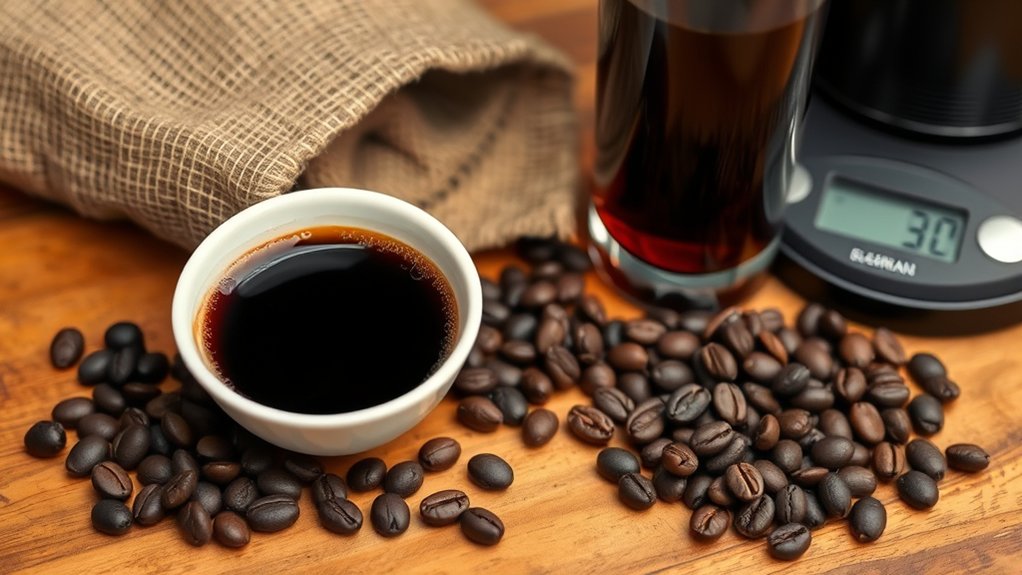
You’ll notice that the type of bean you use really changes the caffeine levels and flavor strength.
For example, Robusta beans pack almost twice the caffeine of Arabica.
And Arabica is usually the go-to for espresso because of its rich taste.
Knowing this difference makes it easier to understand why espresso and drip coffee can feel so different in intensity.
Arabica Vs. Robusta
How does the type of coffee bean influence the strength and flavor of your espresso or coffee?
The choice between Arabica and Robusta beans considerably impacts both caffeine content and flavor profile. Here’s what you need to know:
Arabica beans contain about half the caffeine content of Robusta, making Robusta the stronger option if you want a caffeine boost.
Arabica offers a smooth, nuanced flavor profile, ideal for balanced espresso blends.
Robusta’s flavor is more bitter and earthy, often used to add intensity and crema stability in espresso.
The bean type affects brewing dynamics, altering taste, texture, and perceived strength.
Understanding these differences helps you select the right bean for your preferred coffee or espresso experience.
Bean Impact On Caffeine
The type of bean you choose directly impacts the caffeine content and overall strength of your coffee or espresso. Arabica beans, commonly used in espresso, offer nuanced flavors but contain less caffeine than Robusta beans. Robusta has nearly twice the caffeine and often appears in blends to boost caffeine levels.
When selecting your coffee bean, consider that espresso roasts are typically darker. This enhances flavor intensity and the perception of strength.
The brewing method further concentrates espresso’s caffeine by extracting more oils and flavors through a fine grind, unlike medium-coarse grounds in drip coffee.
How Grind Size and Brewing Time Impact Strength
Although both espresso and drip coffee aim to extract the best flavors and caffeine from coffee grounds, their differences in grind size and brewing time dramatically affect their strength. You’ll notice:
- Espresso uses a fine grind, maximizing flavor and caffeine release during its short brewing time of 25-30 seconds.
- Drip coffee opts for a medium-coarse grind, allowing brewing to take several minutes, which produces a milder extraction.
- The finer espresso grind saturates quickly, concentrating caffeine and flavor per ounce.
- Brewing espresso beyond 30 seconds or using too fine a grind risks over-extraction, causing bitterness.
Understanding these factors helps you appreciate why espresso’s concentrated strength contrasts with drip coffee’s lighter body and extraction profile.
Why Espresso Tastes Stronger Even With Less Caffeine
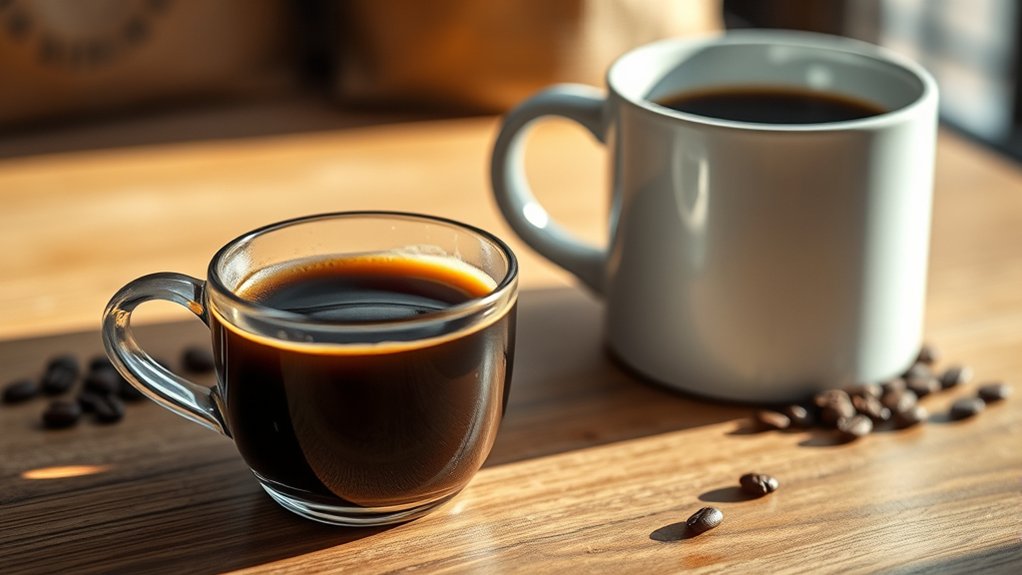
Even though espresso contains less total caffeine than a standard cup of drip coffee, its intense flavor and rich texture make it seem much stronger.
When you drink a shot of espresso, you experience a concentrated brew crafted under high pressure, which extracts more oils and soluble compounds than regular coffee.
This process yields a bolder taste and a creamy crema layer that enhances mouthfeel and perception of strength.
While an 8-ounce cup of brewed coffee has more overall caffeine, about 95 mg compared to espresso’s 63 mg per ounce, the rapid extraction and small volume of espresso deliver a quick, potent caffeine hit.
How Flavor Shapes Strength Perception
Understanding why espresso tastes stronger despite its lower caffeine content leads us to think about how flavor shapes your perception of strength.
Flavor intensity, body, and brewing time all play vital roles in this experience.
Here’s how: Espresso’s quick brewing time extracts bold, concentrated flavors and a rich crema, creating a powerful flavor intensity.
Regular coffee’s longer brewing time yields a cleaner, more mellow taste, which feels less intense even with higher caffeine content.
Darker roast levels amplify flavor richness, enhancing your sense of strength in both espresso and drip coffee.
Also, your drinking habits, like sipping speed, influence how quickly you perceive espresso’s concentrated flavor and caffeine effects.
Which Is Best for Energy: Espresso or Coffee?
How quickly do you need your caffeine fix? If you want a fast jolt, espresso has more caffeine per ounce, about 63 mg in a 1-ounce shot. It offers rapid absorption thanks to its quick brewing process.
However, if you prefer a longer, sustained energy release, an 8-ounce cup of drip coffee contains more total caffeine, roughly 95 mg, due to its longer brewing time. This means the amount of caffeine you consume varies considerably depending on your choice.
Your metabolism and tolerance also play a role in how energized you feel.
Choosing Espresso or Coffee for Different Occasions
When deciding between espresso and coffee, consider the occasion and how you want to enjoy your caffeine. Each suits different moments perfectly:
- Need a quick energy boost? Espresso’s concentrated caffeine (about 63 mg per shot) delivers immediate impact, ideal for busy mornings or quick breaks.
- Planning a relaxed morning? Regular coffee’s larger serving (8+ ounces) offers gradual caffeine release (around 95 mg), perfect for leisurely sipping.
- Social gatherings? Espresso’s bold, intense flavor enhances café experiences, while espresso-based drinks like lattes add creamy comfort.
- Breakfast routines? Regular coffee’s mellow, full-bodied profile suits those who savor straightforward black coffee over time.
Frequently Asked Questions
Can Espresso Be Used as a Base for Other Coffee Drinks?
Yes, you can definitely use espresso as a base for other coffee drinks. Espresso drinks rely on its concentrated flavor profiles, which vary depending on brewing techniques and serving sizes.
This strong, rich shot provides a versatile foundation for beverages like lattes, cappuccinos, and mochas.
How Does Milk Affect the Strength of Espresso-Based Beverages?
Milk softens espresso’s punch like a gentle breeze calming a storm. When you add milk, the texture smooths out, and the boldness mellows, creating a more pleasant flavor balance.
Although the caffeine content stays roughly the same, the beverage dilution reduces the intensity per sip. This means your espresso-based drink feels less strong, with milk’s creaminess enriching the experience while masking the espresso’s natural sharpness.
What Is the Ideal Water Temperature for Brewing Espresso?
You should aim for an ideal water temperature between 195°F and 205°F when brewing espresso. This range guarantees peak espresso extraction time, preventing bitterness or sourness.
Proper espresso brewing techniques rely on consistent temperature control, so maintaining your espresso machine is essential. Keeping your machine precise helps you fully capture complex espresso flavor profiles.
Using a thermometer can guide you to perfect shots every time, enhancing your espresso experience.
How Long Should an Espresso Shot Typically Take to Pour?
You should aim for an espresso extraction time of about 25 to 30 seconds. Think of it as the perfect hourglass moment for your espresso shot.
Adjust your espresso grind size and tamping pressure factors carefully. Too coarse or loose, and it’ll pour too fast. Too fine or tight, and it drags out.
Whether you’re pulling a single or double espresso shot type, keeping this timing guarantees a balanced, rich flavor without bitterness or sourness.
Does Espresso Have More Antioxidants Than Regular Coffee?
Espresso can have more antioxidant benefits than regular coffee due to its concentrated brewing method, which extracts compounds like chlorogenic acid more efficiently.
However, antioxidant levels vary based on brewing methods and bean quality.
You’ll notice different flavor profiles too. Espresso’s intensity contrasts with coffee’s smoother taste.
When comparing health, both offer valuable antioxidants, so choosing between them depends on your preference for strength and brewing style rather than a strict antioxidant advantage.
Conclusion
So, is espresso really stronger than coffee? While espresso packs a bold flavor punch, its caffeine content per shot is often less than a standard cup of coffee.
Your choice depends on how much caffeine you want and the experience you’re after. Whether you prefer a quick, intense sip or a longer, milder brew, understanding these differences helps you pick the perfect drink for your mood and energy needs.
Ready to savor your next cup?