How Much Caffeine Is In A Latte – Caffeine Content Breakdown
You’ll find about 63-64 mg of caffeine in a typical single-shot latte, mostly from the espresso. If you opt for a double shot, it nearly doubles to 126-128 mg.
The type of coffee bean, like Arabica or Robusta, and the brewing method can shift caffeine levels too. Milk doesn’t change the caffeine amount but dilutes its concentration.
Decaf lattes still have small traces. Keep these factors in mind to better understand how caffeine impacts you and your choices.
How Much Caffeine Is in a Typical Latte?
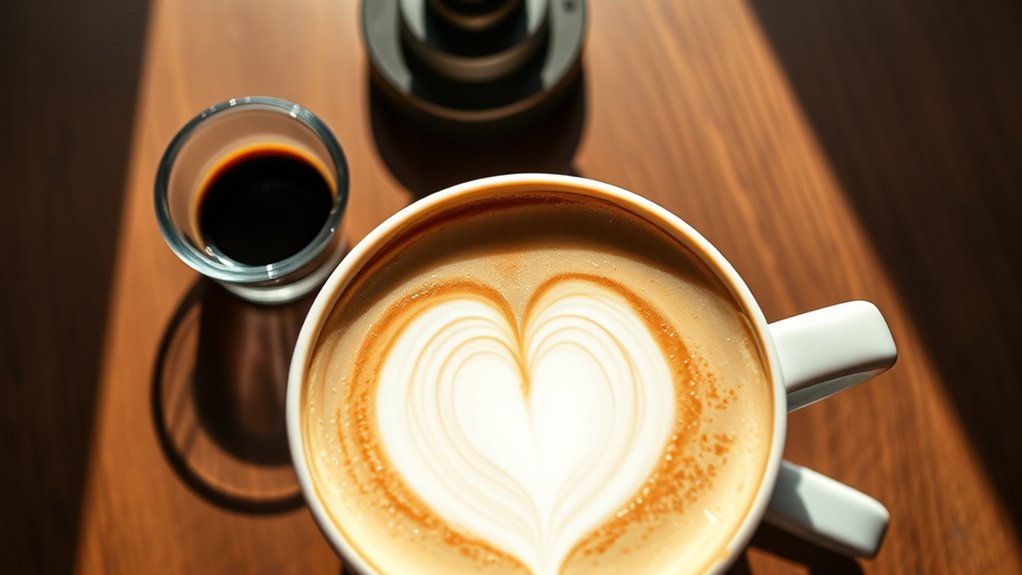
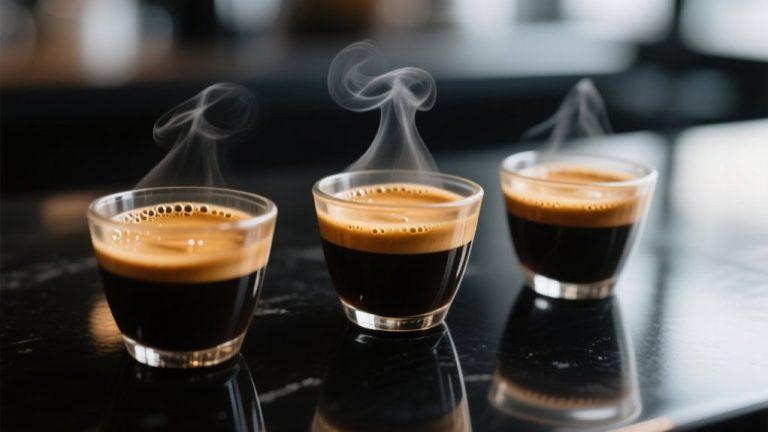
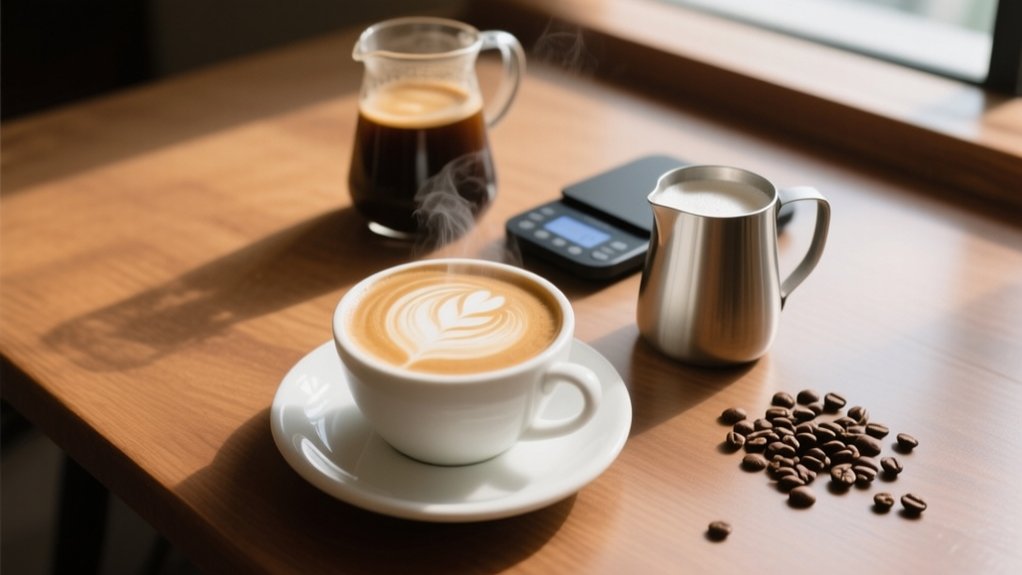
Although the caffeine content in a latte can vary, a typical single-shot latte contains about 63 to 64 mg of caffeine. This caffeine content comes primarily from the espresso shot used as the base.
Compared to brewed coffee, which usually has around 95 to 100 mg of caffeine per 8-ounce cup, a latte offers less caffeine per serving. The milk in a latte dilutes the espresso, lowering the overall caffeine concentration.
A latte contains less caffeine than brewed coffee due to milk diluting the espresso’s strength.
Keep in mind, factors such as the type of coffee beans and brewing method can influence the exact caffeine content.
Understanding this helps you make informed choices about your caffeine intake when opting for a latte instead of brewed coffee or straight espresso.
Single vs. Double Shot Espresso: Caffeine in Lattes
You get about 63-64 mg of caffeine in a latte with a single shot of espresso.
If you go for a double shot, the caffeine content roughly doubles to around 126-128 mg.
Single Shot Caffeine
When comparing single and double shot lattes, the caffeine content nearly doubles from about 63-64 mg in a single shot to roughly 126-128 mg in a double shot. A single shot of espresso delivers approximately 63-64 mg of caffeine, setting a baseline for caffeine levels in your latte.
Factors such as coffee bean type and brewing method influence caffeine content, but the single shot remains a standard measure. Here’s a quick comparison:
| Espresso Shots | Approximate mg of Caffeine | Notes |
|---|---|---|
| 1 (Single) | 63-64 | Standard caffeine content |
| 2 (Double) | 126-128 | Nearly double caffeine |
| Bean Type | Varies | Robusta > Arabica caffeine |
This allows you to tailor caffeine levels to your preference.
Double Shot Comparison
Since a double shot of espresso contains nearly twice the caffeine of a single shot, around 126-128 mg compared to 63-64 mg, choosing between the two greatly impacts your latte’s caffeine content.
When you opt for a double shot in your latte, you’re effectively doubling the caffeine dose, which can influence your alertness and energy levels.
Consider these key points:
- The caffeine amount in your latte depends primarily on the number of espresso shots, with a double shot delivering nearly twice the caffeine of a single shot.
- The type of espresso beans, like Robusta or Arabica, affects caffeine levels, though shot count remains the main factor.
- Adding milk dilutes the espresso’s concentration but doesn’t reduce the total caffeine in your latte.
This knowledge helps you tailor your caffeine intake precisely when ordering a latte with a double shot.
How Coffee Bean Types Affect Latte Caffeine Levels
You might notice that lattes made with Arabica beans have about half the caffeine compared to those made with Robusta beans.
That’s because Arabica contains roughly 1.2% caffeine, while Robusta has around 2.2%.
So, a single shot of Arabica espresso typically delivers about 63 mg of caffeine.
On the other hand, a double shot of Robusta can pack up to 128 mg.
Knowing which bean you’re using really helps you keep track of how much caffeine ends up in your latte.
Arabica Vs Robusta
Although both Arabica and Robusta beans are popular choices for espresso, their caffeine content differs markedly, directly influencing the strength of your latte.
Arabica beans generally contain 1.2% to 1.5% caffeine, while Robusta beans have much higher levels, ranging from 2.2% to 2.7%. This difference impacts the caffeine content in your espresso shot and, consequently, your latte.
Here’s what you should know:
- A single espresso shot from Arabica beans delivers about 63 mg of caffeine.
- The same shot from Robusta beans provides around 80 mg or more.
- Choosing Robusta espresso results in a stronger caffeine kick, whereas Arabica offers a smoother flavor.
Understanding these distinctions helps you tailor your latte’s caffeine content and taste precisely.
Bean Influence On Caffeine
Knowing the caffeine differences between Arabica and Robusta beans lets you better understand how your latte’s caffeine level forms.
Arabica beans contain about 1.2% caffeine by weight, while Robusta beans nearly double that at 2.2%. This bean type difference means lattes made from Robusta beans deliver considerably higher caffeine content than those using Arabica beans.
Besides bean type, factors like grind size and brewing conditions affect caffeine extraction in espresso, the base of your latte.
Finer grinds typically yield more caffeine. Also, the number of espresso shots directly impacts caffeine content: a single shot provides roughly 63 mg, while a double shot can contain about 126 mg.
Finally, more milk dilutes caffeine concentration, lowering the caffeine-to-volume ratio regardless of the bean type used.
Does Milk Change How Much Caffeine Is in Your Latte?
While milk changes the flavor and texture of your latte, it doesn’t affect the caffeine content. The caffeine in a latte comes exclusively from the espresso. Each shot delivers about 63 mg of caffeine, no matter the milk type or volume.
Consider these points:
- A standard double-shot latte contains roughly 126 mg of caffeine. This stays the same whether you use whole, skim, or non-dairy milk.
- Adding more milk dilutes the caffeine concentration per ounce but doesn’t increase or decrease total caffeine.
- Milk doesn’t influence caffeine extraction during brewing. Only the espresso shots determine caffeine levels.
How Brewing Methods Affect Latte Caffeine Content
Milk doesn’t change the caffeine amount in your latte, but how the espresso is brewed definitely affects it.
The brewing method for espresso, which forces hot water through finely-ground coffee under pressure, extracts caffeine more efficiently than drip brewing.
You’ll find that finer grinds and higher brewing temperatures increase caffeine content in your espresso shots.
Furthermore, choosing Robusta beans instead of Arabica greatly boosts caffeine content since Robusta beans contain nearly twice as much caffeine.
When you order a latte, the number of espresso shots determines the baseline caffeine level. Each shot averages about 64 mg.
Latte Caffeine Compared to Other Popular Coffee Drinks
When you compare a latte to brewed coffee, you’ll notice a single-shot latte has about 64 mg of caffeine.
On the other hand, an 8 oz brewed coffee usually contains around 95-100 mg.
Espresso-based drinks like lattes pack more caffeine per ounce, but since they come in smaller servings, they often end up with less total caffeine than a larger cup of brewed coffee.
Just keep in mind, if you add extra espresso shots or go for Robusta beans, your latte’s caffeine content can go way up.
Latte Versus Brewed Coffee
Even though a latte contains a smaller volume of espresso compared to brewed coffee, its caffeine content can vary considerably depending on how many shots you choose. A single shot latte has about 63-64 mg of caffeine, while brewed coffee (8 oz) generally contains around 95-100 mg.
When comparing caffeine content, keep these points in mind: Brewed coffee offers a higher total caffeine amount per typical serving than a single shot latte.
The caffeine concentration per ounce is greater in espresso, but lattes often have diluted caffeine due to milk. You can customize your latte’s caffeine content by adjusting the number of espresso shots, sometimes surpassing brewed coffee’s caffeine levels.
This variability lets you tailor caffeine intake effectively between latte and brewed coffee.
Espresso-Based Drink Comparison
Although a single shot latte contains about 63-64 mg of caffeine, its content can increase considerably with additional espresso shots, reaching up to 126-128 mg in a double shot.
When comparing espresso-based drinks, lattes generally have less caffeine per serving than straight espresso shots but more than some brewed coffee servings, which average 95-100 mg per 8 oz cup.
The caffeine content depends on the number of espresso shots and the type of coffee beans used. Robusta beans contain nearly twice the caffeine of Arabica beans.
Iced lattes often have higher caffeine content if multiple shots are added, sometimes surpassing brewed coffee. Understanding these variables helps you choose the right espresso-based drink for your desired caffeine intake.
Can Decaf Lattes Still Contain Caffeine?
Since decaffeinated espresso still contains a small amount of caffeine, decaf lattes aren’t completely caffeine-free. When you order a decaf latte, you should expect a caffeine content of about 3-5 mg per single shot, compared to 63-64 mg in regular espresso.
Decaf lattes contain 3-5 mg of caffeine per shot, unlike regular espresso’s 63-64 mg.
Here are key points to recognize about decaf lattes and caffeine intake:
- The decaffeination process removes most caffeine but leaves trace amounts, so decaf lattes contain minimal caffeine.
- A double-shot decaf latte can have roughly 6-10 mg of caffeine, depending on the espresso used.
- If you’re sensitive to caffeine or tracking your caffeine intake closely, it’s important to account for this small but present caffeine content.
Understanding this helps you make informed choices about your caffeine consumption.
How Caffeine Affects Your Body and Energy Levels
When you drink a latte, the caffeine from the espresso stimulates your central nervous system, boosting your alertness and helping reduce fatigue. A single espresso shot delivers about 64 mg of caffeine, enough to enhance your focus and cognitive performance.
This stimulation also improves physical endurance and lowers perceived exertion during exercise, raising your overall energy levels.
However, caffeine’s effects vary depending on your sensitivity. Some people may experience increased heart rate or anxiety even at low doses.
With regular consumption, your body can develop tolerance, meaning you might need more caffeine to feel the same energizing effects.
Understanding how caffeine interacts with your body helps you gauge its impact on your energy levels and tailor your latte intake accordingly.
Tips for Managing Caffeine Intake From Lattes
If you want to manage your caffeine intake from lattes effectively, start by choosing the number of espresso shots carefully. Each shot contains about 63 mg of caffeine, so selecting a single shot instead of a double can markedly reduce your caffeine load.
Manage your caffeine by choosing fewer espresso shots—each shot has about 63 mg of caffeine.
For precise caffeine management, consider these tips:
- Customize your latte by requesting fewer espresso shots to control caffeine levels.
- Opt for a larger milk volume to dilute caffeine concentration without sacrificing flavor.
- Explore decaf or caffeine-free espresso options to enjoy lattes without caffeine’s stimulant effects.
When to Be Cautious About Latte Caffeine Consumption
Although lattes can be a delicious daily ritual, you need to be cautious about their caffeine content to avoid exceeding recommended limits. A single shot of espresso adds about 63 mg of caffeine, while a double shot doubles that amount, quickly increasing your total intake.
Adults should keep caffeine under 400 mg daily, roughly three to four standard lattes, but pregnant individuals must limit it to 200 mg. Your individual sensitivity matters too. Some people feel jittery or have sleep issues at lower caffeine levels.
Be especially careful with multiple lattes or high-caffeine options like iced versions with extra shots, as these can push your caffeine consumption beyond safe amounts rapidly.
Monitoring your intake helps maintain a balanced and healthy caffeine routine.
Frequently Asked Questions
Can I Add Flavor Syrups Without Affecting Caffeine Content?
You can add flavor syrups to your latte without affecting caffeine levels since most syrups are caffeine-free.
This means your latte variations will maintain their original caffeine content, allowing you to customize taste preferences without altering the caffeine impact.
Just remember, if you add extra espresso shots alongside syrups, the caffeine will increase.
Always check specific syrup brands, but generally, flavor syrups only add sweetness and don’t change caffeine amounts.
How Does Latte Temperature Impact Caffeine Absorption?
Temperature effects play a key role in caffeine metabolism when you drink a latte. Warmer lattes, brewed around 150-160°F, enhance caffeine solubility and speed up absorption by promoting faster gastric emptying.
This means you feel the stimulating effects sooner. Cooler lattes slow caffeine uptake, delaying the buzz.
Furthermore, temperature influences sensory perception, affecting how you experience flavor and alertness.
Are There Caffeine-Free Milk Alternatives for Lattes?
Just like choosing the right paintbrush shapes your masterpiece, selecting milk alternatives shapes your latte experience.
You’ll find caffeine-free options like almond, oat, soy, coconut, and rice milk offer diverse flavor profiles and nutritional benefits.
Popular brands often fortify these alternatives with vitamins and minerals.
Remember to check labels, as some flavored versions may have trace caffeine.
These choices let you enjoy your latte without caffeine, tailored to your taste and health needs.
Does the Time of Day Affect How Caffeine in Lattes Impacts Sleep?
Yes, the time of day definitely affects how caffeine in lattes impacts your sleep.
If you have caffeine sensitivity or slower caffeine metabolism, evening consumption can disrupt your sleep cycles by prolonging alertness and reducing sleep quality.
Consuming caffeine within six hours of bedtime often leads to difficulty falling asleep and fragmented rest.
To support healthy sleep patterns, it’s best to limit latte intake to the morning or early afternoon.
How Long Does Caffeine From a Latte Stay in My System?
Caffeine from a latte typically stays in your system for 3 to 7 hours, influenced by your caffeine metabolism and individual tolerance.
Your liver breaks down caffeine at different rates depending on factors like age and health, which affects how long you feel its effects.
If you consume caffeine regularly, you might experience milder health effects and fewer withdrawal symptoms.
Understanding these variables helps you manage caffeine’s impact on your body effectively.
Conclusion
Now that you know how much caffeine is in a latte, you can make smarter choices about your daily intake. Whether you prefer a single shot, a double, or even a decaf option, understanding the factors at play helps you avoid going overboard.
Remember, caffeine affects everyone differently, so listen to your body and keep your consumption in check. After all, it’s better to be safe than sorry when it comes to your energy and health.