Is Cold Brew Stronger – Strength And Caffeine Comparison
If you’re wondering if cold brew is stronger, it usually means a bolder flavor and higher caffeine compared to hot or iced coffee. Cold brew’s smooth, less acidic taste comes from steeping coffee grounds in cold water for 12-24 hours. This process also extracts more caffeine, especially when using a higher coffee-to-water ratio.
Its caffeine can range from 100 to 245 mg per serving, often beating hot coffee’s levels. There’s more to discover about how brewing and bean choice impact strength.
What “Stronger” Means for Cold Brew: Flavor vs. Caffeine
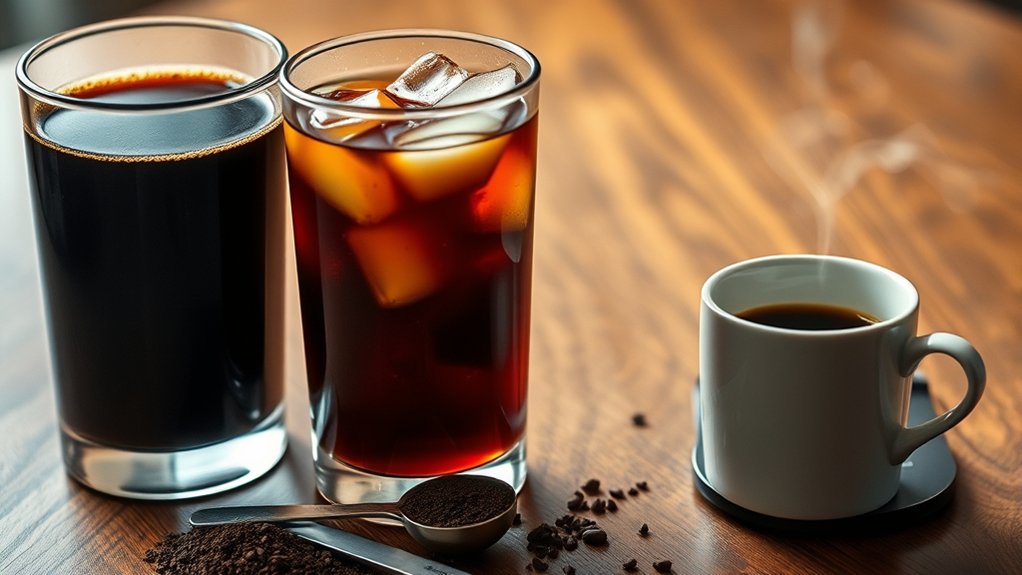
Although the term “stronger” often makes you think of caffeine content, when it comes to cold brew, it usually refers to the flavor profile.
Cold brew coffee contains a less acidic flavor due to its unique brewing process, which uses cold water over an extended time, reducing bitterness.
Cold brew’s slow, cold extraction creates a smoother, less acidic coffee with reduced bitterness.
This method highlights a smoother, richer taste, making the flavor feel stronger compared to hot brewed coffee’s brighter, more acidic notes.
Cold brew concentrate often has higher caffeine levels per ounce, but the true strength many notice is in the flavor depth.
So, when you say cold brew is stronger, you’re likely appreciating its smoother, fuller flavor rather than just its caffeine content.
This distinction helps you understand why cold brew appeals to those wanting a less acidic, richer coffee experience.
Comparing Caffeine: Cold Brew vs. Hot Coffee
When you think about cold brew’s strength, flavor often takes center stage, but caffeine content plays a big role too. Cold brew typically has higher caffeine levels because of its longer brewing time and concentrated coffee-to-water ratio.
Hot coffee, brewed quickly with a more diluted ratio, usually contains less caffeine per serving. Here’s a quick comparison to help you see the differences:
| Beverage | Serving Size | Approximate Caffeine (mg) | Coffee-to-Water Ratio |
|---|---|---|---|
| Cold Brew | 12 oz | 170–245 | 1:4 to 1:8 |
| Hot Coffee | 6 oz | 70–80 | 1:15 to 1:18 |
| Iced Coffee | 8 oz | 80–120 | Variable |
Cold brew’s smooth taste and higher caffeine content make it stand out in the cold brew vs hot coffee debate.
Cold Brew vs. Iced Coffee: Which Has More Caffeine?
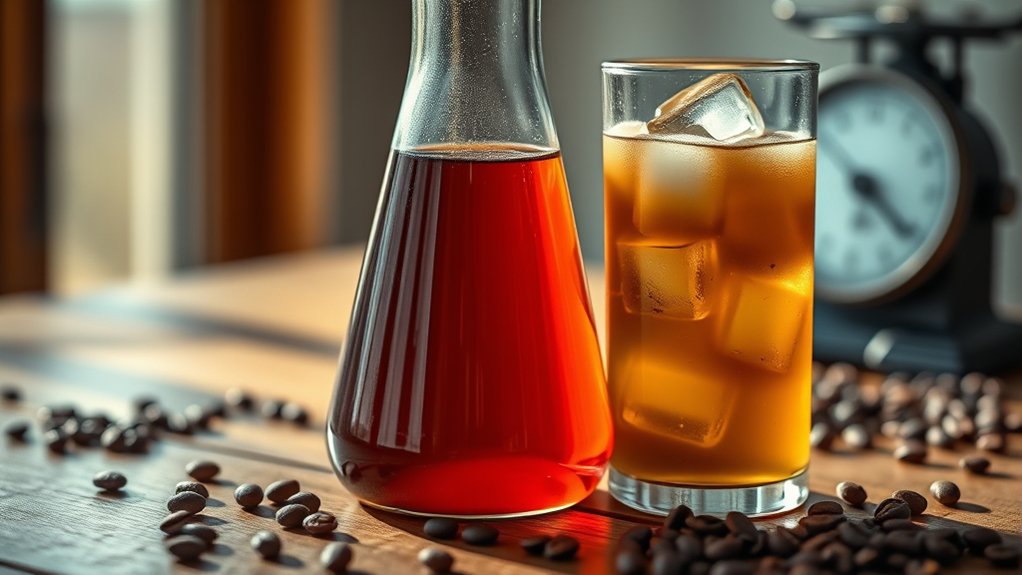
How much caffeine you get from cold brew versus iced coffee depends largely on how each is made.
Cold Brew typically contains 100 to 200 mg of caffeine per 8-ounce serving because its brewing method involves steeping coffee grounds for 12 to 24 hours. This produces a concentrated coffee with a stronger caffeine content.
In contrast, Iced Coffee averages 80 to 120 mg per 8 ounces since it’s brewed hot and then chilled. This method preserves a brighter, slightly acidic flavor profile but results in less caffeine extraction.
When cold brew is diluted, its caffeine levels can match those of iced coffee.
But in its concentrated form, cold brew packs a noticeably stronger caffeine punch. So, if you want more caffeine, cold brew usually delivers it through its unique steeped brewing method.
How Brewing Methods Affect Cold Brew’s Caffeine Strength
You’ll notice that brewing time plays a big role in cold brew’s caffeine strength. The longer you let it steep, the more caffeine gets pulled out.
Grind size also matters—a finer grind speeds up extraction and boosts the caffeine levels. Knowing these factors helps you control just how strong your cold brew turns out.
Brewing Time Impact
Since cold brew coffee steeps for 12 to 24 hours, it extracts more caffeine than most hot-brewed coffees. The extended brewing time allows for greater caffeine extraction, especially when you prepare a coffee concentrate with a stronger coffee-to-water ratio.
Longer steeping times increase caffeine levels, but most caffeine is extracted early. So brewing beyond 24 hours offers little benefit and may cause over-extraction, leading to bitter flavors.
Different brewing methods also impact caffeine strength. For example, cold brew made in a French Press differs from traditional hot brewed coffee in caffeine content.
Understanding how brewing time and method affect caffeine levels helps you tailor your cold brew’s strength to your preference without compromising taste or intensity.
Grind Size Influence
Although brewing time plays a big role, grind size greatly affects how much caffeine your cold brew extracts. Using coarsely ground coffee slows caffeine extraction, producing a smoother taste and minimizing bitterness.
If you switch to finer grinds, you increase surface area, which speeds up caffeine extraction but risks over-extraction and a bitter flavor.
When making cold brew concentrate, adjusting the coffee-to-water ratio along with grind size can boost caffeine levels considerably.
Finer grinds in concentrate pull more caffeine quickly, but you need to watch the balance carefully to avoid harshness.
How Bean Type and Roast Level Influence Cold Brew Caffeine
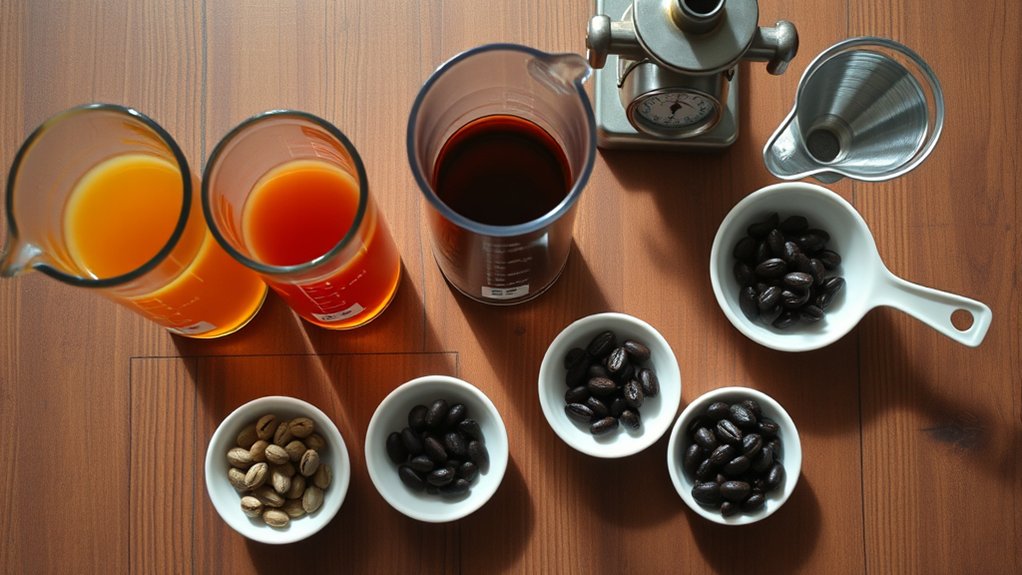
You’ll notice that the type of bean you choose directly impacts your cold brew’s caffeine kick.
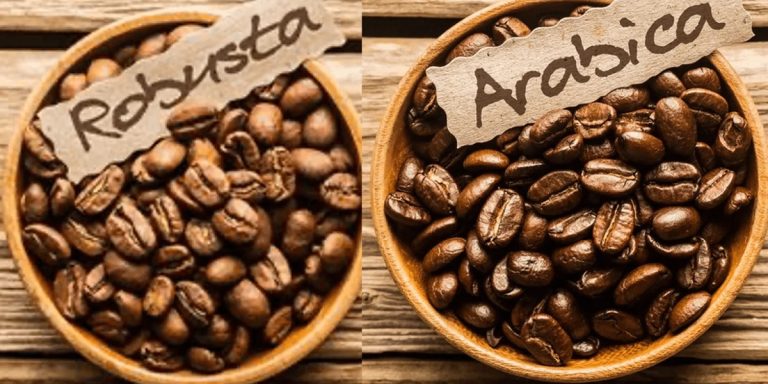
For instance, Robusta beans pack almost twice the caffeine of Arabica. Roast level also plays a role here—lighter roasts tend to hold slightly more caffeine than darker ones.
Bean Varieties And Caffeine
When choosing beans for your cold brew, the variety and roast level play a big role in caffeine content. Robusta beans pack nearly twice the caffeine of Arabica beans, so picking your bean varieties directly impacts how strong your cold brew gets.
While roast level affects caffeine slightly, light roasts hold a bit more caffeine by weight. But the brewing method and coffee-to-water ratio matter more for caffeine extraction.
Using a finer grind exposes more surface area, which boosts extraction during steeping.
Also, a stronger coffee-to-water ratio, like 1:4 concentrate versus 1:16 standard, considerably ups caffeine levels.
Roast Level Effects
Since the type of bean you choose impacts caffeine content, understanding how roast levels affect caffeine in cold brew helps you tailor your coffee’s strength.
Robusta beans have nearly double the caffeine of Arabica beans, so pairing them with a light roast level can boost caffeine content considerably.
Light roasts generally retain more caffeine by weight than dark roasts, enhancing your cold brew’s potency.
You’ll also want to take into account grind size; while cold brew typically uses coarser grinds, finer ones improve extraction efficiency and increase caffeine yield.
Plus, cold brew’s higher coffee-to-water ratio extracts more caffeine overall.
How Coffee-to-Water Ratios Make Cold Brew Stronger
Although cold brew relies on a slower extraction process, the coffee-to-water ratio plays a crucial role in determining its strength. Cold Brew typically uses a coffee-to-water ratio between 1:4 and 1:8, creating a concentrate much stronger than the 1:16 to 1:20 ratio in regular brewed coffee.
This higher concentration boosts caffeine extraction, delivering a stronger flavor and higher caffeine content per serving. Using a coarser grind enhances this extraction efficiency, producing a richer and smoother taste with lower acidity.
Does Cold Brew Concentrate Contain More Caffeine Than Regular Cold Brew?
How much caffeine you get from cold brew depends largely on whether you’re drinking regular cold brew or cold brew concentrate. Cold brew concentrate has a higher coffee-to-water ratio and longer steeping time, which boosts caffeine extraction and overall caffeine content.
Here’s what you should know:
- Cold brew concentrate typically uses a 1:4 to 1:8 coffee-to-water ratio, while regular cold brew ranges from 1:16 to 1:20.
- A 12 oz serving of cold brew concentrate can have 340–490 mg of caffeine; regular cold brew contains 170–245 mg.
- Longer steeping time in concentrate pulls more caffeine from the grounds.
- Cold brew concentrate can be diluted with water to manage caffeine intake, unlike regular cold brew.
Understanding these differences helps you control how much caffeine you consume.
How Dilution Changes Cold Brew’s Caffeine and Flavor Perception
When you dilute cold brew with water or milk, you lower its caffeine concentration and soften its flavor. Cold brew concentrate starts with higher caffeine levels due to its coffee-to-water ratio, but dilution adjusts both caffeine concentration and the flavor profile.
This change affects your perception of strength. Less dilution results in a stronger, bolder taste, while more dilution makes it smoother and less intense, resembling iced coffee caffeine levels.
| Dilution Level | Caffeine Concentration (mg/8 oz) | Flavor Profile |
|---|---|---|
| Undiluted Concentrate | 150–200 | Strong, bold |
| Light Dilution | 100–150 | Balanced, rich |
| Heavy Dilution | 80–120 | Smooth, mild |
Adjust dilution to match your desired strength and caffeine kick.
Why Cold Brew Tastes Smoother but Packs a Punch
Adjusting the dilution of cold brew affects not only its caffeine content but also its unique taste. You’ll notice cold brew tastes smoother but packs a punch because of its careful brewing ratios and slow extraction process. Here’s why:
- Cold brew steeps for 12-24 hours in cold water, extracting fewer bitter compounds and creating a less bitter, smoother coffee flavor.
- The slow extraction reduces acidity, making the taste sweeter and gentler on your stomach.
- Higher coffee-to-water ratios (1:4 to 1:8) concentrate caffeine, often exceeding iced coffee’s caffeine levels.
- The smoother flavor encourages faster drinking, which can make cold brew feel stronger than it really is.
This balance of smoothness and strength is what makes cold brew so appealing.
Choosing Cold Brew or Hot Coffee for Your Caffeine Needs
When you’re trying to choose between cold brew and hot coffee, think about how their caffeine content stacks up. Cold brew usually has more caffeine because it steeps for a longer time.
The way each is brewed changes how strong the coffee tastes. Cold brew is made as a concentrate, so it tends to have a bolder kick, while hot coffee is lighter and smoother.
Caffeine Content Comparison
How much caffeine do you really get from your cold brew compared to hot coffee? Cold brew typically offers a higher caffeine content per serving because of its longer brew time and concentrated coffee-to-water ratio.
Here’s what influences the caffeine extraction: Cold brew concentrate uses a stronger coffee-to-water ratio (1:4 to 1:8), while hot brewed coffee is usually around 1:16 to 1:20.
A 12 oz cold brew usually contains 170–245 mg of caffeine, which is much more than the 70–80 mg you get in 6 oz of hot coffee.
Brand differences matter too. Starbucks cold brew has around 205 mg, while Dunkin’ Donuts clocks in near 260 mg.
Keep in mind, diluting cold brew with water or milk lowers the caffeine concentration, which affects the final caffeine kick you get.
Brewing Impact On Strength
Although both cold brew and hot coffee can deliver a caffeine boost, choosing between them depends on your desired strength and taste preference. Cold Brew’s longer steeping time and different extraction method lead to a higher caffeine concentration and a smoother taste. Its coffee-to-water ratio, typically stronger than hot brewed coffee, impacts the final strength you experience.
| Aspect | Cold Brew |
|---|---|
| Brewing Time | 12-24 hours |
| Coffee-to-Water Ratio | 1:4 to 1:8 |
| Caffeine Content | 170-245 mg (12 oz) |
| Taste | Smoother, less acidic |
| Strength | Higher caffeine conc. |
Hot brewed coffee uses a shorter brewing time and a weaker coffee-to-water ratio, resulting in less caffeine but a bolder flavor. Your choice hinges on whether you prioritize strength or taste.
Frequently Asked Questions
How Long Does Cold Brew Coffee Stay Fresh After Brewing?
Cold brew coffee stays fresh about 1.5 weeks if you use airtight storage containers and refrigerate it promptly.
Your brewing techniques, like coffee ratios and steeping time, impact flavor profiles and freshness.
Once diluted, consume within a few days. Using quality equipment helps maintain taste.
Keep an eye on freshness indicators, such as changes in aroma or flavor.
For best results, follow serving suggestions and store cold brew in a cool, dark place.
Can Cold Brew Coffee Be Made With Decaffeinated Beans?
You can enjoy decaf options with cold brew, which usually contain only 5-15 mg of caffeine per 12 oz.
Using the same brewing methods and steeping time, you’ll get a smooth flavor profile that’s easier on your stomach.
Picking the right bean selection influences taste preferences, so experiment to find what you like.
Serve it chilled or with milk for a revitalizing, low-caffeine treat that suits your needs perfectly.
What Is the Best Water Temperature for Brewing Cold Brew?
For brewing cold brew, you’ll want to use water between 35°F and 70°F to optimize flavor extraction.
This temperature range helps reduce acidity levels, highlighting the natural sweetness and smoothness of your coffee grind.
Pay attention to water quality and steeping time, usually 12 to 24 hours, to balance strength.
Different brewing methods affect taste, so experiment.
Serve your cold brew over ice or diluted with water or milk for the best experience.
How Does Storage Temperature Affect Cold Brew Taste?
Imagine your cold brew stored in the fridge versus left on the counter. One stays fresh, the other sours quickly. Storage temperature dramatically impacts your cold brew’s flavor profile and acidity levels.
Cooler temps slow oxidation effects, preserving the mild, smooth taste you get from careful brewing methods and steeping time.
Using airtight storage containers helps too.
Taste tests show chilled cold brew holds its character longer, making serving suggestions easier and more enjoyable.
Are There Health Benefits Unique to Cold Brew Coffee?
Yes, cold brew offers unique health benefits thanks to its lower acidity levels, which help you avoid digestive discomfort and protect your teeth.
You’ll get a good boost of cold brew antioxidants that support heart health and mental clarity.
Plus, its smoother taste encourages hydration without added sugars, aiding weight management and blood sugar control.
Cold brew can also act as a gentle digestive aid, making it a smart choice for your daily routine.
Conclusion
You might think cold brew is just smoother and not as strong, but don’t be fooled. It often packs more caffeine than your morning hot coffee.
Imagine sipping a glass of cold brew on a hot day, feeling that rich, mellow flavor while the caffeine quietly kicks in. It keeps you alert without the jitters.
So, if you want a bold boost that tastes easygoing, cold brew’s strength has you covered.