Do Hydrangeas Like Coffee Grounds – Gardening Tips Explained
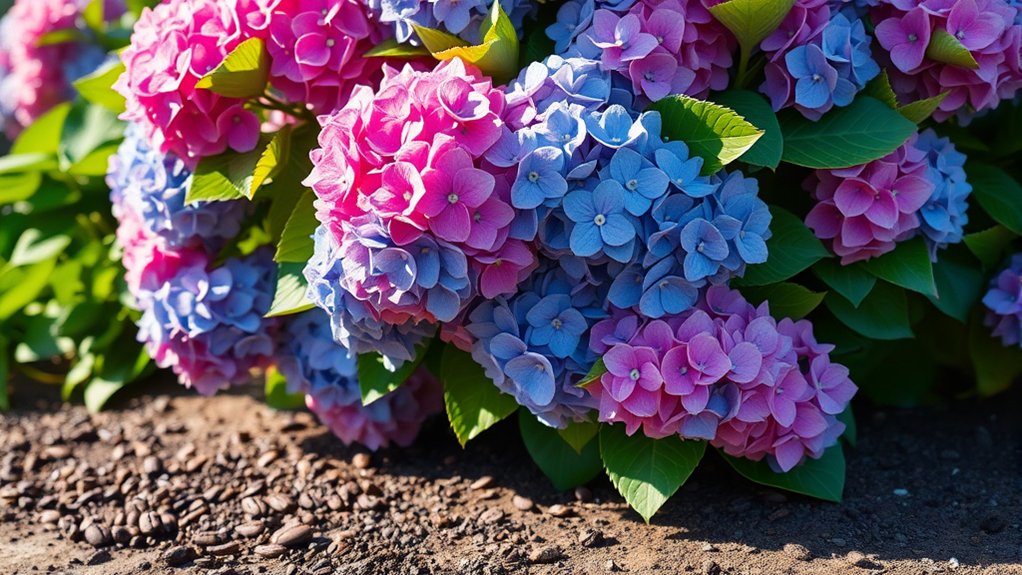
Yes, hydrangeas benefit from coffee grounds because they gradually acidify the soil, helping the plant take up aluminum that makes the blue blooms more vibrant. Coffee grounds also provide key nutrients like nitrogen, phosphorus, and potassium.
They support beneficial microbes in the soil and improve soil structure, which leads to healthier roots and better water absorption. Just be sure to use moderate amounts mixed into your soil or compost.
It’s best to apply coffee grounds in early spring or autumn to avoid over-acidifying the soil and stressing your hydrangeas. Knowing how much to use and when can help you get the most out of this natural boost.
Why Coffee Grounds Help Acidify Hydrangea Soil
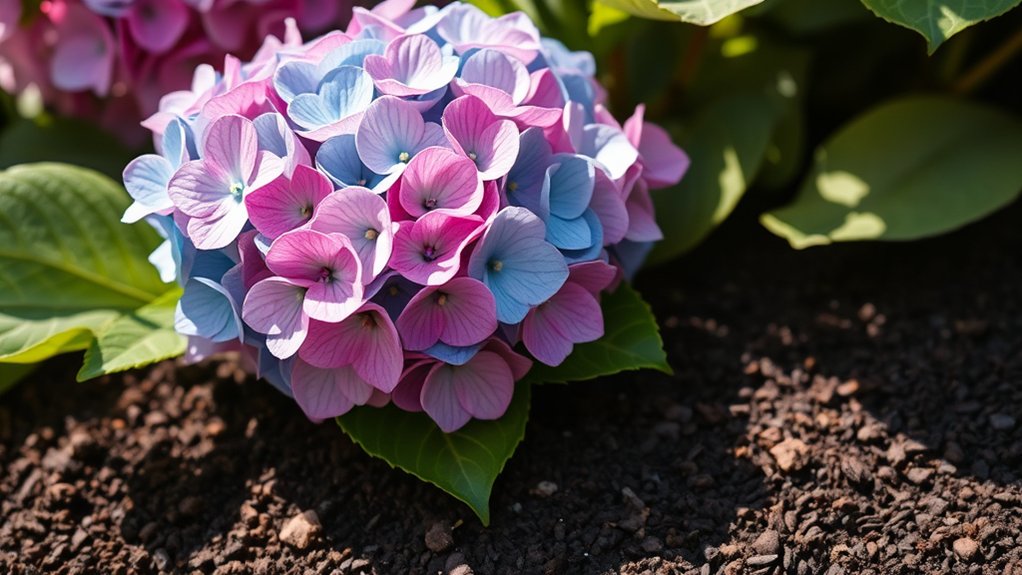
Although hydrangeas can thrive in various soil types, they particularly benefit from acidic conditions, which coffee grounds help create. Used coffee grounds have a mildly acidic pH, typically ranging from 6.2 to 6.8, that gradually lowers soil pH when mixed into the soil.
As the grounds break down, they release organic acids that boost soil acidity over time. This is great for hydrangeas, especially those that need a lower pH to show off their best colors.
Regularly adding coffee grounds helps keep the soil acidic enough to promote those beautiful blue blooms. Just be sure to keep an eye on the soil pH so it doesn’t get too acidic, which could harm your plants.
Key Nutrients Coffee Grounds Provide for Hydrangeas
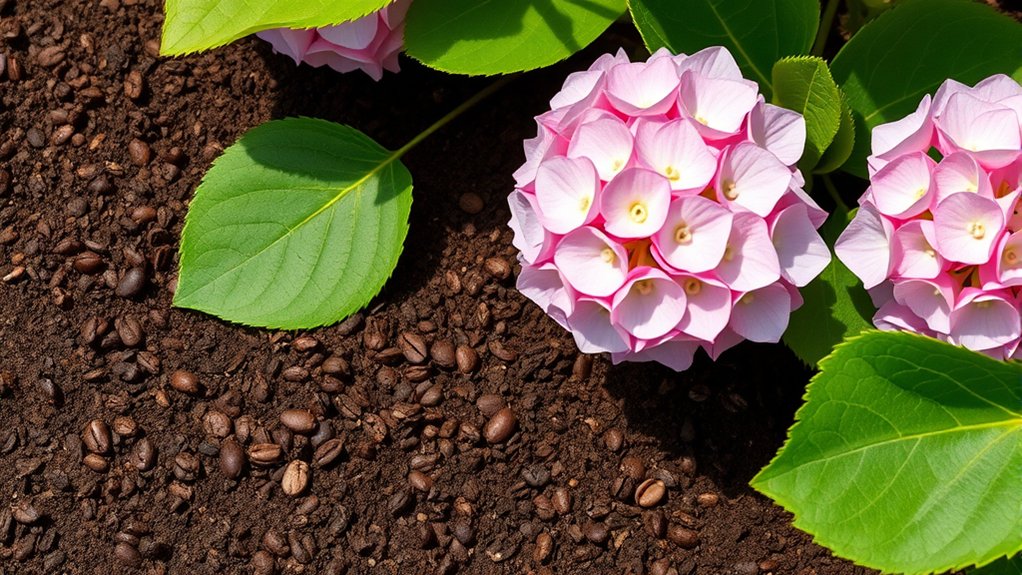
You’ll find that coffee grounds provide hydrangeas with essential nutrients like nitrogen, phosphorus, and potassium. These help support leaf growth, root development, and flower production.
Plus, these nutrients stimulate beneficial soil microbes, which makes nutrients more available and improves soil health.
Using coffee grounds regularly can really boost your hydrangeas’ overall strength and resilience.
Essential Nutrient Content
When you incorporate coffee grounds into your hydrangea care routine, you supply the plants with essential nutrients like nitrogen, phosphorus, and potassium. Nitrogen promotes lush foliage and prevents yellowing leaves, supporting vigorous growth.
Phosphorus enhances root development and encourages vibrant flower production, which is crucial for hydrangea blooms.
Potassium strengthens the plant’s disease resistance and drought tolerance, boosting overall resilience. Additionally, trace minerals such as magnesium, calcium, and iron contribute to chlorophyll synthesis, improving photosynthesis efficiency.
Proper plant watering combined with coffee grounds helps ensure these nutrients are effectively absorbed by hydrangeas.
Also, the potassium content aids in natural pest prevention by enhancing plant health and stress resistance.
Integrating coffee grounds into your routine provides a balanced nutrient profile that supports robust hydrangea growth and vitality. It’s an easy way to give your plants a little extra boost!
Soil Microbe Enhancement
Since coffee grounds supply key nutrients like nitrogen, phosphorus, and potassium, they actively promote the growth of beneficial soil microbes that support hydrangeas. These microbes, including bacteria and fungi, enhance organic matter breakdown, improving nutrient availability to your plants’ roots.
The trace minerals in coffee grounds, such as magnesium, calcium, and iron, aid microbial enzyme functions, further stimulating soil health.
By fostering a balanced microbial community, coffee grounds help protect hydrangeas from root disease by outcompeting harmful pathogens. Plus, when used properly, coffee grounds minimize pest attraction because excessive organic matter buildup can harbor unwanted insects.
So, when you add coffee grounds thoughtfully, you encourage a thriving rhizosphere. This boosts nutrient cycling and overall hydrangea health without increasing the risk of root disease or pest problems.
It’s a simple way to give your plants a little extra support and keep your garden happy.
How Coffee Grounds Affect Hydrangea Bloom Color
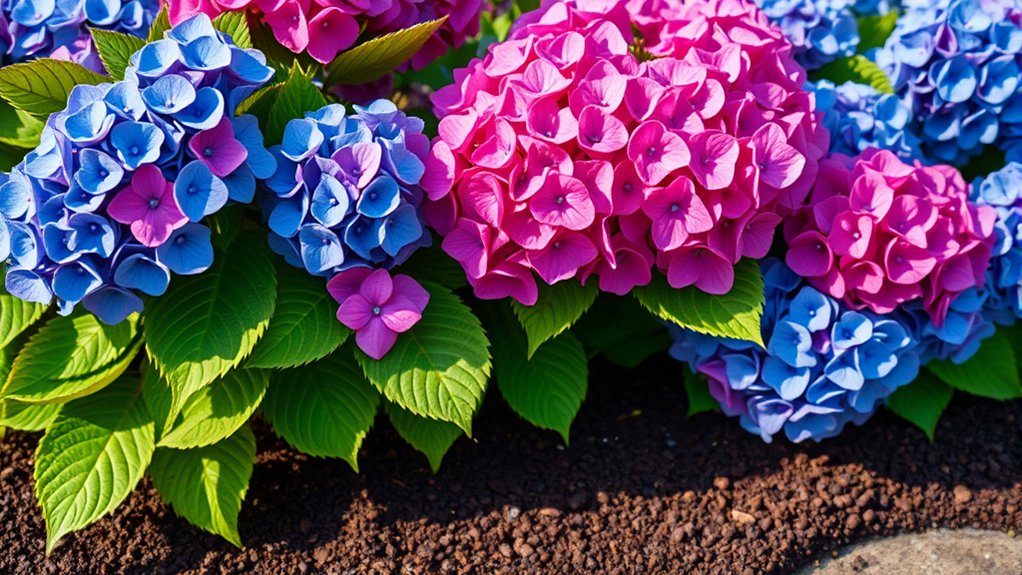
Although hydrangea bloom color depends on multiple factors, coffee grounds can profoundly influence it by altering soil acidity. Their mildly acidic nature lowers the coffee pH of the soil, promoting blue blooms by increasing aluminum availability.
However, you must monitor soil pH regularly to avoid excessive acidity, which harms bloom color and plant health.
Combining coffee grounds with other acidifying agents enhances this effect, giving you more control over bloom color.
Coffee grounds lower soil pH, favoring blue hydrangea blooms. Increased aluminum uptake intensifies blue coloration. Regular soil testing prevents over-acidification.
Excessive coffee grounds can discolor blooms and stress plants. Mixing coffee grounds with other acidifiers improves color results.
How Coffee Grounds Improve Hydrangea Soil Structure
If you want to improve the soil structure around your hydrangeas, incorporating coffee grounds can be highly effective. Coffee grounds add valuable organic matter, which enhances soil aeration by loosening compacted or clay-heavy soil. This improved aeration promotes healthier root growth and better water infiltration.
Enhance hydrangea soil with coffee grounds to improve aeration, root health, and water absorption.
Through coffee composting, the grounds gradually decompose, boosting microbial activity that further refines soil texture and nutrient availability. Properly mixing coffee grounds into your soil prevents crust formation on the surface, ensuring consistent drainage essential for hydrangea health.
By regularly amending your soil with coffee grounds, you create a looser, well-draining environment that supports robust hydrangea development and resilience. This precise approach optimizes soil conditions without altering the plant’s bloom color or relying on excessive amendments.
It’s a simple, natural way to give your hydrangeas what they need to thrive.
Coffee Grounds and Beneficial Microbes for Hydrangeas
When you add coffee grounds to your hydrangea soil, you actively boost populations of beneficial microbes like bacteria and fungi that break down organic matter and release essential nutrients. Coffee grounds enhance microbial diversity, fostering a balanced ecosystem that improves nutrient availability and root health.
Although caffeine may temporarily inhibit some microbes, overall microbial activity increases with proper use. This promotes a healthier environment for your hydrangeas, encouraging vigorous growth and nutrient uptake.
Coffee grounds provide organic matter that enriches soil structure. Enhanced microbial diversity supports nutrient cycling. Bacteria and fungi decompose coffee grounds, releasing nutrients.
Microbial activity improves hydrangea root zone conditions. Regular use sustains a vibrant soil microbial ecosystem.
Incorporating coffee grounds effectively supports hydrangea health through microbial interactions. It’s a simple way to help your plants thrive!
Coffee Grounds for Hydrangea Pest Control
Beyond nourishing the soil and supporting beneficial microbes, coffee grounds also serve as a natural defense against common hydrangea pests. The coarse texture of used coffee grounds creates an abrasive barrier that deters slugs and snails, whose soft bodies are sensitive to rough surfaces.
Plus, the coffee aroma disrupts pest behavior by interfering with ant trails, reducing their activity near your hydrangeas. Caffeine compounds in coffee grounds affect slug nervous systems, decreasing their feeding tendencies.
Sprinkling a thin layer of coffee grounds around hydrangeas acts as an organic pest repellent without harmful chemicals. For enhanced protection, combining coffee grounds with other natural pest control methods boosts their effectiveness and promotes healthier hydrangea growth.
This approach uses both the physical and chemical properties of coffee grounds to manage pest populations efficiently. It’s a smart, eco-friendly way to keep your hydrangeas thriving!
Best Ways to Apply Coffee Grounds Around Hydrangeas
You’ll want to mix used coffee grounds into the soil around your hydrangeas instead of piling them on thickly. This helps avoid crusting on the surface. A good approach is to blend the grounds with compost or other organic matter when you’re preparing the soil—early spring, mid-summer, or early autumn are great times for this.
Doing it gradually helps adjust the soil’s pH in a gentle way.
Also, it’s a smart idea to test your soil regularly. That way, you can keep the acidity just right without worrying about making the soil too acidic or causing drainage issues.
Application Techniques
Although coffee grounds can benefit hydrangeas, applying them correctly is really important to avoid problems like water repellency and nutrient imbalances. Instead of just sprinkling fresh grounds from your coffee brewing directly on the soil surface, it’s better to mix used coffee grounds into the soil or add them to compost first.
This method, called ground composting, helps with gradual acidity adjustment and nutrient release.
To apply coffee grounds effectively around hydrangeas, mix 1-2 tablespoons of used grounds into the soil per plant. Do this during early spring, mid-summer, or early autumn. After applying, be sure to water thoroughly to help the grounds absorb properly.
Also, it’s a good idea to incorporate the grounds into compost before using them to prevent crusting on the soil surface. Don’t forget to regularly test your soil’s pH to avoid over-acidifying it and to keep those blooms looking their best.
Following these simple techniques will help keep your soil healthy and your hydrangeas vibrant and thriving.
Soil Preparation
When preparing soil for hydrangeas, mixing used coffee grounds thoroughly into the soil is essential to prevent water runoff and crust formation. Apply 1-2 tablespoons per plant, then water thoroughly to enhance nutrient absorption. Incorporate grounds into compost or soil amendments to gradually lower pH, which helps bloom color and nutrient availability.
Be careful not to over-apply, as too many grounds can lead to soil compaction. This can hinder water movement and root health. Make sure to use proper watering techniques and test soil pH regularly. The ideal pH for hydrangeas is between 5.5 and 6.5.
Coffee grounds also help prevent pests by improving overall soil conditions. So, adding them can give your hydrangeas a little extra boost in growth and health.
| Step | Action | Benefit |
|---|---|---|
| Mix grounds | Thoroughly blend into soil | Prevents crust, runoff |
| Moderate amount | 1-2 tbsp per plant | Avoids compaction |
| Water thoroughly | After application | Enhances nutrient uptake |
How to Incorporate Coffee Grounds Into Hydrangea Compost
Since coffee grounds are rich in organic matter and nutrients, incorporating them into hydrangea compost can really boost soil quality and even influence bloom color. To do this right, mix coffee grounds thoroughly with other organic materials. This helps promote even decomposition and improves soil aeration.
Coffee grounds enrich hydrangea compost, enhancing soil quality and bloom color when mixed well with organic materials.
Keep in mind, you want to limit coffee grounds to around 20% of the compost. This avoids making the soil too acidic. It’s best to add them during early spring or autumn composting for ideal nutrient cycling.
Also, make sure the coffee grounds are dry and mold-free. This prevents introducing any pathogens to your compost.
When your compost is ready, use it around your hydrangeas to gradually lower soil pH and encourage those beautiful blue blooms.
Don’t forget to test your soil pH regularly after applying the compost. That way, you can keep track of any changes and make adjustments as needed.
Frequency of Coffee Ground Application on Hydrangeas
You should apply coffee grounds to hydrangeas about once every 4 to 6 weeks during their active growing season. This helps keep the soil at just the right acidity level.
Try not to apply them more often than that, though, because too much acidity can actually harm the plants.
When the colder months roll around, it’s a good idea to cut back or even pause using coffee grounds.
Hydrangeas go dormant then, and changes in soil pH aren’t as important during that time.
Application Timing Guidelines
Although hydrangeas benefit from coffee grounds, applying them too frequently or too sparsely can disrupt soil acidity and plant health. You want to time your applications carefully during the growing season to keep soil conditions just right without interfering with pest management or watering.
Here are some application timing guidelines to consider:
Apply coffee grounds every 4 to 6 weeks during active growth phases. Target early spring, mid-summer, and early autumn for the best acidification effects.
Make sure to incorporate a thin layer into the soil to avoid crusting and runoff. Mixing grounds with compost or organic matter helps provide a steady nutrient release.
It’s also a good idea to test your soil pH regularly. That way, you can adjust your timing and keep the acidity perfect for vibrant blooms.
Following these timing practices will help you balance soil chemistry and support healthy hydrangea growth.
Recommended Application Frequency
When applying coffee grounds to hydrangeas, maintaining a frequency of about once a month during the growing season prevents over-acidification and supports ideal soil health. Apply 1-2 tablespoons per plant, mixing them into the soil or compost to avoid crusting and poor water absorption.
This frequency aligns with key growth phases and complements plant pruning and pest management routines. Regular soil testing helps you adjust applications based on soil pH and nutrient needs.
| Time of Year | Application Frequency | Amount per Plant | Notes |
|---|---|---|---|
| Early Spring | Once | 1-2 tablespoons | Prepares soil for growth |
| Mid-Summer | Once | 1-2 tablespoons | Supports ongoing nutrient needs |
| Early Autumn | Once | 1-2 tablespoons | Aids in nutrient replenishment |
| Off-Season | None | 0 | Avoids over-acidification |
Risks of Overusing Coffee Grounds on Hydrangeas
If coffee grounds are applied excessively to hydrangeas, they can considerably lower the soil pH, creating overly acidic conditions that damage root health. Overuse may also lead to soil compaction and crust formation, which limits water and air penetration essential for roots. This can increase the risk of root rot and fungal diseases.
Excessive coffee grounds can acidify soil, harm roots, and cause compaction, increasing disease risk in hydrangeas.
Also, nutrient imbalances, especially nitrogen overload, might promote excessive leafy growth at the expense of blooms. Continuous heavy application without monitoring can cause unpredictable bloom color changes and plant stress. So, it’s really important to keep an eye on how much coffee grounds you’re using.
Consider these risks when using coffee grounds:
- Accelerated soil erosion due to altered soil structure
- Increased root rot from poor drainage and fungal growth
- Nutrient imbalances causing weak flowering
- Soil compaction limiting root respiration
- Mold development on soil surface promoting disease
Hydrangea Varieties That Respond Well to Coffee Grounds
Managing coffee grounds carefully can prevent the risks of soil acidity and nutrient imbalance previously discussed. Certain hydrangea varieties, such as panicle, smooth, mophead, and cultivars like ‘Endless Summer’ and ‘Nikko Blue,’ respond well to the gradual pH-lowering effect of coffee grounds. This enhances their blue or purple blooms and supports healthy growth.
When applying coffee grounds, maintain proper hydrangea watering and hydrangea pruning schedules to optimize nutrient uptake and flower development. It’s all about balance to keep your plants thriving.
| Variety | Response to Coffee Grounds | Preferred Soil Condition |
|---|---|---|
| Panicle | Promotes blue blooms | Acidic |
| Mophead | Improved color and growth | More acidic |
| ‘Endless Summer’ | Enhanced foliage and flowers | Acidic |
Use moderate, regular applications to sustain soil acidity and significance. This way, your hydrangeas will continue to look their best without any soil problems.
Combining Coffee Grounds With Organic Practices for Hydrangeas
Although coffee grounds alone can influence soil acidity, combining them with organic practices like composting considerably enhances their benefits for hydrangeas. When you mix coffee grounds with organic amendments, you improve soil structure, aeration, and microbial activity, all vital for healthy hydrangea growth.
This method also supplies essential nutrients such as nitrogen, phosphorus, and potassium, supporting vibrant blooms. To maximize results, incorporate coffee grounds into the soil rather than applying them as a surface layer. This helps prevent crust formation and promotes better water absorption.
Regularly integrating coffee grounds with organic matter helps maintain ideal soil pH, which encourages those beautiful blue hydrangea flowers to thrive. It’s really about working with nature to get the best from your garden.
- Enhance soil acidity through composting coffee grounds
- Improve soil aeration and microbial activity
- Supply key nutrients: nitrogen, phosphorus, potassium
- Mix grounds into soil to avoid crusting
- Maintain soil pH for vibrant hydrangea blooms
Frequently Asked Questions
Can Coffee Grounds Attract Animals Harmful to Hydrangeas?
Yes, coffee grounds can increase bird attraction and rodent activity around your hydrangeas. These animals might disturb the soil or even damage the plants. So, it’s a good idea to use coffee grounds cautiously.
You want to make sure you’re not unintentionally inviting pests that could harm your garden. Just keep an eye on how your plants respond and adjust as needed. That way, you can enjoy your hydrangeas without any unwanted visitors.
Do Caffeine Levels in Coffee Grounds Affect Hydrangea Growth?
Think of caffeine as a gatekeeper. High levels can block nutrient absorption and disrupt soil acidity, which can hinder hydrangea growth.
But used grounds have minimal caffeine. So, they rarely affect your plants if applied in moderation.
Can Coffee Grounds Be Used on Hydrangea Cuttings or Only Mature Plants?
You can use coffee ground application on hydrangea propagation, mixing grounds into soil to slightly acidify and promote root growth. Avoid direct contact with cuttings, and monitor soil pH to guarantee ideal development and hydration.
Just be careful not to pile the grounds right on the cuttings themselves. It’s best to blend them into the soil. That way, you help the roots without risking damage.
Keep an eye on the soil’s acidity levels. This helps make sure your hydrangea cuttings grow strong and stay hydrated. It’s all about creating the right environment for them to thrive.
How Do Coffee Grounds Interact With Synthetic Fertilizers for Hydrangeas?
You might think coffee grounds and synthetic fertilizers would throw a perfect garden party, but their interaction hinges on soil acidity and nutrient balance. Use them carefully, or you risk unbalancing nutrients and harming your hydrangeas.
It’s all about how they work together in the soil. Coffee grounds can add organic matter and a bit of acidity, while synthetic fertilizers deliver quick nutrients. But if you’re not paying attention, you could throw off the pH or overload certain nutrients.
Are There Seasonal Considerations for Applying Coffee Grounds to Hydrangeas?
You should adjust coffee grounds application based on seasonal timing and soil temperature. Apply them lightly in spring and summer to acidify the soil and help retain moisture. This helps your hydrangeas thrive during their growing season.
But be careful not to overdo it in autumn. Heavy use before dormancy can stress the roots, which isn’t good for the plant. So, it’s best to hold back on coffee grounds as the weather cools down.
Conclusion
If you want your hydrangeas to thrive, think of coffee grounds as a gentle elixir, subtly transforming soil acidity and enriching nutrients. Like a skilled alchemist, they can deepen bloom hues and enhance soil texture while fostering beneficial microbes.
But don’t overbrew this magic. Use grounds sparingly to avoid imbalance. When combined thoughtfully with organic practices, coffee grounds become a key ingredient in cultivating vibrant, healthy hydrangeas that flourish under your care.