Does Coffee Cake Have Caffeine – Ingredients Explained
Coffee cake traditionally doesn’t contain caffeine since it’s meant to be enjoyed alongside coffee, not infused with it. In the U.S., classic recipes focus on cinnamon, streusel, and a moist crumb without coffee or espresso ingredients.
However, caffeine can appear if chocolate chips, cocoa powder, or instant coffee extracts are added. Baking doesn’t reduce this caffeine because it remains stable through typical baking temperatures.
If you want to avoid caffeine or understand regional differences, there’s more to explore about ingredients and preparation. It’s pretty interesting once you start digging into the details!
What Is Coffee Cake and Why Is It Called That?
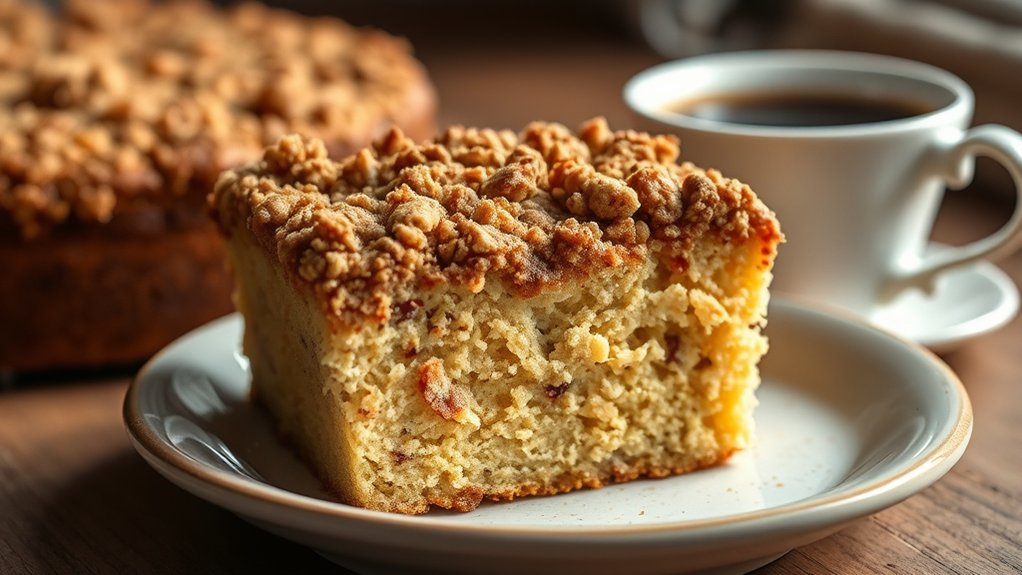
Although coffee cake is often assumed to contain coffee, it traditionally does not. Instead, it’s a sweet baked good designed to be enjoyed alongside coffee.
Coffee cake is a sweet treat meant to be enjoyed with coffee, not flavored with it.
The term “coffee cake” actually comes from the German phrase “Kaffee und Kuchen,” which points to its historical roots as a cake served during coffee breaks.
This shows that the cake is more about being a social companion to coffee rather than being a coffee-flavored dessert.
In the U.S., coffee cake usually features cinnamon, streusel toppings, and a moist, crumbly texture. These qualities really reinforce its role in coffee time rituals.
Knowing this background makes it clear why the cake’s name focuses on its pairing with coffee and not on having coffee or caffeine in the ingredients themselves.
Does Coffee Cake Actually Contain Coffee or Caffeine?
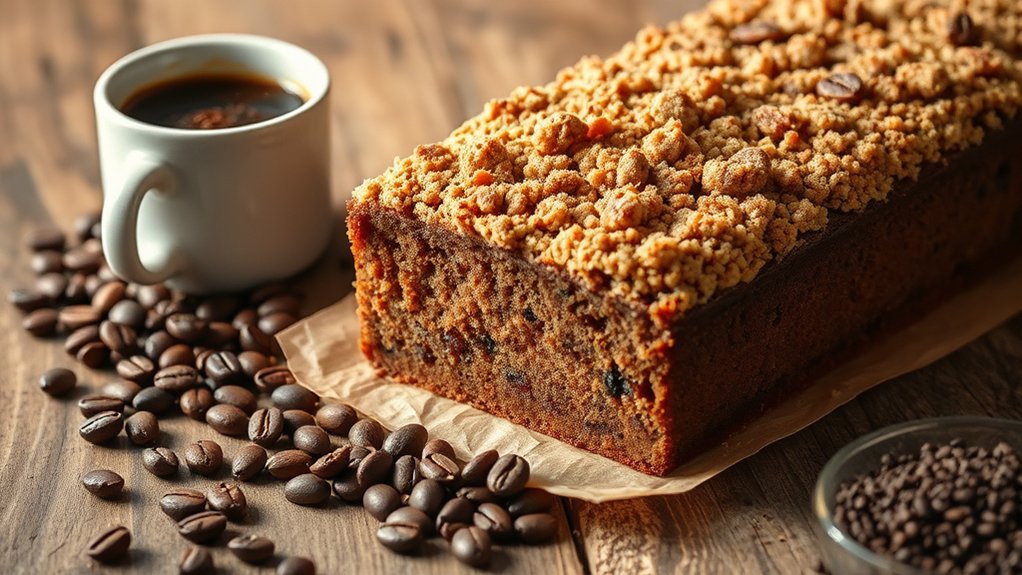
Can coffee cake actually contain coffee or caffeine? In most traditional American recipes, it doesn’t. The term “coffee cake” mainly refers to its role as a companion to coffee, rather than meaning the cake has coffee flavor or caffeine in it.
Classic versions rarely include coffee or espresso as ingredients.
That said, some modern variations might add coffee flavor on purpose, but these are exceptions, not the rule. Unless the recipe uses coffee extracts, espresso, or caffeine-containing additives like chocolate chips, the caffeine content is pretty much negligible.
So, if you’re hoping for a caffeine boost from a typical coffee cake, you probably won’t get it.
Knowing this distinction makes it easier to understand why the name “coffee cake” can be misleading when it comes to actual coffee flavor and caffeine content.
How American and U.K. Coffee Cakes Differ in Caffeine Content
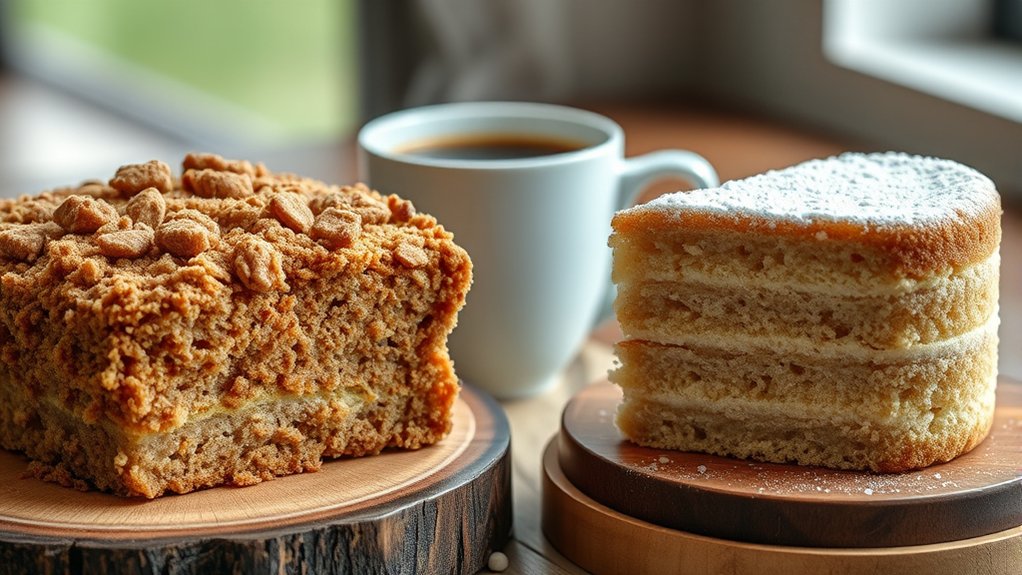
When you compare American and U.K. coffee cakes, the key difference lies in their caffeine content. American coffee cake typically contains no caffeine because it lacks coffee or caffeinated ingredients.
The main difference between American and U.K. coffee cakes is their caffeine content.
Conversely, U.K. coffee cake often incorporates instant coffee or coffee-flavored layers, which raise caffeine levels.
Here’s the breakdown: American coffee cake focuses on texture and sweetness, not coffee flavor or caffeine.
U.K. versions include coffee extract or instant coffee powder, adding measurable caffeine.
Caffeine content in U.K. cakes varies depending on the amount of coffee-infused ingredients used.
The traditional American style serves as a non-caffeinated treat, often paired with coffee, rather than containing it.
Understanding these distinctions helps clarify why caffeine levels differ so markedly between the two regional styles.
Which Ingredients Add Caffeine to Coffee Cake?
You’ll find caffeine in coffee cake mainly when the recipe includes ingredients like chocolate chips, cocoa powder, or instant coffee.
So, if those aren’t part of the mix, chances are your coffee cake won’t have much caffeine at all.
Unlike brewed coffee, the caffeine in coffee cake depends entirely on these added ingredients rather than the base batter.
Most traditional recipes stick to non-caffeinated components like flour, sugar, and cinnamon, which don’t add any caffeine.
Caffeine Sources In Recipes
Although traditional American coffee cakes are usually caffeine-free, certain ingredients commonly added to recipes can introduce caffeine into the final product. Understanding which components contribute caffeine helps you control its presence while experimenting with flavor pairings and baking techniques.
Here are the main caffeine sources in coffee cake recipes:
- Cocoa powder – About 12 mg of caffeine per tablespoon, it adds a rich, chocolatey flavor.
- Chocolate chips – Varying caffeine levels depending on type, enhancing texture and taste.
- Instant coffee or coffee extract – Can contribute around 90 mg of caffeine per teaspoon, intensifying the coffee flavor.
- Coffee-infused ingredients – Sometimes used to boost aroma without adding bulk.
Baking doesn’t considerably reduce caffeine, so its content depends on the quantity and type of these ingredients you include.
Coffee Vs Coffee Cake
Since traditional coffee cake recipes rarely include actual coffee or caffeine-containing ingredients, you won’t find caffeine in most classic versions. Instead, these cakes rely on cinnamon and sugar to deliver their signature coffee flavor without adding caffeine content.
However, when coffee or espresso is incorporated directly, such as in some UK variations using instant coffee or coffee extract, the caffeine content rises noticeably. Also, adding cocoa powder or chocolate chips can boost caffeine levels, since just one tablespoon of cocoa adds roughly 12 mg of caffeine.
So, the caffeine content in coffee cake depends entirely on whether ingredients like coffee or cocoa are added, not on the cake’s basic components like flour or butter.
Understanding these differences helps you distinguish between coffee’s natural caffeine and coffee cake’s flavor profile.
Common Non-Caffeinated Ingredients
When exploring common coffee cake ingredients, it’s important to recognize that most traditional recipes rely on non-caffeinated components like flour, sugar, butter, and cinnamon to create their characteristic flavor. These base ingredients often exclude tea influences or gluten alternatives, which typically don’t contribute caffeine.
However, caffeine enters coffee cake primarily through specific additives. You should note:
- Chocolate chips or cocoa powder contain caffeine, with 1/4 cup of chips adding about 50 mg.
- Instant coffee or coffee extract—1 teaspoon can add roughly 90 mg of caffeine.
- Coffee liqueurs or coffee-flavored syrups also introduce caffeine depending on quantity.
- Standard gluten alternatives and tea-based flavorings usually don’t add caffeine unless combined with coffee or chocolate derivatives.
Does Baking Reduce or Remove Caffeine in Coffee Cake?
You might think that baking a coffee cake would cut down on its caffeine content, right? But actually, caffeine is pretty tough—it can handle the usual baking temperatures, which are around 350°F, without breaking down.
Research shows that the heat from baking barely affects the caffeine levels, so most of the caffeine from things like coffee or cocoa powder stays right where it is.
Caffeine Presence In Baking
How much caffeine survives the baking process in coffee cake? Thanks to caffeine stability, baking techniques generally don’t reduce or remove caffeine considerably. Here’s what you should know:
Caffeine is a stable compound that withstands typical baking temperatures and durations. Ingredients like cocoa powder, chocolate chips, and instant coffee retain their caffeine content after baking. Studies show minimal caffeine degradation during standard baking processes.
The caffeine content in your coffee cake depends mainly on the quantity and type of caffeinated ingredients added, not the baking itself. So basically, if you put more caffeine in, more caffeine stays in. It’s pretty straightforward!
Heat Impact On Caffeine
Although baking involves high temperatures and extended heat exposure, it doesn’t considerably reduce the caffeine content in coffee cake. Caffeine stability plays a vital role here. Caffeine is a robust compound that withstands typical baking temperatures around 350°F without significant breakdown.
Research consistently shows that the caffeine present in caffeinated ingredients remains largely intact after baking. The baking temperature and duration have minimal impact on caffeine retention. So, you won’t lose much caffeine during the process.
If your coffee cake includes caffeinated components like coffee or espresso, you can expect the final product to retain most of its original caffeine content.
Understanding this heat impact guarantees you recognize that baking doesn’t diminish caffeine’s presence in your coffee cake.
Coffee Cake Ingredient Analysis
Several key ingredients contribute caffeine to coffee cake, and analyzing their stability during baking clarifies whether the process affects caffeine content.
When you use components derived from the coffee bean, such as instant coffee or brewed coffee, caffeine extraction occurs before baking. Importantly, caffeine remains stable through typical baking temperatures (around 350°F).
Here’s what you should know: coffee bean derivatives retain their caffeine after baking. Cocoa powder and chocolate chips also keep most caffeine intact. Baking doesn’t break down or markedly reduce caffeine levels.
The final caffeine content depends on the amount of caffeinated ingredients used. So, baking coffee cake doesn’t remove caffeine. If caffeine extraction happened in your ingredients, the finished cake maintains its stimulant properties.
How Cinnamon and Streusel Shape Coffee Cake’s Flavor
When you bite into a coffee cake, the warm, sweet, and slightly spicy notes of cinnamon immediately stand out, shaping the cake’s distinctive flavor profile. Cinnamon’s aromatic oils intensify during baking, producing a pronounced cinnamon aroma that really elevates the whole sensory experience.
Streusel, made from butter, flour, sugar, and cinnamon, adds a wonderful crunch that contrasts with the soft cake. It not only enhances the texture but also boosts that cinnamon flavor we love.
This combo creates the signature cinnamon swirl and crumb topping you find in classic American coffee cake.
Together, cinnamon and streusel bring a balanced mix of sweet, spicy, and buttery flavors that perfectly complement the cake’s moist crumb. When you break it down, you can see how these two elements really define coffee cake’s flavor complexity and make it so appealing.
How Sour Cream Affects Coffee Cake Texture and Moisture
You’ll notice that sour cream really boosts the moisture in coffee cake, giving it a tender crumb that stays soft and doesn’t dry out easily.
Plus, the acidity in sour cream activates the baking soda, which helps the cake rise better and makes the texture lighter and softer.
This mix not only makes the cake feel great when you eat it but also helps keep it fresh for longer, so you can enjoy it even after a few days.
Moisture Enhancement Benefits
Although sour cream might seem like a simple addition, it considerably enhances coffee cake’s texture and moisture. Its acidity activates baking soda, a key baking technique that produces a lighter crumb.
Sour cream’s fat content enriches the cake, preventing dryness and promoting flavor pairing by improving how well the cake absorbs other flavors.
Specifically, sour cream:
- Adds moisture, resulting in a tender, soft crumb
- Enhances fat content, increasing richness
- Improves flavor absorption and overall mouthfeel
- Retains moisture during baking, extending freshness
Texture Improvement Effects
Sour cream markedly influences coffee cake’s texture by adding moisture and activating chemical reactions that lighten the crumb. The acidity in sour cream reacts with baking soda, enhancing dough aeration and producing carbon dioxide bubbles that expand during baking. This process results in a lighter, airier crumb structure.
Additionally, the fat content in sour cream contributes to crumb tenderness by coating flour proteins, limiting gluten development, and preventing toughness. This combination of increased aeration and fat-induced tenderness delivers a delicate, melt-in-your-mouth texture.
Beyond texture, sour cream enriches the cake’s mouthfeel and flavor complexity. It ensures the crumb remains moist without becoming dense.
When you use sour cream in your coffee cake batter, you optimize both moisture retention and dough aeration, directly improving crumb tenderness and overall eating quality.
Common Coffee Cake Add-Ins That May Contain Caffeine
When examining coffee cake ingredients, several common add-ins contribute varying amounts of caffeine that you mightn’t expect. Since caffeine extraction primarily occurs from the coffee bean, ingredients derived from or flavored by coffee or cacao naturally contain caffeine.
Here are four typical add-ins to evaluate:
Here are four common coffee cake add-ins to consider for their caffeine content.
- Chocolate chips: A quarter-cup can add approximately 50 mg of caffeine, derived from the cocoa solids.
- Cocoa powder: Often used in streusel or batter, one tablespoon contains about 12 mg of caffeine.
- Instant coffee or coffee extract: A teaspoon can contribute roughly 90 mg of caffeine, directly from coffee bean extraction.
- Mocha or coffee-flavored fillings: These vary but often contain caffeine depending on the coffee or chocolate content.
Nuts like pecans and walnuts don’t add caffeine. So if you’re avoiding caffeine, those are safe bets!
How to Make a Truly Caffeine-Free Coffee Cake at Home
If you want to enjoy coffee cake without caffeine, you must carefully select ingredients that contain none. Use decaffeinated coffee or caffeine-free flavorings, and avoid chocolate chips, cocoa powder, or coffee extracts. Substitute traditional extracts like vanilla or almond to keep the flavor.
Also, be sure to check all processed ingredients for caffeine by reading the labels. It’s a good idea to include naturally caffeine-free items like sour cream, butter, eggs, and cinnamon.
Baking techniques matter too. Try to avoid any cross-contamination with caffeinated products in your kitchen. You might also consider sugar alternatives like stevia or erythritol to reduce added sugars, though these don’t affect caffeine content.
| Ingredient Type | Recommendations |
|---|---|
| Flavorings | Vanilla, almond extract |
| Avoid | Coffee extracts, cocoa |
| Baking essentials | Baking powder (caffeine-free) |
| Sugar alternatives | Stevia, erythritol |
How to Spot Caffeine in Store-Bought Coffee Cakes
Understanding how to avoid caffeine in homemade coffee cake sets a good foundation, but spotting caffeine in store-bought versions requires careful label scrutiny.
Avoiding caffeine at home is helpful, but reading labels is key for store-bought coffee cakes.
For effective caffeine detection, follow these steps when examining ingredient labels: Check for caffeine-containing ingredients like cocoa powder, chocolate chips, or coffee extract. Look for “decaffeinated” labels to confirm the absence of caffeine. Read closely for any added flavorings or toppings that may include caffeine sources.
Also, review nutritional information for specific caffeine content, typically listed in milligrams per serving.
Most traditional American coffee cakes don’t contain added caffeine unless explicitly stated. So, by applying this analytical approach, you can confidently identify caffeine presence in store-bought coffee cakes and make informed choices.
Why Coffee Cake Pairs Perfectly With Your Morning Coffee
Although coffee cake doesn’t usually contain caffeine itself, its combination of cinnamon, sugar, and buttery flavors perfectly complements the bitterness and aroma of your morning coffee. This coffee pairing creates a balanced taste profile where the cake’s sweetness counters coffee’s acidity, enhancing both flavors.
The moist, tender texture of coffee cake also enriches your coffee experience, encouraging a relaxed morning ritual.
Traditionally enjoyed during breakfast or brunch, coffee cake has become integral to social and cultural morning routines. When you choose coffee cake alongside your brewed coffee, you’re engaging in a time-tested combination that elevates the sensory enjoyment of both.
This harmony between flavors and textures makes coffee cake an ideal companion for your daily coffee ritual.
Best Ways to Store and Serve Coffee Cake for Freshness
Proper storage plays a crucial role in preserving the freshness and texture of coffee cake. Understanding how baking techniques affect moisture retention can guide you in maintaining ideal quality for perfect coffee pairing. Follow these evidence-based steps:
Store coffee cake at room temperature in an airtight container for up to 3 days to keep it moist and fresh.
For longer storage, wrap tightly in plastic wrap and freeze for up to 3 months. Thaw overnight in the refrigerator.
Avoid refrigerating more than a day unless the cake contains perishable ingredients like cream cheese or fresh fruit.
Reheat individual slices in the microwave for 10-15 seconds to restore softness.
Add icing or glaze just before serving to prevent sogginess.
These methods ensure your coffee cake stays fresh and enjoyable alongside your coffee. Give them a try and enjoy every bite!
Frequently Asked Questions
Can Coffee Cake Cause Caffeine Sensitivity or Allergic Reactions?
Coffee cake rarely causes coffee allergy but can trigger caffeine sensitivity if it contains chocolate or coffee ingredients. You should check labels carefully, as caffeine sensitivity may lead to headaches or jitters, not typical allergic reactions.
It’s always a good idea to be cautious, especially if you know you’re sensitive to caffeine. Just keep an eye on what’s in your coffee cake, and you should be fine!
How Long Does Caffeine From Coffee Cake Stay in Your System?
Caffeine from coffee cake stays in your system about 3 to 7 hours. This depends on factors like baking methods and sugar content, which can change how quickly it’s absorbed.
Usually, half of the caffeine clears out in around 5 hours. But remember, everyone’s metabolism is different, so it can vary from person to person.
Are There Caffeine-Free Coffee Cake Mixes Available in Stores?
Yes, you’ll find caffeine-free coffee cake mixes with various flavor variations, like vanilla or cinnamon. When baking, check ingredients carefully and follow baking tips to avoid caffeine-containing additives.
That way, you’ll ensure a safe, enjoyable caffeine-free treat every time. It’s pretty easy once you know what to look for!
Does Coffee Cake Caffeine Affect Children Differently Than Adults?
Wonder why caffeine hits kids differently? Their child metabolism processes caffeine slower, leading to prolonged effects.
Because caffeine absorption varies, even small amounts in coffee cake can disrupt their sleep or behavior more than adults’. So, you should monitor intake carefully.
Can Coffee Cake Caffeine Interact With Medications or Health Conditions?
Yes, the coffee content in coffee cake can interact with medications or health conditions. It’s something to keep in mind, especially if you have any sensitivities or health concerns.
You should consider the health implications carefully, particularly if the cake contains chocolate or coffee extract. Caffeine in these ingredients may affect your blood pressure, heart rhythm, or how certain drugs work.
Conclusion
So, does coffee cake actually caffeinate you? Not unless you’re sneaking in espresso shots or chocolate chips. The name’s just a clever marketing ploy, like calling a salad “dessert” to trick your taste buds. Baking won’t zap caffeine unless you’re targeting it with a science degree.
If you want true caffeine freedom, check ingredients like a detective. Otherwise, enjoy your cake with coffee, because some things just taste better when they team up.