Is There An Automatic Drip Coffee Maker Without Plastic Parts – Best Options Explained
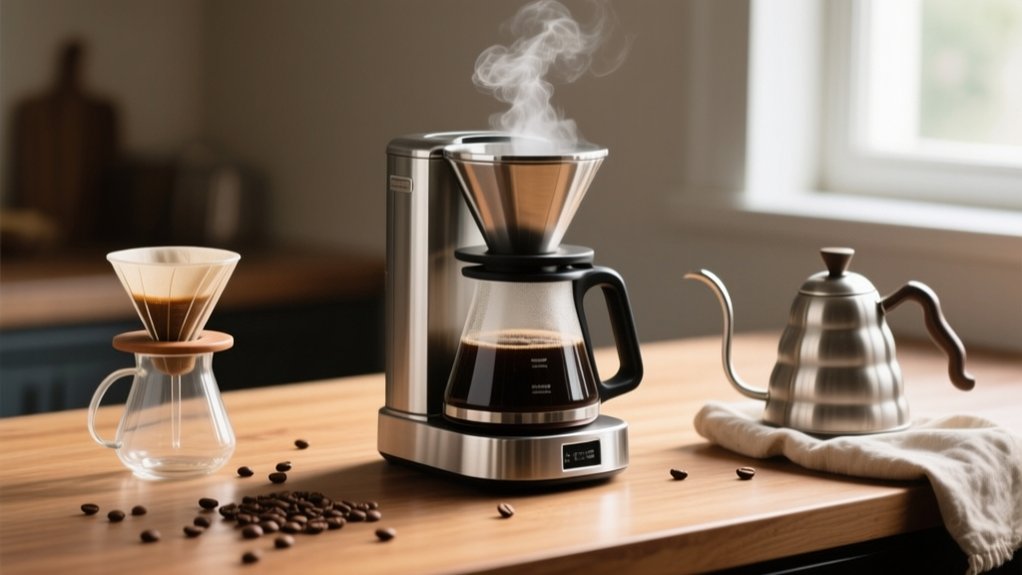
You can find automatic drip coffee makers without plastic parts by choosing models made from stainless steel and glass. These materials avoid plastic contact with hot water and coffee to keep your brew pure and safe.
Options like the Aarke Drip Coffee Maker offer fully plastic-free paths while ensuring great taste and durability. Avoid BPA-free plastics that still leach chemicals.
If you want to know which brands fit these criteria and where to buy them, keep exploring.
What “Plastic-Free” Means in Drip Coffee Makers
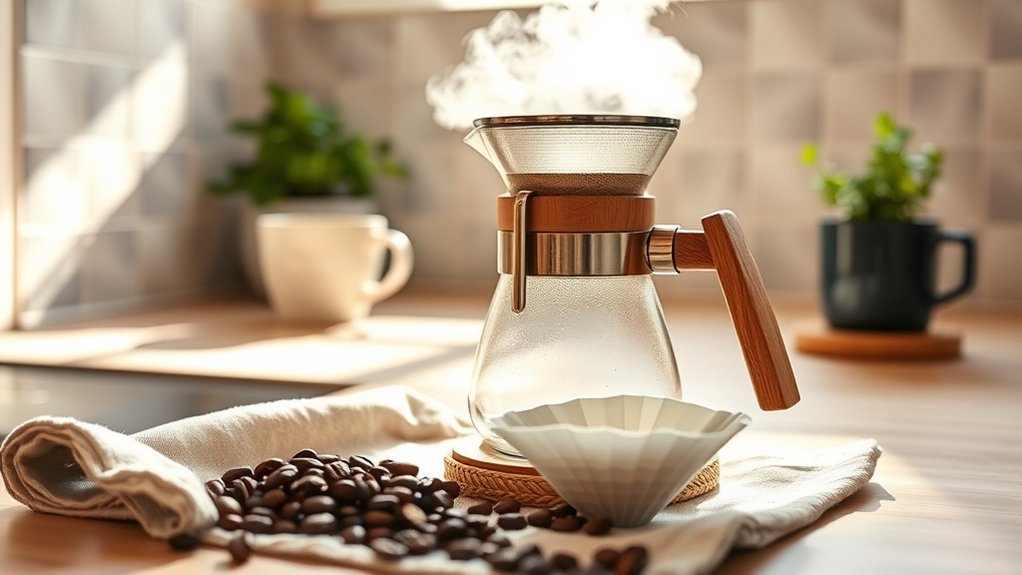
When you choose a plastic-free drip coffee maker, you’re opting for machines that avoid plastic parts in contact with hot water or brewed coffee, such as the brew path, reservoir, and filter basket. This means the key materials in these areas are often stainless steel or glass, which don’t pose the same risks as plastics.
While few drip coffee makers are entirely free of plastic, minimizing plastic exposure in the brew path is vital. Many traditional models use plastic components that raise health concerns, especially when heated.
Minimizing plastic in the brew path is crucial as many traditional coffee makers use heated plastic parts.
Even BPA-free plastics can release harmful compounds.
A plastic-free coffee maker focuses on using safer, durable materials to guarantee your coffee tastes pure and reduces potential health risks associated with plastic materials in contact with hot coffee.
Why Avoiding Plastic Matters for Your Health
Many people don’t realize how much plastic exposure they get from everyday items like coffee makers. During brewing, hot water can cause plastic parts to leach chemicals into your coffee, even from BPA-free plastic. These chemicals, including BPA substitutes, may disrupt hormones and cause health issues like reproductive problems.
To protect your health, it’s smart to avoid plastic in coffee makers. Here’s a quick look at why:
| Concern | Explanation |
|---|---|
| Leaching Chemicals | Heat and acidity cause plastic to release harmful substances. |
| BPA-Free Plastic | Often contains substitutes that mimic estrogen. |
| Health Effects | Linked to hormone disruption and reproductive problems. |
Cutting down on plastic exposure in your daily routine, especially when brewing coffee, supports better well-being.
Common Plastic Parts in Traditional Drip Coffee Makers
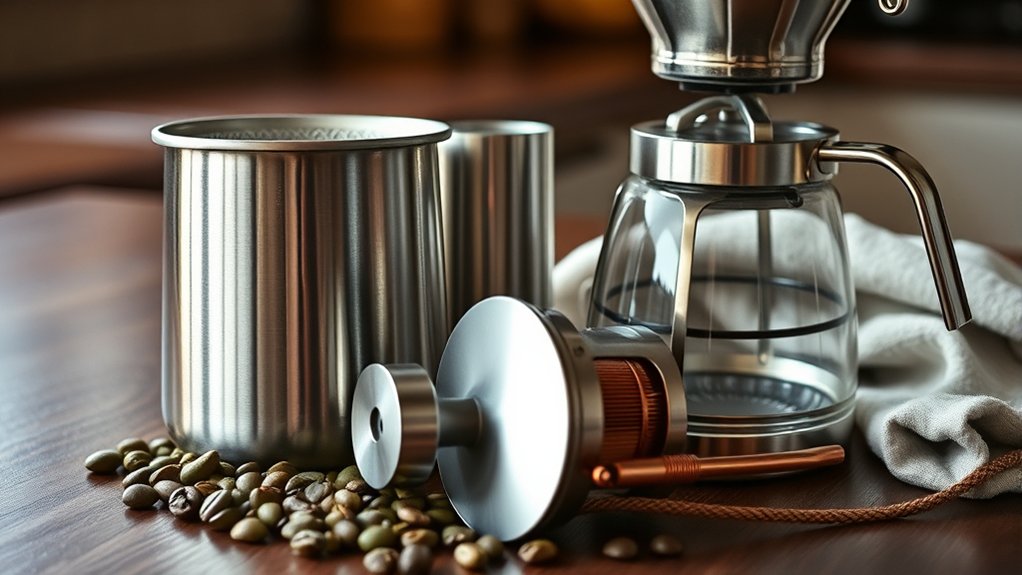
Plastic components are common in traditional automatic drip coffee makers, often found in water reservoirs, filter baskets, and internal tubing.
These plastic parts may seem harmless, but they can cause chemical leaching, especially when exposed to hot coffee brewed at 195°F to 205°F.
Plastic components can leach chemicals when exposed to hot coffee brewed between 195°F and 205°F.
Even BPA-free plastics aren’t completely safe, as they can still release harmful substances under heat and acidity.
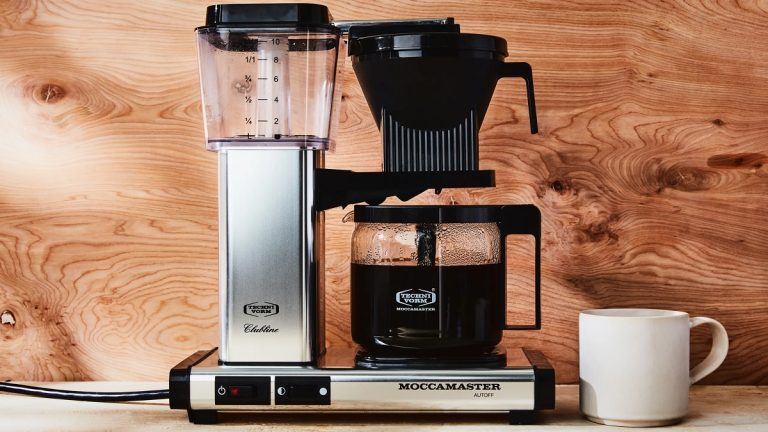
Take the Moccamaster, for example: although it’s praised for quality, it contains several plastic parts touching your hot coffee, raising concerns about long-term exposure.
Since fully plastic-free brewing options are rare, it’s important to understand where plastics hide in your coffee maker.
Being aware helps you make smarter choices if you want to avoid chemical leaching and enjoy cleaner coffee.
How to Identify Truly Plastic-Free Coffee Makers
To spot a truly plastic-free coffee maker, start by checking where plastic might come into contact with your brew.
It’s important to look closely at the materials used in those parts.
Also, keep an eye out for certifications or independent testing that confirm the absence of harmful plastics.
And don’t forget to carefully review the product details to make sure plastic is avoided in key areas.
This way, you can be confident your coffee maker is genuinely plastic-free.
Plastic Contact Points
When you want a truly plastic-free drip coffee maker, focus on the parts that touch hot water and brewed coffee, like the brew basket, tubing, and shower head.
These plastic contact points are where chemical leaching risks are highest, so choosing materials like stainless steel, glass, or ceramic is key.
Many coffee makers still use plastic in these areas, even in well-known brands, so don’t assume all models are plastic-free.
To find a genuine plastic-free coffee maker, carefully check product details to verify that components exposed to hot water or coffee aren’t plastic.
Stainless steel brew baskets and metal tubing help guarantee safer brewing without unwanted chemicals.
Paying attention to these contact points assures your coffee stays pure and free from plastic contaminants.
Certification And Testing
Finding a truly plastic-free automatic drip coffee maker can feel like searching for a needle in a haystack, but certifications and testing provide reliable clues.
You should look for certifications from trusted organizations like the Specialty Coffee Association (SCA) or the European Coffee Brewing Centre (ECBC). These guarantee the coffee maker meets rigorous quality standards for safe brewing.
Independent testing is also key. Some brands share lab results proving no plastic exists in the brew path.
Remember, terms like “BPA-free” don’t mean zero plastic; they only exclude one chemical.
Focus on models using stainless steel and glass in hot-contact areas, reducing plastic exposure risk.
While fully plastic-free machines are rare, these certifications and thorough testing help you identify the best options with minimal plastic involvement.
Material Composition Analysis
Certifications and testing give you a good starting point, but understanding the materials used in a coffee maker reveals the full story.
To identify truly non-toxic coffee makers, focus on the brewing path. This is where hot water meets coffee.
Many traditional drip machines use plastic components in critical areas, so look for models made with stainless steel, glass, or ceramic instead. For example, the Technivorm Moccamaster KBGV and Chemex emphasize metal and borosilicate glass, minimizing plastic contact.
Always check product specs and certifications like those from the Specialty Coffee Association to confirm quality and safety.
Reading user reviews and independent tests helps spot brands that claim a plastic-free coffee maker but still use hidden plastics.
This material composition analysis is key to enjoying a pure, plastic-free brew every time.
Pros and Cons of Plastic-Free vs BPA-Free Coffee Makers
Although BPA-free coffee makers reduce exposure to harmful bisphenol A, they can still contain other plastics that might leach chemicals when heated. This could affect your health and coffee taste.
BPA-free coffee makers still risk chemical leaching from other plastics, impacting both health and flavor.
If you’re a health-conscious consumer, Plastic-Free Coffee Makers offer peace of mind by eliminating plastic in the brew path entirely. Made from stainless steel or glass, these models often provide better durability and longevity than BPA-free options.
The Moccamaster, for example, uses metal components that guarantee superior brewing quality through consistent temperature control and excellent heat retention.
While BPA-Free Coffee Makers might be more affordable, they could compromise your coffee’s flavor and safety over time.
Choosing plastic-free means investing in both your health and a consistently great cup of coffee.
Top Plastic-Free Coffee Makers Today
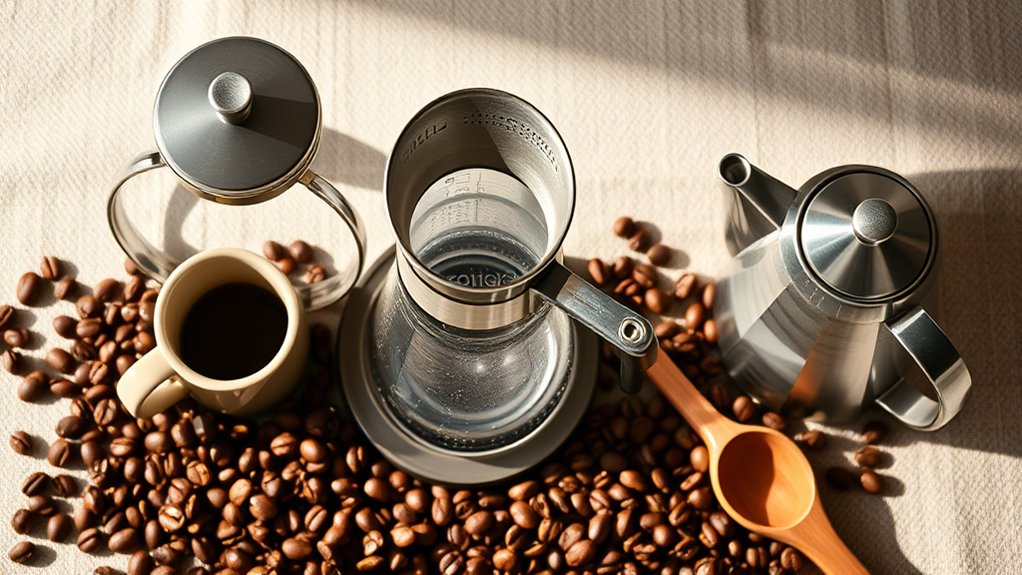
You’ll find several top plastic-free coffee makers that blend quality with safety.
From the stainless steel strength of the Aarke and Frieling to the glass purity of the Chemex, each offers unique features worth comparing.
Leading Plastic-Free Models
Five standout coffee makers lead the way in minimizing plastic use without sacrificing quality or performance.
The Technivorm Moccamaster KBGV Select offers an automatic drip coffee maker design with minimal plastic, using BPA-free components to guarantee a cleaner brewing process.
The Aarke Drip Coffee Maker is a fully plastic-free coffee maker crafted from durable stainless steel and glass, meeting the SCA’s Golden Cup standard.
The OXO Brew 8 Cup Coffee Maker blends stainless steel and BPA-free parts for those reducing plastic exposure.
Fellow Aiden’s model features a stainless steel heating system and thermal carafe, enhancing heat retention.
Finally, the Frieling Double-Wall Stainless Steel French Press eliminates plastic entirely, focusing on durability and excellent heat retention throughout your brew.
Key Features Comparison
When choosing a plastic-free coffee maker, understanding their key features can help you find the best fit for your brewing style and lifestyle.
Here’s a quick comparison of top options:
1. Aarke Drip Coffee Maker: A premium stainless steel coffee maker that brews a full carafe in under six minutes with no plastic contact during brewing.
It’s ideal if you want a fast, automatic drip coffee maker without plastic parts.
2. Frieling Double-Wall French Press: Made entirely of 18/10 stainless steel, offering a completely plastic-free experience.
It’s manual but perfect if you prefer a robust, durable build.
3. Chemex Classic Series: A plastic-free pour-over made from borosilicate glass.
It requires more effort but guarantees no plastic contact and pure flavor.
Some models use BPA-free plastic, but these three stand out for minimal to zero plastic use.
Comparing Plastic-Free Models With Popular Brands
Although many popular automatic drip coffee makers like the Moccamaster include plastic parts that touch hot water, truly plastic-free options remain rare. The Aarke Drip Coffee Maker stands out as a genuine plastic-free coffee maker, using stainless steel and glass to avoid plastic in its brew path.
In contrast, the Moccamaster employs BPA-free plastic but still has plastic components in contact with hot water. Even coffee makers with stainless steel parts, like the OXO Brew, often still use plastic in key areas. The Chemex pour-over offers a fully plastic-free alternative but isn’t automatic.
| Model | Brew Path Material |
|---|---|
| Aarke Drip Coffee Maker | Stainless steel & glass |
| Moccamaster | BPA-free plastic & metal |
| Chemex Pour-over | Glass & stainless steel |
| OXO Brew | Stainless steel & plastic |
Where to Buy Reliable Plastic-Free Coffee Makers Online
Where can you find reliable plastic-free coffee makers online? If you want a truly plastic-free coffee maker, start with these trusted sources:
- SimplyGoodCoffee.com offers the Plastic-Free Brewer, emphasizing clean living with a completely plastic-free design.
- Williams Sonoma stocks the Aarke Drip Coffee Maker, crafted from stainless steel and glass, combining durability and style for around $320.
- Amazon sells budget-friendly options like the Melitta Porcelain Pour-Over ($15–20) and the CHEMEX Pour-Over Glass Coffeemaker, both excellent for plastic-free brewing.
These reliable coffee makers guarantee you avoid plastic without sacrificing quality.
Whether you prefer premium stainless steel or affordable porcelain, these platforms provide solid choices for your plastic-free coffee journey.
How to Maintain Your Plastic-Free Coffee Maker
Finding the right plastic-free coffee maker is just the start of your journey toward a cleaner brew.
To keep it performing well, commit to regular cleaning using warm, soapy water and a non-abrasive sponge, especially on stainless steel and glass parts. Avoid harsh chemicals that could damage your coffee maker’s materials.
Establish a descaling routine with water and vinegar or a commercial descaler to prevent mineral buildup in stainless steel components.
Always monitor seals and gaskets for wear, as they maintain a tight fit and prevent leaks.
When not in use, unplug your coffee maker to protect its heating element.
Finally, guarantee proper storage by keeping your plastic-free coffee maker in a dry, cool place to prolong its lifespan and reliability.
Should You Switch to a Plastic-Free Coffee Maker?
Why should you consider switching to a plastic-free coffee maker? When hot water hits plastic parts, harmful chemicals can leach into your brew, raising serious health concerns. Even BPA-free plastics aren’t completely safe under heat. Here’s why switching matters:
- Health safety: A plastic-free coffee maker, like the one from Simply Good Coffee, eliminates your exposure to toxic chemicals, ensuring safer coffee.
- Better quality coffee: Without plastic in the brew path, your coffee tastes cleaner and fresher.
- Durability and design: While popular models like the Technivorm Moccamaster still use plastic parts, investing in fully plastic-free machines often means longer-lasting, higher-quality equipment.
Switching might cost more upfront, but it’s worth it for your health and a superior coffee experience.
Frequently Asked Questions
How Does Brewing Time Compare Between Plastic-Free and Traditional Coffee Makers?
You’ll find that brewing time between plastic-free and traditional coffee makers is quite similar, generally around 5 to 6 minutes.
Plastic-free models often excel in heat retention and material durability, which supports consistent coffee extraction.
While they may require a bit more maintenance, their brewing efficiency remains solid.
Traditional ones might offer more user convenience with programmable features, but both handle brewing capacity well without compromising flavor or speed.
Are Plastic-Free Coffee Makers More Energy Efficient?
You’d think energy consumption wouldn’t matter back in the age of quills, but today, plastic-free coffee makers actually use less energy thanks to superior heat retention.
Their material durability means fewer replacements, cutting costs and environmental impact over time.
Depending on your user preferences and maintenance needs, these models often outperform plastic ones.
Can Plastic-Free Coffee Makers Handle Hard Water Without Damage?
Yes, plastic-free coffee makers handle hard water better, reducing longevity concerns.
Using material alternatives like stainless steel or glass minimizes mineral buildup, so you won’t need maintenance as often.
Users report improved flavor retention since these materials don’t absorb odors or chemicals.
Many user experiences show these makers withstand regular descaling without damage, making them ideal if you want durability and consistent taste despite hard water challenges.
Do Plastic-Free Coffee Makers Affect the Coffee Flavor?
Imagine sipping coffee that dances on your tongue like a fresh mountain breeze. Plastic-free coffee makers make that happen. They preserve coffee taste by using inert brewing materials like glass and stainless steel, preventing off-flavors linked to health concerns from plastic leaching.
Customer reviews rave about cleaner flavor extraction and vibrant notes.
To keep your maker pristine, follow simple maintenance tips. Plus, you reduce environmental impact, brewing better coffee for you and the planet.
What Warranties Are Offered on Plastic-Free Coffee Makers?
You’ll find plastic-free coffee makers usually offer a 2-year warranty duration, reflecting their manufacturer reputation for quality.
Before buying, check customer reviews to gauge warranty coverage and ease of the claim process.
Many brands provide replacement parts to support sustainability and long-term use.
Following maintenance guidelines is essential to keep your warranty valid.
Always compare these factors closely to guarantee you get reliable protection and support for your coffee maker.
Conclusion
Choosing a plastic-free drip coffee maker isn’t just about brewing better coffee; it’s pouring purity into your daily ritual. Like a clear mountain stream, your coffee deserves to flow free from hidden chemicals that cloud its true flavor.
By ditching plastic, you’re not just caring for your health but also nurturing the planet. So, take the plunge and let every cup you sip be a fresh start, untainted and full of promise.