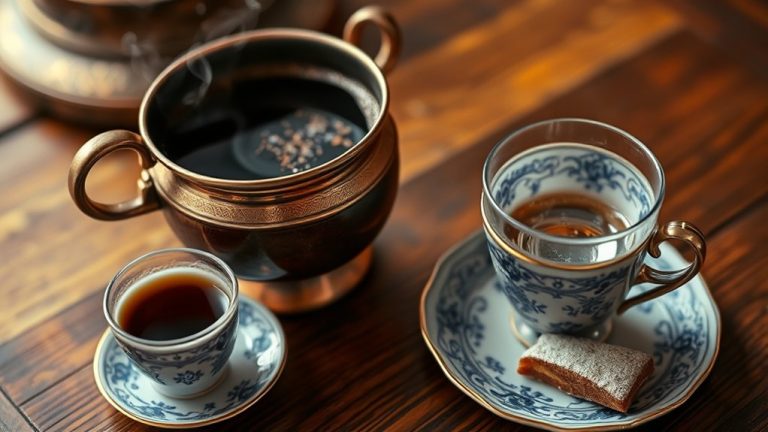
Cortado Coffee Vs Latte – Key Differences Explained
A cortado balances a double shot of espresso with equal parts lightly steamed milk, delivering a strong, rich coffee experience in a small glass. A latte uses one espresso shot with 3-4 times more steamed milk topped by airy microfoam, offering a milder, creamier taste in larger cups.
The cortado emphasizes espresso’s boldness and silky texture, while the latte focuses on smoothness and volume. Explore further to understand their origins, textures, and evolving café trends.
What Is a Cortado?

Although you might be familiar with espresso-based drinks, a cortado stands out by combining a double shot of espresso with an equal amount of warm milk, typically in a 1:1 ratio. This precise balance “cuts” the espresso’s intensity, softening its sharpness while preserving its bold flavor and distinct coffee aroma.
A cortado blends double espresso with warm milk, perfectly balancing bold flavor and smooth intensity.
It’s usually served in small 4-ounce glasses, which helps maintain a serving temperature that optimizes both taste and aroma. The milk isn’t too hot, so it doesn’t mask the espresso’s nuanced profile.
Originating from Spain, this technique enhances the espresso’s texture, creating a silky mouthfeel without diluting the concentrated flavor.
When you order a cortado, expect a rich, robust coffee experience with carefully controlled serving temperature and a pronounced coffee aroma that sets it apart from other espresso drinks.
What Is a Latte?

You’ll find that a latte combines one shot of espresso with three to four times the amount of steamed milk. This creates a creamy and smooth texture, topped with a nice layer of microfoam.
It actually comes from Italy, where it’s known for its mild, mellow flavor. This is quite different from a cortado, which focuses more on the stronger espresso taste.
Milk-To-Espresso Ratio
When you order a latte, expect a milk-to-espresso ratio of about 3:1 or 4:1, meaning three to four parts milk for every single part espresso. This higher milk volume causes significant milk dilution, reducing the coffee concentration compared to espresso-forward drinks.
The result is a smoother, creamier beverage with a balanced profile where milk tempers espresso’s intensity.
The latte’s larger cup size, typically 8 to 12 ounces, accommodates this increased milk content. While milk dilution lowers coffee concentration, it allows for flavor customization and a softer fundamental taste.
Understanding the milk-to-espresso ratio clarifies why lattes differ markedly in strength and texture from drinks like cortados, which use less milk and maintain higher coffee concentration.
This ratio is key to defining the latte’s milder espresso characteristic.
Texture And Flavor
Because a latte contains three to four parts steamed milk for every part espresso, it achieves a creamy, smooth texture with a silky microfoam that enhances its mild and slightly sweet flavor profile. This high milk-to-espresso ratio mellows espresso’s boldness, producing a less intense, more balanced taste.
When you think about coffee pairing, a latte’s smooth texture and subtle sweetness go really well with pastries and light desserts. They add flavor without overpowering what you’re eating.
The steamed microfoam also creates a velvety mouthfeel, which is a big part of the latte’s indulgent character.
Plus, the larger serving size means the coffee is less concentrated but creamier, making every sip feel comforting.
Knowing these texture and flavor details helps you appreciate how lattes offer a refined, customizable coffee experience. It’s perfect for anyone who prefers something soft and smooth instead of espresso’s intensity.
Origin And Evolution
Although many associate lattes with modern café culture, the drink actually originated in Italy as “caffè latte,” a simple morning beverage combining a shot of espresso with steamed milk. Its evolution reflects significant cultural influences and historical milestones shaping coffee consumption globally.
You’ll notice:
- Traditional Italian lattes emphasize a 3-4:1 milk-to-espresso ratio, served in 8-12 oz cups, highlighting creaminess and smoothness.
- The drink gained popularity in European coffeehouses before becoming a staple in 20th-century American cafés.
- Modern lattes often incorporate flavored syrups and latte art, blending tradition with contemporary preferences.
Understanding this progression helps you appreciate the latte’s technical composition and its role in coffee culture’s evolution. It’s pretty cool how a simple mix of espresso and milk has grown into such a global phenomenon.
How Strong Is the Espresso in Each Drink?

Since a cortado contains a double shot of espresso with minimal milk, you’ll experience a strong, concentrated coffee flavor that highlights the espresso’s intensity. This comes from brewing techniques that focus on precise extraction, making sure the coffee is robust and bold. It’s perfect if you want a drink that really shows off the espresso.
In contrast, a latte uses one or two espresso shots but mixes them with a larger amount of steamed milk. This dilutes the espresso’s strength and softens its intensity, giving you a smoother, creamier flavor.
When thinking about espresso strength, it helps to consider the shot size and the coffee-to-milk ratio. Because the cortado has very little milk, the espresso stays front and center.
But with a latte, the higher milk content mellows out the espresso. This difference makes each drink pair differently with various foods and suits different taste preferences.
Milk Ratios and Flavor Differences
The milk-to-espresso ratio plays a key role in shaping the flavor and texture of both cortados and lattes. Cortados use a 1:1 ratio, balancing bold espresso with lightly steamed milk that features minimal microfoam.
Meanwhile, lattes have a 3:1 or 4:1 ratio, offering creamier, milder flavors enhanced by microfoam from advanced milk frothing techniques.
The use of specific coffee bean varieties also influences these profiles.
Consider these points:
- Cortado’s equal milk and espresso ratio intensifies espresso’s boldness, which is ideal for robust coffee beans.
- Latte’s higher milk ratio mellows flavors, complementing lighter, sweeter beans.
- Milk frothing techniques adjust milk texture, affecting the flavor release without overpowering the espresso.
Texture and Foam: What Sets Cortado and Latte Apart
You’ll notice the cortado’s lightly steamed milk creates a smooth, velvety texture with minimal foam. This really highlights the espresso’s intensity.
On the other hand, a latte uses microfoam to give you a silky, creamy mouthfeel, topped with a frothy layer.
These differences in milk texture and foam are what make each drink feel so unique when you take a sip.
Milk Texture Differences
Although both cortado and latte combine espresso with milk, they differ markedly in milk texture and foam. The cortado features gently heated milk with minimal microfoam absence, creating a smooth, velvety texture.
In contrast, the latte uses steamed milk that incorporates microfoam, resulting in a creamier, airier mouthfeel.
Key milk texture differences include:
- Milk heating: Cortado milk is warmed carefully without introducing significant foam, preserving a silky consistency.
- Microfoam absence: Cortado lacks the microfoam layer that defines a latte’s texture.
- Mouthfeel: Latte’s steamed microfoam adds lightness and thickness, while cortado offers a pure, smooth milk texture without frothy layers.
Understanding these distinctions helps you appreciate how milk texture shapes each drink’s sensory experience. It’s pretty cool how such subtle differences can change what you taste and feel with every sip.
Foam Presence Contrast
When comparing cortado and latte, foam presence becomes a defining factor that influences texture and overall mouthfeel. You’ll notice a cortado has little to no foam due to minimal milk frothing. This results in a smooth, velvety texture.
In contrast, a latte features thick, stable microfoam created through extensive milk frothing. This forms a creamy, frothy top layer that’s essential for latte art. The foam stability in a latte adds a light, airy texture that really enhances your sensory experience, unlike the cortado’s denser milk integration.
| Aspect | Cortado |
|---|---|
| Foam Presence | Minimal to none |
| Milk Frothing | Gentle steaming |
| Foam Stability | Low |
| Texture | Smooth, velvety, dense |
| Aspect | Latte |
| Foam Presence | Thick microfoam |
| Milk Frothing | Extensive frothing |
| Foam Stability | High |
| Texture | Creamy, light, frothy |
Mouthfeel And Smoothness
Because milk preparation directly affects texture, the mouthfeel of a cortado and a latte differs considerably. The milk consistency shapes your sensory experience by influencing smoothness and foam presence. Here’s what sets them apart:
Cortado milk is lightly steamed with minimal microfoam, producing a silky, velvety texture that’s smooth but not frothy. This emphasizes espresso’s boldness.
Latte features abundant, finer microfoam, creating a creamier, richer mouthfeel that enhances overall smoothness and adds a luxurious sensory dimension.
The denser, less aerated milk in a cortado offers a straightforward, warm texture.
Meanwhile, the latte’s foam density provides a plush, airy sensation.
Understanding these distinctions helps you appreciate how milk consistency and foam affect the tactile quality and flavor balance in each drink.
Serving Sizes and Presentation Styles
While both cortados and lattes feature espresso and milk, their serving sizes and presentation styles differ markedly to highlight distinct characteristics. You’ll find cortados in small 4 oz glasses. These serve as the ideal vessel to emphasize a balanced espresso-to-milk ratio and showcase the drink’s layered presentation style.
Lattes, by contrast, arrive in larger cups or mugs, typically 8 to 12 oz. They focus more on volume and creamy texture.
| Aspect | Cortado |
|---|---|
| Serving Vessel | Small 4 oz glass |
| Size | 4 oz |
| Presentation Style | Layered, concentrated |
| Milk-to-Espresso | Balanced, minimal milk |
| Texture Focus | Strong, intense |
| Aspect | Latte |
| Serving Vessel | Large cup/mug (8-12 oz) |
| Size | 8-12 oz |
| Presentation Style | Creamy, voluminous |
| Milk-to-Espresso | High milk content |
| Texture Focus | Smooth, customizable |
The Origins of Cortado and Latte
Although both cortado and latte center around espresso and milk, their origins reveal distinct cultural and historical influences. Understanding these differences enriches your grasp of coffee culture and brewing techniques.
The cortado emerged in Madrid and Spain’s Basque region over a century ago. It was designed to balance the espresso’s boldness with a small amount of warm milk. Its name comes from “cortar,” which reflects milk’s role in cutting espresso’s acidity.
The latte originated in Italy as a morning drink that emphasizes creaminess. It combines espresso with steamed milk to offer comfort and smoothness.
While both rely on espresso, cortado and latte developed unique identities influenced by regional preferences for milk quantity and presentation. This shows how coffee culture shapes brewing styles around the world.
How Cafés Are Changing Cortados and Lattes
As coffee culture evolves, cafés are redefining cortados and lattes to meet modern tastes and preferences. You’ll find cortados served in distinctive Gibraltar glasses, emphasizing the ideal espresso-to-milk ratio. Some cafés even offer larger, customizable versions with ristretto shots in 8-ounce cups.
Lattes have also transformed. They now incorporate flavored syrups, alternative milks, and intricate latte art to enhance both flavor and presentation. These innovations let you enjoy tailored coffee pairing experiences that complement your palate and the café ambiance.
Cafés are also experimenting with intensity and milk balance in cortados and lattes. This caters to a wide spectrum of preferences. It’s all about creating personalized coffee experiences focused on precise flavor profiles.
Plus, these changes elevate the sensory environment where you savor your drink. It’s a shift that really shows a commitment to making your coffee moment special.
Which Should You Choose: Cortado or Latte?
Deciding between a cortado and a latte hinges on your preference for espresso intensity and milk content. Both start with the same coffee bean and brewing process, but their milk ratios differ markedly. Consider these factors:
Your choice between cortado and latte depends on espresso strength and milk balance.
- Flavor Profile: Choose a cortado if you want a balanced, bold espresso flavor with equal parts warm milk. This highlights the coffee bean’s nuances.
- Milk Volume: Opt for a latte if you prefer a creamier, milk-forward drink with 3-4 parts milk to one part espresso. It softens the espresso’s strength.
- Serving Size: Cortados come in smaller 4 oz servings for concentrated enjoyment, while lattes are larger (8-12 oz), offering a milder experience.
Your choice really depends on whether you value espresso’s intensity or the smooth texture milk brings to your cup.
Frequently Asked Questions
Can I Substitute Non-Dairy Milk in a Cortado or Latte?
You can definitely use non-dairy alternatives as milk substitution options in both cortados and lattes. Just steam or warm them properly, focusing on ones like oat or soy for better frothing and ideal creamy texture.
These options work really well because they froth nicely and give you that creamy feel you want. So, don’t hesitate to try them out in your favorite coffee drinks!
Are Cortados and Lattes Suitable for People With Lactose Intolerance?
Yes, you can enjoy cortados and lattes if you use milk alternatives. They let you customize the flavor and avoid any lactose intolerance issues.
Just make sure your coffee shop offers dairy-free options. That way, you can have a comfortable and tasty experience without worry.
How Long Does a Cortado or Latte Stay Fresh After Preparation?
Think of coffee freshness as a ticking clock: you’ve got 15-20 minutes for a cortado and 10-15 for a latte before milk storage issues cause sourness.
Drink promptly to enjoy ideal flavor and texture. Don’t let your coffee sit too long or it might lose that perfect taste you’re after.
Can I Make Cortado or Latte Recipes at Home Without an Espresso Machine?
You can make cortados or lattes at home without an espresso machine by selecting bold coffee bean varieties. Using stovetop espresso makers is a great alternative to get that strong coffee base.
For the milk, try frothing techniques like handheld frothers or whisking warmed milk. These methods help you achieve the ideal texture and flavor. It’s easier than you might think!
What Are Popular Flavor Additions for Cortados and Lattes?
You’ll find flavor combinations like cinnamon or caramel enhance cortados. Lattes often feature vanilla, hazelnut, or pumpkin spice.
Garnish options include chocolate drizzle or cocoa powder. These add richness and depth to your coffee experience. Give them a try to mix things up a bit!
Conclusion
Now that you know the key differences between a cortado and a latte, which one fits your mood better? If you want a balanced espresso with smooth, steamed milk and minimal foam, go for a cortado.
But if you prefer a creamier, milky coffee with a frothy top, a latte’s your choice. Understanding these distinctions helps you order exactly what you crave, making every coffee moment perfectly tailored to your taste.