What’s The Difference Between Medium And Dark Roast Coffee – Complete Comparison
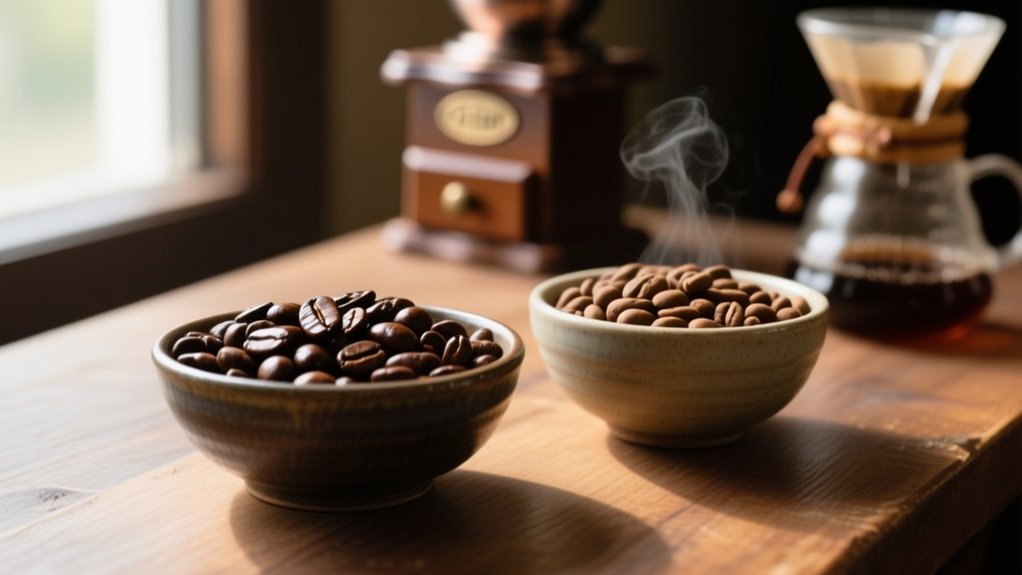
You’ll notice medium roast coffee offers a balanced flavor with chocolate, caramel, and mild fruit notes. It has higher acidity and a smooth texture, roasted around 410-430°F to preserve origin characteristics.
Dark roast, roasted longer at 430-450°F, delivers bold, smoky flavors, reduced acidity, and an oily surface with a fuller body. Caffeine is slightly higher in medium roast.
Your choice depends on preferred flavor intensity and brewing method. Exploring further reveals how processes and techniques shape each roast’s unique profile.
Medium vs Dark Roast: Key Flavor and Profile Differences
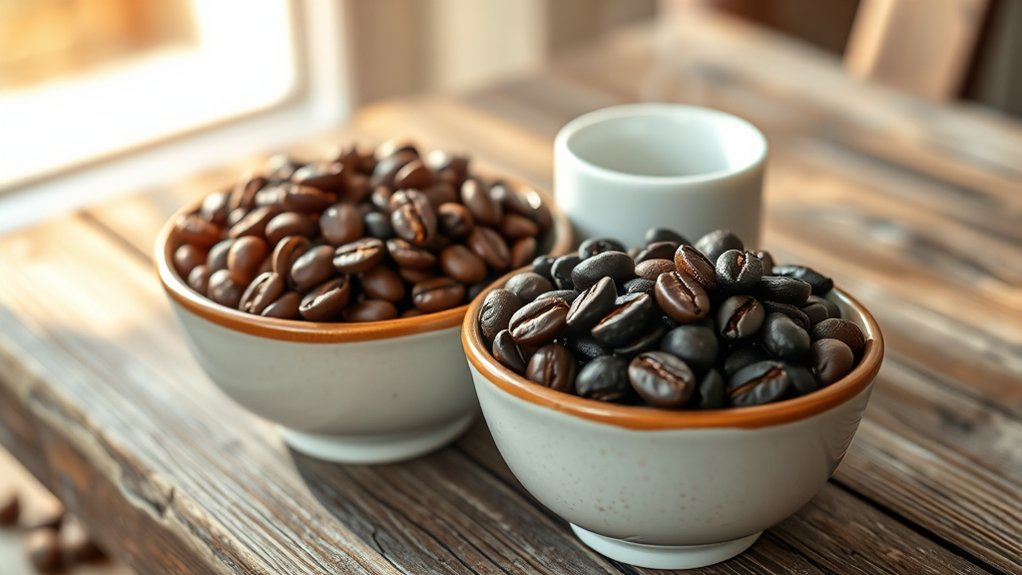
The key differences between medium and dark roast coffees lie primarily in their flavor profiles and physical characteristics.
Medium roast coffees deliver a balanced flavor profile, highlighting chocolate, caramel, and mild fruit notes while preserving noticeable acidity levels that contribute to complexity.
In contrast, dark roast coffee emphasizes bold, robust flavors with pronounced bitterness and smoky undertones, accompanied by reduced acidity for a smoother cup.
The body and mouthfeel differ as well: medium roasts offer a medium body with a smooth texture, whereas dark roasts present a fuller body with a heavier, oily mouthfeel.
Despite common assumptions, caffeine content remains roughly similar between the two, though slight variations exist due to bean density.
Understanding these distinctions helps you select the ideal roast for your preference.
How Roasting Time and Temperature Affect Medium and Dark Roasts
You’ll notice that roasting temperature really affects the chemical changes happening in the coffee. For medium roasts, the beans are heated between 410-430°F, which helps preserve those unique origin flavors.
On the other hand, dark roasts reach higher temperatures, around 430-450°F, to bring out bolder, more intense profiles.
Roasting time is just as important. Medium roasts usually have shorter roasting times, which helps develop complexity without overpowering the bean’s natural character.
Dark roasts, however, take longer, allowing the sugars to caramelize and create those rich, robust notes we love.
By understanding how time and temperature work together, you can better control the acidity, flavor balance, and even the surface texture of your coffee.
It’s all about finding that sweet spot to make your perfect cup.
Roasting Temperature Impact
Although roasting time and temperature work together, temperature primarily drives the distinct characteristics between medium and dark roast coffees.
Medium roast coffee is typically roasted at 410-430°F, preserving a balanced flavor profile that highlights the bean’s inherent acidity and nuanced origin traits.
In contrast, dark roast coffee reaches higher roasting temperatures of 430-450°F, intensifying the roasting process and producing a pronounced bitterness with smoky undertones.
This elevated temperature accelerates caramelization and the Maillard reaction, reducing acidity and creating a heavier body with an oily surface.
Understanding how roasting temperature influences acidity and flavor profile helps you appreciate why medium roasts maintain brightness and complexity, while dark roasts emphasize bold, robust flavors shaped primarily by the roasting process rather than the bean’s origin.
Time’s Role In Flavor
When you extend roasting time alongside elevated temperatures, chemical reactions like the Maillard reaction and caramelization deepen, transforming the coffee’s flavor profile substantially.
For medium roast, roasting time and temperature (410°F–430°F) preserve the coffee beans’ original flavors, balancing sweetness and acidity. This controlled time frame retains complexity and higher acidity.
In contrast, dark roast involves longer roasting times at higher temperatures (430°F–450°F), intensifying Maillard and caramelization reactions. This prolonged exposure breaks down acids, reduces moisture, and lowers density, producing bolder, smoky flavors with pronounced bitterness and a heavier body.
The extended roasting time also slightly affects caffeine content, as denser medium roast beans retain more caffeine.
Ultimately, time during roasting dictates the chemical transformations, directly shaping the distinct flavors and physical attributes of medium and dark roast coffee beans.
Comparing Acidity and Bitterness in Medium and Dark Roast Coffee
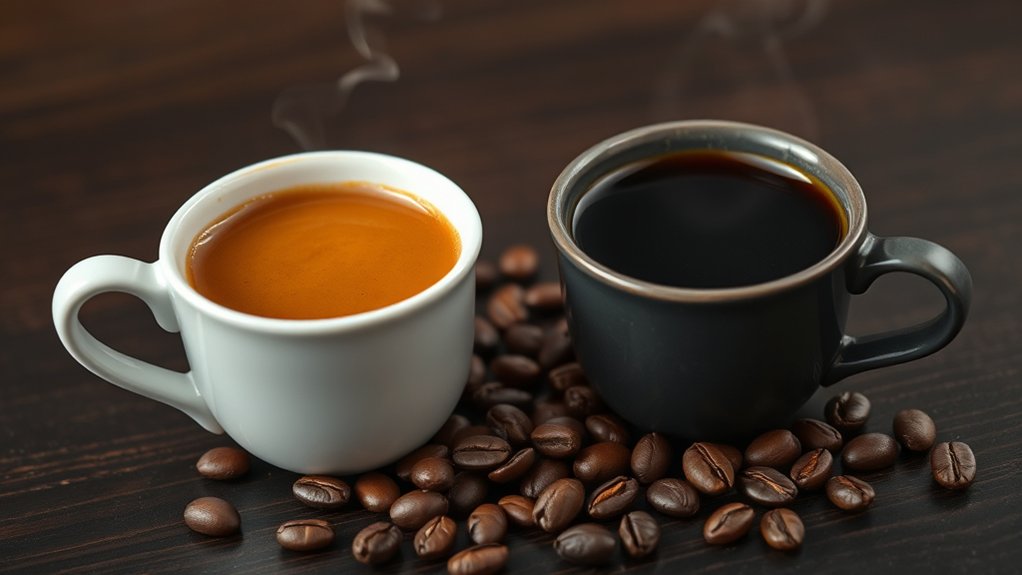
Since acidity and bitterness greatly influence your coffee’s taste profile, understanding their variation between medium and dark roasts is essential.
Medium roast exhibits higher acidity levels, preserving fruity and floral notes, which enhances flavor complexity. This balanced acidity allows for nuanced extraction across brewing methods, amplifying subtle chocolate and mild fruit tones.
In contrast, dark roast undergoes extended roasting, reducing acidity and increasing bitterness profile due to sugar caramelization. The resulting flavor complexity shifts toward smoky, toasty notes that often dominate the cup.
This bitterness can appeal to those sensitive to acidity, affecting brewing impact by favoring bolder, smoother profiles.
Recognizing these contrasts helps you select the roast aligning with your palate, optimizing your coffee experience through informed brewing and flavor expectations.
How Origin Flavors Show Up in Medium vs Dark Roasts
Understanding how origin flavors manifest in different roast levels helps you better appreciate the nuances in your coffee.
When comparing medium roast vs dark roast coffees, medium roasts preserve the bean’s intrinsic characteristics, highlighting vibrant origin flavors such as fruitiness and floral notes. This is due to the higher acidity, which accentuates complex flavors and brightens the cup.
In contrast, dark roast coffees emphasize the roasting process itself; their flavor profiles shift toward bold, smoky, and toasty notes that often mask the unique origin traits.
While both roasts can exhibit chocolate and caramel nuances, medium roasts maintain clarity of origin flavors, whereas dark roasts offer smoother, richer profiles with diminished acidity and less distinct origin expression.
This distinction is critical for understanding how roast level influences flavor perception.
Does Caffeine Content Differ Between Medium and Dark Roasts?
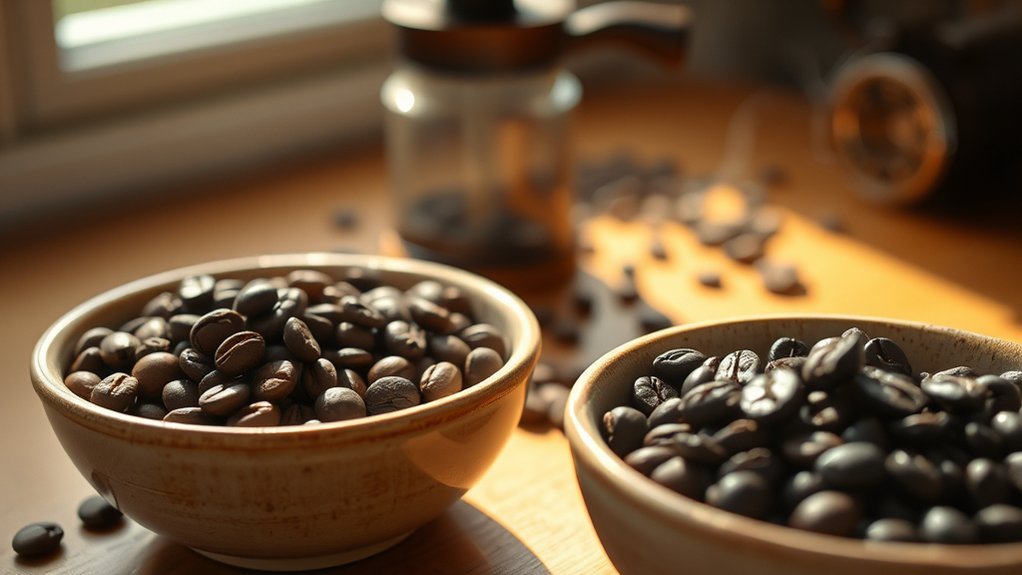
How much caffeine you get from medium versus dark roast coffee often surprises many. The caffeine content between medium roasts and dark roasts remains largely consistent since the roasting process doesn’t notably degrade caffeine molecules.
The differences you might notice are more about flavor profiles than caffeine levels. Here’s what you should keep in mind:
Flavor differences stand out more than caffeine variations between coffee roasts.
- Roasting temperature and duration affect flavor profiles, not caffeine content.
- Medium roasts and dark roasts hold comparable caffeine amounts by weight.
- Light roasts can have slightly more caffeine due to denser beans.
- Brew concentration and coffee bean variety impact caffeine more than roast type.
- Measuring caffeine by volume can vary due to bean density differences between roasts.
Best Brewing Methods to Highlight Medium Roast Coffee
Although medium roast coffee offers a balanced flavor profile, choosing the right brewing method can greatly enhance its distinct characteristics.
When using a French press, extend the extraction time to bring out the coffee’s inherent sweetness and complexity, emphasizing chocolate and caramel notes.
For pour-over brewing, use a medium grind size and maintain a water temperature between 195°F and 205°F. This combination guarantees even extraction, highlighting fruity undertones and balanced acidity.
Drip coffee makers also work well, preserving the nuanced flavors.
Furthermore, cold brew is an excellent option for medium roast coffee, as its prolonged steeping at low temperatures extracts smooth, sweet flavors without excessive acidity.
Selecting these precise brewing methods optimizes the flavor profile, allowing you to fully experience medium roast coffee’s versatility.
Brewing Dark Roast Coffee: Techniques for Bold Flavor
If you’re aiming to brew dark roast coffee with a bold flavor, start by using a coarser grind. A burr grinder works best because it gives you uniform particle size, which helps with even extraction and keeps bitterness at bay.
Next, keep your water temperature between 195°F and 205°F. This range lets you bring out those rich, smoky notes without burning the beans.
Optimal Brewing Temperatures
When you brew dark roast coffee, keeping your water temperature between 195°F and 205°F ensures you get the bold flavors without any bitterness.
Getting the temperature right is key to balancing flavor intensity across different brew methods.
Adjust your brewing times depending on the method you’re using. For drip or French Press, 4 to 6 minutes usually brings out the full richness.
Using a coarser grind helps prevent over-extraction, especially with immersion techniques.
If you’re making cold brew, longer steeping times of 12 to 24 hours really enhance the flavor.
And for espresso, precise control over temperature and pressure—around 9 bars—makes a big difference in crema and sweetness.
- Maintain water temperature strictly between 195°F and 205°F
- Adjust brewing times per method (4–6 minutes typical)
- Use coarser grind size to prevent bitterness
- Longer steeping times (12–24 hours) enhance cold brew flavor
- Employ precise pressure and temperature for espresso extraction
Grind Size Selection
Adjusting water temperature and brewing time sets the stage, but selecting the right grind size directly influences extraction quality for dark roast coffee. A coarser grind prevents over-extraction and bitterness, especially with methods like French Press, which demand longer steeping for full-bodied flavor.
Conversely, espresso requires a fine grind to achieve proper pressure and highlight bold notes. Refining grind size tailors extraction to your brewing method, enhancing the flavor profile.
| Brewing Method | Recommended Grind Size | Extraction Impact |
|---|---|---|
| French Press | Coarse Grind | Smooth, rich, less bitter |
| Espresso | Fine Grind | Intense, bold, full-bodied |
| Drip | Medium Grind | Balanced, nuanced flavor |
Experiment with grind size to reveal dark roast’s best taste.
How to Choose Between Medium and Dark Roast Coffee
How do you decide between medium and dark roast coffee? Focus on your flavor profile preference and brewing method.
Medium roast coffee preserves original bean characteristics with subtle sweetness and mild fruit notes, making it versatile for cold brew or French press.
Dark roast coffee delivers bold, robust, and smoky flavors, ideal for espresso or cream-based drinks.
Both roasts contain similar caffeine content, although medium roasts might’ve slightly more due to denser beans. Ultimately, your personal preference guides the choice.
Consider these factors:
- Desired flavor profile: balanced vs. bold
- Preferred brewing method: versatile vs. espresso-focused
- Caffeine content nuances
- Taste intensity tolerance
- Compatibility with cream or milk additions
This approach guarantees you select the roast that best suits your technical and sensory expectations.
Stone Creek Coffee’s Medium Roast Selections
You’ll find that Stone Creek Coffee’s medium roast selections really showcase carefully balanced flavor profiles. They highlight delicious notes like chocolate, caramel, and a touch of mild fruit.
Plus, their sourcing focuses on quality beans from distinct regions—like Antigua’s volcanic soils—which helps ensure consistency and traceability.
If you want to get the best out of your coffee, be sure to check out their Buyers Guide. It’s a great tool to help you pick the ideal roast and optimize your brewing method for maximum flavor extraction.
Flavor Profiles Highlighted
While exploring Stone Creek Coffee’s medium roast selections, you’ll find a balanced flavor profile that highlights distinct notes of chocolate, caramel, and mild fruit.
This medium roast preserves the origin’s unique characteristics, delivering smooth yet noticeable acidity that enhances complexity without overwhelming.
Coffee drinkers appreciate how these flavors adapt to various brewing methods, maintaining clarity and depth.
For instance, the Cream City emphasizes sweetness and fruity brightness, while the Voyager offers a smooth chocolate body with a clean citrus finish.
This flavor versatility makes Stone Creek’s medium roast a crowd-pleaser, satisfying both casual and discerning palates.
- Balanced flavor with chocolate, caramel, and mild fruit notes
- Smooth, noticeable acidity enhancing complexity
- Preserves distinct origin characteristics
- Versatile across brewing techniques
- Popular selections: Cream City and Voyager
Sourcing And Quality
Because quality starts at the source, Stone Creek Coffee meticulously selects and responsibly sources their medium roast beans to preserve distinct regional characteristics. Their sourcing process prioritizes traceability, ensuring each lot’s origin is transparent and verifiable.
The medium roasts emphasize balanced flavor profiles, highlighting chocolate, caramel, and mild fruit notes while maintaining acidity and body integrity. Stone Creek roasts to order and ships within 24 hours, maximizing freshness and preserving the nuanced flavor profiles unique to each origin.
Their Impact Report provides detailed insights into sourcing practices, reinforcing their commitment to quality and ethical standards.
For example, the Cream City roast specifically enhances sweetness and fruity complexity, reflecting the company’s precise control over sourcing and roasting to deliver consistent, high-quality medium roasts.
Brewing Recommendations
Stone Creek Coffee’s medium roast selections maintain a carefully calibrated balance of acidity and body, making them adaptable to multiple brewing techniques.
These medium coffee roasts reveal nuanced flavors like chocolate, caramel, and fruity brightness, ideal for methods that preserve acidity. This is different from dark roasted coffee, which favors bolder, heavier brews.
To optimize your brew with Stone Creek’s medium roasts, try using a French Press to highlight full-bodied chocolate and caramel notes. You can also employ pour-over filters for clean, crisp acidity and delicate flavors.
Adjust the grind size finer for espresso-style extraction, which balances sweetness and brightness.
If you want to explore more, try the Voyager roast to experience dried cherry sweetness with a citrus finish.
And don’t forget to subscribe for fresh beans roasted to order, guaranteeing peak flavor in every brew.
These steps make sure you get the complexity and balance unique to Stone Creek’s medium roasts.
Stone Creek Coffee’s Dark Roast Offerings and Brewing Tips
A variety of dark roast options from Stone Creek Coffee deliver bold flavors and reduced acidity, catering to those who prefer a robust cup.
Their dark roast selection, including the Voyager blend, highlights tasting notes of bittersweet chocolate and dried fruit. These flavors come from precise coffee roasting at higher temperatures.
This process produces beans with a shiny, oily surface, which indicates a rich flavor profile and lower acidity. For peak extraction, use brewing methods like French Press or espresso. These methods enhance the creamy mouthfeel and complexity inherent in these dark roasts.
Stone Creek guarantees freshness by shipping roasted beans within 24 hours, preserving their aromatic intensity. Following these guidelines will help you extract the fullest expression of Stone Creek’s expertly crafted dark roast coffee.
Frequently Asked Questions
How Should I Store Medium and Dark Roast Coffee for Freshness?
To preserve freshness, store medium and dark roast coffee in airtight containers to minimize oxygen exposure.
Keep the containers in a cool, dark spot away from heat and sunlight. This helps reduce the impact of climate on flavor preservation.
Avoid refrigeration or freezing because moisture can harm the aroma.
It’s best to use whole beans and grind them just before brewing to extend shelf life.
Follow these freshness tips to maintain peak taste within two weeks of opening.
Can I Mix Medium and Dark Roast Beans for a Unique Blend?
Absolutely, you can mix medium and dark roast beans to craft a blend as complex as a fine symphony.
This combo balances the bright acidity and nuanced flavor profiles of medium roasts with the bold aroma differences and bittersweet notes of dark roasts.
Adjusting ratios lets you tailor acidity levels and caffeine content to your taste preferences.
Try brewing methods like French Press or espresso to highlight your blend’s unique characteristics precisely.
What Equipment Is Best for Roasting Coffee at Home?
For home roasting, the best coffee roasters offer precise temperature control, which is essential for consistent flavor development.
Drum roasters excel, but air popcorn poppers work well for DIY roasting methods on a budget.
Use a roasting thermometer to follow a roasting temperature guide, typically 385°F to 450°F, and guarantee even roasting.
A cooling tray stops the roast quickly.
Prioritize bean selection advice to match your roast goals and maximize flavor nuances during home roasting techniques.
How Do Medium and Dark Roasts Impact Coffee Health Benefits?
Think of medium and dark roasts as two different engines powering your health.
Medium roasts offer higher chlorogenic acids and acidity balance, supporting anti-inflammatory effects and digestion.
Dark roasts boost antioxidant levels through melanoidin formation but have lower acidity and slightly less caffeine content.
Your brewing methods influence extraction of these compounds, affecting flavor profiles and health effects.
Choosing between them depends on your tolerance for acidity and desired antioxidant intake.
Are There Seasonal Variations in Medium and Dark Roast Availability?
Yes, you’ll notice seasonal trends affecting medium and dark roast availability.
Roast availability depends on production cycles and sourcing regions, which influence bean quality and flavor profiles.
Consumer preferences shift seasonally, often favoring darker roasts in colder months.
Roasters adjust their inventory accordingly, aligning supply with demand and fresh harvests.
These factors combined create fluctuations in the presence of medium and dark roasts throughout the year.
Conclusion
Choosing between medium and dark roast coffee boils down to your taste and brewing style. Medium roasts highlight origin flavors and balanced acidity, while dark roasts deliver bold, bittersweet intensity with lower acidity.
Roasting time and temperature shape these profiles precisely, affecting caffeine and flavor nuances. Whether you prefer nuanced complexity or robust power, understanding these differences guarantees your coffee experience is nothing short of a flavor explosion that wakes up every sense with surgical precision.