How Much Caffeine In A Teaspoon Of Instant Coffee – Caffeine Guide
You’ll find about 28 to 80 mg of caffeine in a teaspoon of instant coffee, depending on the brand and the bean type used. Robusta-based instant coffees tend to be on the higher end, while Arabica varieties have less caffeine.
Roasting level only slightly affects caffeine content, and production methods like freeze-drying can increase it. Understanding these factors can help you better manage your caffeine intake and explore how caffeine influences flavor and health benefits.
How Much Caffeine Is in a Teaspoon of Instant Coffee?
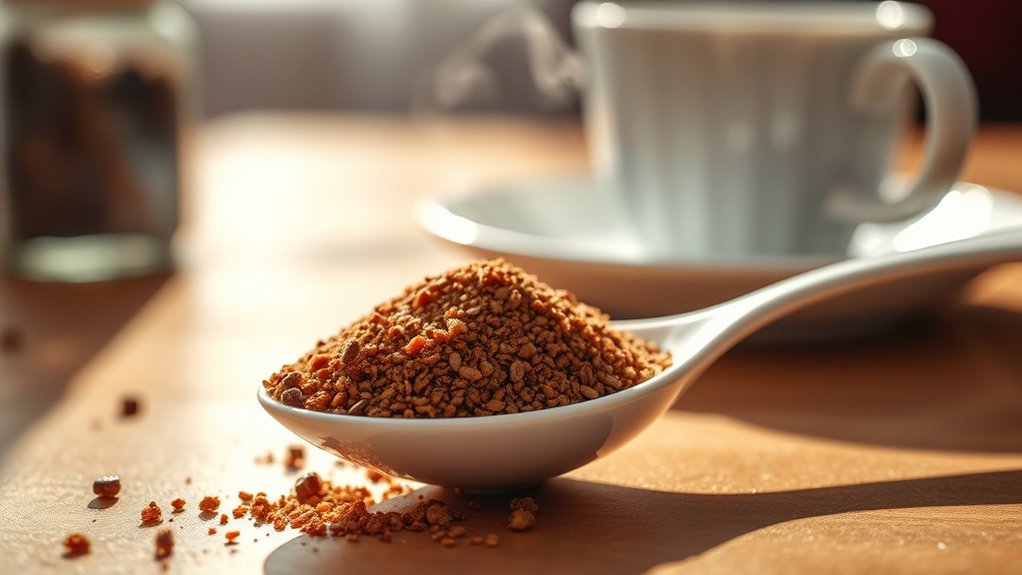
How much caffeine does a teaspoon of instant coffee really contain? On average, a teaspoon holds about 28.3 mg of caffeine, according to the USDA.
However, caffeine content varies across instant coffee brands, typically ranging from 30 to 100 mg per packet. This can translate to roughly 60 to 80 mg per teaspoon. The variation depends partly on the coffee bean type used.
Caffeine in instant coffee varies by brand, ranging from 30 to 100 mg per packet and 60 to 80 mg per teaspoon.
Robusta beans usually have higher caffeine than arabica beans. Some brands, like Cafely, standardize caffeine doses, offering up to 150 mg per packet, which is equivalent to about five teaspoons.
When you prepare a 12-ounce cup using around 3.4 teaspoons, you can expect approximately 96 mg of caffeine.
Understanding these differences helps you gauge your caffeine intake more accurately from instant coffee.
How Does Coffee Bean Type Affect Instant Coffee Caffeine?
You’ll find that the type of coffee bean—arabica or robusta—directly affects the caffeine content in instant coffee.
Robusta beans actually contain about twice the caffeine of arabica. So, instant coffee made from robusta can have up to 150 mg of caffeine per cup, compared to around 70 mg in arabica.
Knowing this difference can really help you pick the instant coffee that fits your caffeine needs.
Whether you want a bigger kick or something a bit milder, it all comes down to the bean type.
Arabica Versus Robusta
Although both Arabica and Robusta beans are used to produce instant coffee, their caffeine content differs markedly, which directly affects the strength of your brew.
Arabica beans contain about 1.2% to 1.5% caffeine, roughly half the caffeine levels found in Robusta beans, which range from 2.2% to 2.7%.
This means instant coffee made from Robusta beans delivers a higher caffeine per serving, up to 150 mg per cup, compared to around 70 mg from Arabica-based instant coffee.
The beans used in your instant coffee greatly influence caffeine content, making Robusta a preferred choice if you want a stronger caffeine kick.
Some coffee types blend both Arabica and Robusta to balance flavor and caffeine levels, helping you tailor your caffeine intake according to taste and strength preferences.
Caffeine Variation By Bean
Since the type of coffee bean directly influences caffeine content, knowing whether your instant coffee uses Arabica or Robusta beans helps you predict its strength. The caffeine content in instant coffee varies considerably based on bean type and brand. Here’s what you should know:
- Robusta coffee beans contain about twice the caffeine of Arabica beans, which impacts the final caffeine level.
- Instant Arabica coffee typically offers around 70 mg per serving, while Robusta varieties can reach 150 mg per serving.
- The USDA estimates one teaspoon of instant coffee holds roughly 28.3 mg caffeine, but this varies with bean type and brewing method.
- Different instant coffee brands, like Cafely and Douwe Egberts, show wide caffeine variation because of their choice of beans and production techniques.
Understanding these factors helps you gauge caffeine strength more accurately.
Impact On Instant Coffee
Two main coffee bean types, Arabica and Robusta, directly shape the caffeine content in your instant coffee.
Robusta beans contain about twice the caffeine of Arabica beans, so instant coffee made from robusta typically contains higher caffeine levels.
For instance, Vietnamese robusta instant coffee may deliver up to 150 mg per cup, while Arabica varieties average around 70 mg per cup.
Production methods like freeze-drying or spray-drying also affect the caffeine content in instant coffee, as they influence how much caffeine remains after processing.
Furthermore, manufacturers sometimes boost caffeine levels by adding extra caffeine during production.
Because of these factors, caffeine levels in instant coffee can vary widely depending on the brand and bean type.
Does Roasting Level Affect Instant Coffee Caffeine?
You’ll find that roasting level has only a minor effect on caffeine content.
Light roasts tend to retain just a bit more caffeine than dark roasts because of the chemical changes that happen during roasting.
But overall, caffeine stays pretty stable no matter the roast.
So, the differences in caffeine aren’t huge unless you’re switching up the type of bean.
Knowing this makes it clear why caffeine levels in instant coffee don’t really change much between light and dark roasts.
Roasting Impact On Caffeine
Although roasting level influences the physical characteristics of coffee beans, it only slightly affects the caffeine content in instant coffee. When you consider caffeine in instant coffee, the roasting process changes bean density, causing light roasts to hold marginally more caffeine than dark roasts.
Here’s what you should know:
- Light roasts tend to have slightly higher caffeine content due to less bean expansion.
- Instant coffee from robusta beans, often roasted lighter, usually contains more caffeine than arabica-based instant coffee.
- The average caffeine content per teaspoon of instant coffee remains around 60 to 80 mg, regardless of roasting level.
- The roasting process doesn’t greatly impact caffeine extraction during brewing, ensuring consistent caffeine levels in instant coffee.
Light Vs Dark Roast
When comparing light and dark roast instant coffee, roasting level plays only a minor role in caffeine content. Light roast instant coffee typically retains slightly more caffeine because its bean structure is less altered by heat.
However, the difference is minimal compared to the impact of bean type. Robusta beans, often used in darker roasts, contain about twice the caffeine of arabica beans regardless of roasting level.
| Roast Type | Bean Type | Approximate Caffeine Content (mg per tsp) |
|---|---|---|
| Light Roast | Arabica | 30 |
| Dark Roast | Arabica | 28 |
| Light Roast | Robusta | 60 |
| Dark Roast | Robusta | 58 |
Caffeine Stability During Roasting
Since roasting alters coffee beans primarily through heat and chemical changes, it’s natural to wonder if caffeine content changes substantially during this process.
The good news is caffeine stability remains largely intact regardless of roasting level, especially in instant coffee.
Here’s what affects caffeine content more than roasting level:
- Bean type: Robusta beans typically contain more caffeine than Arabica.
- Production methods: How coffee is processed influences caffeine retention.
- Instant coffee preparation: The amount of coffee used and brand formulation impact caffeine.
- Roasting level: Lighter roasts retain slightly more caffeine, but differences are minimal.
How Do Instant Coffee Production Methods Affect Caffeine?
Because the production method greatly impacts caffeine retention, you’ll find that freeze-dried instant coffee typically contains more caffeine than spray-dried varieties.
The caffeine levels in instant coffee vary not only due to freeze-drying or spray-drying but also because of the bean type used. Robusta beans have roughly twice the caffeine content of arabica beans, which affects the final caffeine concentration.
Furthermore, some manufacturers add extra caffeine during production, which also influences the caffeine levels.
While roasting has a minor effect, the quantity of instant coffee you use per serving remains a primary factor in caffeine intake.
Understanding these factors helps you gauge caffeine consumption accurately, as the production method and bean selection together shape how much caffeine ends up in your cup.
How Caffeine Levels Affect Instant Coffee Flavor
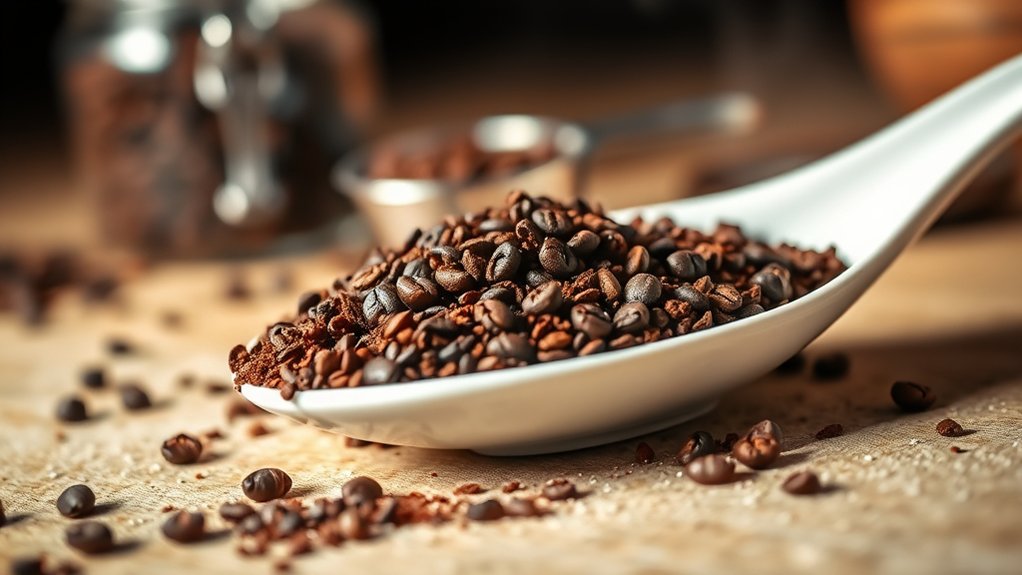
Although caffeine primarily influences the stimulant effects of instant coffee, it also plays a significant role in shaping its flavor profile. When you measure a teaspoon of instant coffee, caffeine levels can range widely, affecting taste intensity.
Here’s how caffeine impacts instant coffee flavor:
- Higher caffeine levels often boost flavor complexity but can introduce bitterness.
- Instant coffee made from robusta beans contains more caffeine, offering a bolder, stronger flavor than arabica-based varieties.
- The brewing method, dissolving granules in hot water, quickly extracts caffeine, influencing the initial flavor experience.
- Production techniques like freeze-drying versus spray-drying affect caffeine retention and final flavor nuances.
Understanding these factors helps you appreciate how caffeine levels directly influence the flavor you get from every teaspoon of instant coffee.
Is Instant Coffee Good or Bad for Your Health?
How does drinking instant coffee affect your health? Instant coffee provides a light caffeine boost, typically containing 30 to 100 mg of caffeine per teaspoon. This makes it a convenient choice for moderate caffeine consumption.
Moderate intake can enhance your focus and concentration and may lower the risk of neurodegenerative diseases.
Moderate coffee intake can improve focus and may help reduce the risk of neurodegenerative diseases.
However, you should be aware of the side effects of caffeine, such as insomnia, jitters, and digestive issues, especially if you consume it excessively.
If you have specific health conditions or are pregnant, consulting a healthcare professional is essential to tailor your caffeine intake safely.
How to Manage Your Caffeine From Instant Coffee
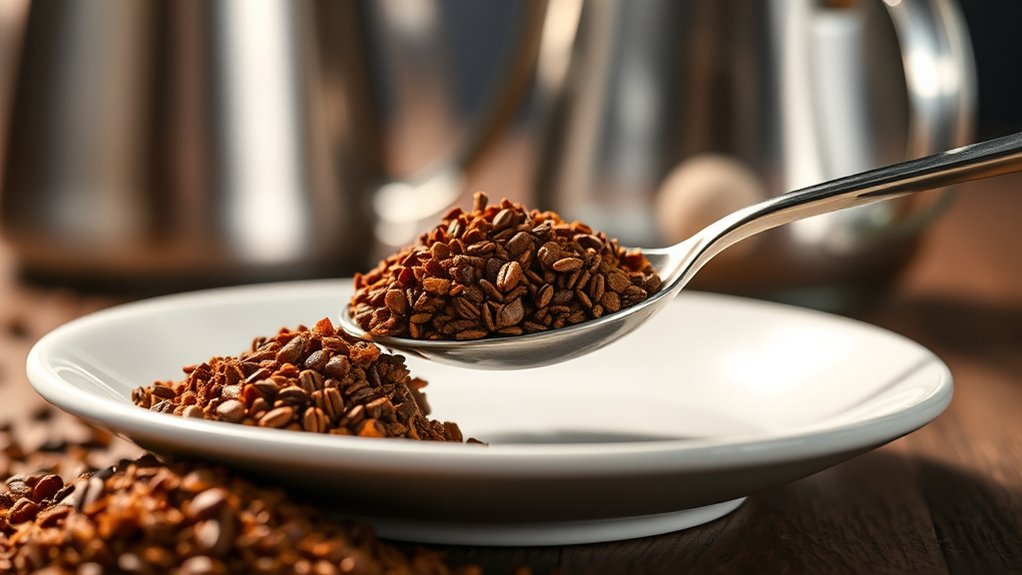
If you want to keep your caffeine intake steady and safe, measuring your instant coffee carefully is key. One teaspoon contains about 28.3 mg of caffeine, so precise measurement helps you manage consumption effectively.
To limit side effects and account for caffeine sensitivity, follow these steps:
- Limit instant coffee to four teaspoons daily, totaling roughly 113.2 mg of caffeine.
- Monitor how you feel after drinking to adjust intake based on your sensitivity.
- Mix regular instant coffee with decaf or use half-caf options to reduce caffeine without sacrificing flavor.
- Stay hydrated and time your caffeine intake, considering caffeine’s 5-6 hour half-life to minimize side effects.
Comparing Caffeine in Popular Instant Coffee Brands
When choosing an instant coffee brand, understanding the caffeine content can help you tailor your intake to your needs. The caffeine content in a teaspoon of instant coffee typically varies depending on the brand and type, averaging around 28.3 mg.
Knowing caffeine levels in instant coffee helps you customize your intake to fit your needs.
Popular instant coffee options like Douwe Egberts contain about 60 mg per serving, while Starbucks Via offers approximately 135 mg.
Cafely Instant Vietnamese Coffee provides higher caffeine levels, with 150 mg per packet. For those seeking a stronger boost, Death Wish Instant coffee can reach up to 300 mg.
Measuring caffeine accurately is essential for managing your daily caffeine intake and avoiding excess. Comparing these brands allows you to select one that aligns with your caffeine goals effectively.
Instant Coffee vs. Energy Drinks: Caffeine and Safety
Although both instant coffee and energy drinks deliver caffeine, their content and safety profiles differ markedly. When managing your daily routine, consider these key points:
- Instant coffee usually contains 30–100 mg caffeine per serving, while energy drinks can reach 300 mg per can. Some instant coffees, like Cafely Vietnamese, offer 150 mg per packet.
- Energy drinks often include added sugars and stimulants, which increase the risk of side effects. Instant coffee relies on natural caffeine instead.
- Serving sizes vary, so your caffeine intake can spike unexpectedly if you consume multiple servings.
- Both can cause side effects such as jitters and increased heart rate when overused. This emphasizes the importance of mindful caffeine consumption for safety.
Choosing instant coffee may offer a more controlled caffeine experience, helping you balance alertness without excessive side effects.
Frequently Asked Questions
Can Instant Coffee Caffeine Content Change Over Time in Storage?
No, the caffeine content in instant coffee doesn’t change over time because caffeine is stable.
However, storage conditions like exposure to moisture, temperature changes, and oxygen can cause oxidation that harms the flavor.
Using airtight packaging and keeping coffee in a cool, dry place helps prevent moisture impact and maintains the flavor.
While shelf life affects taste, it doesn’t alter caffeine levels, so you can trust the caffeine content regardless of how long it’s stored.
How Does Water Temperature Affect Caffeine Extraction in Instant Coffee?
You get up to 30% more caffeine extraction efficiency when brewing instant coffee with water at 190°F to 205°F.
Water temperature directly impacts caffeine solubility, so hotter water boosts caffeine release.
While steeping time and coffee grind matter less for instant coffee, your beverage preference and flavor profile depend on the temperature range you choose.
Using just-off-the-boil water guarantees ideal caffeine extraction and a balanced taste in your cup.
Is Caffeine Content Different in Decaf Instant Coffee?
Yes, caffeine levels in decaf coffee differ considerably from regular instant coffee due to decaffeination processes.
You’ll notice taste differences and flavor profiles that vary by brand and brewing methods.
Market variations affect caffeine content, so checking labels is key.
Decaf offers health benefits by reducing caffeine intake, but you should consider consumption tips to avoid hidden caffeine.
Does Adding Milk or Sugar Alter Caffeine Absorption?
Adding milk can slightly delay caffeine absorption rates due to milk effects on digestion.
But this impact is minimal and varies by individual tolerance.
Sugar’s impact on absorption is negligible.
However, it can enhance flavor balance and provide a quick energy boost.
When considering health, your caffeine metabolism plays a bigger role than beverage combinations.
Overall, milk and sugar mainly affect taste, not caffeine uptake.
Can Caffeine From Instant Coffee Cause Dehydration?
Imagine your body as a garden. Caffeine effects are like gentle rain, not a drought. Instant coffee won’t cause dehydration if you respect daily limits and follow health guidelines.
Your caffeine metabolism adapts, debunking hydration myths linking coffee to fluid loss. Watch for dehydration symptoms, but with moderate coffee consumption and smart beverage choices like water alongside, you’ll stay well-hydrated.
Evidence shows caffeine doesn’t rob your body of hydration when consumed responsibly.
Conclusion
When you enjoy a teaspoon of instant coffee, you’re sipping a modest caffeine boost that varies with bean type, roast, and production method. While it won’t skyrocket your energy, it offers a gentle nudge to keep you alert without overwhelming your system.
By understanding these nuances, you can savor your cup wisely, balancing flavor and energy. So, embrace instant coffee as a subtle companion in your daily routine, not just a quick fix.