
How To Grow Coffee Beans At Home – Beginner’s Guide
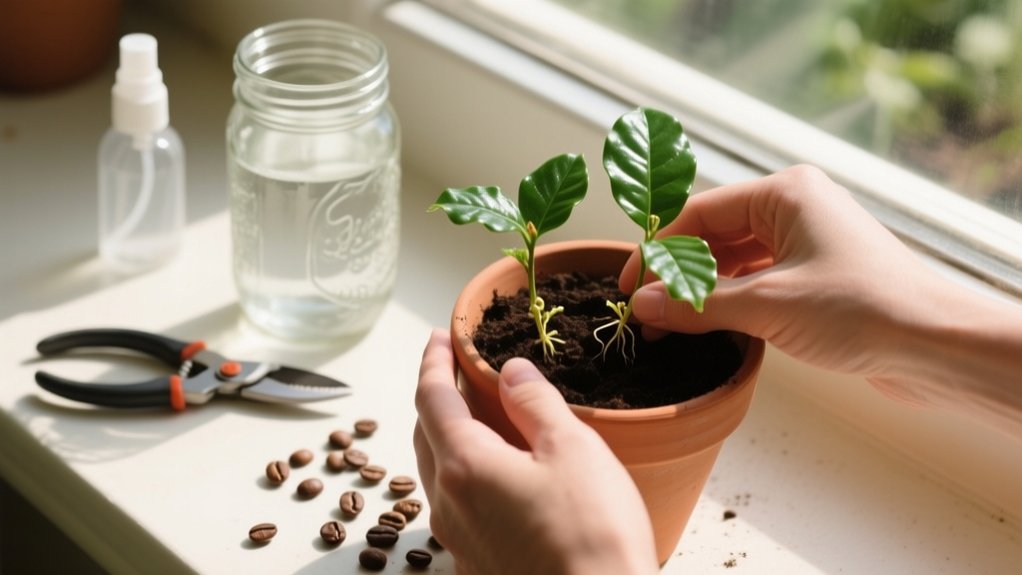
To grow coffee beans at home, start by planting fresh seeds in rich, well-draining soil with a pH of 6.0-6.5, keeping them moist but not soggy. Position your plant near an east-facing window to provide indirect light and maintain temperatures between 60°F and 80°F with 50-80% humidity.
Water regularly and fertilize every 4-6 weeks, prune for healthy growth, and monitor pollination to guarantee cherry development. Master these steps, and you’ll soon understand harvesting and processing techniques.
Prepare Soil and Plant Your Coffee Seeds Correctly
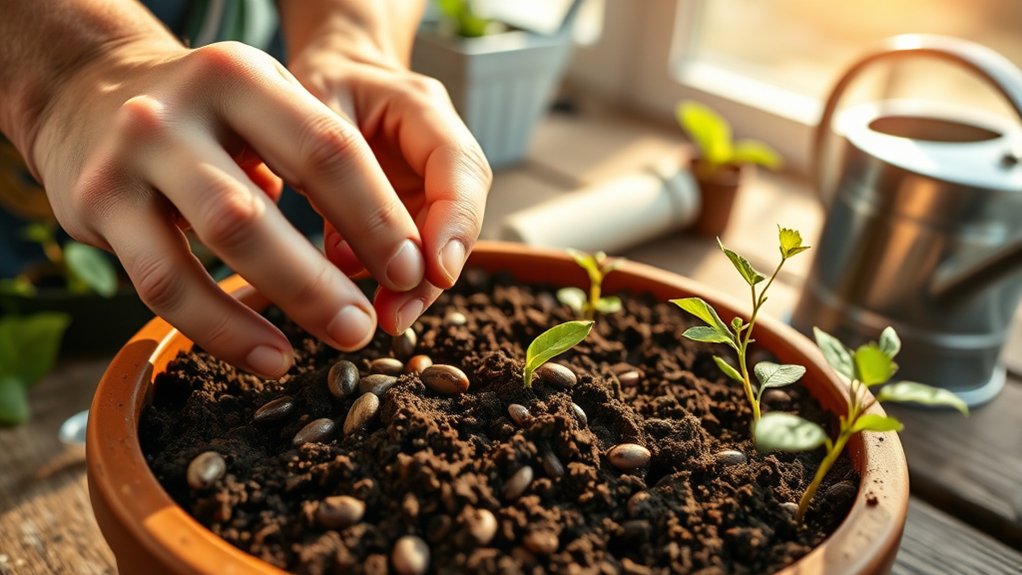
Preparing the soil and planting your coffee seeds correctly is essential for successful germination and healthy growth. To prepare soil, use a rich, well-draining mix with a pH between 6.0 and 6.5. Combine peat moss, perlite, compost, and organic potting soil.
Before you plant seeds, soak fresh coffee seeds in water for 24 hours to boost germination rates and seed viability. Plant seeds at a depth of 0.5 inches in moist soil.
Keep the soil damp but not waterlogged to avoid rot. Choose containers with drainage holes to let excess water escape and prevent soil saturation.
This precise preparation guarantees ideal conditions for your coffee seeds to germinate and thrive efficiently.
Set Up Light, Temperature, and Humidity for Your Coffee Plant
You’ll want to place your coffee plant near an east-facing window. This way, it gets bright, indirect sunlight without the harsh afternoon rays that can be too intense.
Try to keep the temperature consistent, somewhere between 60°F and 80°F (15°C to 27°C). That helps prevent any stress or damage from cold conditions.
Also, maintaining humidity levels between 50% and 80% is important. Using trays or misting can help replicate its native tropical environment, which will promote healthy growth.
Optimal Light Conditions
Although coffee plants require bright light to flourish, they thrive best in bright, indirect sunlight to prevent leaf damage. Position your coffee plants near an east-facing window to capture morning light while avoiding harsh afternoon rays that cause leaf burn.
Ideal light conditions involve shielding the plant from prolonged exposure to direct, bright sunlight, especially during peak heat. Maintaining consistent monitoring guarantees you provide the perfect environment for healthy growth.
Furthermore, balancing humidity levels between 50% and 80% complements these light settings, mimicking the coffee plant’s native tropical habitat. Use misting or humidity trays to sustain this moisture.
Ideal Temperature And Humidity
Maintaining the right temperature and humidity levels works hand in hand with proper lighting to create an ideal environment for your coffee plant.
Coffee plants thrive within an ideal temperature range of 60°F to 80°F (15°C to 27°C), promoting peak growth and fruit development.
To keep a stable environment, avoid sudden temperature fluctuations or frost exposure, which can damage the plant.
Humidity levels should be kept between 50% and 80% to guarantee sufficient moisture, essential for healthy foliage and bean production.
Position your coffee plants in bright indirect sunlight, shielding them from direct afternoon sun to prevent leaf burn.
Use humidity trays or regularly mist leaves to sustain moisture levels.
This precise balance of temperature, humidity, and light helps your plant grow vigorously and maximizes yield.
Select Viable Coffee Seeds or Seedlings for Home Growing
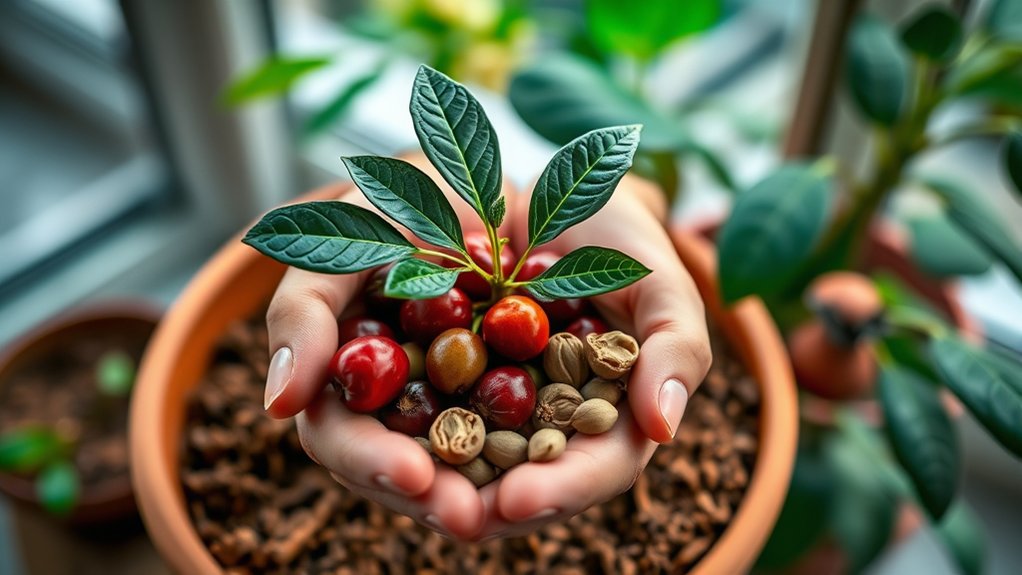
Selecting viable coffee seeds or seedlings is essential for successful home cultivation, and focusing on Coffea arabica varieties will yield the best results.
To select suitable coffee seeds, choose those from reputable sources labeled specifically as Coffea arabica, ensuring freshness and viability.
Before planting, soak coffee seeds in water for 24 hours to boost germination rates. If you opt for seedlings, get them from local nurseries or reliable online platforms, which often provide nursery-grown plants that are easier for beginners to establish.
Always inspect for pests and diseases to prevent future plant health issues.
Remember, Coffea arabica is self-pollinating, but encouraging pollinators can improve fruit production and plant robustness.
Careful selection at this stage sets a strong foundation for healthy coffee plants in your home garden.
Water, Fertilize, and Care for Coffee Plants
Once you’ve chosen healthy coffee seeds or seedlings, providing consistent water and nutrients will support vigorous growth.
Water your coffee plants regularly to keep the potting mix consistently damp without waterlogging, preventing root rot.
Fertilize every 4-6 weeks during active growth with balanced liquid fertilizer to supply essential nutrients.
Maintain humidity between 50%-80% by misting leaves or using humidity trays, creating an ideal microclimate.
For proper care, monitor the plant closely for pests like mealybugs and aphids.
Treat infestations promptly with neem oil or suitable insecticides.
Ensuring these conditions will promote healthy development and robust growth, allowing you to cultivate strong coffee plants indoors.
Prune and Manage Growth for Healthier Coffee Plants
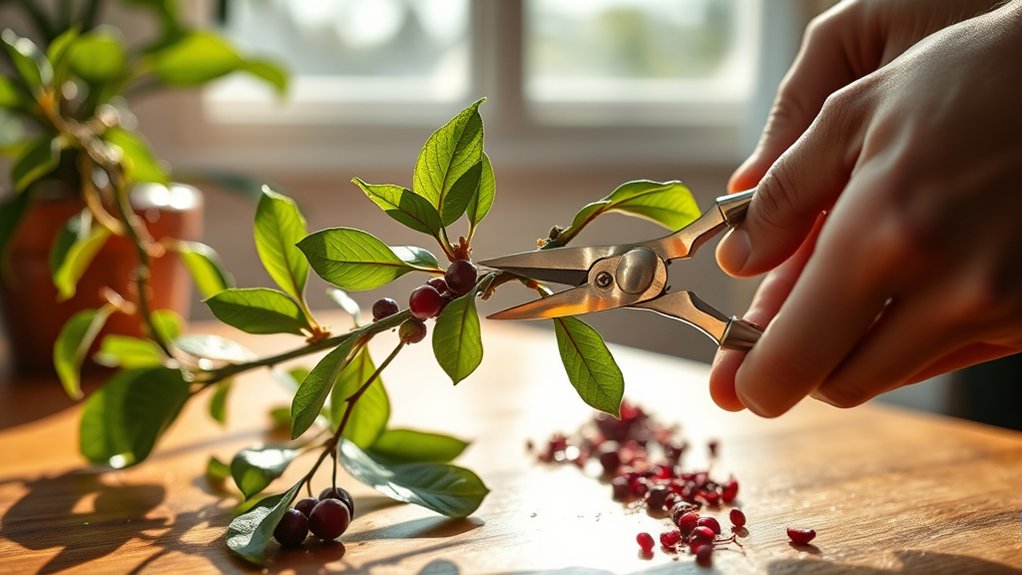
You should prune your coffee plant in spring by cutting the stems at a 45-degree angle just above a leaf joint. This helps stimulate bushier growth and improves airflow around the plant.
Try to keep the plant’s height between 4 and 5 feet so it stays manageable indoors. You can trim it as needed to maintain this size without any hassle.
Regular pruning does more than just shape your plant—it also helps reduce the risk of disease by removing dead or yellowing leaves.
Pruning Techniques Explained
Prune your coffee plant in early spring to stimulate bushier growth and remove dead or yellowing leaves that hinder airflow and light penetration.
Use sharp shears to make clean cuts at a 45-degree angle just above a leaf joint, which prevents damage and promotes healthy regrowth.
When pruning indoor coffee plants, remove about 20-30% of the foliage per session to avoid shock and encourage vigorous new shoots.
Regular pruning maintains a manageable structure and enhances plant health by improving light exposure and ventilation.
After pruning, monitor your plant closely for signs of stress like wilting or discoloration.
Make necessary care adjustments such as watering or humidity changes to support recovery.
Consistent pruning guarantees your coffee plant remains robust and productive.
Managing Plant Size
Although managing your coffee plant’s size requires consistent attention, it’s essential for maintaining its health and productivity. To effectively manage plant size, prune coffee plants in spring by cutting stems at a 45-degree angle just above a leaf joint. This encourages bushier growth, improves airflow, and removes dead branches, which helps stimulate flowering.
Keep your indoor coffee plant around 4.5 to 5 feet tall for manageable growth. Repot every 2-3 years into a slightly larger container to accommodate root expansion and prevent stunting.
Apply balanced fertilizers every 4-6 weeks during active growth to support vigor and control size. Regularly removing yellow leaves and dead branches enhances overall health, promoting robust flowering and fruiting.
Consistent pruning and nutrient management are key to maintaining a healthy, productive coffee plant.
Manage Flowering, Pollination, and Cherry Development
When coffee plants bloom, they produce delicate white flowers that last only a few days but play a critical role in fruit development. To manage flowering effectively, maintain ideal growing conditions such as stable humidity and temperature. These factors enhance flower longevity and attract pollinators.
Successful pollination is essential. Arabica coffee is self-pollinating, but insect activity improves fertilization rates. Each fertilized flower transforms into green coffee cherries, starting cherry development.
Monitor these cherries as they mature over several months, shifting from green to red. This color change signals ripe cherries ready for harvest.
Proper management of flowering and pollination directly influences the quantity and quality of coffee cherries. By refining environmental factors and supporting pollination, you guarantee robust cherry development and maximize your coffee plant’s yield potential.
Harvest and Process Your Coffee Cherries at Home
Once your coffee cherries have matured to a deep red hue, it’s time to harvest them promptly to preserve peak bean quality. After harvest, immediately remove the pulp to start the drying process and prevent spoilage.
Use the wet processing method by soaking cherries in water. This allows floaters, which are unviable beans, to surface so you can remove them easily.
Dry the viable beans for about 10 days in shaded conditions to protect the flavor profile. Once dried, roast the green beans to your desired level—light, medium, or dark—before brewing. This reveals specific flavor characteristics.
| Step | Action Detail |
|---|---|
| Harvest | Pick fully ripe, deep red cherries |
| Pulp Removal | Extract pulp promptly post-harvest |
| Drying Process | Dry 10 days in shade to preserve flavor profile |
| Roasting | Roast beans to desired flavor level |
Frequently Asked Questions
Can I Grow Coffee Plants Indoors Year-Round?
Yes, you can grow indoor coffee plants year-round by meeting their specific needs.
Provide bright, indirect light and maintain temperatures between 60°F to 80°F. Use well-draining, acidic soil to avoid root rot.
Water consistently to keep soil moist but not soggy. Control humidity around 50% to 80%, and follow a fertilization schedule with balanced nutrients every 6 to 8 weeks.
Regular plant care, including repotting every 2 to 3 years, guarantees healthy growth and fruit production.
How Long Does It Take for Coffee Plants to Bear Fruit?
You’ll see fruit on a coffee plant after 3 to 4 years, progressing through distinct coffee plant life growth stages.
Providing perfect conditions like well-draining, nutrient-rich soil, consistent watering without waterlogging, and proper pruning techniques accelerates development.
Flowering leads to cherries that mature in 6 to 8 months.
Monitor soil moisture carefully, prune to encourage healthy branches, and time your harvest precisely to guarantee peak ripeness and maximum yield.
What Pests Commonly Affect Coffee Plants at Home?
You should know that over 80% of coffee plant issues stem from common infestations like coffee leaf miners, aphids, and spider mites.
Use pest identification tips by inspecting leaves for curling, webbing, or cottony residue.
For aphid management and spider mite prevention, maintain humidity and apply organic pesticide options like neem oil.
Natural pest control methods minimize chemical use while effectively protecting your coffee plants from damage.
Can I Grow Coffee Plants From Store-Bought Coffee Beans?
You can’t grow coffee plants from store-bought beans because they’re roasted and lack viability. Focus on seed selection by sourcing green coffee seeds, which retain viability.
For the germination process, soak seeds for 24 hours, then plant them 0.5-1 inch deep in well-draining soil with a pH of 6.0-6.5.
Maintain consistent moisture with a proper watering schedule, provide bright, indirect light, and guarantee ideal growing conditions with temperatures between 60°F and 80°F and high humidity for successful plant care.
How Do I Roast Coffee Beans Harvested From My Plant?
To roast coffee beans harvested from your plant, use precise roasting techniques like preheating your oven or home equipment to 450°F.
Spread beans evenly for consistent heat, and keep an eye on the first and second cracks to tailor flavor profiles.
After roasting, quickly cool the beans to preserve their tasting notes.
Then, store them in airtight containers away from light and moisture.
Experiment with different bean varieties to master your preferred roast and optimize storage for freshness.
Conclusion
Growing coffee beans at home demands careful soil preparation, precise seed selection, and ideal control of light, temperature, and humidity. You’ll need to water consistently, fertilize appropriately, and prune methodically to guarantee vigorous growth.
Managing flowering, pollination, and cherry development requires attention and timing. Finally, harvesting and processing your coffee cherries with care guarantees quality beans.
By following these steps meticulously, you’ll cultivate healthy plants, produce ripe cherries, and enjoy fresh, homegrown coffee.