Can You Use A Blender To Grind Coffee Beans – What To Know
You can use a blender to grind coffee beans, but you need to control pulse speed and grind time carefully to avoid uneven sizes and heat buildup. Blenders work best for coarser grounds, like French press or cold brew, since they produce less consistent particles than coffee grinders.
Using short pulses and sifting fine particles can improve results, but be aware that flavor may be affected. If you want to refine your approach, more insights on optimizing your blend are available.
Preparing Coffee Beans for Blender Grinding
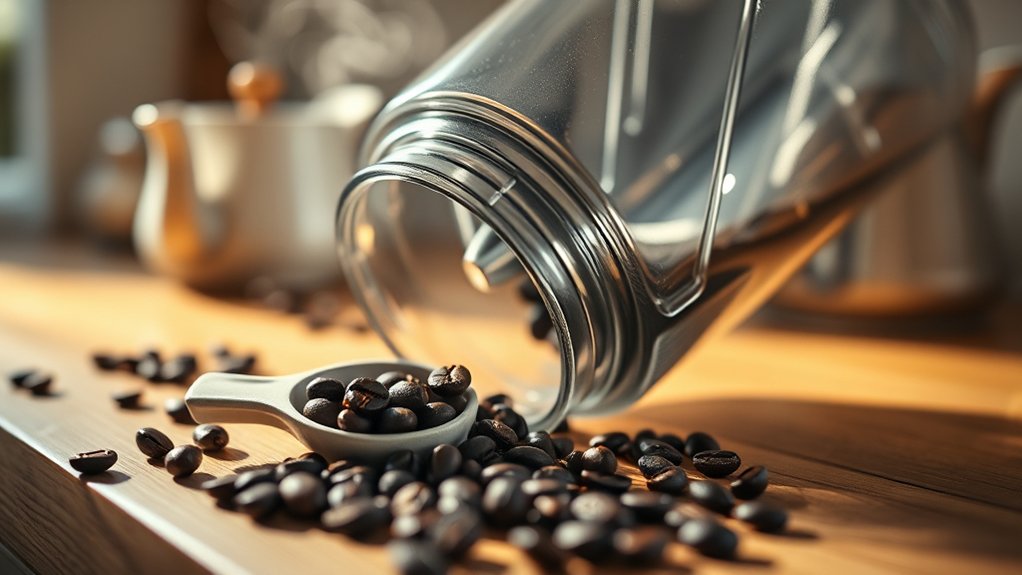
Before you start grinding, measure 1-2 tablespoons of coffee beans per 6 ounces of water to guarantee peak flavor.
Preparing coffee beans for blender grinding begins with ensuring your blender is clean and completely dry to avoid contamination that could alter the taste.
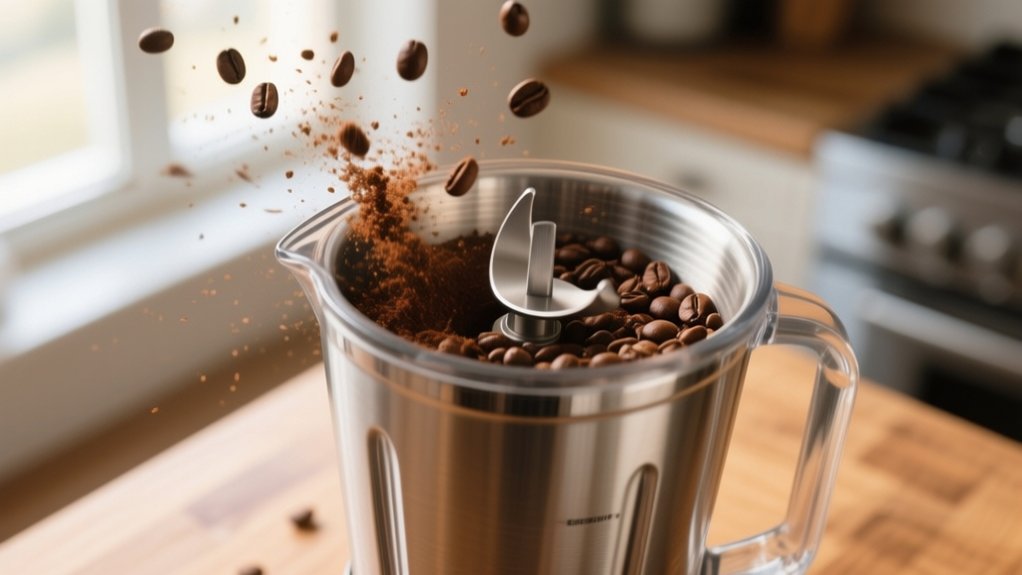
Add the measured beans and use the pulse function on low speed. This helps you control the grind size precisely while preventing overheating that diminishes aroma.
Check the grind size regularly; pulsing intermittently lets you achieve coarser or medium coffee grounds, ideal for methods like French press or cold brew.
For best extraction, sift the grounds with a fine sieve to remove ultra-fine particles. This ensures balanced brewing and consistent flavor in your final cup.
Step-by-Step Guide to Grinding Coffee Beans With a Blender
Start by measuring 1 to 2 tablespoons of coffee beans per cup to guarantee proper flavor extraction.
Then, place the beans in your blender. Use short, low-speed pulses to avoid over-processing and help achieve an even grind.
Make sure to check the consistency frequently as you pulse. You’re aiming for a coarse texture, which works best for methods like French press or cold brew.
Measuring Coffee Beans
One to two tablespoons of coffee beans per cup is the ideal measure to guarantee your brew has the desired strength and flavor. When measuring coffee beans, accuracy is key to maintaining consistency in taste.
Use a standard tablespoon to portion the beans precisely according to the number of cups you plan to brew.
After measuring, spread the beans evenly across the blender’s bottom to guarantee uniform grinding. Proper measuring coffee beans helps control the final grind size, vital for different brewing methods.
By starting with the right amount, you avoid overloading the blender and guarantee each cup extracts maximum flavor.
This step sets the foundation for a balanced, flavorful cup every time you use your blender to grind coffee.
Blender Pulsing Technique
Although measuring your coffee beans accurately is essential, mastering the blender pulsing technique is equally important for achieving the perfect grind. Start by placing the measured beans into your blender.
Use a low speed and pulse intermittently rather than running the blender continuously. This prevents over-processing and guarantees a more uniform grind. Pause between pulses to assess the grind size, adjusting as needed to suit your brewing method.
For making coffee with a French press or cold brew, aim for a coarser grind, as uneven particles enhance extraction. Remember, pulsing controls particle size and prevents overheating, preserving flavor.
After grinding, clean your blender thoroughly to avoid cross-contamination of flavors in future batches.
Applying the blender pulsing technique precisely elevates your coffee-making experience considerably.
Checking Grind Consistency
While pulsing your blender, regularly checking the grind consistency guarantees you achieve the texture best suited for your brewing method.
After placing the measured coffee beans in the blender, pulse on low speed in short bursts, then pause to inspect the grounds.
Look for the specific texture you need, like coarse for French press or medium for drip coffee.
If you notice uneven grind coffee beans, pause pulsing and gently shake the blender to redistribute the beans, promoting uniformity.
Keep repeating this process until the grind matches your target size.
Since blenders often produce mixed grind sizes, consider sifting the coffee beans through a fine sieve to remove ultra-fine particles.
This helps ensure a more balanced extraction and better brewing results.
How Coffee Grind Size Affects Blender Brewing Results
Because a blender produces a grind size that varies widely in consistency, it directly impacts the extraction rate and flavor profile of your coffee. Uneven ground coffee beans from a blender can cause over-extraction or under-extraction, altering taste.
Finer grinds extract faster, intensifying flavor, while coarser grinds extract slower, yielding milder notes. Given that coffee farming methods influence bean density, inconsistent grinding complicates achieving ideal brewing results.
Different brewing techniques demand specific grind sizes, and a blender often fails to meet these precise standards.
| Grind Size | Brewing Result |
|---|---|
| Fine | Strong, risk of bitterness |
| Medium | Balanced extraction |
| Coarse | Milder, slower extraction |
Understanding this helps you adjust expectations when using a blender for coffee preparation.
Tips to Improve Coffee Grind Consistency Using a Blender
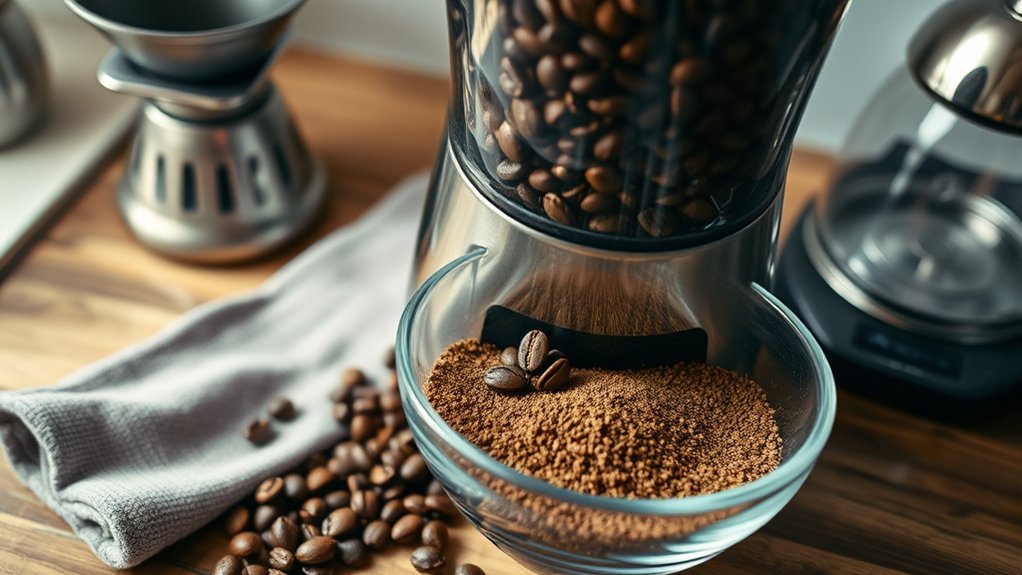
To get a more consistent coffee grind using a blender, try pulsing on low speed in short bursts instead of blending non-stop.
It really helps to shake the blender gently between pulses to move the beans around, so they grind more evenly.
Also, don’t forget to stop regularly and check the grind size—this way, you avoid over-processing and keep things uniform.
Pulse In Short Bursts
If you want a consistent grind when using a blender, pulse it in short bursts instead of running it continuously. Pulsing in short bursts prevents the blades from overheating, which can alter the coffee’s flavor and degrade the grind quality.
This method gives you better control over the particle size, helping to avoid overly fine grounds that cause bitterness. For a coarse grind, use longer pulses, but keep them brief to maintain consistency.
After a few pulses, stop and check the grind size to confirm uniformity. Adjust the pulse duration based on your brewing needs, but always prioritize short bursts to maintain control and prevent heat buildup.
This technique optimizes the coffee grind quality when using a blender.
Shake Between Pulses
Several brief shakes between pulses can greatly improve the consistency of your coffee grind when using a blender.
When you shake between pulses, you redistribute the beans, preventing clumping and ensuring a more uniform grind.
Here’s why you should consistently shake between pulses:
- It moves larger bean pieces closer to the blades for even grinding.
- It breaks up clumps that could lead to uneven extraction.
- It helps avoid over-processing, preventing excessively fine particles.
- It promotes consistent particle size, essential for ideal coffee flavor extraction.
Monitor Grind Size
When you monitor grind size closely during blending, you gain greater control over the consistency and quality of your coffee grounds. Pulse the blender on low speed and stop intermittently to inspect the grind. This prevents over-processing, which causes uneven sizes and heat buildup that affects flavor.
Use short bursts rather than long blends, and sift grounds through a fine sieve to remove ultra-fine particles for a balanced profile. Experiment with pulse count and duration to tailor grind size to your brewing method.
| Action | Purpose |
|---|---|
| Pulse on low speed | Avoids over-processing and heat |
| Stop and inspect | Guarantees desired coarseness |
| Sift with sieve | Removes ultra-fine particles |
Consistently monitor grind size to optimize your coffee’s flavor.
Common Pitfalls and How to Avoid Overheating Your Coffee Beans
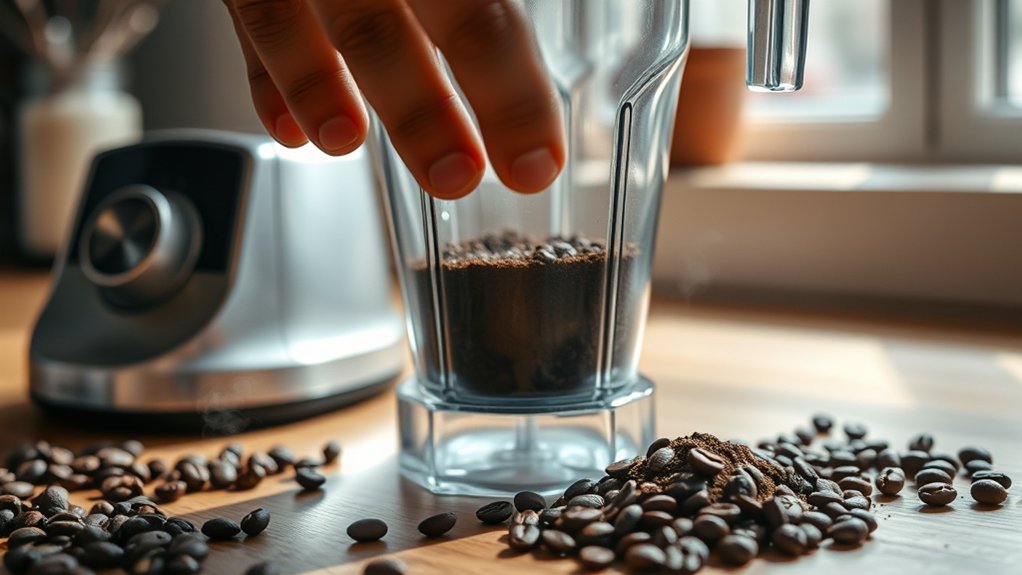
Although blenders offer convenience, they can easily overheat your coffee beans, diminishing their flavor and aroma by burning essential oils. To prevent overheating coffee beans, you need a precise approach.
Here’s what to do:
- Pulse the blender on low speed instead of running it continuously to keep temperatures down.
- Grind in small batches to reduce friction and heat buildup.
- Frequently check the grind size to stop grinding before excessive heat develops.
- Recognize that blenders generate more heat than dedicated grinders, so monitor the process closely.
Best Brewing Methods for Blender-Ground Coffee
How should you brew coffee ground in a blender to achieve the best flavor? The best brewing methods for blender-ground coffee are those accommodating a coarser grind, like French press and cold brew. These methods tolerate uneven particle sizes better, minimizing extraction issues.
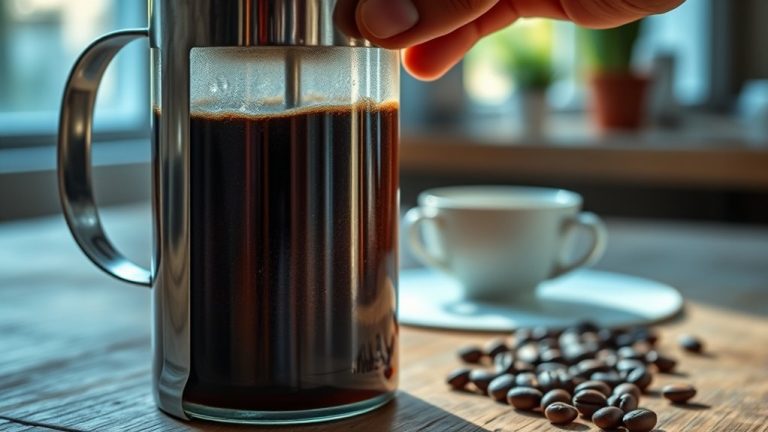
For French press, a coarser grind prevents sediment from clogging the filter, producing a smoother cup.
Cold brew benefits from coarse grounds that extract flavors slowly over extended steeping, resulting in a rich, mellow brew.
To optimize extraction, use the pulse method when grinding with your blender to improve consistency.
Avoid espresso, as it requires a fine, uniform grind for proper pressure extraction, which a blender typically can’t deliver.
Choosing the right brewing method guarantees you get the most from your blender-ground coffee.
Blender vs. Food Processor and Hammer: Which Grinds Better?
Which grinding tool delivers the best results depends largely on your brewing preferences and desired grind consistency.
When comparing blender vs. food processor and hammer, consider these points:
A blender produces an uneven grind, which is ideal for coarse methods like French press or cold brew.
A food processor, with careful pulsing, achieves a more consistent grind and gives you better control over particle size.
A hammer results in the most irregular grind, with large chunks that are unsuitable for most brewing styles.
Sifting food processor grounds can remove ultra-fine particles, enhancing flavor consistency, something not possible with a blender or hammer.
Why a Coffee Grinder Beats a Blender for Precision Grinding
When you need a consistent grind size tailored to your brewing method, a coffee grinder outperforms a blender by delivering precise control and uniformity. Coffee grinders provide adjustable settings for grind size, which is essential for methods like espresso or French press.
Blenders produce uneven particles and generate heat, which can alter the coffee’s aroma and flavor. Plus, coffee grinders are easier to clean, avoiding the residue buildup that’s common in blenders.
| Feature | Coffee Grinder | Blender |
|---|---|---|
| Grind Consistency | Uniform | Uneven |
| Grind Size Control | Precise, adjustable | Limited |
| Heat Generation | Minimal, preserves flavor | High, risks flavor damage |
| Cleaning | Easy, straightforward | Difficult, traps oils |
| Brewing Versatility | High, suitable for all methods | Low, unsuitable for precision |
Final Thoughts: When to Use a Blender for Your Coffee Beans
Although a blender doesn’t match the precision of a dedicated coffee grinder, it can still serve as a practical tool for coarser brewing methods like French press or cold brew.
Here are key points for when to use a blender for your coffee beans:
- Use low-speed pulsing to avoid overheating and preserve flavor.
- Check grind size frequently to prevent over-processing.
- Expect uneven particle sizes, suitable mainly for coarser methods.
- Sift grounds with a sieve to remove ultra-fine particles and improve taste.
In these final thoughts, remember that while a blender won’t deliver the perfect cup precision of a grinder, it offers convenience and acceptable results for certain brew styles.
A blender may lack grinder precision but provides convenient, acceptable results for select coffee brewing methods.
Use it wisely to maximize flavor without sacrificing quality.
Frequently Asked Questions
Can Blender Grinding Affect Coffee Bean Flavor or Aroma?
Yes, blender grinding can affect coffee bean flavor and aroma.
You’ll face challenges with flavor preservation because blenders generate heat, which diminishes delicate aroma compounds.
The uneven grind size leads to inconsistent extraction, impacting taste clarity. Over-extracted bitter notes and under-extracted sour flavors often result.
Since you can’t control grind size precisely, the final brew may lack the balanced flavor profile you want.
How Do Blender Noise Levels Compare to Coffee Grinders?
Imagine brewing coffee early morning; your blender’s roar might wake the whole house.
When you compare noise levels, blenders operate between 80 to 90 decibels, louder than coffee grinders, which typically run around 70 to 80 decibels.
This noise comparison shows blenders produce more intrusive sounds due to higher RPMs and blade design.
If you value quiet, a burr grinder’s sound-dampening features make it a smarter, quieter choice for grinding beans.
Is It Safe to Use a Blender for Flavored or Oily Beans?
You can use a blender for flavored or oily bean types, but it’s not ideal. The oils in these beans can heat up quickly, altering flavor and aroma.
You’ll also face residue buildup, which affects future blends and demands thorough cleaning. To minimize issues, pulse the blender intermittently.
But for consistent grind size and better flavor integrity, a dedicated coffee grinder is safer and more effective for oily or flavored beans.
Can You Grind Other Spices With the Same Blender After Coffee?
You can grind other spices with the same blender after coffee, but spice compatibility matters. Residual coffee oils may affect the flavor of your spices, so you’ll want to clean the blender thoroughly between uses.
Some spices require different grind sizes, so adjust your technique accordingly.
For best results and ideal spice compatibility, consider using a separate blender or grinder to keep flavors distinct and avoid cross-contamination.
What Are the Best Blender Brands for Coffee Grinding?
When it comes to coffee grinding, Ninja and Vitamix stand out as the cream of the crop thanks to their powerful motors and sharp blender features that deliver consistent grind sizes.
Breville’s precise speed settings also let you tailor grind coarseness perfectly.
If you’re budget-conscious, Oster and Hamilton Beach offer decent performance, especially for coarser grinds.
Choosing the right blender features guarantees your coffee grounds hit the nail on the head every time.
Conclusion
You might think a blender’s just for smoothies, but it can grind coffee beans in a pinch if you prepare them right and watch the grind size closely. Coincidentally, while it’s not as precise as a dedicated grinder, knowing when to use your blender can save you time and mess.
Just avoid overheating, and you’ll get a decent brew. So when precision isn’t critical, your blender’s ready to step in.