How Long Do Whole Coffee Beans Last – Shelf Life And Storage Guide
You should use whole coffee beans within 2-4 weeks after roasting to enjoy peak flavor and aroma. Light roasts stale faster, lasting 1 to 2 weeks once opened. Dark roasts can stay fresh up to 3 to 4 weeks.
Store beans airtight in cool, dry, dark places to slow degradation. Grind just before brewing to preserve taste. Proper storage and understanding factors that affect freshness can really extend your coffee’s shelf life and quality.
How Long Are Whole Coffee Beans Fresh After Roasting?
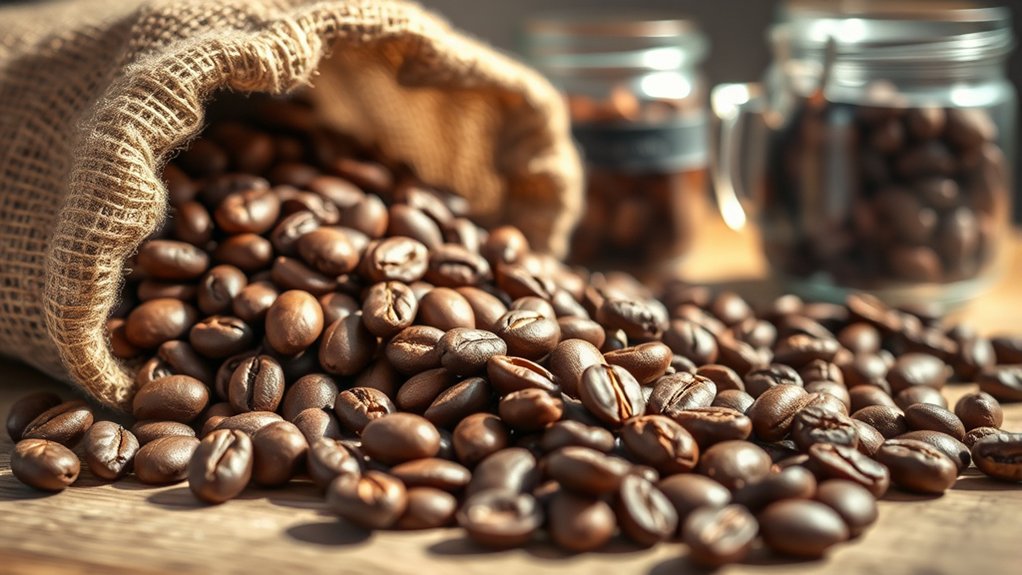
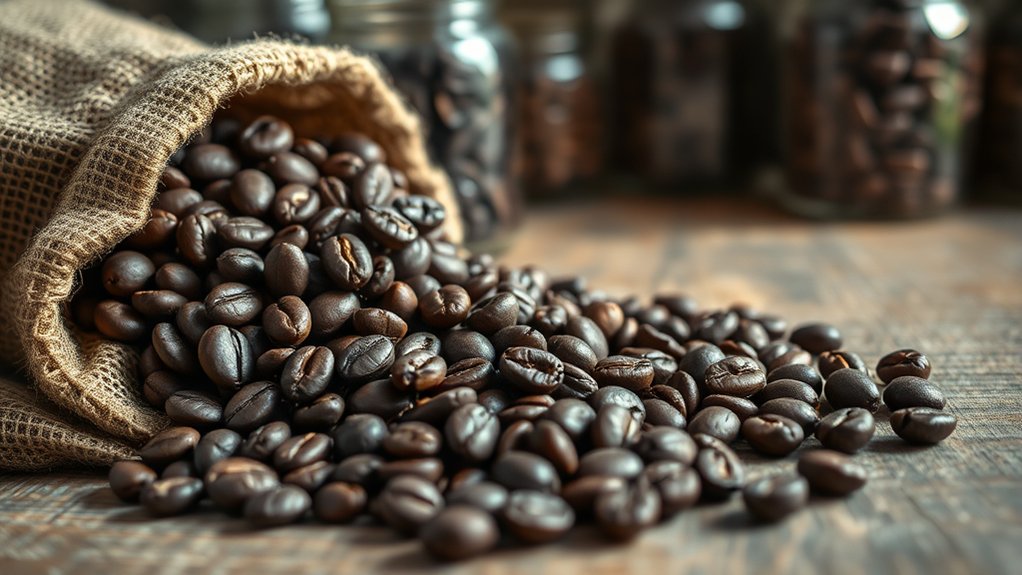
Although whole coffee beans begin to lose freshness immediately after roasting, you can expect them to maintain the best flavor for about two to four weeks. This freshness timeline is essential because coffee bean roasting triggers chemical changes that release aromatic compounds but also starts oxidation.
Within this period, the beans retain ideal oils and volatile compounds responsible for their rich taste and aroma. Beyond four weeks, these desirable qualities degrade noticeably, diminishing the coffee’s complexity and brightness.
You should aim to consume or grind beans within this window to preserve peak flavor. Understanding the coffee bean roasting process and freshness timeline helps you gauge when beans deliver their full sensory potential.
This way, you make sure each brew meets your expectations for quality and satisfaction.
What Factors Shorten Whole Coffee Bean Shelf Life?
You’ll notice that exposure to air really speeds up the staling process because oxygen breaks down the beans.
Plus, moisture and humidity aren’t your friends—they encourage mold growth and mess with the flavor.
Exposure To Air
When whole coffee beans come into contact with air, they begin to undergo oxidation, which rapidly degrades their flavor and aroma. This chemical reaction breaks down volatile compounds responsible for the coffee aroma, causing a noticeable decline in bean freshness.
The moment you expose beans to oxygen, the oils that contribute to rich flavors start to deteriorate, leading to stale, flat-tasting coffee.
To preserve coffee aroma and maintain bean freshness, you should limit air exposure by storing beans in airtight containers. Avoid opening bags frequently or leaving beans uncovered, as repeated exposure accelerates oxidation.
Understanding this factor helps you extend the shelf life of your beans, ensuring each brew delivers ideal flavor and aroma, just as the roaster intended.
Moisture And Humidity
Beyond protecting whole coffee beans from air exposure, controlling moisture and humidity plays a big role in keeping their quality intact. When beans soak up too much moisture, they can get moldy and spoil faster. That means their shelf life takes a serious hit.
To avoid this, you need good humidity control and a solid moisture barrier in your storage. Airtight containers with built-in moisture barriers or vacuum-sealed bags work great to keep moisture out.
Also, try not to store beans in humid spots like near stoves or windows. Fluctuating moisture can mess with the flavor and make beans go stale quicker.
Keeping a stable, low-humidity environment helps your coffee beans stay fresh and aromatic for longer. This way, you get the best taste and can enjoy your brew for more time.
How Does Packaging Affect Coffee Bean Freshness?
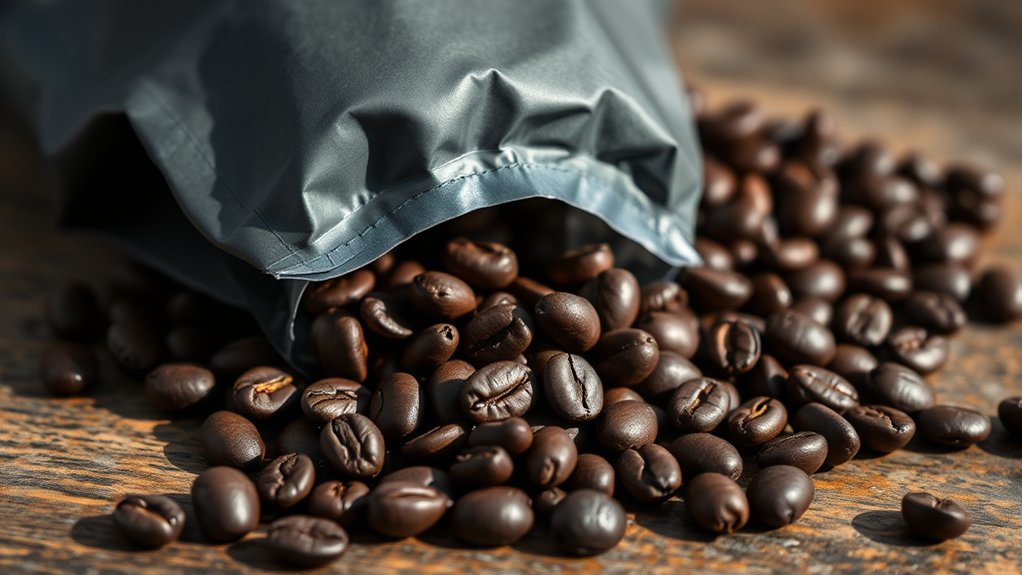
You’ll find that the type of packaging plays a critical role in keeping your coffee beans fresh by controlling how much air gets in.
Packaging materials with airtight seals and one-way valves really help cut down on oxygen exposure, which is what speeds up staling.
Knowing how these features work can make it easier for you to pick packaging that keeps the flavor locked in longer.
Types Of Coffee Packaging
Although coffee beans naturally begin to lose freshness after roasting, the type of packaging plays a crucial role in slowing this process. Proper packaging preserves the coffee flavor and guarantees ideal coffee brewing results.
You’ll find three main packaging types, each affecting bean freshness differently:
| Packaging Type | Barrier to Oxygen | Impact on Coffee Flavor |
|---|---|---|
| Foil Bags w/ Valve | High | Maintains freshness longer |
| Plastic Bags | Moderate | Moderate flavor retention |
| Paper Bags | Low | Quick flavor degradation |
Foil bags with one-way valves expel CO2 while blocking oxygen, extending freshness and flavor. Plastic bags offer moderate protection but may allow some oxidation, affecting coffee brewing quality.
Paper bags provide minimal barrier, causing rapid flavor loss. Choosing the right packaging helps keep your coffee beans fresher, improving your daily brew.
Impact Of Air Exposure
Air exposure considerably accelerates the deterioration of coffee bean freshness by promoting oxidation, which degrades flavor compounds and aromatic oils. When oxygen interacts with the beans, it alters the chemical makeup that preserves the unique coffee flavor tied to the bean origin.
Packaging plays a critical role in minimizing this exposure. Vacuum-sealed or nitrogen-flushed bags create a protective barrier, markedly slowing oxidation. In contrast, simple resealable bags or open containers allow continual air contact, causing rapid flavor loss and staleness.
To maintain the beans’ original profile, you should store them in airtight containers immediately after opening. This practice preserves the distinct characteristics derived from the bean origin, ensuring each brew retains its intended flavor complexity.
Effective packaging directly impacts how long your coffee beans stay fresh and flavorful.
How Can You Tell If Whole Coffee Beans Have Gone Bad?
How can you accurately determine if whole coffee beans have gone bad? Evaluating their quality involves analyzing sensory and physical changes linked to coffee bean roasting and bean grind size. Look for these signs:
- Aroma Loss: Freshly roasted beans release a strong, rich scent. If the aroma is faint or stale, your beans’ oils have likely degraded.
- Visual Changes: Examine the beans for discoloration or oily residue beyond what’s typical after roasting. Dull, dry beans suggest oxidation.
- Taste Test: Brew a small amount using your preferred grind size. Sour, flat, or bitter flavors indicate the beans have spoiled or over-aged.
What Are the Best Ways to Store Whole Coffee Beans?
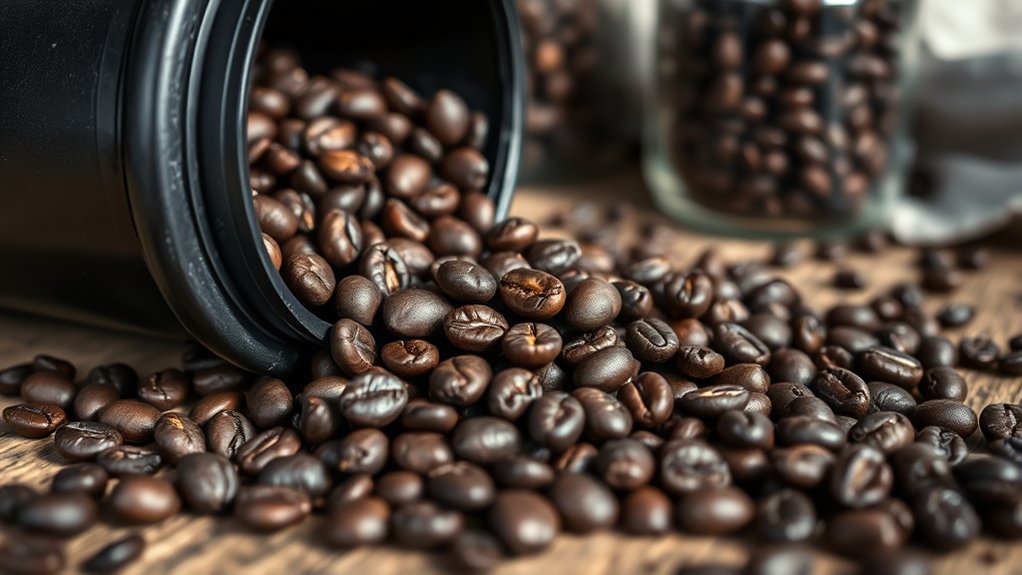
The best ways to store whole coffee beans focus on minimizing exposure to factors that accelerate staling, such as oxygen, moisture, heat, and light. You should keep your beans in an airtight container made of opaque material to block light and prevent oxygen from degrading their quality.
Store the container in a cool, dry place away from heat sources like ovens or direct sunlight. Avoid using clear bags or containers, as they allow light to deteriorate the delicate oils essential for flavor.
Since different coffee varieties have unique flavor profiles, proper storage preserves these nuances, enhancing your coffee brewing experience.
By controlling storage conditions, you maintain freshness longer, ensuring each brew highlights the beans’ intended aroma and taste without premature loss of quality.
Can You Freeze Whole Coffee Beans to Keep Them Fresh?
After guaranteeing you store your whole coffee beans away from heat, light, and moisture, you might wonder if freezing them could extend their freshness even further. Freezing can slow the degradation of flavor compounds formed during coffee bean roasting, which helps preserve the coffee’s flavor.
However, it’s essential to freeze beans properly.
Use airtight, moisture-proof containers to prevent condensation and freezer burn. Freeze beans in small batches to avoid repeatedly thawing and refreezing, which damages flavor.
Let beans return to room temperature inside the sealed container before opening to avoid moisture exposure.
Freezing isn’t necessary for daily use but can be effective for long-term storage if you roast beans yourself or buy in bulk.
When done right, freezing can help you maintain ideal coffee flavor preservation.
How Does Grinding Early Affect Coffee Bean Flavor and Freshness?
Although grinding coffee beans early might seem convenient, it considerably accelerates flavor loss and diminishes freshness. When you grind your beans, you increase the surface area exposed to oxygen, light, and moisture. These are key factors that degrade flavor compounds rapidly.
This grinding impact means volatile oils and aromatic compounds evaporate quickly, resulting in a flat, stale taste. For the best flavor preservation, it’s best to grind your beans just before brewing. By doing so, you maintain the integrity of the coffee’s complex flavors and freshness.
If you grind too far in advance, you compromise both aroma and taste, regardless of storage methods. Understanding this grinding impact helps you make better choices to enjoy your coffee at its peak quality every time.
How Much Whole Coffee Beans Should You Buy Based on Consumption?
To figure out how much whole coffee beans you should buy, start by thinking about how much coffee you drink each day. It really helps to match your purchase to your brewing habits.
Also, keep in mind how much space you have to store the beans. Beans stay freshest when you keep them in small, airtight containers away from light and heat.
Daily Consumption Estimates
Determining how much whole coffee beans you should buy depends largely on your daily consumption habits and brewing preferences. To maintain optimal coffee flavor and bean freshness, consider these daily consumption estimates:
- Light drinkers (1 cup/day): Purchase about 1 ounce (28 grams) daily, or a 7-ounce (200 grams) pack weekly to ensure freshness.
- Moderate drinkers (2-3 cups/day): Aim for 2.5 to 3 ounces (70-85 grams) daily, buying in 12 to 16-ounce (340-450 grams) increments weekly.
- Heavy drinkers (4+ cups/day): Opt for 4+ ounces (113+ grams) daily, purchasing larger amounts but make sure you use them within two weeks to preserve bean freshness.
Storage Capacity Limits
Since your storage space and consumption rate directly impact coffee freshness, you need to carefully calculate how much whole coffee beans to buy. Buying in bulk might seem economical, but excessive quantities risk staling, especially after bean roasting, which starts flavor degradation.
Think about your daily coffee grinding routine; freshly ground beans deliver the best taste, so try not to stockpile more than you can use within two to four weeks.
Also, check your storage container’s airtight capacity to minimize oxygen exposure, which speeds up freshness loss.
If you drink one to two cups daily, buying a one-pound bag each month usually works well. This way, you balance freshness and convenience.
At the end of the day, match the amount of beans you buy with how fast you consume them and your storage limits. That helps keep the flavor and aroma at their peak, so every cup tastes like it came from freshly roasted, properly stored beans.
Purchase Frequency Tips
When you consider how often you brew coffee, you can tailor your bean purchases to maintain ideal freshness. Buying the right amount ensures optimal bean freshness and preserves coffee flavor. Here’s how to decide:
- Brew daily: Purchase small quantities weekly to enjoy peak coffee flavor without stale beans.
- Brew occasionally: Buy enough for two weeks, balancing freshness and convenience.
- Brew rarely: Opt for smaller batches monthly, preventing flavor degradation from prolonged storage.
Adjust your buying frequency based on your consumption habits to avoid excess beans losing their aromatic oils. Remember, coffee flavor diminishes as bean freshness declines, so frequent, smaller purchases help you savor the best taste.
How Long Do Light, Medium, and Dark Roasts Stay Fresh?
Although all coffee roasts eventually lose freshness, the rate varies considerably between light, medium, and dark roasts because of differences in roasting levels and bean composition.
Light roasts have less exposure to heat during roasting, which means they keep more of their original flavors. But here’s the catch—they also contain higher moisture and oils. This makes them more prone to staling within 1 to 2 weeks after opening.
Medium roasts strike a nice balance. Their slightly longer roasting reduces moisture and stabilizes oils, so you can expect the flavor to last about 2 to 3 weeks.
Dark roasts get roasted for longer, which breaks down oils and significantly reduces moisture. This slows down deterioration, allowing freshness to stick around for up to 3 to 4 weeks.
Knowing these differences helps you time your coffee consumption just right to enjoy peak flavor in your favorite roast.
How Can You Keep Bulk Whole Coffee Beans Fresh Longer?
To keep bulk whole coffee beans fresh longer, you need to control their exposure to air, moisture, heat, and light. These factors directly impact bean freshness and coffee flavor. If you neglect them, the beans can stale or develop off-notes.
Controlling air, moisture, heat, and light is key to maintaining coffee bean freshness and flavor.
Here’s how you can preserve them effectively:
- Store beans in an airtight, opaque container. This blocks oxygen and light, both of which degrade coffee flavor.
- Keep the container in a cool, dry place, away from heat sources like ovens or direct sunlight. Heat speeds up freshness loss.
- Avoid frequent opening. Only take out the portion you need to minimize air exposure and keep the beans fresh consistently.
Frequently Asked Questions
What Are the Health Benefits of Drinking Coffee Made From Whole Beans?
You gain several health benefits by drinking coffee made from fresh whole coffee beans. Coffee bean freshness guarantees higher levels of antioxidants and essential nutrients, boosting your metabolism and improving brain function.
Freshly ground beans release more beneficial compounds, enhancing energy and focus while reducing inflammation. By choosing fresh whole beans, you maximize these health benefits.
It supports heart health and can potentially lower the risk of certain diseases through regular, moderate consumption.
How Does the Origin of Coffee Beans Affect Their Flavor Profile?
The coffee origin directly shapes the flavor characteristics you experience. Beans from Africa often deliver fruity and floral notes, while those from Latin America tend to offer bright acidity and nutty undertones.
Asian coffee origins usually provide earthy, bold flavors.
Understanding coffee origin helps you anticipate taste profiles, allowing you to choose beans that match your preferences precisely.
Can Whole Coffee Beans Be Used for Espresso Machines?
Yes, you can definitely use whole coffee beans for espresso machines. You’ll need to grind them to a very fine, consistent texture, as grinding consistency directly impacts extraction and flavor.
Also, prioritize bean freshness; fresher beans yield richer crema and better taste.
Using whole beans allows you to control grind size precisely, which is essential for espresso’s intense, balanced flavor. Always grind just before brewing to preserve maximum freshness and quality.
It really makes a difference in how your espresso turns out!
What Is the Environmental Impact of Coffee Bean Packaging Materials?
You should know coffee bean packaging often uses plastic and foil, which harm the environment by creating waste and consuming resources.
Choosing eco friendly packaging, like biodegradable bags or compostable materials, reduces this impact considerably.
Recycling innovations also help by allowing materials to be reused, cutting down landfill waste.
Supporting brands that invest in these solutions ensures you minimize environmental damage while enjoying your coffee.
How Do Different Brewing Methods Affect the Taste of Whole Bean Coffee?
Different brewing methods are like painters using varied brushes, shaping your whole bean coffee’s flavor. You’ll notice grinding consistency plays a huge role. Espresso demands fine grounds, while French press prefers coarse.
Brewing temperature also affects extraction. Hotter water pulls more bitterness, while cooler water highlights acidity. By controlling these factors, you can tailor your cup’s body, aroma, and balance.
This way, you reveal complex notes unique to each brewing style. It’s pretty cool how small changes make a big difference in taste!
Conclusion
Think of your whole coffee beans as a delicate symphony. Freshness fades like a fleeting melody after roasting. To keep that rich harmony alive, store them in airtight containers away from heat and light.
Avoid grinding too early. Also, buy only what you’ll brew soon. By mastering these factors, you’ll preserve the vibrant notes of light, medium, or dark roasts.
This way, each cup sings with peak flavor and freshness every time.