What Is The Difference Between A Latte And A Mocha – Key Differences Explained
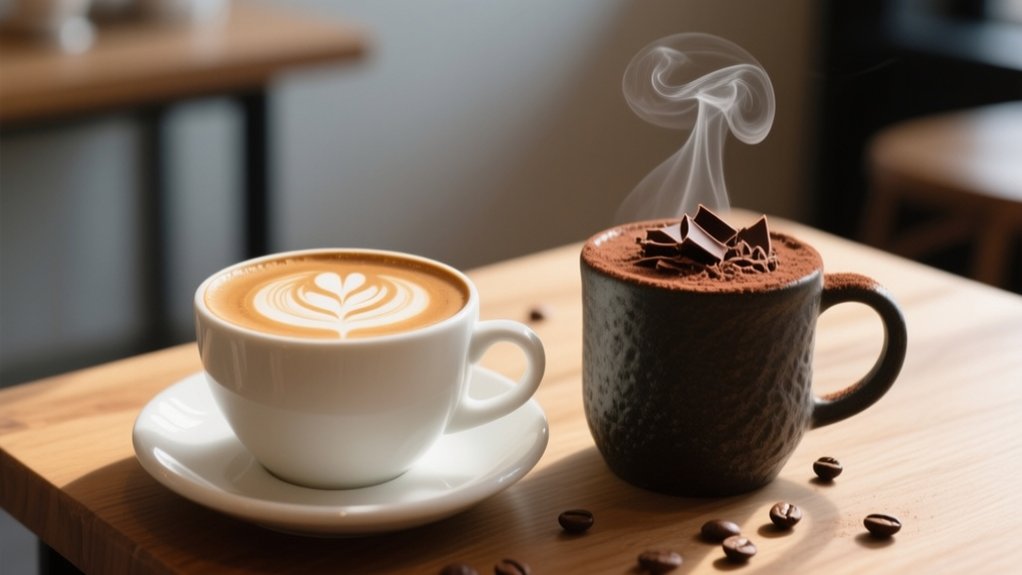
You’ll find the main difference between a latte and a mocha is chocolate. A latte blends espresso with steamed milk for a smooth, creamy taste, while a mocha adds chocolate syrup or cocoa, making it richer and sweeter.
Mocha usually has more calories and sugar due to the chocolate and whipped cream, but both have similar caffeine levels from espresso. If you want to know how flavors, calories, and variations compare, keep exploring these drinks further.
Latte And Mocha: Definition And Key Differences
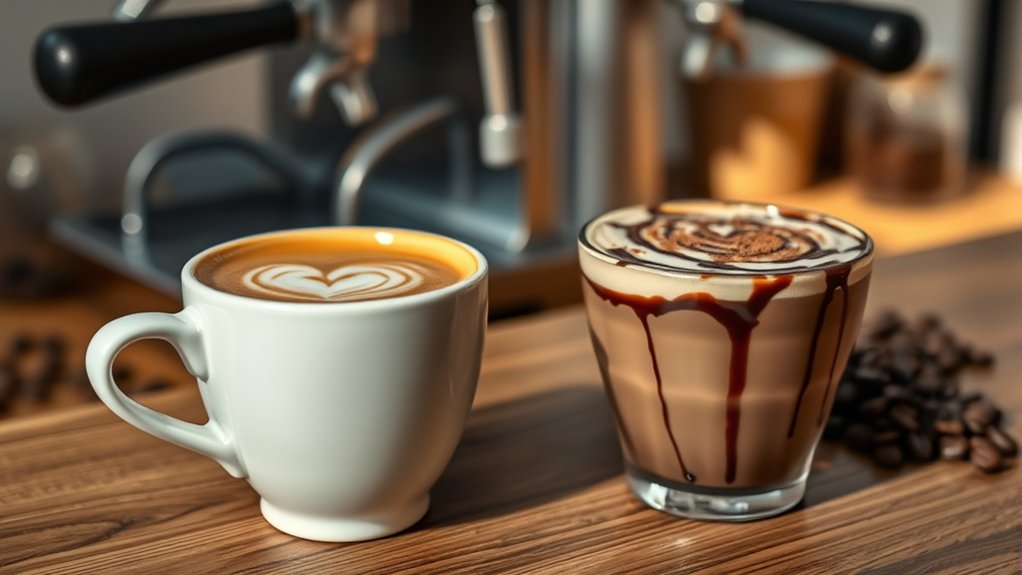
When you order a latte, you get a smooth blend of one-third espresso and two-thirds steamed milk, creating a creamy, mild coffee experience.
In contrast, a mocha adds chocolate syrup or powder to espresso and steamed milk, giving it a sweeter, richer taste.
The key differences between a latte and mocha lie in flavor and calorie content. Lattes focus on the espresso’s boldness with lower sugar, while mochas satisfy a sweet tooth with chocolate’s added richness and extra calories.
Also, lattes usually come in larger servings, around 10 to 12 ounces, compared to mochas at about 8 ounces, affecting texture and intensity.
Both have similar caffeine, but mocha’s chocolate adds a slight caffeine boost.
Latte Vs Mocha: Key Ingredients Compared
When you compare a latte and a mocha, the main difference is that a mocha has chocolate added to it.
You’ll notice that milk plays a big role in making lattes smooth and frothy. On the other hand, chocolate brings richness and sweetness to mochas.
Knowing these key ingredients helps you see how each drink’s flavor and texture come together in their own unique way.
Core Ingredients Breakdown
Understanding the core ingredients of a latte and a mocha helps you appreciate their distinct flavors. Both drinks start with espresso, but their milk ratio and chocolate content set them apart.
A latte blends one-third espresso with two-thirds steamed milk, creating a smooth, creamy experience. In contrast, a mocha combines espresso with chocolate syrup or cocoa powder, offering a richer, sweeter taste with less milk.
Here’s a quick breakdown:
| Ingredient | Latte | Mocha |
|---|---|---|
| Espresso | 1-2 shots | 1-2 shots |
| Milk Ratio | 2/3 steamed milk | Less milk |
| Chocolate | None | Chocolate syrup or cocoa |
| Toppings | Light milk foam | Whipped cream, chocolate shavings |
| Flavor Profile | Creamy, smooth | Rich, sweet |
This core difference defines your choice between the two.
Milk And Chocolate Roles
Milk and chocolate play distinct roles in shaping the flavor and texture of lattes and mochas.
When you order a latte, you get a smooth blend of one-third espresso and two-thirds steamed milk, giving it a creamy texture without any chocolate.
In contrast, a mocha includes chocolate syrup or cocoa, which adds sweetness and richness alongside espresso and a smaller amount of milk.
You’ll notice that mochas balance the boldness of espresso with chocolate’s indulgent flavor, while lattes highlight the espresso’s natural taste with a milky softness.
Both drinks start with espresso, but in a mocha, chocolate mixes in before adding milk, whereas a latte simply combines espresso and milk.
This difference defines their unique appeal and texture.
Flavor Impact Differences
Although both drinks start with espresso, the flavor impact of a mocha and a latte differs considerably because of their key ingredients. A mocha combines espresso, steamed milk, and chocolate, creating a rich, sweet flavor profile that stands out with its dessert-like quality.
The chocolate adds sweetness and complexity, often enhanced by whipped cream or chocolate shavings.
In contrast, a latte blends espresso with steamed milk in a 1:3 ratio, offering a smoother, subtler coffee experience. Its flavor profile highlights the espresso’s natural taste, complemented by a light milk foam layer.
While both have similar caffeine levels, the mocha’s sweetness can make it feel bolder, whereas the latte’s creamy texture keeps the coffee flavor more delicate and straightforward.
How Latte And Mocha Taste Different
When you take a sip of a mocha, you’ll notice how the rich chocolate blends with the espresso and steamed milk, creating a sweet and indulgent flavor that contrasts with the straightforward, creamy taste of a latte.
The mocha’s chocolate adds a dessert-like sweetness, balancing the espresso’s bitterness, while the latte highlights the natural espresso flavor with its smooth, creamy texture.
You’ll often find mochas topped with whipped cream or chocolate shavings, enhancing their rich taste, whereas lattes keep it simple with just a light foam.
The flavor of a mocha can vary depending on the type of chocolate used, but a latte’s flavor stays consistent, focusing on the coffee and milk blend.
This makes mochas perfect if you love chocolate, while lattes suit coffee purists.
Why Chocolate Makes Mocha So Sweet And Delicious
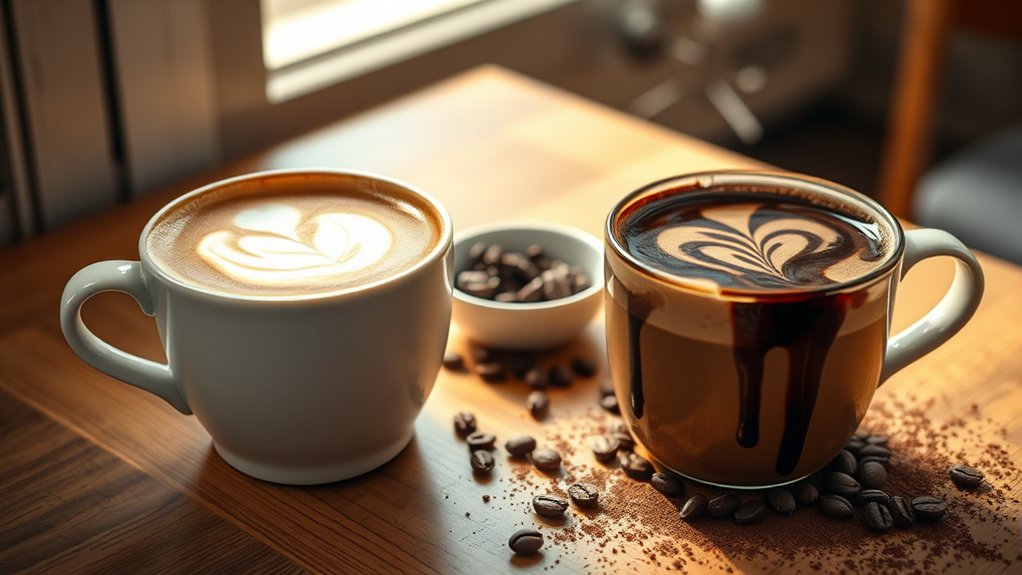
Because chocolate forms the heart of a mocha, it naturally makes the drink sweet and indulgent. When you savor a mocha, the chocolate syrup or melted chocolate chunks blend perfectly with espresso, creating a rich sweetness you won’t find in a latte.
Chocolate blends seamlessly with espresso in a mocha, delivering a rich sweetness unlike any latte.
Here’s why chocolate makes mocha so delicious:
- The type of chocolate matters. Milk chocolate syrup adds creamy sweetness, while dark chocolate offers a bittersweet contrast.
- Chocolate syrup contributes significant sweetness, balancing the coffee’s natural bitterness in every sip.
- Many mochas are topped with whipped cream, enhancing the overall sweetness and making it feel like a dessert.
This unique combination of chocolate and espresso gives mocha its signature sweet and satisfying flavor.
Calories And Sweetness: How Mocha And Latte Compare
When you compare a mocha and a latte, you’ll notice that mochas pack more calories and sugar because of the chocolate syrup.
Lattes, on the other hand, tend to be lighter, focusing mainly on espresso and milk with less sweetness.
But honestly, the ingredients you pick can really change the calorie and sugar levels in both drinks.
Calorie Content Differences
Anyone choosing between a mocha and a latte should consider their calorie and sugar content. The calorie content varies greatly because of ingredients like chocolate syrup and whipped cream in mochas. These make them richer and more indulgent than lattes.
Here’s how they compare:
- A standard mocha contains around 400-500 calories, mainly from chocolate and whipped cream.
- A latte typically has 200-300 calories, mostly from steamed milk.
- Customization options such as non-dairy milk or sugar-free syrups can reduce calorie content in both drinks.
Understanding these calorie content differences helps you make a choice aligned with your dietary goals without sacrificing flavor or enjoyment.
Sugar Levels Comparison
Beyond calorie content, sugar levels play a big role in distinguishing mochas from lattes. A mocha usually contains more sugar because of the chocolate syrup or powder added, making it noticeably sweeter than a latte.
This higher sugar level contributes to the mocha’s richer taste and increased calorie count, often ranging between 300 to 500 calories depending on size and toppings.
On the other hand, a latte’s sugar levels are lower since it mainly relies on milk for sweetness, which you can customize to reduce sugar intake.
If you prefer a balanced, espresso-forward flavor with less sugar, a latte is your go-to.
Understanding these sugar levels helps you pick the right drink based on your sweetness preference and dietary goals.
Impact Of Ingredients
Although both mochas and lattes start with espresso and milk, the addition of chocolate in mochas greatly boosts both calories and sweetness. When comparing mocha vs latte, understanding the impact of ingredients is key to choosing your perfect drink.
Here’s how they differ in calories and sweetness level:
- Mochas often exceed 400 calories due to chocolate syrup or powder, while lattes range from 200 to 300 calories depending on milk choice.
- The sweetness level in mochas is considerably higher, with around 40 grams of sugar, compared to 10-15 grams in an unsweetened latte.
- Both drinks can be customized with sugar-free syrups or non-dairy milk, letting you control calories and sweetness to suit your taste and dietary needs.
Which Has More Caffeine: Latte Or Mocha?
How much caffeine do you get from a latte compared to a mocha? Both drinks typically contain a double shot of espresso, delivering about 126 mg of caffeine each. The caffeine content mainly comes from the espresso, so the latte typically packs the same caffeine punch as a mocha.
While mocha includes chocolate, which adds a small amount of caffeine, this is minimal compared to the espresso’s contribution. Dark chocolate in mochas has a bit more caffeine than milk chocolate, but it’s still a minor factor.
So, even though a mocha might feel stronger due to its rich, sweet flavor, the actual caffeine content is quite similar to that of a latte.
Your choice can focus more on taste rather than caffeine strength.
Comparing The Strength And Flavor Impact Of Latte And Mocha
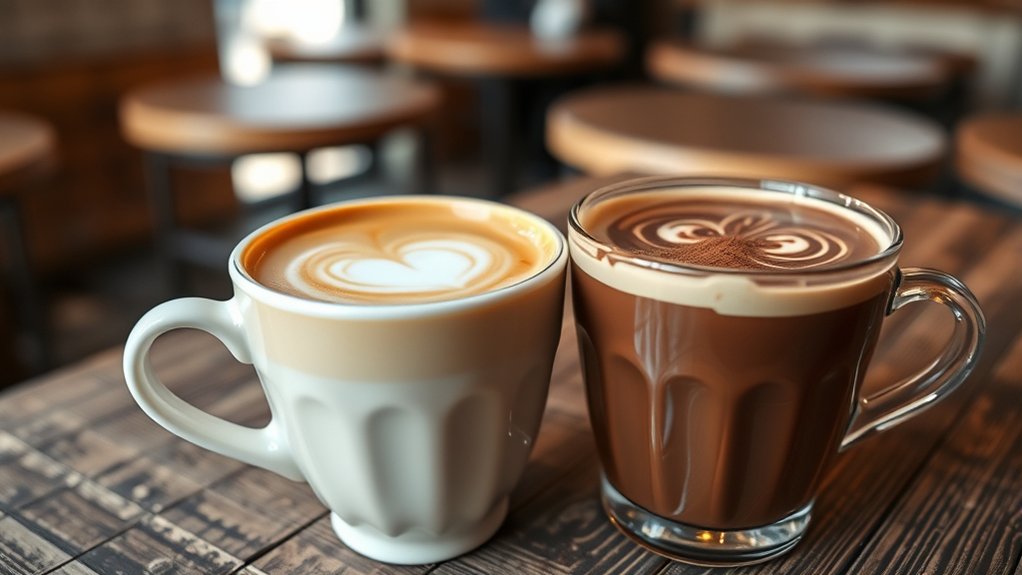
While both latte and mocha deliver similar caffeine levels, their strength and flavor impact feel quite different.
When you compare these two, consider:
- Flavor Profile: Mocha blends espresso with chocolate, giving you a richer, sweeter taste.
- Perceived Strength: The mocha’s chocolate adds depth, making it feel stronger and more indulgent, even though caffeine content is about the same.
- Texture and Sweetness: Mocha’s velvety texture and higher sugar content contrast with latte’s lighter, frothier feel, which keeps the flavor cleaner and less sweet.
Popular Mocha And Latte Variations To Try
If you want to explore more flavors, both mocha and latte offer popular variations that can suit your mood and season.
Mocha variations include the smooth White Chocolate Mocha, swapping classic chocolate for white chocolate syrup, and the invigorating Iced Mocha, served cold with whipped cream.
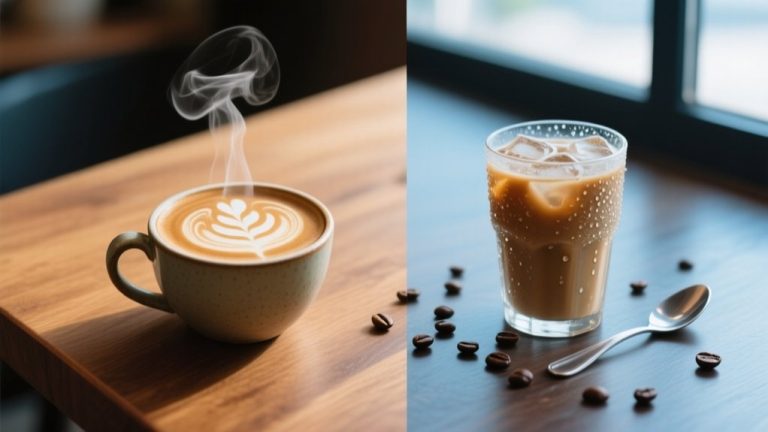
Latte variations shine with the Iced Latte, perfect for warm days, and seasonal favorites like the Pumpkin Spice Latte, blending espresso with cozy pumpkin spice syrup.
For added flavor customization, you can experiment with syrups like caramel or hazelnut in either drink, tailoring sweetness and aroma to your taste.
These mocha and latte variations let you enjoy familiar comforts while discovering new flavor profiles that keep your coffee experience exciting and personalized.
Customizing Latte And Mocha At Home
Exploring popular mocha and latte variations can inspire you to customize these drinks right in your own kitchen. By customizing, you can make each cup uniquely yours using simple adjustments.
Here are three ways to enhance your latte or mocha:
- Add flavored syrups like caramel, vanilla, or sugar-free options to create distinctive tastes without extra calories.
- Experiment with non-dairy milk such as almond, oat, or soy to cater to dietary preferences and introduce new textures.
- Control sweetness and richness in mochas by varying chocolate syrup or cocoa powder amounts, then top with whipped cream or chocolate shavings for indulgence.
Using a quality espresso machine helps you perfect extraction and milk steaming, ensuring the ideal flavor and texture every time.
Choosing Between Latte And Mocha: What Suits You Best
How do you decide between a latte and a mocha when both offer delicious coffee experiences?
If you crave rich, chocolatey coffee flavors with a creamy texture, a mocha is your go-to. It blends espresso, steamed milk, and chocolate for a sweeter, more indulgent treat.
On the other hand, if you prefer a smoother, lighter drink that highlights the espresso’s natural taste, a latte suits you best. With a higher milk-to-coffee ratio, lattes deliver mild coffee flavors without extra sweetness.
Keep in mind, mochas generally have more calories and sugar due to chocolate, while lattes can be customized to be lower in sugar.
Ultimately, your choice depends on whether you want a dessert-like mocha or a classic latte experience.
Frequently Asked Questions
Can I Use Non-Dairy Milk for Both Latte and Mocha?
Yes, you can use non-dairy options for both lattes and mochas. Just keep in mind that milk frothing may vary depending on the type you choose. Oat milk froths well, while almond milk might be lighter.
These options also influence flavor profiles. For instance, coconut milk adds a tropical twist to your mocha, while oat milk enhances creaminess in both drinks.
Always ask your barista about their available non-dairy choices.
What Is the Best Type of Chocolate for Making a Mocha?
Imagine savoring a mocha that perfectly balances richness and sweetness. For the best mocha, you’ll want dark chocolate benefits. Its intense flavor adds depth and a slight bitterness that complements espresso.
If you prefer something creamier, milk chocolate preference is great for a sweeter, dessert-like touch.
Don’t overlook cocoa powder alternatives; they offer authentic chocolate flavor and let you control sweetness, making your mocha uniquely yours every time.
Are Lattes and Mochas Suitable for People With Lactose Intolerance?
Yes, lattes and mochas can be suitable for you if you have lactose intolerance.
Many coffee shops offer lactose-free options by using dairy alternatives like almond, soy, or oat milk.
These substitutes help protect your digestive health while still letting you enjoy your favorite drinks.
Just make sure to ask for lactose-free milk when ordering, so your latte or mocha won’t cause discomfort.
How Do Brewing Methods Affect the Taste of Lattes and Mochas?
Brewing techniques shape the symphony of flavors you taste in lattes and mochas. When you master coffee ratios and steaming methods, you reveal unique flavor profiles.
Lattes sing with creamy, smooth notes, while mochas burst with rich chocolate harmony.
The way you extract espresso and steam milk directly impacts texture and balance.
Can I Add Flavored Syrups to Both Latte and Mocha?
Yes, you can add flavored syrups to both lattes and mochas to create exciting flavor combinations. Popular syrup brands offer options like caramel, vanilla, and hazelnut, which complement these drinks well.
Seasonal variations, such as pumpkin spice or peppermint, add festive twists.
Just keep in mind mochas are naturally sweeter due to chocolate, so balance your syrup choice accordingly. Many shops even have sugar-free syrups if you want to cut back on sugar.
Conclusion
Whether you’re craving a smooth, creamy latte or a rich, chocolatey mocha, you’ll find they share more than just espresso and milk. They both bring comfort in a cup.
It’s no coincidence that both drinks start with the same base but end up telling different flavor stories. So next time you choose between them, remember your mood might be the perfect ingredient to decide which one suits you best today.