Why Does My Coffee Taste Sour – Causes And Solutions
Your coffee tastes sour mainly because it’s under-extracted, brewed with under-roasted or stale beans, or made with water that’s too cool or imbalanced. Under-extraction leaves acids sharp and unchecked, while under-roasted beans keep high acidity that feels harsh.
Stale beans and improper grind size or brew time can also cause sour notes. Adjust your grind, water temperature (195°F-205°F), and brew time for balance. Choose fresh, properly roasted beans to get the best flavor.
There are plenty of ways to perfect your cup once you know what to look for. Experiment a bit and you’ll find the sweet spot for your taste.
What Does Sour Coffee Taste Like and Why It Matters to You
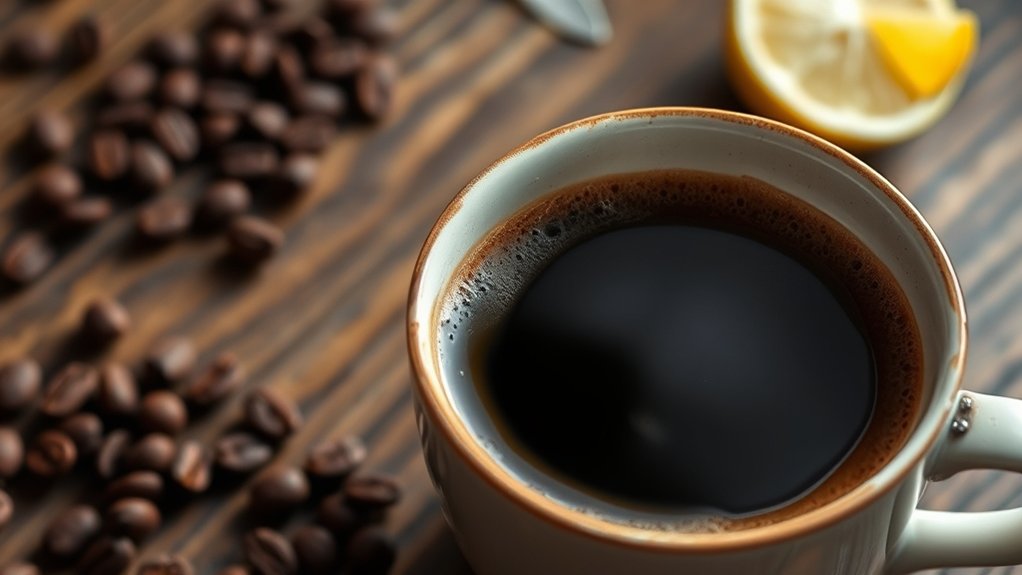
Although sour coffee can catch you off guard with its sharp, tangy flavor that might make you wrinkle your nose, understanding this taste is essential for improving your coffee experience. Sourness often comes from high acidity, a key component in the coffee’s flavor profile. While some find these tasting notes unpleasant, others appreciate the brightness it adds.
Your perception depends on factors like sensitivity. For example, “supertasters” detect sourness more intensely.
Recognizing these sour elements helps you adjust brewing methods or select beans from regions known for balanced acidity.
What’s the Difference Between Acidity and Sourness in Coffee?
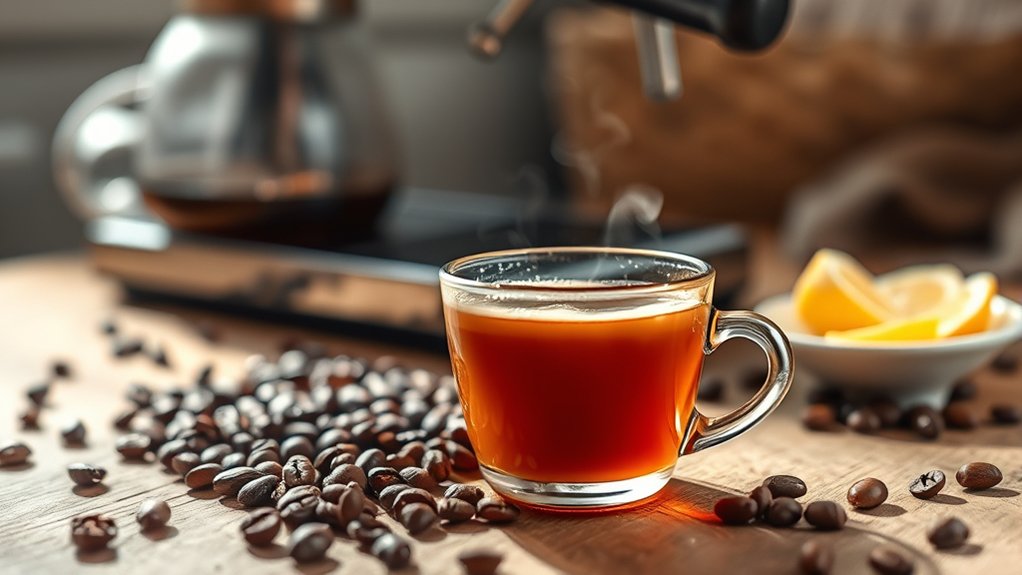
You might notice that acidity in coffee brightens the flavor, making it lively and complex.
On the other hand, sourness tends to taste harsh and unpleasant.
Acidity comes from natural acids that add a nice crispness when balanced well.
But sourness usually signals brewing issues or underdeveloped beans.
Knowing this difference helps you choose beans and brewing methods that highlight the good acidity without slipping into sourness.
Acidity Versus Sourness
When you notice a sharp tang in your coffee, it’s important to figure out whether it’s acidity or sourness affecting the flavor. Acidity adds a bright, lively touch to your coffee’s flavor profile. This comes from natural acids like citric and malic acid.
Sourness usually means something went a bit off during brewing. It’s often caused by under-extraction or over-roasting, which can create an unpleasant sharpness.
Here’s how to tell them apart: Acidity offers a balanced brightness that makes the coffee more complex. Sourness feels harsh and often sticks around on the back edges of your tongue.
Proper extraction brings out acidity without crossing into sourness. If acidity is too high, it might actually start to taste sour if you’re not careful.
Knowing the difference helps you tweak your brewing and pick beans that give you vibrant, enjoyable coffee without those unwanted sour notes.
Flavor Impact Differences
Because acidity and sourness impact coffee flavor in distinct ways, understanding their differences can help you brew a better cup. Acidity contributes a bright, lively quality that enhances flavor harmony, adding clarity and vibrancy to your coffee.
In contrast, sourness is an unpleasant sharpness that disrupts sensory balance, often signaling under-extraction or improper brewing.
The main acids, like citric, malic, phosphoric, and acetic, bring positive brightness when balanced but lead to sourness if overrepresented.
Recognizing that acidity is a desirable trait and sourness a flaw allows you to adjust variables like grind size and brew time to achieve ideal flavor harmony.
Why Under-Extraction Makes Coffee Taste Sour
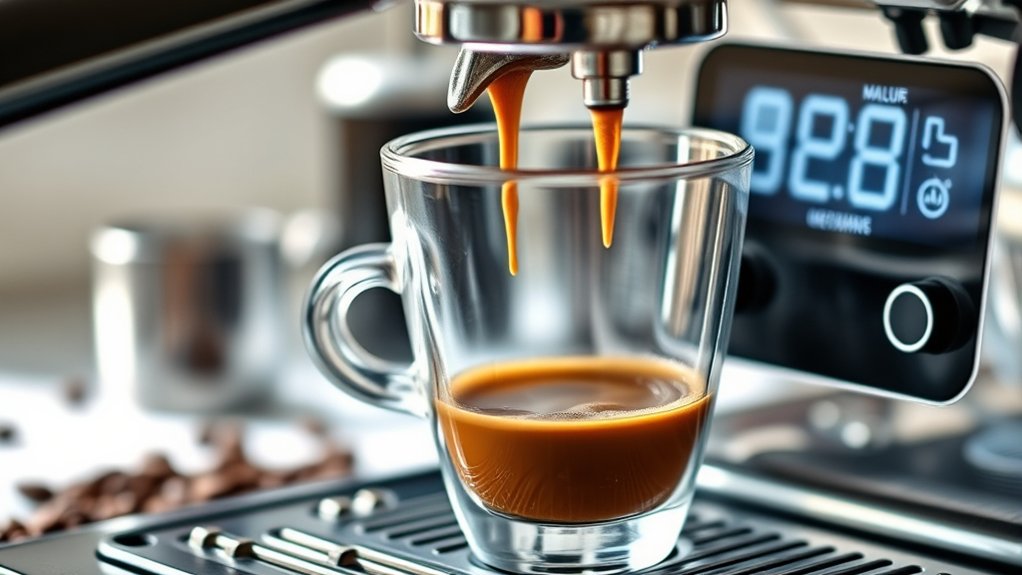
If your coffee tastes sour, it’s usually because of under-extraction. This happens when the brew time is too short, the grind is too coarse, or the water isn’t hot enough.
When that’s the case, the water can’t fully dissolve the sugars and flavor compounds in the coffee, which leaves you with a sharp, acidic taste.
To fix this, try adjusting a few things. Make your grind a bit finer, give your coffee a little more time to brew, and make sure your water temperature is between 195°F and 205°F.
These small changes can help balance the extraction and cut down on that sourness.
Extraction Time Impact
How long you let your coffee brew directly influences its flavor balance. Under-extraction happens when brewing time is too short, leaving you with a sour taste because acids dominate over sugars. The impact varies depending on bean origin and roast level.
Lighter roasts and certain origins often need longer extraction to bring out sweetness and complexity.
To optimize extraction time and avoid sourness, consider these points:
Aim for 4-5 minutes brewing time with drip methods, 2-3 minutes for espresso. Adjust duration based on roast level; lighter roasts typically need more time. Also, keep an eye on bean origin characteristics, since some origins have more delicate acidity.
Avoid rushing the process to guarantee all flavor compounds dissolve evenly. Proper timing ensures a balanced, flavorful cup without unwanted sour notes.
Grind Size Importance
Adjusting your grind size plays a significant role in controlling extraction and ultimately the flavor profile of your coffee.
If your grind is too coarse, water takes longer to fully interact with the grounds, causing under-extraction and a sour taste. This happens because the coarse particles don’t release enough sugars and complex flavors, leaving behind sharp acids.
To avoid this, aim for a medium or fine grind size that promotes balanced extraction, capturing both acids and sweetness for a smoother cup.
Maintaining grind consistency is essential. Uneven particles can lead to uneven extraction and unpredictable flavors.
Also, always use fresh beans, as stale coffee can amplify sour notes regardless of grind.
Fine-tuning your grind size based on bean freshness ensures you extract maximum flavor without unwanted sourness. It’s a simple step but makes a big difference in your coffee’s taste.
Water Temperature Role
Because water temperature directly influences extraction, brewing with water below 195°F (90°C) often results in sour coffee. When the water is too cool, it slows the dissolution of essential flavor compounds, leading to under-extraction and a pronounced sourness.
To achieve brewing consistency and a balanced cup, keep your water temperature within the ideal range of 195°F to 205°F (90°C to 96°C). This guarantees even extraction of acids and sugars, preventing sour notes from dominating.
Focus on these key points:
- Water temperature below 195°F causes under-extraction and sour flavors
- Cooler water fails to dissolve sugars, enhancing acidity
- Proper temperature balances acid and sweetness for smoothness
- Consistent water temperature improves overall brewing reliability
Controlling water temperature is essential for a well-rounded, enjoyable coffee. It really makes a difference in your cup.
How Under-Roasted Beans Make Coffee Taste Sour
When you brew coffee with under-roasted beans, you’ll often notice a sharp, sour taste caused by the high levels of retained natural acids. At a low roast level, the Maillard reaction is incomplete, so the beans lack caramelization and flavor balance. This leaves you with a grassy, acidic cup.
Freshness matters, but even fresh beans can taste sour if under-roasted. Roasting around 14-20 minutes at 392°F (200°C) typically isn’t enough to break down these acids. That’s what results in that sharp sourness you might not enjoy.
| Factor | Effect on Coffee Flavor |
|---|---|
| Roast Level | Light roast retains high acids |
| Bean Freshness | Freshness doesn’t prevent sour taste if under-roasted |
| Maillard Reaction | Incomplete, causing grassy notes |
| Roasting Time | Short time leaves acids unbroken |
| Flavor Balance | Lacking caramelization, causing sharp sourness |
Why Stale Beans Make Coffee Taste Sour
Although stale beans might look fine on the surface, they undergo chemical changes that dramatically alter your coffee’s flavor. As beans age past their prime, the coffee aroma fades, and broken-down oils and sugars transform into sharp, sour compounds. This oxidation process, intensified after 3-4 weeks of storage, disrupts the balance achieved during bean roasting.
The result is an overly acidic cup that just doesn’t taste right. It’s like all the smooth, rich notes you expect get lost somewhere along the way.
To avoid sourness from stale beans, keep in mind:
Freshness is key. Use beans within 3-4 weeks of bean roasting. Store beans in airtight containers to slow oxidation. Avoid exposure to heat, light, and moisture.
And don’t forget to grind beans just before brewing. That way, you preserve the coffee aroma and flavor as much as possible.
How Water Quality and Temperature Affect Sour Coffee Taste
If you want to prevent sourness in your coffee, paying close attention to both water quality and temperature is vital. Using filtered water with a neutral pH balance (around 7) avoids adding sour notes caused by acidic water.
Additionally, brewing between 195°F and 205°F ensures balanced extraction, preserving flavor without sourness. Too cool water under-extracts, making coffee tart. Too hot water over-extracts or burns, also causing sourness.
| Water Factor | Effect on Sourness | Ideal Range/Condition |
|---|---|---|
| pH Balance | Low pH increases sourness | Neutral (~7) via filtration |
| Temperature | Too low = tart | 195°F–205°F |
| Temperature | Too high = burnt/sour | Max 205°F |
Using proper water filtration and controlling temperature will help you brew smooth, balanced coffee without sour aftertaste. Give it a try and notice the difference!
Why Grind Size and Brew Time Influence Sourness
Your grind size plays a big role in how fast water pulls flavors from your coffee grounds. So, if your grind is too coarse and the brew time isn’t long enough, you might end up with a sour taste.
On the other hand, making the grind finer speeds up extraction. This helps balance out the acidity and cuts down on those sour notes.
Impact Of Grind Size
Because grind size directly affects how water interacts with coffee grounds, it plays an essential role in the sourness of your brew. If your grind is too coarse, water flows too quickly, causing under-extraction and a sharp, sour taste.
Conversely, a finer grind boosts surface area, speeding extraction and balancing flavors.
Maintaining grind consistency is imperative; uneven particles lead to inconsistent extraction, increasing sourness risk.
Also, bean freshness impacts how grind size influences flavor. Fresh beans extract more evenly, reducing sour notes.
To optimize your coffee:
- Choose grind size based on your brewing method
- Guarantee uniform grind consistency
- Use fresh beans for predictable extraction
- Adjust grind size before modifying brew time
This approach helps you avoid sourness caused by improper grind size and enjoy a well-rounded cup.
Brew Time Effects
While grind size sets the stage for extraction, brew time plays a crucial role in determining how fully those flavors develop. If your brew time is too short, especially with coarse grounds, the coffee will be under-extracted, leaving behind sharp acids that produce sourness.
On the other hand, extending brew time allows the sugars and balanced flavors to emerge, reducing that unpleasant sour note. Using finer grind sizes increases surface area, which complements longer brew times by enhancing extraction efficiency.
When adjusting your brewing equipment, remember that grind size and brew time work hand in hand to shape the coffee aroma and overall taste. Gradually experiment with these variables to avoid sourness and achieve a balanced, flavorful cup every time.
Balancing Extraction Variables
Although grind size and brew time might seem like separate factors, they actually work together to control extraction and directly impact your coffee’s sourness.
If your grind is too coarse, extraction slows down, which causes sourness from under-extraction. On the other hand, a finer grind speeds up extraction, helping to balance flavors and reduce sour notes.
Adjusting brew time complements this by making sure the water interacts long enough with the grounds, so you avoid sourness altogether.
To balance extraction variables for a creamy texture and consistent brew, consider using a finer grind to speed up extraction. You might also want to increase brew time to dissolve more flavor compounds.
Avoid excessively coarse grinds since they cause under-extraction.
Keep an eye on brewing consistency to maintain that perfect flavor balance.
Mastering this balance helps you eliminate sourness and enjoy a smooth, well-rounded cup.
How Overheating Makes Coffee Taste Sour
If you leave your coffee on a warming plate or heat source for too long, you’ll notice its flavor turns sour and tangy. This happens because overheating chemistry breaks down organic compounds, intensifying acidity and creating off-flavors.
Maintaining temperature stability during brewing and serving (195-205°F) prevents these chemical changes. To preserve your coffee’s balanced profile, drink it quickly after brewing.
| Factor | Effect on Coffee Flavor | Recommended Action |
|---|---|---|
| Overheating | Sour, tangy taste | Avoid prolonged heat exposure |
| High acidity | Sharp, unpleasant notes | Maintain proper temperature |
| Organic compound breakdown | Loss of freshness | Serve immediately |
| Temperature stability | Balanced flavor | Brew within 195-205°F |
| Quick consumption | Peak flavor | Drink coffee soon after brewing |
Why Ultra-Fresh Coffee Beans Taste Sour Initially
Because ultra-fresh coffee beans release higher levels of acids shortly after roasting, you might notice a sharp, sour taste when you brew them immediately. This sourness happens because the high acidity hasn’t mellowed yet. It’s just a natural phase in the bean’s freshness.
Here’s what you should know: newly roasted beans emit volatile acids, which cause that tangy flavor. It usually takes several days to a week for these acids to balance out. Proper coffee storage during this resting period helps keep the beans fresh.
Brewing too soon after roasting makes those sour notes stand out even more because of the elevated acid concentration. Once you understand this, it’s easier to appreciate why coffee brewed right after roasting tastes sour.
Letting the beans rest improves the flavor by reducing acidity, making your coffee smoother and more balanced.
Simple Brewing Adjustments to Reduce Sourness
When your coffee tastes sour, tweaking your brewing method can make a big difference. Start by adjusting your grind size finer to increase extraction. This helps balance acidity and reduce sourness.
Adjusting to a finer grind can boost extraction, balancing acidity and minimizing sourness in your coffee.
Try extending your brewing time slightly so sugars and flavors fully develop. Keep your water temperature steady between 195-205°F. This range extracts flavor without highlighting sour acids.
Also, consider increasing your coffee-to-water ratio to subtly dilute sour notes. The key is making small, incremental changes and tracking how they affect your brew.
Consistency is essential, especially since coffee freshness can change flavor day to day.
Choosing Coffee Beans to Avoid Sour Flavors
Although brewing techniques influence your coffee’s taste, the choice of beans plays a crucial role in minimizing sour flavors. Selecting the right coffee bean origins and roasting profiles can considerably reduce unwanted acidity. Focus on beans from regions known for lower acidity, like Hawaii, Brazil, Sumatra, and Central America.
Pay attention to how the beans are roasted, as darker roasts typically mellow acidity and diminish sourness. To avoid sharp flavors, choose fresh beans roasted within the last 3-4 weeks.
Here are key tips to guide your selection:
- Opt for medium to dark roasts for a balanced, less sour profile
- Choose Arabica beans over Robusta to reduce harsh acidity
- Select beans from lower-acid coffee bean origins
- Consult local roasters for recommendations on mild, low-acid beans
This approach guarantees a smoother, more enjoyable cup.
How to Taste and Appreciate Good Acidity in Coffee
If you want to truly appreciate coffee’s complexity, learning to taste good acidity is essential. Good acidity delivers a bright, crisp tang that enhances flavor complexity and aroma without overpowering. To identify it, focus on a lively, balanced brightness instead of sharp, bitter sourness.
Adjust your brewing variables like water temperature and grind size to highlight this vibrant quality. Playing around with these factors can really bring out the best in your coffee.
| Acidity Type | Taste Profile | Brewing Tip |
|---|---|---|
| Bright & Crisp | Balanced, lively tang | Medium grind, 195-205°F water |
| Harsh Sour | Sharp, bitter | Lower extraction time |
| Lemon-like | Too sharp, chemical | Adjust grind coarser |
| Well-rounded | Smooth, clean acidity | Optimize brew time |
This approach helps you appreciate coffee’s true essence in every cup. Give it a try and notice the difference!
Frequently Asked Questions
Can Sour Coffee Be Healthy or Have Health Benefits?
Yes, you can enjoy health benefits from sour coffee when the acidity balance is right. Coffee fermentation enhances antioxidants, which support digestion and help reduce oxidative stress.
But you should keep an eye on the acidity level. Too much acid can cause stomach irritation and acid reflux. So, finding the right balance is key to enjoying sour coffee without any discomfort.
Does the Type of Coffee Machine Affect Sourness?
You know, “a watched pot never boils,” and in coffee brewing, the machine you use shapes flavor profiles profoundly. Different machines control temperature and pressure differently, directly impacting sourness.
How Does Altitude Impact Coffee Sourness?
Altitude influences flavor development by slowing bean maturation, which boosts acid retention. When you brew high-altitude coffee, expect brighter, tangier notes due to increased acidity.
Can Adding Milk or Sugar Mask Sour Flavors?
You can mask sour flavors with sugar’s sweetness or dairy addition’s creamy touch. But while flavor masking softens acidity, it doesn’t fix the root cause.
Use these wisely to balance taste without losing coffee’s true character. It’s all about finding that perfect harmony. Just don’t rely on them to cover up problems in the coffee itself.
Is Sour Coffee More Common in Certain Coffee Varieties?
Yes, sour coffee is more common in specific coffee bean origins like East Africa and Central America. You’ll also notice it in lighter roasting profiles, which preserve natural acids, unlike darker roasts that reduce sourness.
Conclusion
Sour coffee can feel like a jolt to your taste buds, but understanding its roots turns that sharpness into a dance of flavors. By tweaking your grind, roast, or brew time, you’re not just fixing sourness. You’re revealing a balanced cup that sings with bright acidity instead of biting harshness.
Choose your beans wisely and master your technique. Soon, your coffee will be a smooth symphony rather than a sour note.