How To Descale A Breville Coffee Maker – Maintenance Guide
To descale your Breville coffee maker, regularly remove mineral buildup by running a solution of equal parts white vinegar and water through the machine. Pause midway and let it sit for 30–45 minutes. Then, complete the cycle and thoroughly rinse with fresh water at least twice to eliminate any residues.
Make sure to clean filters and tanks weekly to keep water flow and temperature stable. Proper descaling helps prevent clogs and preserves your coffee’s quality, efficiency, and lifespan.
Stick around for essential tips and troubleshooting advice to keep your machine running smoothly.
Why You Should Descale Your Breville Coffee Maker
Although your Breville coffee maker brews delicious coffee daily, mineral buildup from hard water can impair its performance and flavor quality. Water hardness deposits accumulate inside boilers and pumps, reducing efficiency and causing inconsistent brewing temperatures. This affects extraction, diminishing the coffee aroma you expect.
Descaling removes these mineral deposits, restoring ideal flow and temperature control, which guarantees consistent coffee quality. Ignoring buildup leads to blockages, longer brew times, and can shorten your machine’s lifespan.
Regular descaling maintains internal components, preventing mechanical strain and preserving warranty conditions. By methodically removing scale, you keep your Breville operating at peak efficiency, safeguarding both its performance and the rich coffee aroma you enjoy with every cup.
How Often Should You Descale Your Breville Coffee Maker?
You should descale your Breville coffee maker every 1 to 3 months. It really depends on how hard your water is and how often you use the machine.
If you live in an area with hard water, you’ll probably need to descale more often—like every 1 to 2 months—to keep those minerals from building up.
Keep an eye out for signs that it’s time to descale sooner, such as slower brewing or a change in taste. These little hints are your coffee maker’s way of telling you it needs a clean!
Recommended Descaling Frequency
Since mineral buildup varies with water hardness and how often you use your coffee maker, it’s important to descale your Breville every 1 to 3 months to keep it running smoothly. If you live in an area with hard water, you might need to descale it every month to stop mineral buildup from damaging the internal parts.
Sticking to this schedule helps keep your coffee tasting great by making sure water flows properly and the extraction stays consistent. The manufacturer usually suggests descaling after about 300 to 400 brews, which fits nicely with this timing.
If you skip descaling, your brewing will slow down and the coffee flavor could take a hit because minerals block the water pathways. Doing it regularly also helps your machine last longer and keeps the temperature and pressure just right for that perfect cup.
Signs To Descale
When mineral deposits start affecting your Breville coffee maker’s performance, several clear signs show up telling you it’s time to descale. You might notice the coffee flows more slowly or that brewing takes longer than usual. Both of these happen because limescale is blocking the water pathways.
If your coffee tastes a bit off or strange, that’s another sign. Mineral buildup can mess with the flavor, hiding the true taste of your beans and making it harder to customize your brew based on freshness.
Also, if your machine shows a “Descale” alert, don’t ignore it. Acting quickly helps prevent damage.
It’s a good idea to descale every 1 to 3 months, but you can adjust this depending on how hard your water is and how often you use the machine.
In places with hard water, you might want to descale every 4 to 6 weeks. Doing this keeps your coffee extraction consistent and helps your Breville last longer.
Regular maintenance is key to getting precise brews and keeping your coffee tasting great.
What You Need to Descale Your Breville Coffee Maker
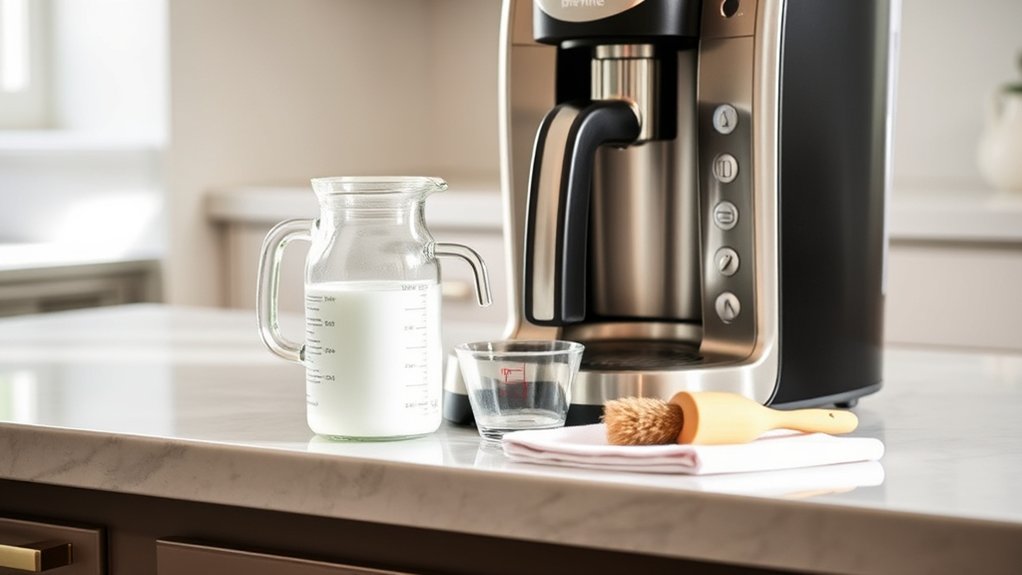
Before beginning the descaling process, gather all necessary materials to guarantee efficiency and accuracy. Maintaining your Breville coffee maker with proper descaling preserves coffee flavor and extends machine longevity. You’ll need white vinegar or a commercial descaling solution approved for your model, a clean cloth, a measuring cup, and access to fresh water.
Empty the water reservoir before starting. Use a 1:1 vinegar-to-water ratio or follow your descaling solution’s dilution instructions. Always consult your Breville user manual for model-specific guidelines.
| Material | Purpose |
|---|---|
| Descaling solution | Removes mineral buildup |
| Measuring cup | Ensures correct solution mix |
| Clean cloth & water | Cleans and rinses the machine |
How to Descale Your Breville Coffee Maker With Vinegar
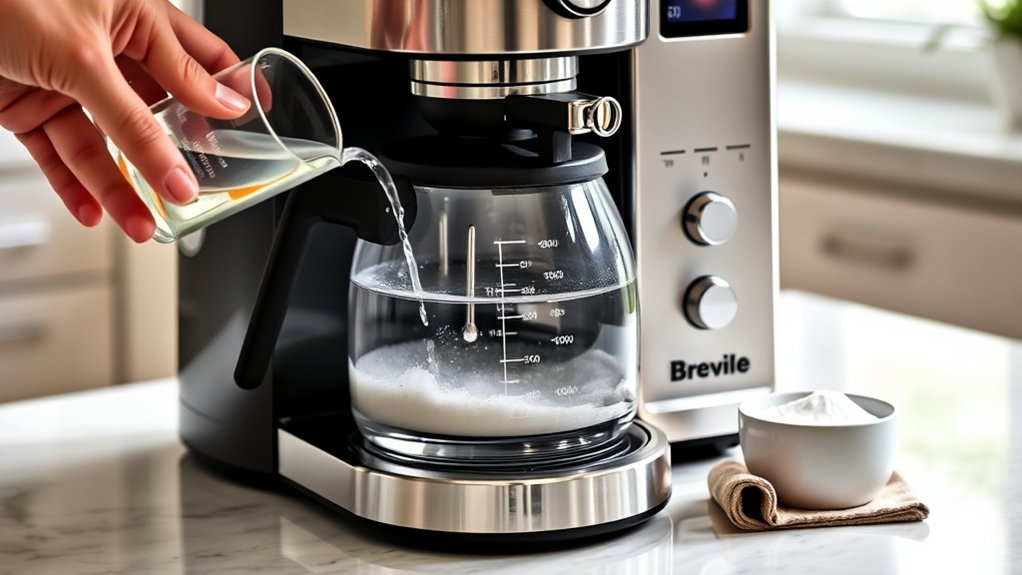
Start by mixing equal parts white vinegar and water to fill the Breville’s water tank.
Then, run a brew cycle without adding any coffee. About halfway through, pause the cycle and let the solution sit for 30 to 45 minutes. This gives the vinegar time to break down those stubborn mineral deposits.
Once the waiting time is up, go ahead and finish the brew cycle.
After that, it’s important to flush the machine with several rinse cycles using fresh water. This helps get rid of any lingering vinegar taste or smell, leaving your coffee maker fresh and clean.
Vinegar Solution Preparation
Although preparing the vinegar solution is straightforward, it’s essential to mix equal parts white vinegar and water to guarantee effective descaling. Measure the liquids accurately to fill the water reservoir to its recommended level. Stir the mixture thoroughly to ensure uniform concentration, which is critical for dissolving mineral deposits without harming internal components.
Before filling the tank, confirm the coffee maker is free of coffee bean residue, grounds, and filters, as these could interfere with the descaling process.
Using this 1:1 ratio balances cleaning efficacy with safety, maintaining ideal brewing temperature and preserving machine performance. Proper solution preparation directly supports effective limescale removal, extending your Breville’s lifespan and ensuring consistent extraction quality from your coffee beans.
Descaling Process Steps
Once you’ve prepared the vinegar solution and filled the water tank, initiate a brew cycle but stop it halfway. This interrupts the process and lets the solution work on mineral deposits without overheating the water temperature.
Let the machine sit for 30 to 45 minutes to effectively loosen scale buildup.
After the pause, complete the brew cycle, then run a full cycle with fresh water to rinse thoroughly. Avoid adding coffee grind during descaling to prevent clogging.
It’s best to follow this method monthly or as your Breville manual advises to keep your machine running smoothly.
- Fill water tank with equal parts white vinegar and water
- Start brew cycle, stop halfway
- Let sit 30 to 45 minutes
- Complete cycle, then rinse with fresh water
- Avoid coffee grind during the process
Running the Descaling Cycle Safely and Effectively
When you run the descaling cycle, use only a Breville-recommended solution or a 1:1 mix of white vinegar and water to guarantee safe and effective cleaning. Fill the water reservoir with the solution, then initiate a brewing cycle without coffee.
Monitor the water temperature carefully; it should reach ideal levels to activate the descaling agents without damaging internal parts.
Midway, pause the brewing cycle to let the solution sit for 20-30 minutes. This gives it time to break down mineral deposits effectively.
After the wait, resume the cycle at a controlled brewing speed to ensure thorough circulation through internal components.
This method maintains performance and prevents scaling. Remember, following this precise procedure safeguards your machine while maximizing descaling efficiency.
It’s a simple step that goes a long way in keeping your coffee maker in great shape.
How to Rinse Your Breville After Descaling
Once you’ve finished the descaling cycle, it’s important to give your Breville a good rinse to get rid of any leftover cleaning solution.
Start by filling the water reservoir with fresh water.
Then, run at least two full brew or hot water cycles. Make sure to discard the rinse water each time.
Keep doing this until you don’t notice any more descaler smell.
Importance Of Thorough Rinsing
Because leftover descaling agents can mess with both the flavor and the machine itself, you need to rinse your Breville coffee maker really well. This step is super important to keep your coffee tasting fresh and to make sure your machine stays looking nice. If any vinegar or cleaning solution sticks around, it can change the taste and speed up mineral buildup, which hurts how the machine works and looks.
Here’s why thorough rinsing matters:
- It gets rid of chemical residues that might damage the internal parts
- It stops any weird flavors that can ruin your coffee’s freshness
- It prevents mineral deposits from building up and messing with your machine’s appearance
- It keeps things hygienic by washing away all descaling agents, which NSF.org studies back up
- It helps your machine run smoothly and last longer by making sure there’s no leftover residue
Steps For Effective Rinsing
Although descaling removes mineral buildup, you’ll need to run multiple rinse cycles with fresh, cold water to completely flush out any residual cleaning agents. Start by filling the water tank with clean, cold water. Run a full brew cycle without coffee to rinse the internal components thoroughly.
Repeat this process 2-3 times, refilling the water tank with fresh water each cycle to guarantee complete removal of vinegar or descaling solution. During rinsing, remove and clean filters separately to eliminate trapped residues.
After the final rinse, wipe down the machine’s exterior and removable parts with a damp microfiber cloth to clear any lingering solution.
Let all components, including the water tank and filters, air dry fully before brewing again. This helps ensure excellent performance and taste.
Frequency Of Post-Descale Rinsing
When you finish descaling your Breville coffee maker, you should run at least two rinse cycles with fresh water to eliminate any leftover descaling solution. This process guarantees no residues affect the flavor extracted from your coffee beans.
Proper water filtration enhances rinse efficiency by reducing mineral content, supporting machine longevity.
Typically, start rinsing immediately after descaling, then perform one or two additional cycles for thorough cleansing. Always rinse after every descaling session to keep your machine in top shape.
Using filtered water helps protect the internal components from mineral buildup.
Run a minimum of two rinse cycles to guarantee no residual descaling agent remains. This routine maintains your coffee maker’s performance and preserves the integrity of your coffee’s flavor.
Consistent rinsing really safeguards your Breville’s operation and the quality of every cup.
Signs Your Breville Coffee Maker Needs Descaling
If your Breville coffee maker starts brewing noticeably cooler coffee or takes longer than usual, these are clear indicators that mineral buildup is affecting its efficiency. This buildup can degrade water quality, leading to altered coffee flavor and diminished extraction.
You should also inspect for visible white or chalky deposits around the water outlet and inside the brew basket, as these are tangible signs of scale accumulation.
Pay attention if water flow feels restricted or inconsistent, since this impairs brewing pressure and temperature stability.
Additionally, an increase in energy consumption or unusual operational noises can signal internal mineral deposits disrupting components.
Many Breville models feature descaling reminders. Make sure to heed these alerts promptly to maintain ideal performance and preserve coffee flavor integrity.
Can You Use Commercial Descaling Products With Breville?
Since commercial descaling products often contain strong acids, you need to check if they’re compatible with your Breville coffee maker before using them. Using products that aren’t compatible can damage the internal parts and might even void your warranty.
So, it’s always a good idea to look at the manufacturer’s guidelines or your user manual to see which descaling agents are approved.
Many Breville models actually suggest using a mix of white vinegar and water instead. This option is gentler on your machine and better for the environment too.
Here are a few things to keep in mind if you’re thinking about using commercial descalers:
- Make sure the product works with your specific Breville model.
- Know that using harsh chemicals could affect your warranty.
- Avoid commercial products with strong acids unless they’re approved.
- Always rinse your machine thoroughly after descaling to get rid of any leftover residue.
- Keep an eye out for any mineral buildup or corrosion after you use the descaler.
Cleaning Breville Filters and Water Tanks
How often do you clean the filters and water tank in your Breville coffee maker? Regular maintenance is essential to preserve coffee flavor and extend filter lifespan.
Remove the filters weekly and clean them with warm water and a soft brush or cloth to eliminate residue buildup.
Empty and rinse the water tank weekly to prevent mineral deposits and bacterial growth.
Every 1-3 months, depending on usage, descale the filters and water tank using a 1:1 mixture of white vinegar and water.
After cleaning, make sure all components dry thoroughly to prevent mold and mildew.
Always follow Breville’s specific cleaning guidelines carefully to avoid damaging these parts and maintain peak machine performance.
This directly impacts coffee flavor and the longevity of your filters.
Taking a little time to clean can really make a difference!
Troubleshooting Common Descaling Issues With Your Breville
Maintaining clean filters and water tanks supports effective descaling, but you may still run into some issues during the process. Mineral buildup can block sensors or clog internal parts, which might cause error messages or inconsistent water flow. Also, if you’re dealing with hard water, that can make scale buildup even worse.
Sometimes, preparing the descaling solution incorrectly or using too little of it can reduce how well it works. This can affect your machine’s performance and even the taste of your coffee, no matter what beans you use.
To troubleshoot common descaling issues, start by inspecting and cleaning the drip tray and water reservoir regularly. Make sure you’re using the recommended descaling solution and preparing it exactly as instructed.
For heavy scale deposits, running multiple descaling cycles can help.
It’s also important to check your water quality to keep mineral buildup to a minimum. And if error messages keep popping up, verify that your sensors are working properly.
Addressing these things step-by-step will usually solve most descaling problems and keep your Breville running smoothly.
Tips to Maintain Your Breville Coffee Maker for Longevity
To guarantee your Breville coffee maker operates efficiently over time, you need to follow a consistent maintenance routine that includes regular descaling and thorough cleaning. Use Breville-approved descaling agents every one to three months to prevent mineral buildup and protect internal components.
Promptly remove coffee grounds after each use and rinse all removable parts to inhibit microbial growth and flavor contamination.
Keep the water reservoir spotless to maintain durability and consistent coffee quality. Also, pay attention to how you store your coffee and how fresh your beans are. Store beans in airtight containers away from heat and light to preserve oils and flavor.
Fresh beans reduce residue buildup inside the machine, which supports ideal extraction and reduces how often you need to clean internally. This methodical approach maximizes your Breville’s lifespan and guarantees consistently excellent coffee.
Following these steps will make your coffee routine smoother and tastier every day.
Where to Find More Breville Cleaning and Maintenance Resources
Consistently following maintenance routines lays a strong foundation, but accessing detailed instructions and expert advice can further enhance your care for the Breville coffee maker.
Proper cleaning directly impacts coffee flavor and stabilizes brewing temperature, ensuring ideal performance.
To deepen your understanding and maintain peak functionality, consult these resources:
- Official Breville website and blog for thorough cleaning guides
- Breville customer support center with FAQs and tailored instructions
- Product registration page offering maintenance advice and troubleshooting
- Breville’s online videos and articles demonstrating cleaning procedures
- Authorized retailers and service centers providing expert maintenance resources
Using these precise, methodical resources helps maintain your machine’s efficiency. It preserves coffee flavor integrity and keeps your brewing temperature consistent over time.
Frequently Asked Questions
Can I Descale My Breville Coffee Maker With Lemon Juice Instead of Vinegar?
You can descale your Breville coffee maker with lemon acid as a natural cleaning agent, but expect multiple rinses to remove residues. It’s less effective than vinegar for heavy mineral buildup, so monitor performance closely.
If you choose lemon juice, just be patient and give your machine a good rinse afterward. It works well for light cleaning, but don’t be surprised if you need to repeat the process a few times to get it all out. Just keep an eye on how your coffee maker runs after descaling.
How Long Does a Full Descaling Cycle Usually Take?
A full descaling cycle usually takes 30 to 45 minutes, depending on machine compatibility and mineral buildup.
You should descale every 2 to 3 months to maintain performance. This helps guarantee precise cleaning within that timeframe. It’s a simple routine that really pays off!
Is It Safe to Descale While the Machine Is Still Hot?
Descaling while the machine’s hot is like juggling flames, risky and unsafe. You really want to be careful with safety precautions.
Make sure to let your Breville cool completely before you start. This helps you avoid burns, spills, and even internal damage during maintenance.
It’s worth the wait to keep everything running smoothly and safely!
Will Descaling Remove Coffee Stains Inside the Machine?
Descaling won’t fully remove coffee stains inside your machine. It mainly targets mineral buildup, so it’s not enough on its own.
You’ll need to follow dedicated cleaning routines using vinegar or specialized cleaners. These are much better at getting rid of coffee stains and keeping your machine running smoothly.
Can I Use Distilled Water to Prevent Mineral Buildup?
Yes, you can use distilled water to prevent mineral buildup. Despite concerns about taste, distilled water improves water quality by minimizing mineral deposits.
This helps protect your Breville’s internal components and extends its efficient operation. So, using distilled water is actually a smart way to keep your machine running smoothly.
Conclusion
Descaling your Breville coffee maker diligently delivers durable device performance and delicious drinks. Regular removal of mineral buildup guarantees efficient extraction and extends equipment lifespan.
By following safe, systematic steps with vinegar or approved solutions, you safeguard your setup from scale’s stubborn sabotage. Stay vigilant, verify water quality, and routinely refresh filters and tanks for flawless functionality.
Prioritize proper maintenance to preserve peak performance and protect your prized Breville for years of satisfying sips. Taking care of your machine really pays off in the long run!