How Long Does Coffee Last In Fridge – Storage Timeline Guide
You can store black brewed coffee in the fridge safely for up to 3 to 4 days before the flavor and freshness start to decline noticeably. Cold brew lasts longer, about 10 to 14 days if you keep it in an airtight container.
Adding dairy or flavorings shortens this to 1 to 2 days because they spoil faster. It’s best to use airtight, opaque containers to keep the aroma fresh and prevent your coffee from absorbing other odors in the fridge.
Also, reheating your coffee properly to 165°F ensures it’s safe to drink. Knowing how storage affects both taste and longevity can really help you enjoy your coffee to the fullest.
How Long Does Coffee Last in the Fridge?
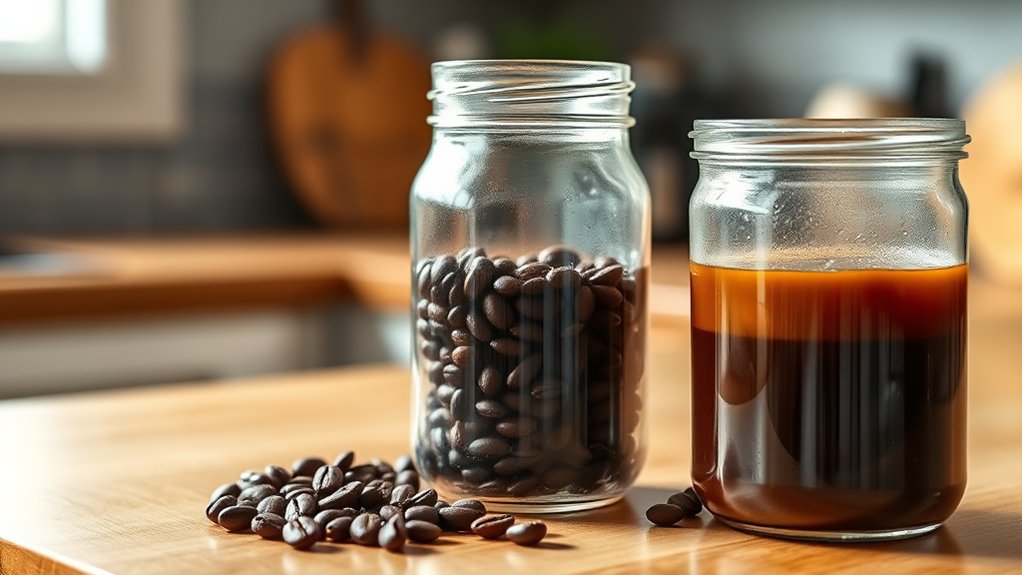
Although brewed black coffee can last 3 to 4 days in the fridge without compromising safety or quality, you should consume coffee with dairy or flavorings within 1 to 2 days to avoid spoilage and bacterial growth.
The stability of caffeine remains largely unaffected during this refrigeration period, preserving the stimulating effects you expect.
Coffee bean roasting influences flavor retention but has minimal impact on how long brewed coffee stays fresh in the fridge.
To maintain ideal quality, store coffee in airtight, non-reactive containers like glass or ceramic at consistent refrigerator temperatures.
Be alert for sour smells, mold, or separation, which indicate spoilage.
Shelf Life of Black, Hot Brewed, and Cold Brew Coffee
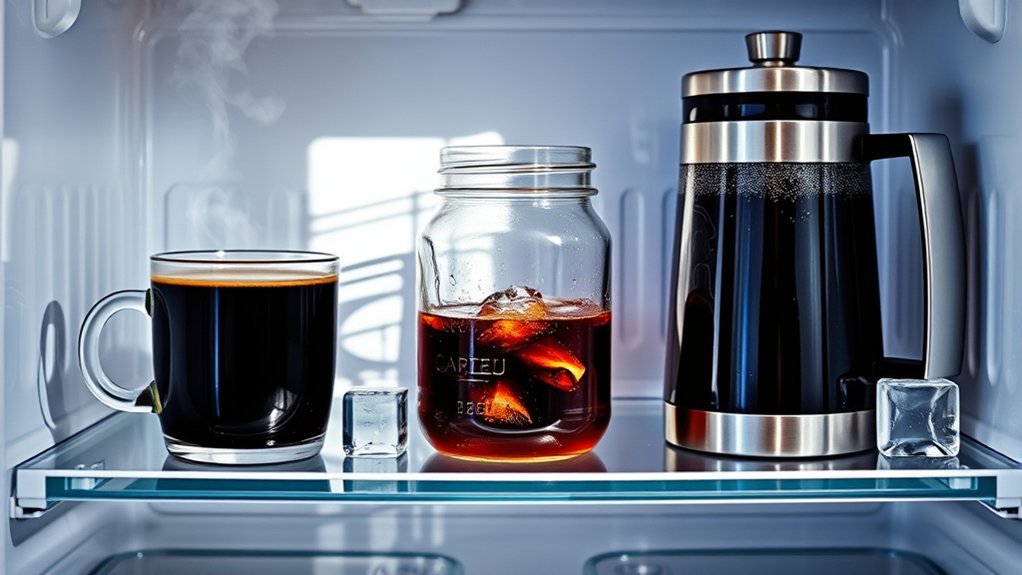
Understanding how different types of coffee hold up in the fridge helps you manage freshness and safety more effectively. Black coffee can last up to 42 days refrigerated, maintaining its coffee aroma with minimal flavor degradation and no significant bacterial growth.
Hot brewed coffee, however, is best consumed within 3-4 days to enjoy its ideal beverage temperature and aroma. Even though it remains microbiologically safe up to 42 days, you probably won’t want to drink it after a few days.
Cold brew coffee offers a middle ground, staying fresh for 10-14 days before sour notes start to signal spoilage.
To keep all these coffee types fresh, store them airtight and avoid adding anything that could reduce their shelf life.
Pay attention to the beverage’s temperature and aroma—they’re good clues to help you judge freshness and avoid drinking coffee past its prime.
How Additives Affect Coffee Shelf Life
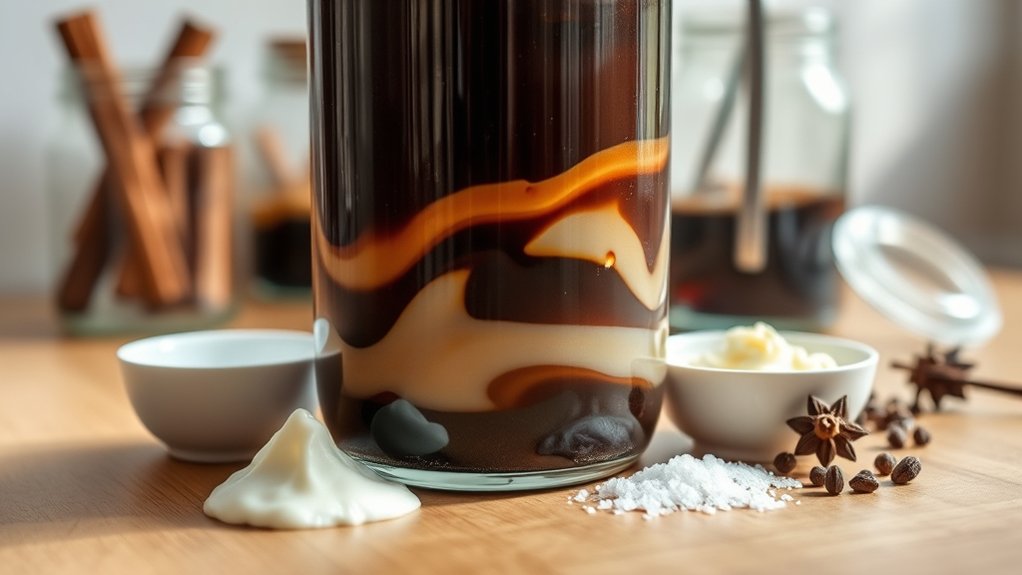
When you add dairy or plant-based milk to your coffee, its shelf life drops to about 12 days in the fridge because bacteria tend to grow faster.
Flavored syrups can also make your coffee lose freshness more quickly, especially if it’s not stored properly.
Dairy Impact On Freshness
The addition of dairy to coffee drastically shortens its refrigerated shelf life, typically limiting consumption to about 12 days. Dairy spoilage happens quickly because milk and cream encourage bacterial growth. This increases the risk of sourness and milk curdling.
When you add dairy, it’s really important to store coffee in airtight containers to help slow down spoilage. After about 12 days, you’ll probably notice off-flavors and changes in texture. That’s because the flavor breaks down faster and curdling sets in.
Black coffee, on the other hand, can last up to 42 days in the fridge. But once you add dairy, you need to drink it sooner to avoid mold and safety problems.
Knowing this helps you keep your coffee fresh and safe, so you don’t end up with unpleasant tastes or health risks from spoiled dairy.
Flavored Syrups Shelf Life
Although flavored syrups can enhance your coffee’s taste, they also shorten its refrigerated shelf life because of their ingredients. Syrups with dairy or natural components reduce storage time by speeding up spoilage. This is especially true when mixed with coffee brewed at lower temperatures, which slows down microbial inactivation.
Syrups that contain preservatives last longer when unopened, but once opened, you should use them within 1-2 months.
| Syrup Type | Typical Refrigerated Shelf Life |
|---|---|
| Dairy-based | 7-14 days |
| Natural ingredient | 7-14 days |
| With preservatives | Up to 1-2 months (opened) |
| Mixed with coffee | Approx. 12 days |
To keep your coffee tasting great, watch out for mold, off-odors, or discoloration. If you notice any signs of fermentation, it’s best to toss the syrup.
Plant-Based Milk Spoilage
Since plant-based milk introduces moisture and nutrients that favor microbial growth, adding it to your coffee drastically shortens its refrigerated shelf life to about 3-7 days.
Plant-based milks such as almond, soy, or oat milk spoil quickly once opened, often developing sour or rancid odors within this timeframe.
When combined with coffee, these liquids create an environment that’s perfect for bacteria and mold growth, which speeds up spoilage compared to black coffee.
You should watch for signs like curdling, separation, mold growth, or changes in color and texture.
To keep things safe and tasty, add plant-based milk only when you’re ready to drink your coffee and try to finish it within a week.
Ignoring these spoilage signs can lead to unpleasant taste and even potential health risks.
How Does Refrigeration Change Coffee’s Flavor?
When you refrigerate brewed coffee, you slow microbial growth and extend its safety for a few days, but you can’t stop its flavor from deteriorating.
Cold temperatures cause coffee to absorb odors from other foods, altering its original coffee aroma and taste. Over time, prolonged refrigeration triggers chemical changes in the coffee’s compounds, dulling its flavor profile.
This process leads to the loss of volatile aromatic compounds, which are essential for maintaining freshness and flavor complexity. As a result, you’ll notice a decline in the vibrancy and depth of the coffee’s flavor.
While refrigeration preserves safety, it inevitably compromises sensory quality, making coffee less enjoyable the longer it stays chilled.
Best Containers for Storing Coffee in the Fridge
You’ll want to use an airtight container made of glass, ceramic, or stainless steel to keep your coffee fresh and prevent it from absorbing any unwanted odors.
Try to avoid plastic containers because they can hold onto smells and might change the flavor over time.
Also, picking a container with a tight-fitting, non-reactive lid is a smart move.
If you can find one that’s opaque, even better—that way, it helps protect the coffee’s aroma and flavor by keeping moisture and light out.
Airtight Container Importance
Although many containers seem suitable, only airtight, non-reactive options like glass or ceramic truly preserve coffee’s flavor and freshness in the fridge. Airtight containers limit oxygen exposure, preventing staling and keeping the coffee aroma you love. Containers with one-way valves offer added protection by releasing gases without letting air in.
Plastic containers often retain odors and allow air exchange, which can compromise coffee quality. Proper container maintenance, including thorough cleaning, guarantees no residual smells affect your coffee.
Below is a comparison of container types:
| Container Type | Key Benefit |
|---|---|
| Glass | Non-reactive, airtight |
| Ceramic | Preserves aroma |
| Plastic | Risk of odor retention |
| Valve-equipped | Releases gases safely |
| Metal | Potential reactivity |
Choosing the right airtight container is essential to extend your coffee’s fridge life effectively. It really makes a difference in keeping your coffee fresh and tasty.
Material Impact On Flavor
Selecting the right material for your coffee container considerably influences the flavor retention during fridge storage. Glass and ceramic containers excel in preserving coffee aroma because they don’t absorb odors or impart unwanted flavors. Their container durability also ensures a consistent, non-reactive environment that limits moisture and oxygen exposure. These are key factors in preventing staleness.
In contrast, plastic containers often retain odors and may alter coffee’s taste over time, degrading its aroma. Metal containers, meanwhile, risk reacting with coffee acids, changing flavor profiles unfavorably.
For ideal freshness, consider airtight glass or ceramic containers, or vacuum-sealed jars with one-way valves. These materials maintain coffee aroma effectively by reducing oxidation. Plus, their structural integrity supports long-term durability, making them the best choice for fridge storage.
Storage Environment Tips
When storing coffee in the fridge, choosing airtight, non-reactive containers like glass or ceramic plays a crucial role in preserving its flavor and aroma. These materials prevent odor absorption and chemical reactions that degrade coffee bean freshness.
Avoid plastic containers, as they retain odors that negatively impact taste.
Opt for opaque containers to shield coffee from light, which accelerates flavor deterioration. A tight seal is essential to block moisture and air, key factors that speed up staling and spoilage.
Maintaining a consistent brewing temperature is easier when you store coffee properly, ensuring ideal flavor extraction.
Also, regularly clean your containers to eliminate mold, bacteria, and residual flavors that could contaminate fresh coffee.
Smart container choices directly influence how well your coffee retains quality in the fridge. So, picking the right container really makes a difference!
Signs Your Refrigerated Coffee Has Gone Bad
If you notice fuzzy patches of mold on the surface of your refrigerated coffee, it’s a clear indicator that it has spoiled and should be discarded immediately. Mold detection is vital; any visible growth means bacterial contamination has occurred.
Besides mold, pay close attention to the coffee aroma. A sour, musty, or fermented odor signals spoilage, deviating from the usual rich and inviting scent.
A sour, musty, or fermented aroma indicates your coffee has spoiled and should not be consumed.
Also, inspect the liquid’s appearance. Murkiness or color changes suggest the coffee has deteriorated.
If your coffee has been stored beyond seven days, these signs become more likely.
Finally, an overly sour or bitter taste confirms that the coffee has gone bad. Monitoring these factors helps guarantee you only consume fresh, safe refrigerated coffee.
Can You Reheat Refrigerated Coffee Safely?
You can safely reheat refrigerated coffee as long as it’s stored properly and warmed up quickly, either in the microwave or on the stovetop. This helps keep bacterial growth to a minimum.
Just make sure your coffee stays at or below 40°F (4°C) and that you reheat it within 24 hours—that way, it stays safe and tastes good.
That said, reheating coffee multiple times isn’t the best idea because it can mess with the flavor. So, it’s a good plan to reheat it efficiently and avoid leaving your coffee out for too long in the first place.
Reheating Methods Impact
Although reheating refrigerated coffee is safe, doing so repeatedly diminishes its flavor and aroma. Each reheating cycle breaks down the coffee aroma compounds, which leads to a flatter taste profile. So, it’s better to keep reheating to a minimum.
When you do reheat, think about how you’re doing it. Microwaving coffee is quick—usually around 30 seconds to one minute—but it can heat unevenly and change the brewing temperature. This can mess with the flavor more than you might expect.
On the other hand, reheating on the stovetop gives you more control over the temperature. You can warm your coffee slowly, which helps keep more of that lovely aroma intact.
To get the best taste, try to limit reheating to just once, since too much heat breaks down the volatile compounds that make coffee smell so good.
Safety Considerations
How safely can you reheat refrigerated coffee without compromising quality or health? When stored properly in airtight containers at or below 40°F (4°C), black coffee reheats safely and keeps its caffeine stable.
But if your coffee has dairy or other perishables, you should drink it within 1-2 days to avoid bacterial growth.
Overheating can mess up the coffee’s aroma and flavor, so try not to reheat it more than once.
Always reheat evenly, either in a microwave or on the stovetop, until the coffee reaches at least 165°F (74°C) to kill any harmful germs.
If your coffee smells off, has mold, or looks strange, it’s better to throw it out because it’s not safe to drink.
- Store coffee airtight at or below 40°F (4°C) to keep it safe and preserve the aroma
- Limit reheating to once, especially if it has dairy
- Heat to at least 165°F (74°C) for safe drinking and to keep caffeine stable
Tips to Keep Cold Brew Fresh Longer
When aiming to keep your cold brew fresh longer, storing it in an airtight, opaque container plays an essential role in preventing oxidation and preserving its flavor profile. Exposure to air and light speeds up coffee aroma loss and flavor degradation, so minimizing these factors is key.
Keep your cold brew consistently refrigerated at or below 40°F (4°C) to slow bacterial growth and chemical changes that reduce quality. Avoid leaving it at room temperature since temperature changes promote spoilage.
Make sure to use clean utensils and freshly washed containers every time you handle your cold brew to prevent contamination.
When Should You Toss Refrigerated Coffee?
Since refrigerated coffee begins to lose its ideal flavor and safety after just a few days, you should consume it within 3 to 4 days to avoid spoilage.
Beyond this period, coffee aroma and flavor preservation degrade, and the risk of bacterial growth increases, especially if dairy or additives are involved.
After 7 days, off-flavors, sour odors, or visible mold mean it’s time to toss your coffee.
Watch for these signs to know when to discard refrigerated coffee:
- Noticeable changes in coffee aroma or the development of sour odors
- Visible mold, discoloration, or separation in the liquid
- Storage beyond one week, even if it seems fine, increases contamination risk
Disposing of coffee promptly ensures you enjoy safe, flavorful brews.
How to Store Coffee Properly to Extend Fridge Life
Proper storage techniques can considerably slow down the degradation process and help maintain the quality of your refrigerated coffee. After brewing, transfer your coffee into airtight, non-reactive storage containers like glass or ceramic. This helps prevent odor absorption and keeps your coffee fresh.
Keep your fridge temperature at or below 40°F (4°C) to limit bacterial growth and maintain flavor integrity. Try not to store coffee longer than 7 days because the aroma and taste decline sharply after that.
If you add milk or syrups, make sure to consume your coffee within 1-2 days to prevent spoilage. It’s better to enjoy it sooner rather than later for the best flavor.
| Storage Tip | Reason |
|---|---|
| Use airtight glass/ceramic | Prevents odor absorption |
| Fridge ≤ 40°F (4°C) | Slows bacterial growth |
| Consume additives quickly | Avoid rapid spoilage |
Does Cold Brew Last Longer Than Iced Coffee?
How long your coffee stays fresh depends a lot on whether it’s cold brew or iced coffee. Cold brew lasts much longer because of how it’s made. The slow extraction and low acidity help keep the coffee aroma and reduce oxidation.
Iced coffee, on the other hand, is usually brewed hot and then chilled. Because of that, it spoils faster and loses its freshness within hours.
Here are some key differences: Cold brew can last 7-14 days in the fridge while keeping its flavor and safety. Iced coffee is best enjoyed within 24 hours since the flavor goes downhill quickly.
Cold brew’s low oxygen exposure and higher concentration help it stay fresh longer compared to iced coffee’s quicker spoilage.
Knowing these differences can help you store your coffee better. That way, you get to enjoy the full aroma and taste for longer.
Common Questions About Drinking Old Coffee
Even if your coffee has been refrigerated for a few days, drinking it is generally safe when stored correctly. The flavor will likely be diminished though, so don’t expect it to taste as fresh as when it was first brewed.
Coffee aroma fades over time, especially after 3-4 days. That’s because volatile compounds break down even if you keep it airtight.
How you brew your coffee matters if you want it to stay fresh longer. Freshly brewed coffee keeps its taste and aroma best.
If you’ve added dairy or other ingredients, try to consume it within 1-2 days to avoid spoilage and food safety risks.
Keep an eye out for mold, sour smells, or off-tastes. If you notice any of these signs, throw the coffee away right away.
Reheating old coffee won’t harm you but it usually makes the flavor bitter and flat.
For the best experience, drink your coffee fresh.
If you need to store it, use airtight containers to slow down the loss of aroma. That way, it stays enjoyable a little longer.
Frequently Asked Questions
Can Freezing Coffee Extend Its Shelf Life Beyond Refrigeration?
Yes, freezing coffee extends its shelf life beyond refrigeration by slowing spoilage and preserving freshness for up to 6 months. It’s a great way to keep your coffee tasting good if you don’t plan to use it right away.
For the best results, use airtight containers to store your coffee. When you’re ready to use it, thaw it gradually. This helps minimize flavor loss and keeps the quality just right.
Does the Type of Coffee Bean Affect How Long It Lasts in the Fridge?
You’ll find that the type of coffee bean barely affects coffee storage longevity. Studies show Arabica and Robusta preserve freshness similarly.
It’s better to focus on airtight bean preservation instead. Factors like light and moisture impact shelf life way more. So, keeping your beans sealed tight is key.
How Does Altitude or Origin Influence Refrigerated Coffee Freshness?
Altitude impact slows coffee spoilage by maintaining cooler temperatures, while origin influence affects oil content and moisture, altering freshness retention.
You’ll notice high-altitude beans lose complex flavors faster if fridge conditions aren’t ideal. So, keeping your fridge just right really makes a difference. It’s all about balancing temperature and humidity to keep those flavors locked in.
Can Flavored Coffee Last as Long as Regular Coffee in the Fridge?
You won’t get the same shelf life extension with flavored coffee storage. For example, a café found its mocha syrup coffee spoiled within 4 days, unlike black coffee lasting weeks. This shows that perishables limit flavor and safety over time.
Is It Safe to Mix Freshly Brewed Coffee With Refrigerated Coffee?
You can mix freshly brewed coffee with refrigerated coffee safely if both are stored properly in airtight containers at or below 40°F. This helps prevent condensation and microbial growth.
Doing this ensures ideal coffee storage and flavor preservation. So, go ahead and combine them without worry as long as you keep these tips in mind.
Conclusion
You can keep brewed coffee in the fridge for about 3 to 4 days without a significant drop in quality. Notably, studies show cold brew coffee lasts up to two weeks when refrigerated, thanks to its lower acidity and brewing method.
To make the most of your coffee’s flavor and safety, store it in an airtight container and avoid additives that spoil quickly.
Knowing these facts helps you enjoy fresher coffee every time.