
How Many Calories In A Coffee – Nutrition Facts Explained
You get about 2 calories from an 8-ounce plain coffee, as it has no fats, sugars, or carbs. However, adding common extras like half-and-half, sugar, or milk can quickly raise your calorie intake. Half-and-half adds 40 calories per 2 tablespoons, and sugar adds 16 per teaspoon.
Specialty drinks often exceed 400 calories due to these add-ins. Understanding these details helps you make smarter choices. Exploring further reveals how caffeine and drink types affect your calorie and appetite management.
How Many Calories Are in a Plain Cup of Coffee
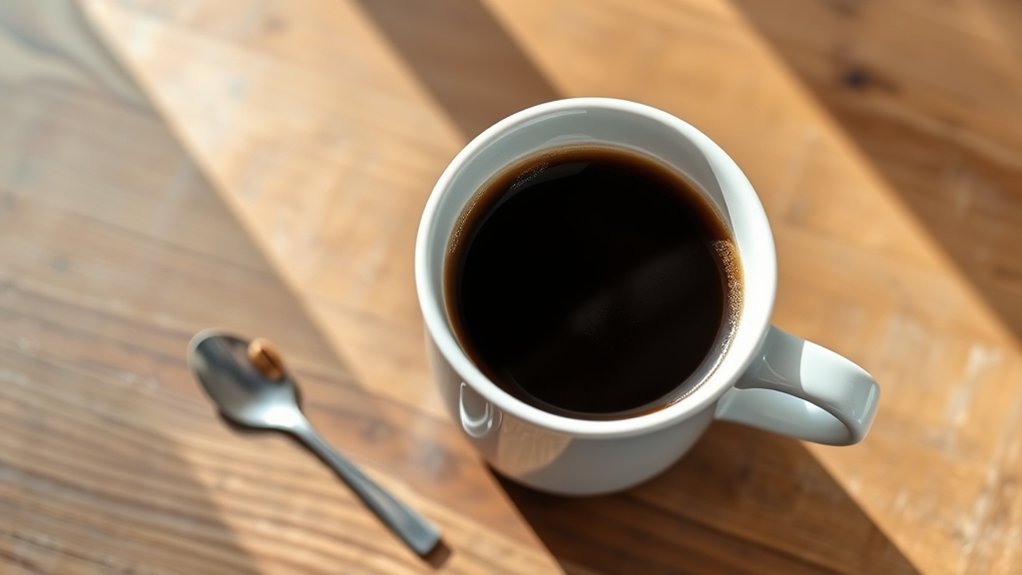
Wondering how many calories a plain cup of coffee contains? A standard 8-ounce (240 ml) cup of brewed coffee has about 2 calories, making it almost calorie-free. This low calorie count is because brewed coffee contains no sugars, fats, or carbohydrates.
Whether you use drip, French press, or pour-over methods, the calories in plain coffee remain consistent. Even espresso, though more concentrated, contains roughly 2 calories per 1-ounce (30 ml) shot, resulting in more calories per ounce but still minimal overall.
Thanks to its negligible calories, brewed coffee is an excellent choice if you’re watching your calorie intake or managing your weight.
Calories From Common Coffee Additions
You mightn’t realize how quickly calories add up from common coffee additions like milk, sugar, and flavored syrups.
For example, just two tablespoons of half-and-half add about 40 calories. And a single teaspoon of sugar? That’s another 16 calories right there.
Knowing these little details can really help you keep an eye on your coffee’s calorie content without giving up the flavor you love.
Calorie Counts By Addition
Although black coffee contains almost no calories, the additions you choose can considerably increase its caloric content. Understanding calories per common add-in helps you make informed choices, especially since added sugars and dairy can rapidly boost your intake.
Consider these typical additions:
- Two tablespoons of nonfat milk add about 10 calories, while whole milk contributes around 20 calories.
- Half-and-half doubles that effect, adding roughly 40 calories per two tablespoons.
- One teaspoon of sugar adds 16 calories; honey is slightly higher at 21 calories per teaspoon.
Additionally, flavored syrups contribute 20-30 calories per pump, which can add up quickly.
Specialty drinks like a 16 oz mocha latte exceed 400 calories, mainly due to these added sugars and dairy components.
Tracking these values helps you monitor your daily calorie intake effectively.
Managing Coffee Add-in Calories
Knowing the calorie content of common coffee additions helps you manage your daily intake more effectively.
For example, nonfat milk adds about 10 calories per 2 tablespoons, while whole milk contributes roughly 20 calories. Half-and-half is more calorie-dense, with 40 calories for the same amount.
Sweeteners also impact your calorie intake. Each teaspoon of sugar adds 16 calories, and honey adds around 21.
Specialty coffee drinks like mochas or frappuccinos can exceed 400 calories per 16 oz serving due to combined milk, sweeteners, and flavorings.
Being mindful of these quantities allows you to control calorie intake from coffee drinks, supporting healthier choices.
Adjusting your add-ins can help you enjoy coffee without unintentionally increasing your daily calories.
Calories in Popular Coffee Drinks

Sixteen-ounce servings of popular coffee drinks vary considerably in calorie content, depending on ingredients like milk type and added sugars. When you choose your coffee, keep these calorie counts in mind to better manage your intake.
For instance:
A regular coffee with half-and-half and sugar has about 140 calories. A cappuccino made with 2% milk contains roughly 120 calories. A mocha latte topped with whipped cream can exceed 400 calories.
Similarly, lattes with 2% milk hover around 130 calories, while blended drinks like frappuccinos generally reach about 400 calories per 16 ounces.
Understanding these calorie differences helps you make informed choices about your popular coffee beverages without sacrificing flavor or enjoyment.
How Cold Brew Coffee Compares to Hot Coffee in Calories
If you want to keep calories low while enjoying coffee, both cold brew and hot coffee offer excellent options. A 16-ounce cold brew coffee contains about 4 calories, closely matching the 2 calories found in an 8-ounce serving of hot brewed black coffee.
The minimal difference in calories arises mainly from volume rather than brewing method. Both drinks are nearly calorie-free when consumed black, making them ideal for calorie management.
Calorie differences in coffee come down to volume, not brewing method—black coffee remains a low-calorie choice.
Cold brew’s smoother, less acidic profile might lead you to add less sweetener or milk, potentially lowering your overall calorie intake compared to hot coffee.
Importantly, steeping coffee grounds in cold water doesn’t greatly change the calories compared to hot brewing.
Can Caffeine Affect How Many Calories You Consume From Coffee?

You might notice that caffeine in coffee can temporarily suppress your appetite. This can actually help you eat fewer calories before meals.
On top of that, research shows that caffeine boosts your metabolic rate by up to 11%. So, it can help you burn more calories throughout the day.
Knowing how caffeine works can be pretty useful when you’re trying to manage how many calories you get from coffee and other sources.
Caffeine’s Impact On Appetite
Although caffeine itself contains almost no calories, it can influence how many calories you consume by affecting your appetite. Understanding caffeine’s impact on appetite helps you see how it might alter your calorie intake beyond the coffee’s negligible 2 calories per cup.
Research shows caffeine can temporarily suppress hunger, which may reduce your calorie consumption if you drink coffee 30 minutes to four hours before eating. Furthermore, caffeine can increase feelings of fullness, further influencing how much you eat.
However, if you’re a regular coffee drinker, you might develop tolerance, lessening this appetite-suppressing effect over time.
Keep in mind:
- Caffeine’s appetite suppression is often short-term.
- Increased fullness can decrease overall calorie intake.
- Tolerance may reduce caffeine’s impact on appetite.
This nuanced effect shapes the number of calories you consume post-coffee.
Calorie Intake Regulation
Since caffeine can temporarily suppress appetite and boost metabolic rate, it plays a role in regulating how many calories you consume from coffee. When you drink coffee, caffeine may reduce hunger, helping with calorie intake regulation.
However, drinking too much caffeine can disrupt normal eating patterns and lead to imbalanced nutrition. Also, added sugars and creamers often increase calorie intake, overshadowing caffeine’s benefits.
| Factor | Effect on Calorie Intake |
|---|---|
| Caffeine | Suppresses appetite temporarily |
| Metabolic Rate | Increases energy expenditure |
| Added Sugars/Creamers | Raises calorie content considerably |
| Individual Tolerance | Varies effects on appetite |
| Excessive Consumption | May cause irregular eating habits |
Understanding these factors helps you manage calorie intake effectively.
Do Coffee Calories Influence Your Hunger and Cravings?
How exactly do the calories in your coffee influence your hunger and cravings? Black coffee has a very low caloric content, about 2 calories per 8-ounce serving, making it unlikely to increase hunger. In fact, caffeine can temporarily suppress your appetite and enhance post-meal satisfaction, helping regulate cravings.
However, high-calorie coffee drinks with added sugars and creamers might do the opposite. Here’s what you should know:
- Low-calorie coffee can reduce appetite if consumed 30 minutes to four hours before meals.
- Added sugars and creamers in coffee cause blood sugar spikes, leading to increased hunger afterward.
- Monitoring your coffee’s caloric content helps maintain balanced eating and controls cravings effectively.
Understanding these effects can help you manage your hunger better through mindful coffee choices.
How to Choose Coffee Options That Fit Your Health Goals
Managing hunger and cravings starts with choosing coffee options that align with your health goals. Understanding Nutrition Facts can help you choose wisely, keeping calories low without sacrificing flavor.
Opt for black coffee or add low-calorie milk alternatives. Be cautious with sugar and high-calorie toppings, which quickly increase calorie intake.
| Coffee Option | Approximate Calories |
|---|---|
| Black Coffee (8 oz) | 2 |
| Nonfat Milk (2 tbsp) | 10 |
| Sugar (1 tsp) | 16 |
| Whipped Cream | 50+ |
| Flavored Syrup | 20-80 |
Use this table to guide your choices and control calorie intake effectively. These Nutrition Facts help you choose coffee options that support your health goals.
How to Track and Manage Coffee Calories Effectively
Why does tracking the calories in your coffee matter? Because the caloric content varies widely depending on what you add. Plain black coffee has about 2 calories per 8-ounce serving size, but cream, sugar, and flavored syrups can quickly increase this number.
Tracking coffee calories matters because additives like cream and sugar can greatly increase its caloric content.
To manage your coffee calories effectively, consider these strategies: Use a food tracking app to log your coffee and any additives, ensuring accurate calorie counts.
Understand the caloric impact of common additions (e.g., 20 calories for 2 tablespoons of whole milk, 16 calories per teaspoon of sugar).
Pay attention to serving size, especially with specialty coffee drinks that may exceed 400 calories per cup.
Regularly checking nutrition labels and online resources helps you make informed, healthier coffee choices.
Frequently Asked Questions
What Is the History of Coffee and Its Calorie Content?
You’ll find that coffee origins trace back to Ethiopia’s Kaffa region, where its caffeine effects first energized early drinkers.
Over centuries, coffee spread globally, valued for its stimulating effects, yet its calorie content remained minimal. Black coffee has just about 2 calories per cup.
Only after adding cream and sugar did calories rise considerably.
Understanding this history helps you appreciate coffee’s evolution from a simple, low-calorie beverage to today’s diverse, calorie-rich drinks.
How Does Coffee Consumption Impact Hydration Levels?
Think of coffee as a gentle river, flowing hydration rather than draining it. Despite caffeine effects being labeled as dehydrating, research busts those hydration myths.
Moderate coffee consumption actually contributes to your fluid intake. The diuretic effect is mild in regular drinkers, so your body adapts.
Drinking up to four cups daily won’t harm your hydration. Instead, coffee’s high water content helps keep you balanced and refreshed.
Are There Any Vitamins or Minerals Naturally in Coffee?
Yes, coffee naturally contains several coffee nutrients like potassium, magnesium, and niacin, contributing small but beneficial amounts to your diet.
These minerals and vitamins vary depending on the coffee’s origin and brewing method.
Along with caffeine benefits like alertness and metabolic boost, these nutrients help support your overall health.
Can Coffee Calories Affect Athletic Performance?
You might think coffee calories don’t matter, but they can affect your athletic performance.
While caffeine effects boost your energy levels and endurance, high-calorie coffee drinks can add unwanted calories that lead to weight gain, reducing your efficiency.
Sticking to black coffee maximizes caffeine’s benefits without extra calories, helping you perform better and recover faster.
How Do Different Coffee Brewing Methods Influence Flavor but Not Calories?
Different brewing techniques influence flavor profiles by changing extraction time, temperature, and pressure. These factors alter the coffee’s oils and chemical compounds.
You’ll notice espresso’s boldness, drip coffee’s clarity, or cold brew’s smoothness.
However, these changes don’t affect calorie content much since plain coffee has about 2 calories per serving.
Conclusion
You might be surprised to learn that a plain cup of black coffee has just 2 calories, making it an excellent low-calorie beverage choice. However, those calories can add up quickly once you start adding sugar, cream, or flavored syrups.
Being aware of these additions helps you manage your intake and stay aligned with your health goals. Tracking your coffee calories can prevent unintended excess, keeping your diet both enjoyable and controlled.