
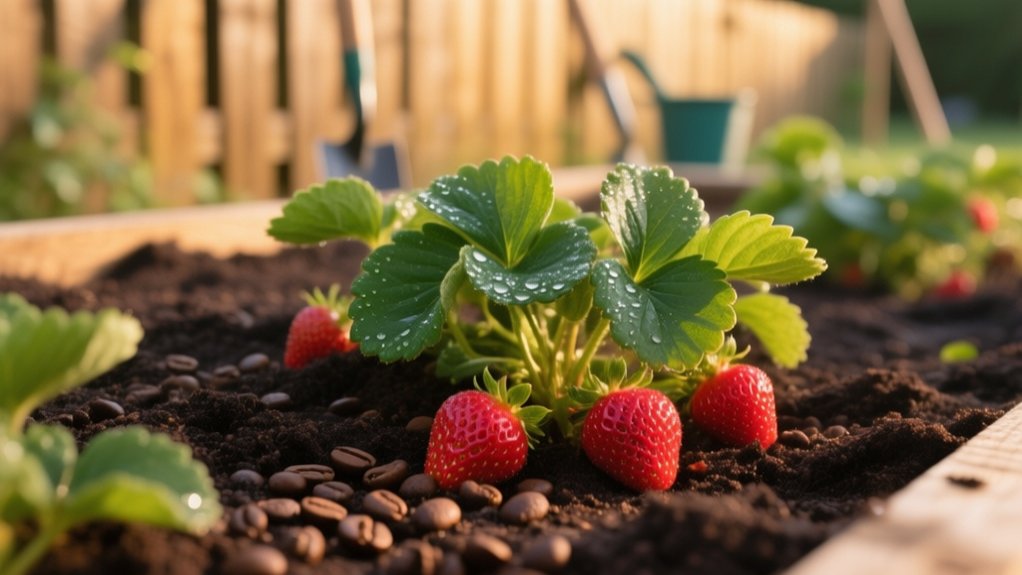
Are Coffee Grounds Good For Strawberry Plants – Gardening Benefits Explained
Yes, coffee grounds can benefit your strawberry plants when used properly. They add nitrogen, improve soil structure, and attract helpful organisms like earthworms, boosting growth and fruit flavor.
Avoid fresh grounds directly, as they may stress plants by temporarily locking nutrients and increasing acidity. Apply thin layers, ideally composted, in early spring to maintain ideal pH and moisture.
Overuse can harm plants, so balancing with other soil amendments is key. Exploring application techniques and timing will enhance results.
How to Use Coffee Grounds for Healthy Strawberry Plants
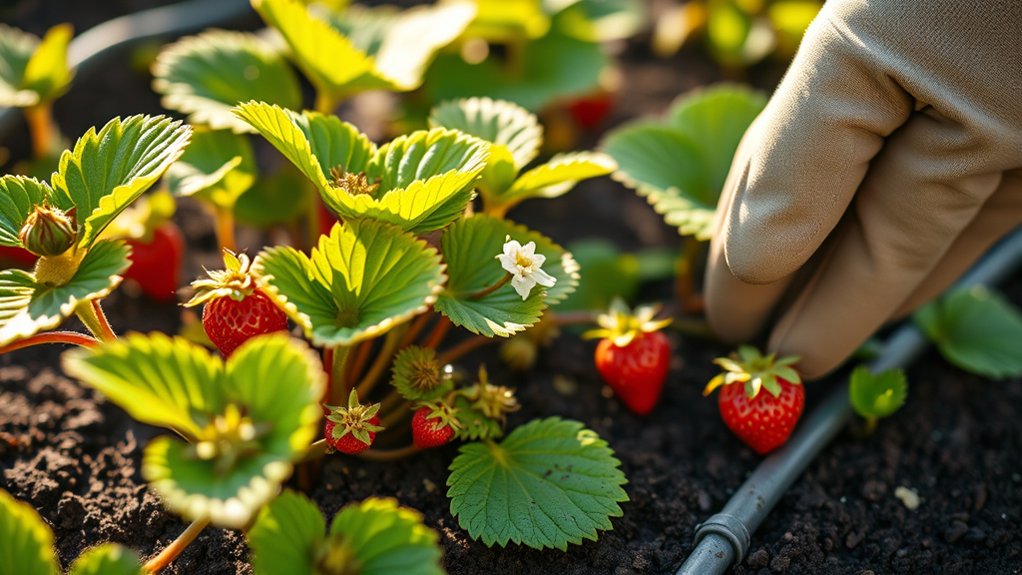
Coffee grounds can boost your strawberry plants’ growth when used properly, but you need to apply them with care. Start by composting coffee grounds to reduce acidity and prevent nutrient imbalances.
Apply a thin, even layer of these composted grounds as mulch around your strawberries to improve soil structure, add nitrogen, and retain moisture. Avoid piling fresh coffee grounds directly on the soil; doing so can create a water-repellent barrier and tie up essential nutrients, hindering plant development.
To maintain ideal growth, monitor your soil’s pH regularly, ensuring it stays between 5.5 and 6.5.
Why Soil pH Matters for Strawberries and Coffee Grounds
You want to keep your soil pH between 5.5 and 6.5 for the best strawberry growth.
Interestingly, fresh coffee grounds have a pH around 6.5, which fits right within that range.
But, before you go spreading coffee grounds all over your strawberry patch, there’s a catch.
Using coffee grounds directly can change the soil chemistry, especially when it comes to nitrogen availability, which can impact your plants’ health.
So, it’s a good idea to keep an eye on your soil pH and make adjustments as needed.
That way, you can use coffee grounds effectively without throwing off the nutrient balance.
Ideal Strawberry Soil pH
Although soil pH might seem like a subtle factor, it critically influences nutrient availability and overall health for your strawberry plants. Strawberries thrive best in slightly acidic soil, maintaining a pH between 5.5 and 6.5.
This range aligns closely with the pH of fresh coffee grounds, which hover around 6.5, making them a potentially compatible soil amendment. However, applying coffee grounds directly without composting can temporarily disrupt nutrient balance by increasing nitrogen and acidity beyond suitable levels.
To protect your plants, you should regularly test your soil’s pH and adjust accordingly. Composting coffee grounds prior to use stabilizes their nitrogen content and reduces the risk of acidifying your soil excessively, ensuring the ideal environment for your strawberries to absorb essential nutrients effectively.
Coffee Grounds Soil Effects
When managing soil amendments for strawberries, understanding how coffee grounds affect soil pH is crucial because it directly influences nutrient availability and plant health.
Coffee grounds have a slightly acidic pH of about 6.5, which aligns with the ideal pH range of 5.5 to 6.5 for strawberries.
However, applying fresh coffee grounds can temporarily immobilize nitrogen, causing nutrient deficiencies. Composting coffee grounds stabilizes nitrogen content and mitigates this risk, making them safer for your plants.
Excessive use may shift soil toward unnecessary acidity, as strawberries thrive in balanced pH conditions rather than highly acidic soil. Regularly monitor soil pH and nutrient levels to guarantee ideal growth.
How Coffee Grounds Improve Soil and Nutrients
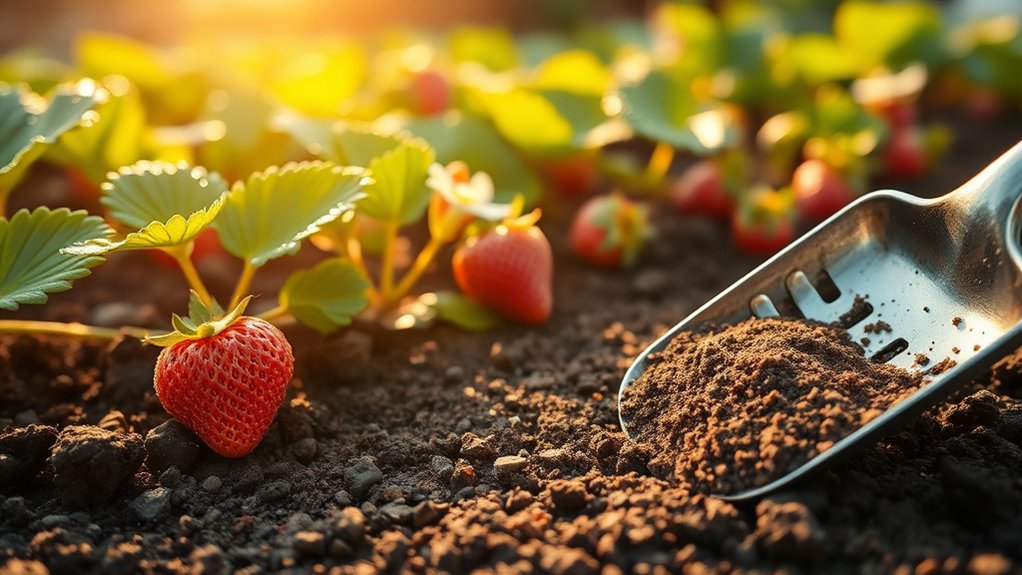
Since coffee grounds contain high levels of nitrogen, they play an essential role in promoting healthy growth and enhancing nutrient availability in the soil for your strawberry plants.
When you incorporate coffee grounds into compost, they stabilize nitrogen release, preventing nutrient tie-up that could stress your plants.
Their slightly acidic pH, around 6.5, complements strawberries’ preferred soil acidity, potentially improving fruit flavor.
Furthermore, coffee grounds enhance soil structure and drainage, which supports ideal root development.
The organic matter in coffee grounds attracts beneficial organisms such as earthworms, enriching the soil ecosystem and further improving nutrient cycling.
Using Fresh vs. Compost Coffee Grounds
Anyone considering coffee grounds for their strawberry plants should understand the differences between fresh and compost coffee grounds. Fresh coffee grounds have a pH around 6.5, which fits within strawberries’ preferred slightly acidic range (5.5 to 6.5).
However, their high nitrogen content can temporarily immobilize nutrients, causing stress to the plants.
High nitrogen levels in fresh coffee grounds can lock up nutrients and stress your strawberry plants.
Compost coffee grounds, on the other hand, stabilize nitrogen levels through microbial decomposition, reducing nutrient tie-up and potential plant stress.
Using composted grounds guarantees a more balanced nutrient release, enhancing soil health and strawberry growth.
When applying coffee grounds, avoid thick layers to prevent water repellency.
Best Ways to Apply Coffee Grounds to Strawberry Beds
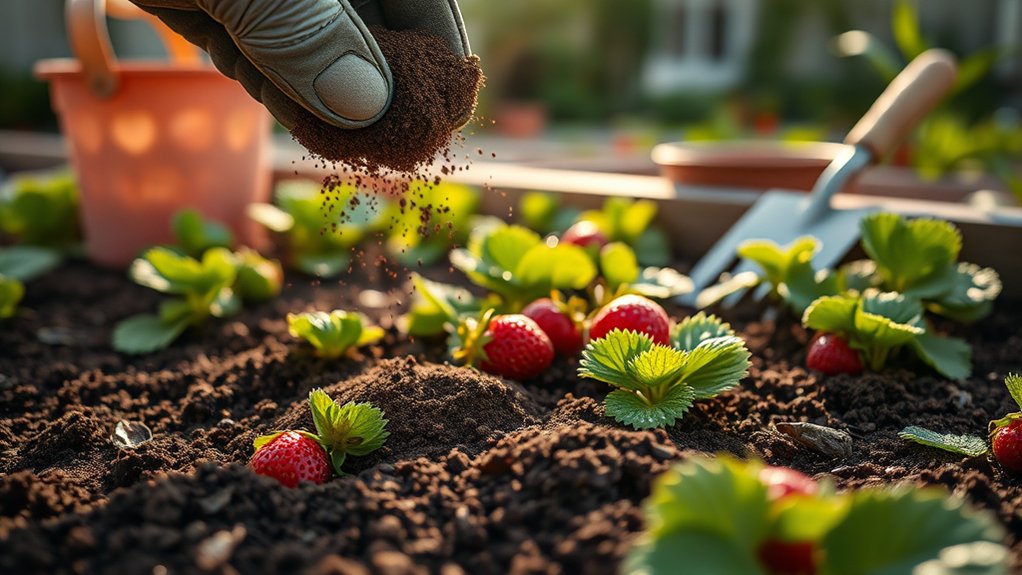
When adding coffee grounds to your strawberry beds, it’s best to spread them in thin layers—no thicker than half an inch.
Doing this in early spring works really well because it complements balanced fertilizers.
It’s a good idea to compost the coffee grounds first. Composting helps stabilize the nitrogen in the grounds, which can reduce stress on your plants.
Plus, mixing the coffee grounds with brown materials in your compost creates a nice, balanced amendment for your soil.
Also, keep an eye on your soil’s pH. Strawberries like a slightly acidic environment, ideally between 5.5 and 6.5.
Monitoring this helps prevent the soil from becoming too acidic, which could harm your plants.
Timing Of Application
Although coffee grounds offer valuable nutrients for strawberry plants, timing their application is crucial to maximize benefits and minimize stress. Apply coffee grounds in the morning to enhance nutrient absorption and support ideal growth.
Avoid using coffee grounds during the fruiting phase, as this can stress the plants and impair fruit development. Before applying, compost coffee grounds to stabilize nitrogen levels, reducing phytotoxic risks.
When spreading, limit the layer to half an inch to prevent water-repellent mats that impede moisture access to roots.
Regularly monitor soil pH and moisture since coffee grounds can increase acidity, potentially affecting strawberry health.
Application Techniques
When applying coffee grounds to strawberry beds, it’s essential to use thin layers no thicker than half an inch. This prevents the formation of water-repellent mats that hinder moisture penetration to the roots. You should lightly sprinkle coffee grounds around the base of plants, preferably in the morning when absorption is ideal.
Mixing grounds with brown materials like dry leaves before composting balances nutrients and stabilizes nitrogen. This reduces plant stress. Avoid overapplying coffee grounds to prevent excessive soil acidity, as strawberries prefer pH 5.5 to 6.5.
| Technique | Purpose | Notes |
|---|---|---|
| Thin Layer Spread | Prevent water repellency | Max 0.5 inch thickness |
| Mix with Browns | Balanced composting | Use dry leaves or straw |
| Morning Application | Enhance nutrient uptake | Avoid heavy application |
Soil Impact Management
Since coffee grounds can alter soil chemistry, managing their application carefully is essential to maintain ideal conditions for strawberry plants. You should apply coffee grounds in thin layers, no more than half an inch, to prevent water-repellent mats that inhibit moisture penetration.
Avoid sprinkling fresh coffee grounds directly on beds. Instead, compost them first to stabilize nitrogen levels and minimize plant stress. Mixing coffee grounds with brown materials like dry leaves or straw in a compost bin creates a balanced amendment that enhances soil fertility.
Before application, monitor soil pH closely since strawberries prefer slightly acidic soil (pH 5.5 to 6.5), and excessive acidity from coffee grounds can be detrimental.
Incorporating coffee grounds thoughtfully will optimize soil health and promote vigorous strawberry growth.
Best Timing to Apply Coffee Grounds
The best time to apply coffee grounds to your strawberry plants is in the morning. This allows the nutrients to be absorbed effectively during the plant’s active growth phase. Applying coffee grounds at this time maximizes nutrient uptake and supports healthy development.
Avoid using coffee grounds during the fruiting stage to prevent adverse effects on fruit quality. Also, consider soil moisture and weather conditions, as these influence nutrient absorption. Composting coffee grounds beforehand stabilizes nitrogen, reducing plant stress.
When timing your application, focus on early morning, when stomata are open, enhancing nutrient uptake. Apply before rainfall or irrigation to help coffee grounds integrate into the soil.
And avoid fruiting periods to maintain ideal fruit health. This approach guarantees coffee grounds benefit your strawberry plants without compromising growth or yield.
Risks of Using Too Much Coffee Grounds on Strawberries
Although coffee grounds can benefit strawberry plants, applying too much can cause significant risks. Excessive coffee grounds increase soil acidity beyond the ideal pH of 5.5 to 6.5, hindering nutrient uptake and growth.
High nitrogen content in coffee grounds, when overused, temporarily immobilizes other essential nutrients, leading to deficiencies.
Moreover, thick layers of coffee grounds may form a water-repellent barrier, restricting moisture penetration critical during fruit set. This moisture limitation stresses plants, impairing health and yield.
To mitigate these risks, you should compost coffee grounds before application to stabilize nitrogen levels and reduce acidification.
Monitoring your strawberry plants’ response is important; over-application can cause nutrient imbalances and soil conditions unfavorable for best development.
Use coffee grounds judiciously to avoid these detrimental effects.
Other Soil Amendments to Complement Coffee Grounds for Strawberries
Managing soil conditions carefully can help you maximize the benefits of coffee grounds for strawberries while minimizing their potential drawbacks. To complement coffee grounds effectively, consider integrating these amendments:
Careful soil management maximizes coffee grounds’ benefits for strawberries while minimizing drawbacks with complementary amendments.
- Composted manure enriches nutrient content and improves soil structure, enhancing strawberry growth synergistically with coffee grounds.
- Bone meal supplies high phosphorus levels, promoting robust flowering and fruit development when combined with coffee grounds.
- Greensand adds essential trace minerals and boosts moisture retention, balancing the nitrogen provided by coffee grounds.
Additionally, using aged wood chips or straw as mulch regulates soil temperature and moisture, preventing compacted mats that coffee grounds alone might cause.
Applying lime or crushed eggshells can neutralize excess acidity from coffee grounds, maintaining ideal pH for strawberries.
These amendments work in concert to create a balanced, fertile medium for your plants.
Common Questions About Coffee Grounds and Strawberry Gardening
How much coffee ground should you apply to your strawberry plants to see real benefits without causing harm? Experts recommend a thin layer, no more than half an inch, of composted coffee grounds as mulch to improve soil health.
Fresh coffee grounds have a pH around 6.5, which aligns well with strawberries’ preference for slightly acidic soil. But using too much can increase acidity and disrupt nutrient balance.
Composting stabilizes nitrogen and reduces plant stress, so avoid applying fresh grounds directly. Coffee grounds alone won’t replace balanced fertilizers; they work best as a supplement.
Remember, consistent watering and traditional straw mulch are more essential for strawberry growth and fruit quality than coffee grounds.
Apply coffee grounds carefully, composted, and sparingly to support healthy strawberry gardening without adverse effects.
Frequently Asked Questions
Can Coffee Grounds Repel Pests Harmful to Strawberry Plants?
Yes, coffee grounds can repel pests harmful to strawberry plants due to their caffeine content and abrasive texture, which deter slugs and snails effectively.
However, you need to be cautious with pest attraction; applying too much coffee grounds may attract other unwanted insects or pests.
To maintain a balanced environment, you should use brewed coffee grounds moderately, as they reduce caffeine levels while still providing a physical barrier against certain pests.
Do Coffee Grounds Affect the Flavor of Strawberries?
You know what they say: “You reap what you sow.” Coffee grounds can indeed affect strawberry flavor by providing nitrogen, which promotes healthy growth and flavor enhancement.
Their slight acidity matches strawberries’ preferred soil pH, improving nutrient uptake.
However, applying coffee grounds in moderation or composted form is essential. Otherwise, excess nitrogen might stress plants, negatively impacting taste.
Always monitor your strawberries’ response to optimize flavor benefits scientifically and precisely.
Are Coffee Grounds Safe for Organic Strawberry Farming?
Yes, coffee grounds are safe for organic strawberry farming when used as a soil amendment in moderation. They provide essential nutrients like nitrogen, potassium, and phosphorus, improving soil fertility and structure.
Composting grounds before application stabilizes nitrogen levels, preventing nutrient imbalances. Their slightly acidic pH matches strawberries’ preference, enhancing nutrient uptake.
Just avoid overusing grounds, as excessive nitrogen can temporarily inhibit other nutrient availability and potentially stress your plants.
Can Coffee Grounds Be Used Year-Round on Strawberry Plants?
You shouldn’t use coffee grounds year-round on strawberry plants because seasonal use is essential.
Studies show soil pH shifts by 0.5 units when coffee grounds are over-applied, risking acidity imbalance.
Apply composted grounds only in spring or fall to match strawberries’ pH preference (5.5–6.5) and avoid nutrient competition during fruiting.
This seasonal use helps maintain soil health, guarantees proper nutrient availability, and supports ideal plant growth throughout the year.
Do Coffee Grounds Impact Pollinators Around Strawberry Plants?
Yes, coffee grounds can impact pollinator attraction around strawberry plants. When used properly, they improve soil health by encouraging earthworms, which enhances plant vigor and flower production, indirectly supporting pollinators.
However, applying fresh grounds excessively creates a dense barrier, reducing moisture and air. This may deter pollinators.
Using composted coffee grounds stabilizes nitrogen and soil pH, promoting healthier plants that attract pollinators more effectively and sustain a balanced garden ecosystem.
Conclusion
You’ve seen how coffee grounds can be a powerhouse for your strawberry plants, improving soil structure and nutrient availability. But don’t go overboard. Too many grounds can throw off pH balance and harm growth.
Applying them properly, at the right time and in moderation, can make your garden thrive like never before. Remember, combining coffee grounds with other amendments creates an ideal environment. This ensures your strawberries reach their full, juicy potential.