What Does Mocha Taste Like – Flavor Profile And Notes
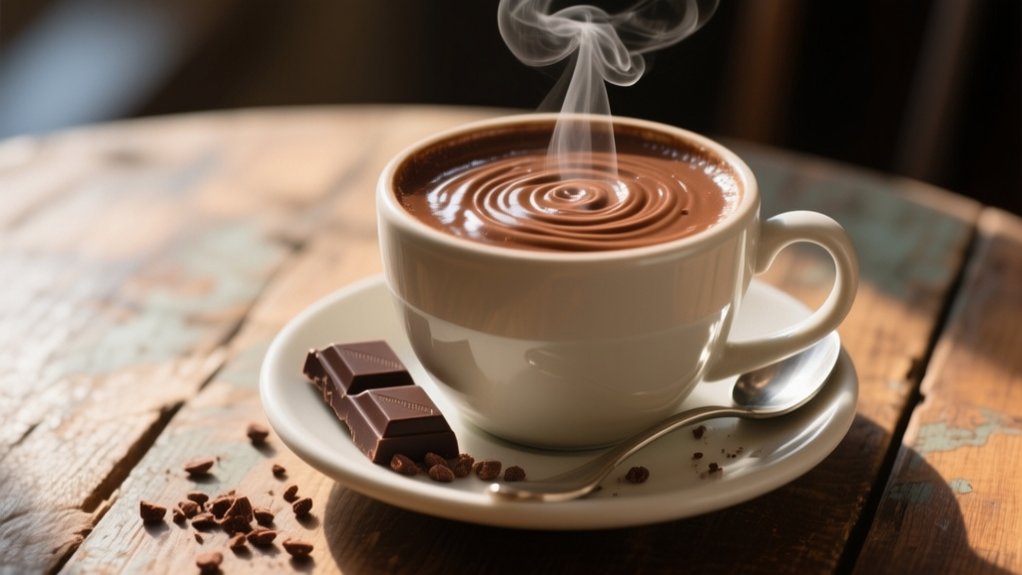
When you taste mocha, you get a rich blend where bold espresso’s bitterness meets chocolate’s smooth sweetness. It delivers deep cocoa notes layered with creamy, velvety textures.
Dark chocolate heightens complexity, while milk chocolate softens the edge with extra sweetness. The milk you choose adds creaminess or frothy indulgence.
Coffee beans contribute subtle fruity or earthy tones. This complex flavor unfolds in unique ways, inviting you to discover how variations make each mocha experience distinct.
What Is Mocha and How Does It Taste
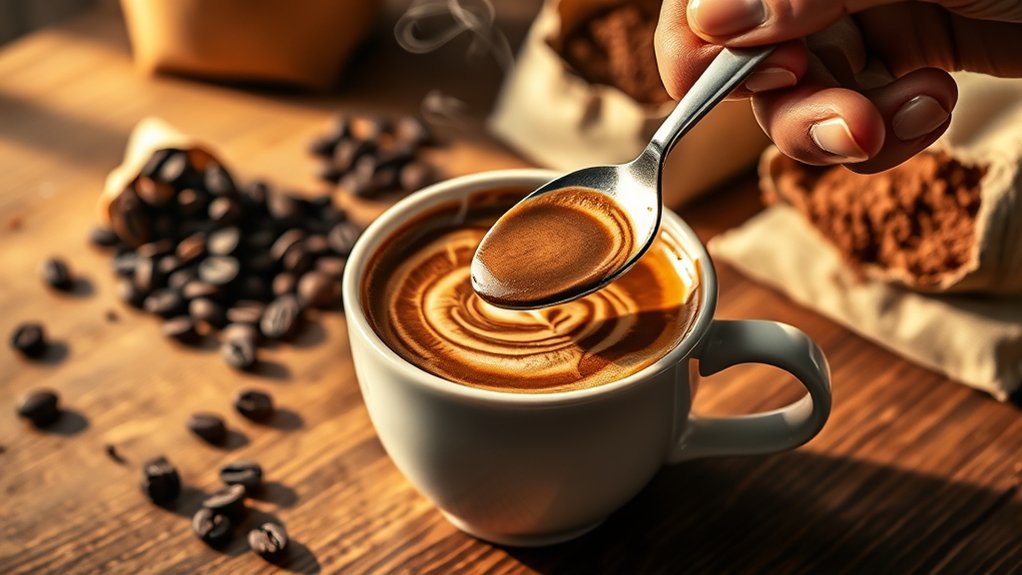
Although mocha is often thought of simply as a flavored coffee, it actually delivers a complex taste experience that marries the deep bitterness of espresso with the rich sweetness of chocolate.
When you sip mocha, you’ll notice how the espresso’s robust, slightly bitter notes perfectly balance the creamy chocolate flavor. It creates a harmonious blend that appeals to both coffee lovers and chocolate enthusiasts.
The bold espresso and creamy chocolate create a perfect harmony for coffee and chocolate lovers alike.
The type of chocolate used influences this flavor. Dark chocolate intensifies richness, while milk chocolate adds a smoother sweetness.
Often topped with whipped cream, mocha gains an extra layer of indulgence and creaminess that elevates the drink’s texture.
How Coffee, Chocolate, and Milk Shape Mocha Flavor
You’ll notice that coffee provides the bold foundation of mocha. Its regional notes add a subtle complexity that really makes each cup unique.
Then, chocolate comes into play and shapes the flavor profile—dark chocolate deepens the richness, while milk chocolate adds a touch of sweetness.
At the same time, milk smooths out the texture, balancing creaminess and enhancing the overall mouthfeel.
It all comes together to create that perfect mocha experience.
Coffee’s Role In Mocha
When you savor a mocha, the espresso’s bold, slightly bitter notes play an essential role in balancing the drink’s sweetness. The coffee component anchors the flavor profile, offering robust intensity that cuts through the chocolate’s rich creaminess and the milk’s smooth texture.
Depending on the coffee beans and roast level, the espresso can introduce brighter acidity or deeper, earthier tones, shaping how the mocha ultimately tastes.
Milk softens the coffee’s bitterness, making the drink more approachable while enhancing its velvety mouthfeel.
This interplay between coffee’s strength, chocolate’s sweetness, and milk’s creaminess creates a layered, harmonious experience.
Understanding coffee’s role helps you appreciate how espresso’s distinctive bitterness and complexity elevate mocha beyond a simple sweet treat.
Chocolate’s Flavor Contribution
The chocolate in mocha plays an essential role in shaping its flavor, adding rich sweetness that complements the espresso’s bold bitterness.
When you choose dark chocolate, you introduce a deeper, more intense richness that enhances mocha’s complex flavor profile.
Opting for milk chocolate, however, brings a creamier, sweeter character, softening the espresso’s edge and making the drink more approachable.
This interplay of chocolate and espresso creates a balanced harmony where sweetness and bitterness coexist without overpowering each other.
The chocolate’s sweetness works alongside the espresso’s earthy notes, enriching the overall experience.
As you savor a mocha, you’ll notice how chocolate’s richness shapes the drink’s essence, blending seamlessly with cream and espresso to deliver a layered, decadent flavor profile that delights both coffee and chocolate enthusiasts.
Milk’s Texture Impact
Milk’s texture plays an essential role in shaping the mocha’s overall flavor experience by influencing its creaminess and mouthfeel.
You’ll notice that milk’s texture impact begins with the type of milk you choose. Whole milk, with its higher fat content, creates a creamy texture that enhances the mocha’s richness.
When you use steamed milk, it produces a velvety smoothness that perfectly balances the bold coffee and the sweetness chocolate offers. This creamy texture not only softens the sharpness of espresso but also helps dissolve the chocolate, harmonizing the flavor profile.
Frothy steamed milk adds a luscious mouthfeel, making each sip indulgent by contrasting the mocha’s intense coffee notes with a smooth, rich finish.
How Dark and Milk Chocolate Affect Mocha Sweetness
Although both dark and milk chocolate contribute to a mocha’s flavor, they influence its sweetness in distinctly different ways. Dark chocolate adds a rich, intense depth with less sweetness, creating a more robust mocha flavor that highlights espresso’s natural bitterness.
In contrast, milk chocolate brings a creamy taste and elevates the sweetness level, balancing espresso’s sharpness and making the drink smoother and more approachable.
Milk chocolate adds creaminess and sweetness, softening espresso’s edge for a smoother, more inviting mocha.
When you combine dark and milk chocolate, you reveal a unique flavor profile that marries dark chocolate’s complexity with milk chocolate’s sweetness, resulting in a well-rounded mocha.
This blend not only adjusts sweetness but also affects mouthfeel. Dark chocolate adds complexity, while milk chocolate enhances smoothness, crafting a nuanced experience tailored to your taste preferences.
How Coffee Beans and Roast Change Mocha Flavor
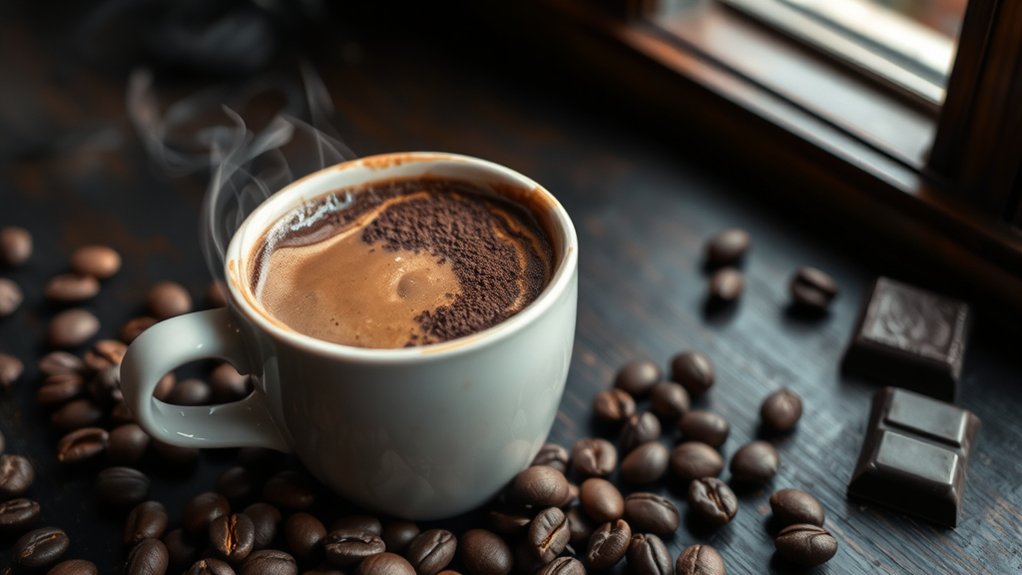
When you select coffee beans for your mocha, you’re shaping the drink’s entire flavor landscape. Different coffee beans bring unique earthy, fruity, or spicy notes that interplay with the chocolate flavor. Choosing Arabica beans offers a sweeter, more nuanced profile, while adding Robusta increases body and bitterness.
The roast level significantly influences flavor extraction. Dark roasts deepen mocha’s richness and amplify chocolate’s boldness, while lighter roasts highlight acidity and brightness. A medium roast balances sweetness and bitterness, harmonizing coffee and chocolate.
Brewing espresso concentrates these flavors, delivering a robust mocha base, whereas drip coffee yields a softer profile.
How Milk Choices Impact Mocha’s Creaminess and Texture
You’ll notice that milk fat content plays a big role in making a mocha rich and creamy. Higher-fat options help the chocolate blend more smoothly, giving you that luxurious texture.
Now, when you switch to non-dairy alternatives like almond or oat milk, the texture lightens up quite a bit. This change affects the mouthfeel and the overall experience of your drink.
Knowing these differences makes it easier to tailor your mocha’s creaminess exactly how you like it.
Milk Fat Content
Since the fat content in milk directly shapes a mocha’s creaminess and texture, your choice of milk plays a crucial role in crafting the perfect cup.
Milk fat content influences not only creaminess but also the mocha’s flavor profile.
Whole milk, with about 3.25% fat, delivers a richer mouthfeel and amplifies the chocolate notes, creating a more indulgent experience.
Using milk with less fat, like 2% or skim, results in a lighter texture and can dilute the mocha’s richness.
While non-dairy alternatives vary in fat content, selecting milk with at least 2% fat achieves a balanced combination of smoothness and flavor depth.
- Whole milk enhances creaminess and intensifies chocolate notes
- Lower-fat milk yields a lighter, less rich mocha
- Milk fat content directly affects mouthfeel and texture
- Balanced fat levels guarantee smoothness without overpowering flavor
Non-Dairy Alternatives
Although non-dairy alternatives can’t perfectly replicate the creaminess of whole milk, they offer unique textures and flavor nuances that can transform your mocha experience.
Oat milk stands out with its creamy consistency and subtle sweetness, enhancing the chocolate’s richness while maintaining a smooth mouthfeel.
Soy milk delivers a dense, creamy texture and boosts protein, though its distinct flavor might shift the overall flavor profile in unexpected ways.
Coconut milk adds a tropical sweetness and thick texture, but if overused, it can overpower both coffee and chocolate notes.
Almond and other plant-based milks tend to lighten the texture, introducing mild nutty undertones.
Keep in mind many plant-based milk options contain added sugars, influencing the mocha’s sweetness and balancing the chocolate’s bitterness.
Your choice of non-dairy milk ultimately shapes the mocha’s creaminess and flavor complexity.
How Mocha’s Flavor Stacks Up Against Latte and Macchiato
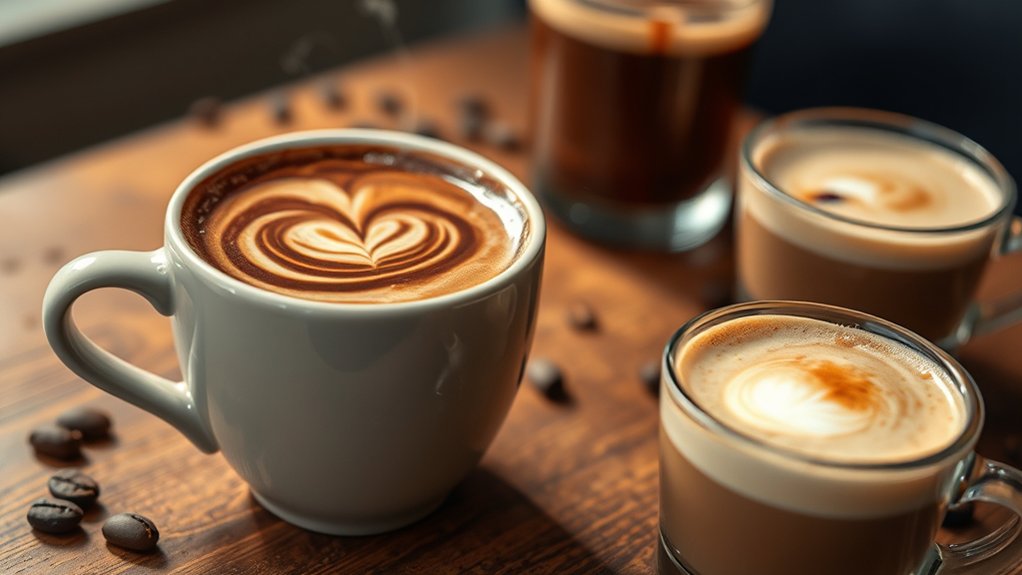
When comparing mocha to latte and macchiato, you’ll notice that mocha stands out with its rich blend of chocolate sweetness and robust espresso bitterness. This espresso-based drink combines chocolate syrup and steamed milk, creating a flavor complexity that’s both creamy and indulgent.
Unlike a latte, which highlights smooth coffee flavors with milk’s subtle sweetness, mocha offers a dessert-like taste.
Macchiato, on the other hand, focuses on bold espresso with just a splash of milk, delivering a sharper, more intense profile.
- Mocha drink balances chocolate syrup’s sweetness with espresso’s bitterness
- Latte emphasizes creamy texture and natural coffee flavors without added sugar
- Macchiato presents a minimalist espresso-forward experience with minimal milk
- Mocha’s layered flavors cater to those craving richness beyond classic coffee notes
Best Flavors to Mix With Your Mocha
You’ll find that adding syrups like caramel or hazelnut can really transform your mocha. They enrich its chocolate base with a buttery sweetness or a warm nuttiness.
Then, try experimenting with popular flavors like French vanilla or peppermint. These let you tailor the balance between creamy softness and invigorating brightness.
By mixing these syrups carefully, you’ll enhance your mocha’s complexity while keeping every sip smooth and satisfying.
Give it a go and see what combinations you like best!
Popular Flavor Combinations
Since mocha blends the boldness of coffee with rich chocolate, pairing it with complementary flavors can elevate your experience to new heights. You’ll find that each addition highlights different aspects of mocha’s complex profile.
For example, caramel adds a buttery sweetness that balances chocolate syrup’s intensity. Hazelnut swirl introduces a nutty warmth, enhancing mocha’s depth. French vanilla softens mocha’s boldness with creamy sweetness, making it more approachable.
Peppermint mocha offers a revitalizing, festive twist, invigorating the classic flavors. Coconut adds a tropical creaminess, subtly sweetening the blend without overpowering it.
Popular flavor combinations to try:
- Caramel and chocolate syrup for a rich, buttery finish
- Hazelnut swirl to emphasize nutty undertones
- French vanilla for creamy mellowing
- Peppermint mocha for a cool, festive lift
Enhancing Mocha With Syrups
Anyone looking to elevate their mocha experience can experiment with a variety of syrups that amplify its rich chocolate and coffee foundation.
To make your drink more indulgent, caramel syrup adds a luscious sweetness that perfectly balances mocha’s bittersweet notes.
If you prefer complexity, hazelnut syrup introduces a nutty depth that enhances the chocolate’s richness.
For a revitalizing seasonal twist, peppermint syrup pairs brilliantly with mocha’s chocolate, creating a bright, festive flavor.
Beyond these, flavored syrups like vanilla or toasted almond also soften coffee’s intensity or add subtle nuances, letting you customize your mocha precisely.
Why Do Some Mochas Taste Sweeter?
Why do some mochaccinos hit your taste buds with a noticeably sweeter kick? It often comes down to several key factors shaping the sweetness you experience.
The type of chocolate syrup plays a big role. Milk chocolate syrup naturally packs more sugar than dark chocolate.
Milk chocolate syrup adds a sweeter touch than dark chocolate, making your mochaccino more indulgently sweet.
Then, flavored syrups like vanilla or caramel add layers of sweet complexity.
The milk used also matters. Whole milk or sweetened non-dairy alternatives enrich the drink’s sweetness and creaminess.
Moreover, whipped cream topping enhances the sugary sensation, amplifying the drink’s indulgence.
Finally, your own preferences for sweetness often lead to extra chocolate syrup or toppings, especially in homemade versions, making each mocha uniquely sweet.
- Milk chocolate syrup increases sweetness compared to dark chocolate
- Flavored syrups boost sugary notes considerably
- Whole or sweetened milk enriches the flavor profile
- Whipped cream and personal customizations elevate sweetness
Simple Ways to Customize Your Mocha
Although mochas come with a classic flavor profile, you can easily tailor each cup to suit your taste by experimenting with various ingredients and techniques.
Start by trying different types of chocolate: dark for bitterness, milk for sweetness, or white for creaminess to affect richness.
Next, add flavored syrups like peppermint or caramel to introduce unique twists.
Consider using different milk options such as almond or oat milk to modify creaminess and accommodate dietary needs.
You can also adjust the coffee strength by varying espresso shots or opting for coffee concentrate to balance acidity.
Finally, top your mocha with whipped cream, chocolate shavings, or cocoa powder for extra indulgence.
Following this step-by-step guide lets you customize your mocha precisely to your preferences.
How to Make a Classic Mocha at Home
When you want to craft a classic mocha at home, start by brewing a strong shot of espresso to serve as the coffee’s robust foundation. This shot of espresso captures the rich, bold flavors of coffee essential for balance.
Next, mix chocolate syrup or cocoa with hot water to create a smooth chocolate base. Combine the espresso with this mixture for an even blend of coffee and chocolate.
Steam and froth milk to add creamy texture, then pour it over the espresso-chocolate blend. Finally, top off with whipped cream for indulgence.
- Brew a potent shot of espresso to highlight coffee’s depth
- Prepare chocolate syrup or cocoa for rich sweetness
- Steam milk to enhance texture and mouthfeel
- Add whipped cream for luxurious finish and aroma
Frequently Asked Questions
What Is the History Behind the Mocha Coffee Drink?
You’ll find mocha origins tied to Yemen’s port city, where coffee beans with chocolatey notes first gained fame. The historical significance lies in how these beans symbolized cultural exchange along trade routes.
Early recipes blended coffee and chocolate, evolving in famous cafes into the mocha drink you know.
Over time, mocha’s evolution embraced cultural variations worldwide, boosting its global influence and making it a beloved coffee staple across continents.
Are There Any Health Benefits to Drinking Mocha?
Drinking mocha health benefits isn’t just pie in the sky. Its antioxidant properties from coffee and chocolate help protect your cells, while caffeine effects boost your energy and focus.
The flavonoids support heart health and improve circulation. Plus, chocolate’s mood enhancement lifts your spirits.
For weight management, opt for sugar alternatives and non-dairy milk to keep calories low.
Enjoy mocha as a smart, tasty way to fuel both body and mind.
How Long Can You Store a Prepared Mocha?
You can store a prepared mocha for up to 2 days, but to preserve its flavor, use airtight containers as your best choice.
Keep in mind shelf life factors like milk freshness and avoid exposure to air.
For flavor preservation, gently reheat mocha safely on low heat or in short microwave bursts without boiling.
Ideal serving temperature enhances taste.
Watch for signs of spoilage such as sour smell or separation to guarantee quality.
What Equipment Is Best for Making Mocha at Home?
You’ll want an espresso machine or stovetop maker for rich coffee, paired with a steam wand or milk frother to create creamy, textured milk.
A quality coffee grinder guarantees fresh grounds, while chocolate syrup adds that essential sweet, cocoa flavor.
Measuring tools help you get precise ratios, making every mocha consistent.
Don’t forget cups in various sizes to suit your mood.
This setup lets you craft perfect mochas, tailored exactly how you like them.
Can Mocha Be Made With Non-Coffee Alternatives?
You can absolutely craft mocha magic without coffee by using non-coffee substitutes like roasted grains or herbal teas.
Experiment with flavor variations by blending rich chocolate types, like cocoa powder or syrup, with milk alternatives such as oat or almond milk.
Sweetener choices let you tailor sweetness, while different brewing methods, from steeping to simmering, shape your base.
For serving, top with whipped cream or cinnamon for texture and warmth, creating a creamy, chocolatey delight customized to your taste.
Conclusion
Now that you know mocha’s rich dance of coffee, chocolate, and milk, you can savor every sip like a symphony on your tongue. Whether you lean into dark chocolate’s bold notes or milk chocolate’s sweet embrace, your mocha’s flavor will sing uniquely.
Don’t hesitate to tweak ingredients; each choice shapes your perfect cup. With a little creativity, making mocha at home becomes a delicious adventure, turning simple ingredients into liquid gold.