

What Plants Like Coffee Grounds In Their Soil – Gardening Guide
You’ll find coffee grounds boost growth in acid-loving plants like blueberries, azaleas, and hydrangeas by slightly lowering soil pH and improving nutrient uptake. Nitrogen-hungry plants such as roses, kale, and tomatoes also thrive thanks to coffee grounds’ rich nitrogen content.
To use coffee grounds effectively, mix them lightly into soil or compost, avoiding thick layers to prevent acidity issues. Understanding these effects helps you optimize soil health and plant vigor, with more tips on application and care ahead.
Are Coffee Grounds Good for Plants?
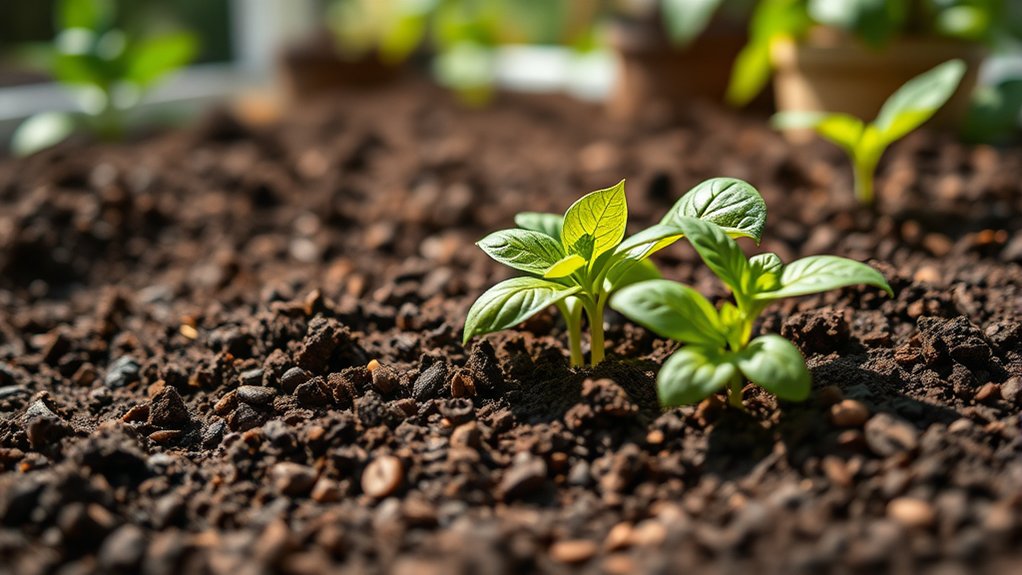
Although coffee grounds vary in acidity depending on their state, they generally benefit plants when used correctly. When you use spent coffee grounds from a coffee infusion, their pH ranges from neutral to slightly acidic. This suits acid-loving plants such as blueberries and azaleas.
The grounds improve soil structure by enhancing aeration, drainage, and moisture retention. However, fresh coffee grounds, like those from an un-brewed coffee plant, are more acidic and can harm plants sensitive to low pH.
Applying coffee grounds moderately guarantees you avoid over-acidifying the soil while promoting healthy plant growth.
What Nutrients Do Coffee Grounds Add to Soil?
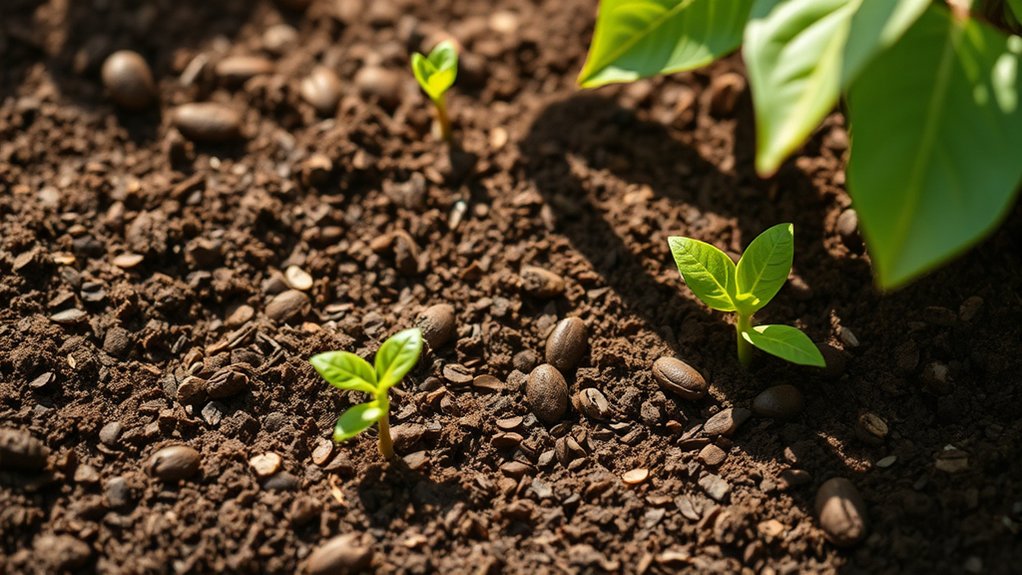
When you add coffee grounds to your soil, you introduce a rich source of organic matter that enhances soil structure and moisture retention. This improvement helps plant roots absorb nutrients better, which boosts overall soil enrichment.
Coffee grounds contain about 2% nitrogen, a key nutrient that supports strong foliage growth. They also provide potassium and phosphorus, which are important for healthy flowering and root development.
Besides those, coffee grounds offer micronutrients like calcium, magnesium, and other trace elements that promote overall plant health. As the grounds break down, they slowly release these nutrients, making the soil more fertile.
How Do Coffee Grounds Affect Soil Acidity?
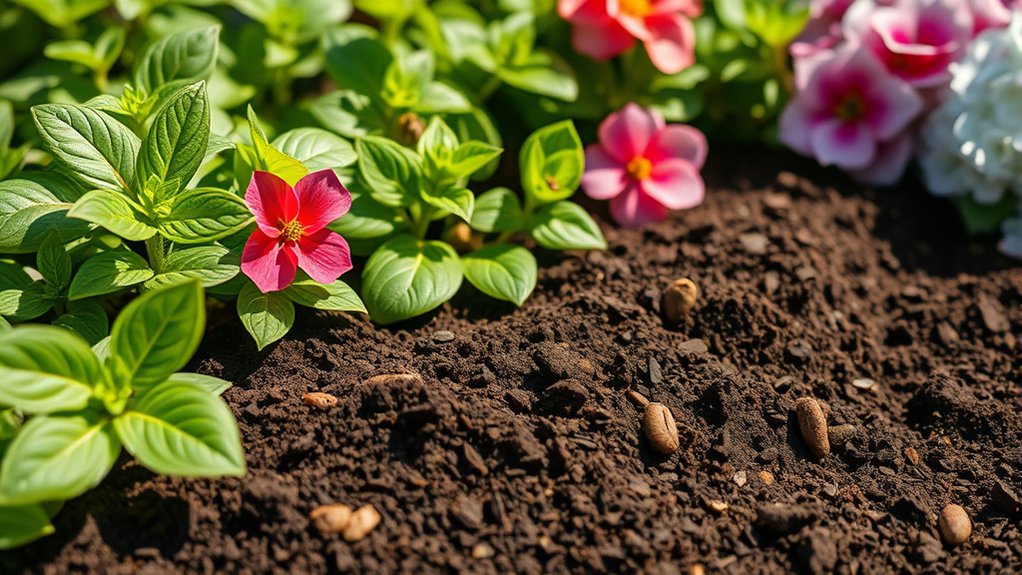
Because used coffee grounds have a near-neutral pH after brewing, they generally won’t cause significant changes to your soil’s acidity. The coffee acidity present in fresh, unbrewed grounds is higher, and if applied in excess, can lower soil pH noticeably.
However, once coffee grounds decompose, their acidity diminishes, often stabilizing around neutral or slightly acidic levels depending on your soil’s conditions.
When you compost coffee grounds properly, their impact on soil pH becomes minimal, making them safe for diverse plant types.
By understanding how coffee grounds interact with soil acidity, you can manage their application effectively without disrupting your soil’s natural pH balance.
This way, your garden stays healthy and productive.
Acid-Loving Plants That Thrive With Coffee Grounds
If you want to support plants that thrive in acidic soil, incorporating coffee grounds can be beneficial. Coffee grounds contribute to pH adjustment by slightly lowering soil pH when fresh, creating an environment favorable for acid-loving plants like blueberries, azaleas, and hydrangeas. This pH adjustment improves nutrient availability, promoting healthier growth.
Additionally, coffee grounds supply nitrogen and organic matter, further enhancing soil fertility. Using coffee grounds in moderation prevents over-acidification since decomposed grounds tend toward neutral pH.
Regular application around rhododendrons and camellias supports robust flowering and foliage development.
To optimize benefits, mix coffee grounds into the topsoil rather than applying them thickly on the surface. By managing coffee grounds properly, you can create ideal conditions for acid-preferring plants to thrive and flourish in your garden. It’s pretty straightforward once you get the hang of it!
Nitrogen-Hungry Plants That Benefit From Coffee Grounds
Although many plants benefit from coffee grounds, nitrogen-hungry species like roses, kale, and spinach gain particular advantages due to the grounds’ approximately 10% nitrogen content. This high nitrogen level supports vigorous leafy growth, which is essential for these plants.
When you add coffee grounds to your compost, you enhance nitrogen supplementation, creating a nutrient-rich medium that balances carbon-to-nitrogen ratios effectively.
Incorporating coffee grounds compost into the soil around nitrogen-demanding plants like tomatoes and peppers improves soil fertility and sustains healthy foliage development.
Using coffee grounds as mulch also supplies a gradual nitrogen release, promoting lush, robust growth.
Plants Sensitive to Coffee Grounds and Why
You need to be cautious when using coffee grounds around plants that are sensitive to caffeine, like tomatoes. That’s because caffeine can inhibit seed germination and stunt their growth.
Also, coffee grounds can change the soil’s pH, making it more acidic. This isn’t great for plants that prefer neutral or alkaline soil, such as succulents and some herbs.
Knowing these effects can help you avoid soil imbalances that lead to root stress and nutrient deficiencies.
Plants Sensitive To Caffeine
Because caffeine acts as a natural stimulant, it can inhibit seed germination and stunt growth in certain plants like tomatoes. You need to understand plant caffeine sensitivity when using coffee grounds in your garden, as residual caffeine can disrupt normal development.
Sensitive plants, including beans, peas, and legumes, may suffer from soil nutrient disruption. This especially impairs nitrogen fixation, which is critical for their growth.
Additionally, succulents and herbs that favor low-acid or alkaline soils often react negatively to caffeine presence. This results in reduced nutrient uptake and root damage.
When you add coffee grounds, the leftover caffeine can be toxic to seedlings and young plants. This can profoundly hinder their progress.
To protect sensitive species, avoid applying coffee grounds directly or in high concentrations where these plants grow.
Effects On Soil pH
Understanding how coffee grounds affect soil pH helps explain why certain plants respond differently to their use. Fresh coffee grounds are mildly acidic, with a pH around 6.0 to 6.5, and can temporarily lower soil pH when applied directly.
As they decompose, soil mineralization processes gradually neutralize acidity, resulting in coffee grounds that are generally neutral to slightly acidic. This pH stabilization benefits acid-loving plants like blueberries, azaleas, and hydrangeas, which thrive in low to moderate acidity.
However, overusing coffee grounds can increase soil acidity excessively, harming plants that prefer neutral or alkaline conditions.
Over time, the influence of coffee grounds diminishes, returning soil to near-neutral pH and supporting a wider variety of plants.
Understanding these dynamics helps you use coffee grounds effectively without damaging sensitive species.
How Coffee Grounds Help Repel Garden Pests
Although often overlooked, coffee grounds provide an effective natural barrier against common garden pests like slugs and snails. Their rough texture makes it physically challenging for these soft-bodied pests to cross, protecting your herb garden and vegetable beds.
Coffee grounds create a natural, rough barrier that deters slugs and snails from damaging your garden.
Plus, the residual caffeine in used coffee grounds acts as a natural repellent. It disrupts pests’ sensory systems and keeps them from locating your plants.
Compounds released from coffee grounds interfere with the chemical cues pests rely on, reducing infestations without needing synthetic chemicals. By applying coffee grounds around vulnerable plants, you create a protective perimeter that targets crawling pests and soft-bodied insects, enhancing plant health.
This method offers a sustainable, non-toxic alternative for pest control in all kinds of garden settings. It’s an easy and eco-friendly way to keep your plants safe.
Best Ways to Apply Coffee Grounds Around Plants
Repelling pests with coffee grounds is just one way to benefit your garden. How you apply these grounds can considerably affect their effectiveness and impact on plant health.
For acid-loving plants like blueberries, sprinkle a thin layer of coffee grounds directly onto the soil or gently mix them in. This helps guarantee a gradual nutrient release.
To maintain coffee grounds preservation and prevent nutrient loss, allow them to decompose for a few days before application. This reduces excess acidity and caffeine content.
Using coffee grounds as mulch suppresses weeds and retains moisture. But always mix them with straw or leaves to avoid compaction and improve aeration.
Additionally, think about coffee grounds aesthetics. Apply them evenly in thin layers to enhance your garden’s appearance while delivering essential nutrients efficiently.
How to Incorporate Coffee Grounds Into Compost
When you add coffee grounds to your compost, try to keep them around 20% of the total volume. This helps maintain the right nitrogen-to-carbon balance. It’s a good idea to mix the grounds thoroughly with carbon-rich materials, like dried leaves.
Also, make sure to turn the pile regularly. This boosts microbial activity and helps prevent mold from forming.
If you can, let the coffee grounds sit for a few days before adding them to the compost. Doing this reduces the caffeine content and speeds up the decomposition process.
Balancing Nitrogen And Carbon
Because coffee grounds are rich in nitrogen, containing about 10% nitrogen-rich proteins that stabilize near 11% over time, you need to balance them carefully with carbon-rich materials in your compost.
Achieving the right coffee balance means mixing one part coffee grounds with roughly three parts brown, carbon-rich materials like dry leaves, straw, or shredded paper.
This organic layering prevents clumping and promotes airflow, which is essential for microbial activity and efficient decomposition.
Maintaining a nitrogen-to-carbon ratio near 1:25-30 ensures microbes break down the coffee grounds without causing compacted, cakey layers.
By thoroughly blending coffee grounds with these browns, you optimize the compost environment, speeding nutrient cycling and improving soil health.
Proper coffee equilibrium through organic layering is key to integrating coffee grounds effectively into your compost system.
Composting Coffee Grounds Properly
Although coffee grounds are a valuable nitrogen source, you should mix them with carbon-rich materials like dry leaves or straw at a ratio of about 1 part coffee grounds to 3 parts browns to maintain proper nitrogen-to-carbon balance. Let your used coffee grounds sit for at least 3 days before adding them to your pile to reduce caffeine and boost microbial activity. Distribute grounds evenly to avoid compaction and maintain aeration.
Keep compost moist but not soggy, as coffee grounds retain water and speed decomposition. Proper coffee grounds storage preserves their coffee grounds aesthetics and compost quality.
| Benefit | Tip | Emotion |
|---|---|---|
| Enhanced nutrient | Even distribution | Satisfaction |
| Balanced compost | Mix with browns | Confidence |
| Moisture control | Moderate watering | Peace of mind |
Avoiding Composting Pitfalls
To successfully incorporate coffee grounds into your compost, you need to carefully manage how much and where you add them to avoid common problems. Coffee grounds can become toxic if they make up more than 20% of your compost. This happens because too many grounds cause excess acidity and nitrogen, which slows down the helpful microbes.
To keep things balanced, stick to a 3:1 ratio of carbon-rich brown materials like leaves or straw to coffee grounds. This helps everything break down nicely. It’s also a good idea to layer your compost by mixing coffee grounds evenly throughout the pile. This promotes airflow and stops the grounds from clumping or getting compacted.
Try not to add fresh, unbrewed coffee grounds in big amounts. They might create a water-repellent layer that blocks air and water from moving through your compost. Also, make sure the grounds are broken up or already starting to decompose. This prevents mold growth and keeps your compost healthy and active.
Using Coffee Grounds as Mulch Safely
When you use coffee grounds as mulch, applying them in a thin, even layer is essential to prevent compaction and assure proper water and air flow. Thick layers of coffee grounds can create dense mats that restrict moisture penetration and oxygen exchange, stressing plant roots.
To avoid that, mix coffee grounds with other mulch materials like straw or leaves. These help improve aeration and moisture retention.
Spreading grounds evenly around plants also helps minimize issues like coffee grounds pests and coffee grounds weeds, which can thrive in improperly applied mulch.
Try not to pile grounds directly on soil in large amounts. Instead, use decomposed grounds when possible—they’re less prone to compacting and gradually enhance soil health.
This careful approach ensures you safely harness coffee grounds’ benefits without harming your garden.
How Coffee Grounds Support Worms and Soil Microorganisms
You’ll find that coffee grounds are a great nitrogen-rich food source that really boosts worm nutrition and activity.
Plus, this organic material helps stimulate beneficial soil microorganisms, increasing both their population and how well they function.
When you combine these effects, it all adds up to better nutrient cycling and improved soil fertility, which is essential for healthy plant growth.
Worm Nutrition Benefits
Although often discarded, coffee grounds offer substantial nutritional benefits for worms and the microorganisms essential to soil health. When you add coffee grounds to your worm habitat, you provide a high-nitrogen food source that enhances worm activity and the quality of their castings.
This leads to improved soil aeration as worms burrow more actively, creating channels that allow air and water to penetrate deeper.
Coffee grounds also enrich the organic matter in soil, supporting microbial populations that contribute to nutrient cycling.
Key benefits include:
- Enhanced worm nutrition, boosting castings with higher nutrient content
- Increased worm burrowing, improving soil aeration and structure
- Sustained microbial populations that promote a healthy soil ecosystem
Incorporating coffee grounds supports a vibrant, nutrient-rich worm habitat. It’s a simple way to keep your worms happy and your soil healthy.
Microorganism Activity Boost
How exactly do coffee grounds enhance the activity of soil microorganisms and worms? Coffee grounds supply organic matter that stimulates beneficial bacteria and fungi, which are essential for a thriving soil ecosystem. As they break down, coffee grounds release nutrients that fuel microbial growth and reproduction, increasing microbial diversity.
This richer microbial community speeds up the breakdown of organic materials, which improves soil fertility. Worms, especially those involved in coffee composting, are drawn to coffee grounds because of their high nitrogen content. This provides a nutritious food source that supports their activity and reproduction.
Common Mistakes When Using Coffee Grounds
When using coffee grounds in your garden, it’s really important to avoid common mistakes that can affect your plants’ health. Applying large amounts of fresh coffee grounds without properly composting them can cause soil compaction. This reduces soil aeration and water infiltration, which hurts root development and microbial activity.
Avoid using large amounts of fresh coffee grounds directly to prevent soil compaction and poor root growth.
Also, using too many un-composted grounds can make the soil more acidic. That messes with how plants get their nutrients, which is a problem for most plants.
To keep things on track, make sure you mix coffee grounds with other organic matter. This helps them break down better and stops mold from growing.
Try not to put thick layers of grounds directly on the soil because that can block air and water from getting through.
And don’t forget to check your soil’s pH regularly, especially if you have plants that are sensitive to acid levels. This way, you can avoid making the soil too acidic.
Frequently Asked Questions
Can Coffee Grounds Affect Seed Germination Rates?
Yes, coffee grounds can affect seed germination rates by influencing seed dormancy and adjusting soil pH. You should compost them first to avoid inhibiting germination or creating barriers that reduce water absorption for seedlings.
Composting helps break down the grounds into a more plant-friendly form. If you use fresh coffee grounds directly, they might be too acidic or compact, which isn’t great for young seeds. So, giving them time to decompose can really make a difference.
Do Coffee Grounds Influence Indoor Plant Growth?
Yes, coffee grounds influence indoor plant growth by slightly increasing soil acidity and providing slow-release nitrogen, which helps boost plant nutrition. Using them in moderation can improve root health.
But be careful not to use too much. Overapplication might cause moisture problems and lead to mold growth. So, a little goes a long way when it comes to coffee grounds in your indoor plants.
How Long Do Coffee Grounds Take to Decompose in Soil?
Think of coffee grounds as slow-burning fuel; their decomposition speed typically takes 3 to 6 months.
You’ll boost soil enrichment faster in warm, moist conditions, especially if grounds are finely shredded and properly aerated.
It’s all about giving those grounds the right environment to break down efficiently. Just a little care goes a long way!
Can Coffee Grounds Be Used in Hydroponic Gardening?
You shouldn’t use coffee grounds in hydroponic gardening because they can cause clogging and microbial issues.
Instead, try coffee composting for soil applications. Using grounds in soil can be really beneficial.
But in hydroponics, coffee grounds mess with nutrient delivery and water flow, so it’s best to avoid them.
Are Used Coffee Filters Safe to Compost With Grounds?
You can compost used coffee filters safely, especially unbleached ones, as they biodegrade without harmful chemicals. For ideal coffee filter safety, tear them before adding; this speeds decomposition during composting filters with grounds.
It’s pretty simple to do, and it helps your compost break down faster. Just make sure you’re not using any bleached filters with dyes or chemicals. Those might not be the best for your garden in the long run.
Conclusion
Think of coffee grounds as a nutrient-rich elixir, quietly transforming your garden’s soil like a skilled alchemist refining raw elements into gold. By understanding their role in adjusting acidity and enriching nitrogen, you can tailor their use to plants that crave these conditions.
When added thoughtfully, whether in compost or mulch, you’ll nurture a thriving ecosystem beneath the surface. Worms and microbes flourish, turning your garden into a living laboratory of growth and renewal.