How Can I Make Coffee Without A Coffee Maker – Easy Brewing Methods
You can easily make coffee without a coffee maker by using simple methods like pouring hot water over ground coffee in a filter or strainer, steeping coffee in a saucepan, or trying the cowboy coffee method by boiling grounds directly.
Control water temperature to 195°F to 205°F for the best taste, choose the right grind size, and steep for 3 to 4 minutes to avoid bitterness. With these basics, you’ll soon master flavorful coffee even without fancy equipment.
Discover more techniques and tips to perfect your brew.
What You Need to Make Coffee Without a Coffee Maker
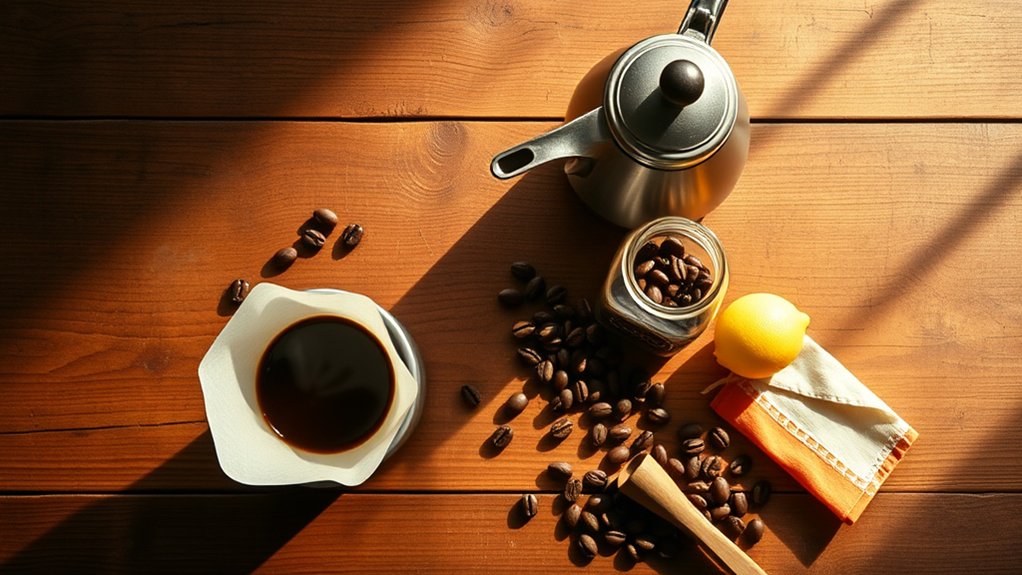
To make coffee without a coffee maker, you’ll need a few key ingredients and tools to guarantee a rich, flavorful brew. Start with fresh coffee, ideally ground medium to coarse, to preserve its aroma and depth during brewing.
You’ll also need hot water just off the boil to extract the best flavors. For equipment, grab a saucepan or kettle to heat the water, a mug for your coffee, and a filtering method such as a paper filter or fine mesh strainer to separate grounds from the liquid.
Use a spoon to measure 1–2 tablespoons of coffee per 6 ounces of water and stir gently.
Choosing quality beans and filtered water will elevate your brew coffee experience, ensuring each cup bursts with rich, nuanced flavors.
Control Water Temperature When Making Coffee Without a Coffee Maker
Although it might seem simple, controlling the water temperature is key to revealing your coffee’s full flavor potential when brewing without a coffee maker. The ideal range is between 195°F and 205°F, ensuring excellent extraction without bitterness.
Boil water, then let it rest for about 30 seconds to reach this sweet spot. Using a kettle with a handle helps you pour steadily, maintaining temperature control during brewing coffee. A thermometer can assist but isn’t necessary if you time the cooling correctly.
| Water State | Temperature (°F) | Impact on Coffee |
|---|---|---|
| Boiling | 212 | Too hot, scorches grounds |
| Ideal Brewing | 195 – 205 | Extracts balanced flavors |
| Slightly Cooled | ~200 | Perfect for brewing |
| Too Cool | < 195 | Under-extracts, weak taste |
Brew Classic Pour Over Coffee Without a Dripper
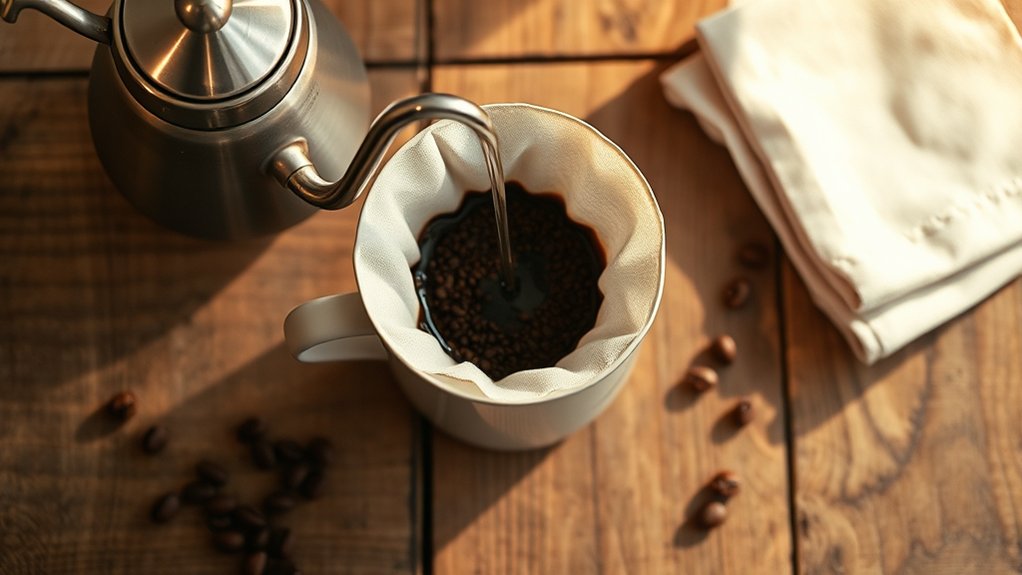
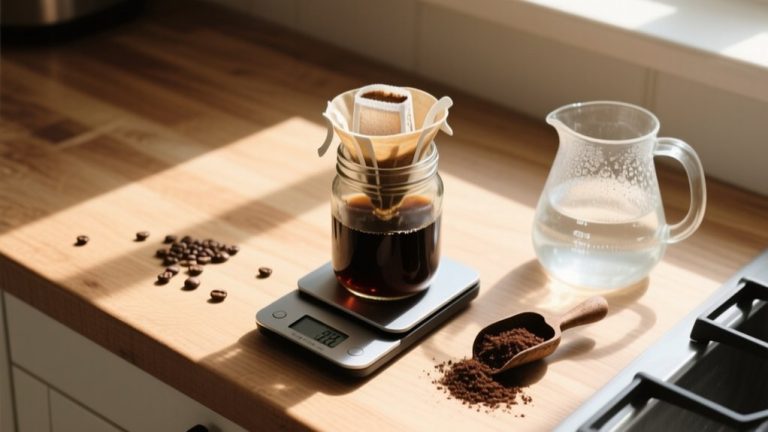
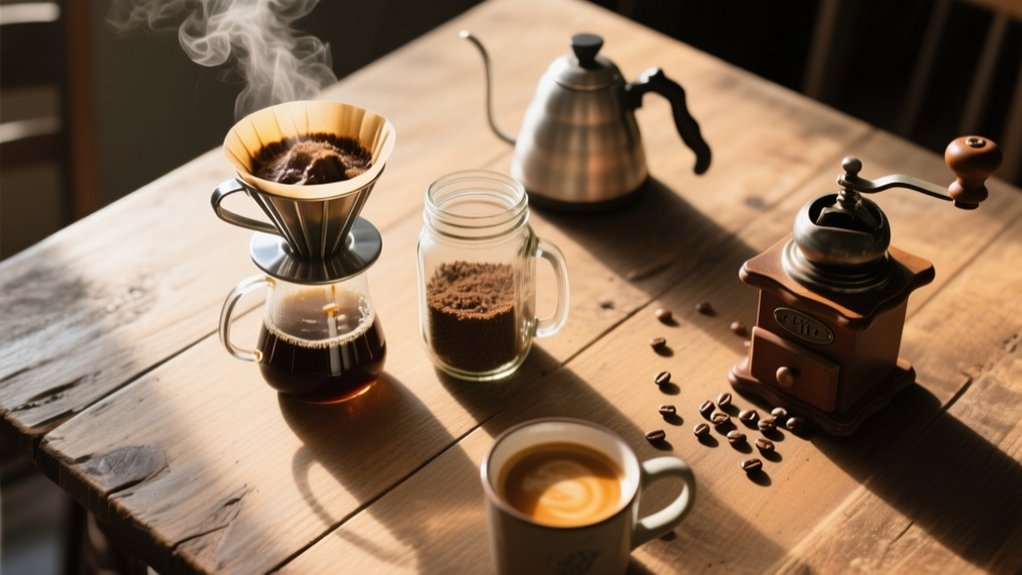
To brew classic pour-over coffee without a dripper, you’ll want to grab a funnel or a fine mesh strainer, along with a paper filter and some freshly ground coffee measured just right.
First, rinse the filter and warm up your mug—this helps everything taste better.
Next, place the filter inside the funnel or strainer, add the coffee grounds, and slowly pour hot water over them in a gentle, circular motion.
This even pouring helps get a balanced extraction. Just keep an eye on things like your grind size and water temperature, and you’ll be rewarded with a bright, clean cup every time. Easy, right?
Essential Equipment Needed
When you don’t have a dripper on hand, you can still brew a classic pour-over coffee using a few simple tools. To extract the best flavors from your coffee grounds, you’ll need a funnel or fine mesh strainer paired with a paper coffee filter.
Freshly ground coffee (medium-fine) and hot water heated between 195–205°F are essential to achieve the ideal extraction. Finally, a mug or carafe will catch your brewed coffee.
| Equipment | Purpose | Notes |
|---|---|---|
| Funnel/Strainer | Holds the filter & grounds | Fine mesh preferred |
| Paper Coffee Filter | Filters coffee grounds | Must fit securely in funnel |
| Mug or Carafe | Collects brewed coffee | Heat-resistant recommended |
With these tools, you’re ready for a clean, bright pour-over without a dripper.
Step-By-Step Brewing
Start by placing a paper coffee filter inside your funnel or fine mesh strainer, setting it securely over your mug. Add about 2 tablespoons of freshly ground coffee, ideally medium-fine, to the filter.
Heat water to between 195°F and 205°F to avoid scorching the coffee during brewing. Slowly pour hot water in a circular motion over the grounds, allowing them to bloom for 30 seconds. This releases essential flavors.
Continue pouring water evenly until you’ve added the desired amount, letting the coffee drip through completely. Once the dripping stops, carefully remove the filter.
This method lets you brew classic pour-over coffee without a dripper, delivering a bright, clean cup that highlights the nuanced flavors of your ground coffee.
Tips For Best Flavor
Mastering the basic pour-over technique sets a solid foundation, but small adjustments can elevate your coffee’s flavor considerably.
When making coffee without a dripper, use a funnel or fine mesh strainer to hold your paper filter securely over the mug.
Measure about 2 tablespoons of medium-fine grounds per 6 ounces of water for a balanced taste.
Pour hot water between 195–205°F slowly and in a circular motion to let the coffee bloom and release its aromatics fully.
Allow the coffee to drip through completely before removing the filter to avoid bitterness and guarantee clarity.
To enjoy the best ways to brew, drink your coffee immediately, especially lighter roasts, preserving its vibrant flavors and aromas for an exceptional cup every time.
Brew Coffee in a Saucepan on the Stovetop
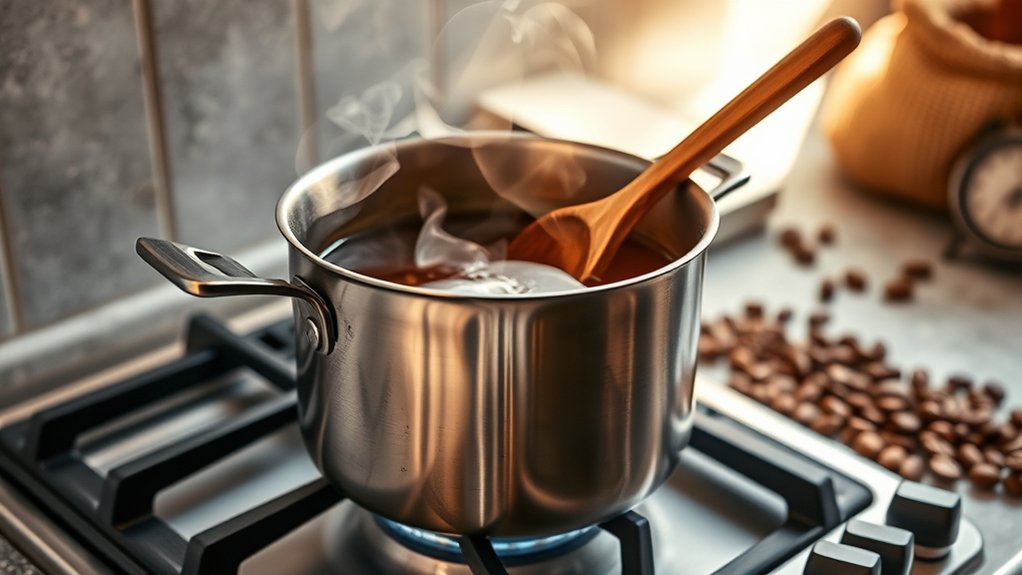
Although you don’t have a coffee maker, you can still brew a flavorful cup using just a saucepan and your stovetop. To make coffee without specialized equipment, combine 1–2 tablespoons of freshly ground coffee with 6 ounces of water in the saucepan.
Heat the mixture over medium-high until it reaches a boil, then promptly remove it from the heat to prevent bitterness. Let the coffee steep for 3–4 minutes, allowing the flavors to fully develop.
When it’s ready, carefully pour the brew into your mug, using a spoon to hold back the grounds for a clean, smooth cup.
This straightforward method delivers a great cup of coffee, ideal for times when you lack traditional brewing tools or are camping.
Make Cowboy Coffee the Easy Way
If you want to make Cowboy Coffee the easy way, start by getting your water-to-coffee ratio just right—about one tablespoon of grounds for every 5 ounces of water.
Next, bring the mixture to a boil, but be sure to watch it carefully. Give it a quick stir, then let it steep so the grounds can settle at the bottom.
Just follow these simple steps and a few key tips, and you’ll have a smooth, strong cup of coffee without needing any fancy coffee maker.
It’s really that easy!
Cowboy Coffee Basics
When you want a straightforward, no-fuss method to brew coffee outdoors, Cowboy Coffee offers a robust and flavorful solution with minimal gear. Start by boiling 13 ounces of water in a pot, then add one tablespoon of coarse coffee grounds per 5 ounces of water. Remove from heat and let it steep for 4 to 5 minutes. Pour carefully to avoid grounds in your cup.
| Step | Quantity | Tip |
|---|---|---|
| Water | 13 ounces | Account for evaporation |
| Coffee Grounds | 1 tbsp per 5 oz | Use coarse grind |
| Steeping Time | 4-5 minutes | Remove pot from heat |
This method guarantees rich, bold cowboy coffee with minimal equipment and effort.
Brewing Steps Simplified
Three simple steps will have you brewing Cowboy Coffee like a pro in no time.
First, boil 13 ounces of water to compensate for evaporation, then stir in one tablespoon of coarse coffee grounds per 5 ounces of water.
Using coarse grounds is essential because they settle quickly, making your coffee easier to pour without sludge.
Next, remove the pot from heat and let it brew for three minutes, allowing the flavors to develop fully.
Finally, carefully pour the coffee into your mug, using a spoon to hold back the grounds.
This straightforward method is easy to make and perfect when you don’t have access to coffee makers.
Cowboy Coffee delivers a robust, rich brew ideal for outdoor settings, combining simplicity with bold flavor.
Tips For Best Results
Anyone enthusiastic to master Cowboy Coffee will find that small adjustments in technique greatly enhance the final brew.
When making coffee without a coffee maker, start by measuring 13 ounces of cold water to compensate for evaporation, and use about one tablespoon of freshly ground coffee for every 5 ounces of water.
Boil the mixture over medium-high heat, stirring after 45 seconds to guarantee even extraction.
Remove the pot after two minutes, then let it brew undisturbed for three minutes to develop full flavor.
Before pouring, allow the grounds to settle to reduce sludge.
For the smoothest taste, use a ladle or strainer to separate the coffee from the grounds.
These precise steps ensure a rich, well-balanced cowboy coffee every time.
Make Coffee With a DIY Coffee Bag
Although you don’t have a coffee maker, you can still brew a great cup by crafting a DIY coffee bag. Start by placing about 2 tablespoons of ground coffee into a coffee filter or clean cheesecloth. Securely tie the filter or cloth with string or a twist tie, creating a pouch similar to a tea bag.
Place this DIY coffee bag into your mug, then pour hot water, ideally between 195°F and 205°F, over it. Let it steep for 3 to 5 minutes, adjusting the time for your preferred strength.
Once steeped, remove the pouch and enjoy a low-mess, flavorful cup. This method provides great coffee without equipment and is perfect for travel or whenever you lack traditional brewing tools.
Make Cold Brew Coffee Without Special Equipment
To make cold brew coffee without any special equipment, just start by mixing coarsely ground coffee with cold water. A good rule of thumb is to use a 1:4 ratio—so for every part coffee, add four parts water. You can do this right in a jar or pitcher.
Then, pop it in the fridge and let it steep slowly for about 12 to 24 hours. This slow brewing process helps pull out those rich, smooth flavors we all love.
After it’s done steeping, strain out the coffee grounds carefully. What you’ll have is a concentrated cold brew that you can dilute to whatever strength you prefer. Easy, right?
Cold Brew Basics
Cold brew coffee offers a smooth, rich flavor and can be made easily without any special equipment.
Making cold brew coffee without a coffee maker is straightforward and rewarding. Here’s how to get started:
- Combine coarsely ground coffee with cold water at a 1:4 ratio in a jar or pitcher and stir well.
- Steep the mixture in the refrigerator for 12 to 24 hours, adjusting steep time to your taste.
- Strain the concentrate through a fine mesh sieve, cheesecloth, or clean towel to remove grounds.
- Dilute the cold brew concentrate with water or milk, commonly at a 1:1 ratio, before serving.
Store your cold brew in the fridge for up to two weeks. It’s perfect for quick, invigorating coffee anytime.
Simple Steeping Process
When you want a smooth, flavorful brew without any fancy gear, simply combine about one cup of coarsely ground coffee with four cups of cold water in a large jar or container.
Stir well to guarantee all grounds are saturated.
This simple steeping process lets you make coffee without a coffee maker, relying on time rather than heat to extract rich flavors.
Place the jar in your refrigerator and let it steep for 12 to 24 hours.
After steeping, strain the mixture through a fine mesh sieve or clean cloth to separate the grounds.
Dilute the concentrated brew with water or milk to taste, then serve over ice.
Store leftovers refrigerated for up to two weeks to maintain freshness and flavor.
Optimal Coffee Ratios
One reliable ratio to start with is one cup of coarsely ground coffee to four cups of cold water. This creates a smooth, balanced cold brew concentrate.
Mastering ideal coffee ratios guarantees you drink coffee that’s rich without bitterness or excessive acidity. Follow these steps for the best results:
- Steep the grounds in cold water for 12 to 24 hours in the refrigerator to extract full flavor.
- Strain the mixture through a fine mesh sieve or coffee filter to remove grounds.
- Dilute the concentrate with equal parts water or milk to suit your taste.
- Store any leftover cold brew in the fridge for up to two weeks to enjoy anytime.
Using these precise ratios helps you craft perfect cold brew without special equipment.
When to Choose a Brewing Method Without a Coffee Maker
Although having a coffee maker is convenient, you’ll find that brewing coffee without one becomes essential in situations like camping or traveling, where carrying bulky equipment isn’t practical.
When you’re limited to basic supplies, choose methods like cowboy coffee, which only requires a pot and coffee grounds for a robust flavor.
If you have filters but no machine, the bag method offers a cleaner taste with less bitterness.
For a richer, distinctive experience, Turkish coffee is perfect with minimal equipment.
Regardless of the method, pay close attention to the amount of coffee you use and guarantee you’re working with freshly ground beans and water heated to 195–205°F.
These factors maximize flavor, making brewing coffee without a coffee maker both practical and enjoyable.
Why Grind Size Matters When Brewing Without a Coffee Maker
Since grind size directly controls how quickly flavors are extracted from coffee grounds, choosing the right grind is essential when brewing without a coffee maker. Getting this right guarantees your coffee tastes balanced and rich.
Here’s why grind size matters:
- Finer grinds extract flavors faster, ideal for quick brewing but can risk over-extraction.
- Coarser grinds extract more slowly, perfect for immersion methods like the French Press to avoid sludge.
- Using the correct grind size prevents under-extraction (sourness) or over-extraction (bitterness).
- Experimenting with grind size helps you tailor the flavor profile to your brewing method and preference.
Mastering grind size is key when brewing without a coffee maker, especially with a French Press, as it impacts both flavor and texture.
How to Stop Your Coffee From Tasting Bitter
If your coffee tastes bitter, you’re likely dealing with over-extraction or improper brewing conditions. Start by using freshly roasted coffee beans to preserve your coffee bean’s delicate aromatic oils, which stale beans lack.
Adjust your grind size to a coarser setting as a general guideline, especially for French press or cowboy coffee, to prevent excessive extraction of bitter compounds.
Brew your coffee at an ideal temperature between 195 and 205°F; hotter water can scorch the grounds and add bitterness.
Steep your coffee for about 3-4 minutes. Over-steeping extracts unwanted flavors.
Finally, stick to the right coffee-to-water ratio, generally one to two tablespoons per six ounces of water, to balance flavor and avoid bitterness.
Following these steps helps you enjoy smoother, more balanced coffee without bitterness.
How to Clean Your Coffee Equipment for Better Flavor
Keeping your coffee equipment clean plays an essential role in preserving the true flavor of your brew. Residual oils and mineral buildup can taint your coffee’s taste, so it’s vital to clean your coffee equipment regularly.
Here’s how to maintain it effectively:
- Clean your coffee equipment, including grinders and brewers, at least once a month to remove oils and residues.
- Descale machines and kettles with equal parts water and white vinegar to eliminate mineral deposits.
- For French presses, disassemble and wash all parts with warm soapy water after each use.
- Rinse paper filters before use to remove any papery taste and guarantee a cleaner extraction.
How to Store Fresh Coffee for the Best Taste
Although freshly roasted coffee offers the best flavor right after roasting, how you store it plays a crucial role in preserving that freshness. To keep coffee vibrant and aromatic, store whole beans in an airtight, dark glass or opaque container at room temperature.
Store freshly roasted coffee beans airtight in dark containers at room temperature to preserve their vibrant flavor.
Avoid light, moisture, and heat because they accelerate staling and degrade taste.
If you buy from your local coffee shop, ask for whole beans and grind them just before brewing to maximize flavor extraction.
For longer storage, seal beans tightly and freeze them to prevent moisture absorption and flavor loss.
Frequently Asked Questions
Can I Use Flavored Coffee Grounds Without Altering the Taste?
You can use flavored blends without drastically altering the taste, but it takes careful brewing techniques. Since flavored blends have added oils or extracts, adjust your coffee-to-water ratio to avoid overwhelming sweetness or artificial notes.
Methods like pour-over or French press give you control over steeping time and temperature, ensuring a balanced extraction.
Experiment gently, and always check your grounds’ freshness to keep the flavor true and enjoyable.
How Long Does Brewed Coffee Stay Fresh Without Refrigeration?
Brewed coffee stays fresh for about 4 to 6 hours at room temperature, but its flavor starts to degrade after the first hour due to freshness factors like oxidation.
To maintain quality, avoid leaving it exposed to air and heat.
Using an insulated thermos is a smart storage tip. It keeps your coffee hotter and fresher longer.
For the best taste, brew smaller amounts to enjoy quickly rather than storing large batches.
Is It Better to Use Bottled or Tap Water for Brewing?
You’ll get better coffee using bottled water if you want superior water quality, as it often lacks chlorine and impurities that tap water might have.
This cleaner profile lets the brewing temperature extract flavors more effectively, enhancing your cup’s taste.
However, if you prefer an eco-friendly choice, filtered tap water works well too.
Just make sure your water’s mineral content is balanced to optimize extraction and flavor during brewing.
Can I Reuse Coffee Grounds for a Second Brew?
Think of coffee extraction like squeezing a sponge; you get most of the flavor the first time, but a gentle press can still release some taste.
You can reuse coffee grounds for a second brew, but expect a milder cup.
Adjust your brewing techniques by increasing the coffee-to-water ratio and brewing quickly, ideally within 30 minutes, to capture what’s left.
Methods like French press work best to extract those lingering flavors efficiently.
What Is the Ideal Coffee-To-Water Ratio for Strength Preference?
You want to adjust the coffee-to-water ratio based on your coffee strength preference. For a bolder flavor, use 2 tablespoons of coffee per 6 ounces of water.
If you prefer a milder taste, stick with 1 tablespoon.
Specialty brewing techniques often recommend a 1:15 ratio, meaning 1 gram of coffee per 15 grams of water, for ideal extraction.
Conclusion
You might think brewing coffee without a machine is a hassle, but as you master each method, from pour over to cowboy coffee, you’ll realize how control over water temperature and grind size can transform your cup.
Coincidentally, the simpler your tools, the richer your understanding of coffee’s nuances becomes. So, embrace these easy techniques. Not only will you enjoy fresh, flavorful coffee, but you’ll also deepen your connection to the craft with every brew.