How Long To Grind Coffee Beans – Timing Tips For Best Results
You’ll want to tailor your grind time to your brewing method for the best flavor. For instance, aim for 10-15 seconds with a fine espresso grind, 20-30 seconds for pour-over’s medium-fine, and up to 60 seconds for cold brew’s extra coarse.
Burr grinders take longer but offer consistency, while blade grinders are faster but less precise. Use a timer to adjust gradually, factoring in bean roast and storage, to avoid bitter or weak coffee.
Keep your grinder clean to maintain timing accuracy, and explore these tips to perfect your brew. It’s all about finding that sweet spot that works just for you.
Why Grind Time Matters for Coffee Flavor and Extraction
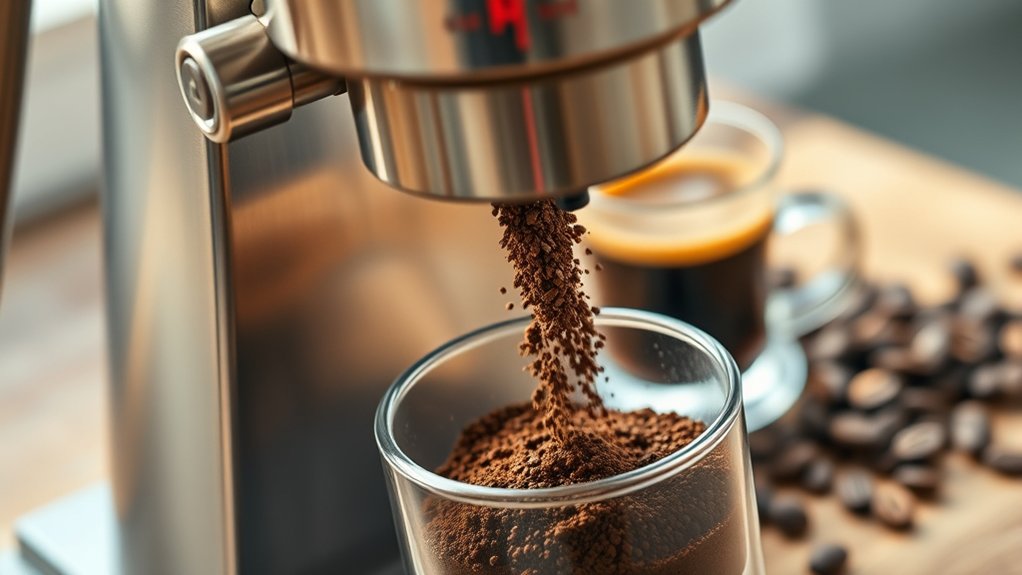
Although it might seem like a small detail, how long you grind your coffee beans directly affects the flavor and extraction of your brew. When you grind too briefly, your coffee may retain large, uneven particles that result in under-extraction, leaving your cup sour and weak.
Conversely, grinding too long produces overly fine grounds, risking over-extraction and bitterness. Achieving the right grind consistency is essential because it controls how water interacts with coffee particles, directly influencing extraction balance.
Plus, proper grind time helps preserve the coffee aroma, ensuring your brew smells as rich as it tastes. By paying close attention to grind duration, you optimize both flavor clarity and aroma intensity.
This way, you transform your daily ritual into a consistently satisfying experience.
Blade vs. Burr Grinders: How Grind Time Differs
Understanding how grind time impacts flavor naturally leads to thinking about the type of grinder you use since each handles grinding differently. Blade grinders chop beans unevenly and quickly, so you’ll only need to grind for a few seconds. But this fast method can generate heat, which might mute those nuanced notes tied to where your coffee beans come from.
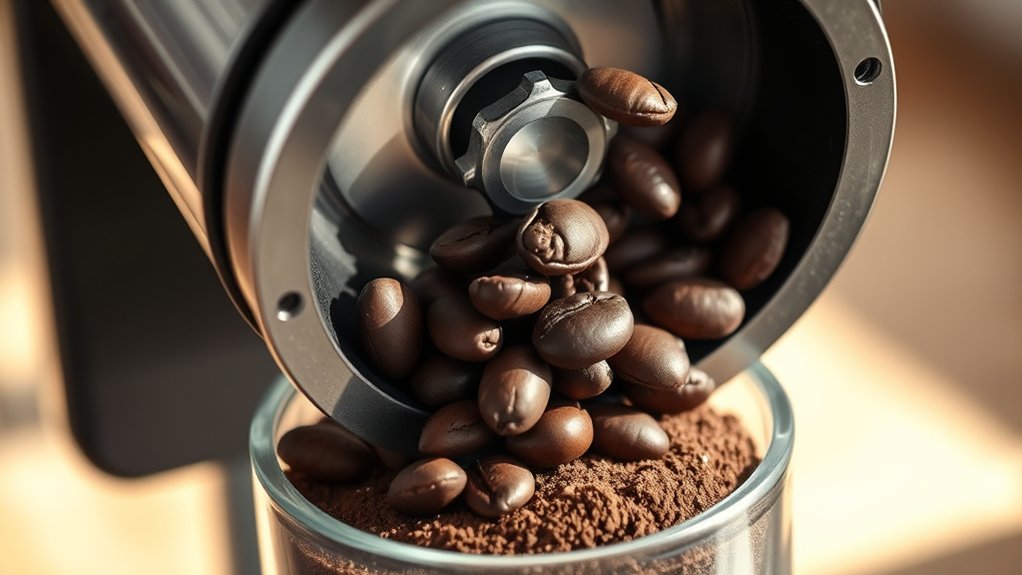
Burr grinders, on the other hand, crush beans more uniformly and usually take longer to grind. This helps preserve the flavor’s integrity, giving you a better cup.
Plus, burr grinders tend to be quieter, making them more pleasant to use, especially during early mornings.
When choosing your grinder, think about how these differences affect both grind time and the delicate flavors unique to your coffee’s origin. That way, you can make sure you get the most out of every brew.
How Grind Size Changes With Grinding Duration
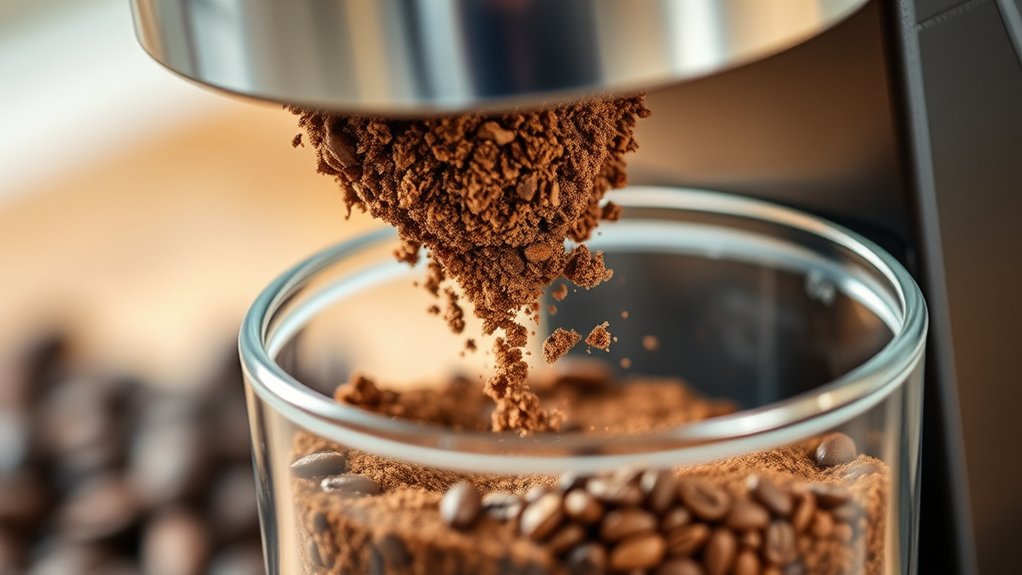
As you grind your coffee beans longer, the particles become progressively smaller, but the rate of size reduction isn’t always linear. At first, the larger chunks break down quickly, but as the grind gets finer, it takes more time to make smaller differences. You’ll often notice the grinder noise levels increase as the motor works harder to crush tougher particles.
Keeping your coffee beans stored properly helps them stay fresh, which affects how easily they grind. Stale beans can lead to inconsistent sizes, no matter how long you grind.
So, paying attention to grinding time helps you control your grind size more precisely. This way, you can avoid over-extracting or under-extracting your coffee during brewing.
Understanding this relationship makes it easier to dial in the perfect grind for your favorite brewing method.
Adjusting Grind Time for Bean Type and Roast
Because different coffee beans vary in density and roast level, you’ll need to adjust your grind time to achieve the ideal particle size. Darker roasts tend to be more brittle, requiring less grinding time. Meanwhile, denser, lighter roasts need a bit more to reach the right consistency.
Keep in mind that roast level influences not just texture but extraction too, so dialing in grind time is essential.
Also, think about how you store your coffee beans. Exposure to air and moisture can change their hardness and subtly affect grind time.
If your beans have been stored for a while or in less-than-ideal conditions, you might notice you need to tweak your grind duration.
Paying attention to these factors guarantees you get the best flavor and extraction from every batch.
Recommended Grind Times for Different Brew Methods
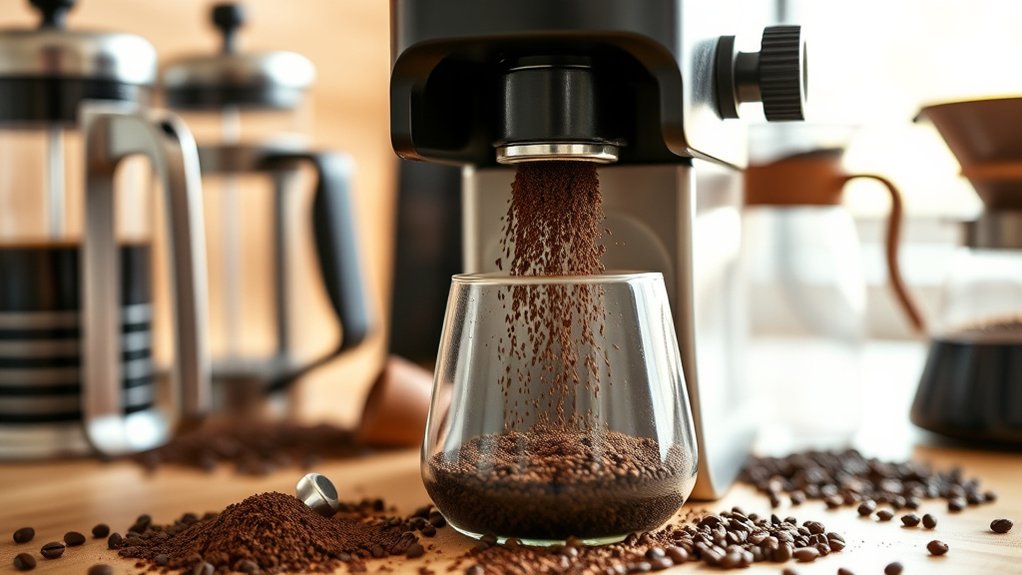
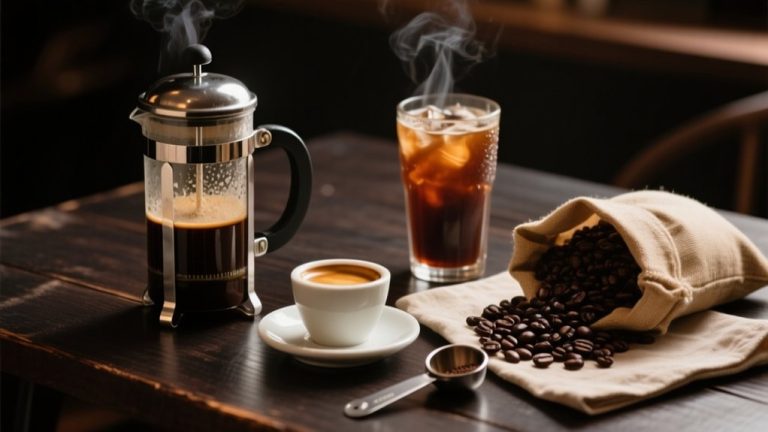
You’ll want to tailor your grind time based on the brewing method you’re using, since each one calls for a specific particle size to bring out the best flavor. Adjusting your grind duration is key to hitting the right coarseness—whether you’re getting ready for espresso, drip coffee, or a French press.
Grind Time By Method
When selecting the right grind time, consider the brewing method you’ll use. Each method demands a specific grind size to extract the best flavor. Your grind duration directly influences particle size, which affects extraction and taste.
Keep in mind that proper coffee storage preserves bean freshness. This also impacts grind consistency. Also, be mindful of grinder noise, especially in quiet settings.
Here’s a quick guide to grind times by method:
- Espresso: 10-15 seconds for a fine grind, ensuring pressure extraction.
- Pour-over: 20-30 seconds for a medium-fine grind, balancing flow rate.
- French Press: 40-50 seconds for a coarse grind, preventing over-extraction.
- Cold Brew: 60 seconds or more for an extra coarse grind, minimizing bitterness.
Feel free to adjust your grind time within these ranges to get that ideal flavor you’re after.
Adjusting Grind Duration
Although recommended grind times provide a solid starting point, adjusting your grind duration is key to tailoring flavor and extraction to your taste preferences and specific beans. Factors like how fresh your coffee is, affected by proper coffee storage, can influence grind time. Older beans may require a slightly finer grind or longer duration.
Also, consistent grinder maintenance ensures your burrs stay sharp, delivering uniform particle size and predictable timing. For example, espresso demands a very fine, precisely timed grind, while French press benefits from coarser, slightly longer grinding.
Don’t hesitate to tweak grind duration in small increments, tasting as you go. This hands-on approach lets you *discover* each bean’s potential and brew exactly how you like it, every time.
Best Grind Times for Espresso, Drip, and French Press
Since grind size directly affects extraction, knowing the best grind times for espresso, drip, and French press is essential to brewing your perfect cup. Different coffee plant varieties respond uniquely depending on grind consistency and brewing temperature.
Grind size shapes extraction, so mastering grind times for each brew method is key to your perfect cup.
Here’s a quick guide:
- Espresso: Grind for 15-20 seconds to achieve a fine texture, ideal for high-pressure extraction.
- Drip: Aim for 20-30 seconds to create a medium grind that balances flavor and brewing time.
- French Press: Grind coarsely for 30-40 seconds, allowing ideal immersion and avoiding over-extraction.
Adjust grind time slightly based on your coffee plant variety’s roast level and your brewing temperature. It’s all about finding that sweet spot that works best for your taste.
Signs You’re Grinding Coffee Too Long or Too Short
If you grind your coffee beans too long or too short, you’ll notice clear differences in taste and texture that can make or break your brew. Grinding too long produces overly fine grounds, leading to bitter, over-extracted coffee. Conversely, grinding too short results in coarse, uneven particles, causing weak, under-extracted flavors.
Pay attention to your grinder noise levels. A prolonged, high-pitched sound often signals over-grinding.
Also, consider your coffee bean storage. Stale beans amplify off-flavors, making it harder to judge grind quality.
Properly stored beans maintain freshness, helping you detect when grind time is off. By tuning in to these signs, you guarantee every cup hits the right balance. This way, you reveal the full potential of your coffee beans without guessing or wasting time.
Troubleshooting Common Grind Time Mistakes and Solutions
Recognizing the signs of improper grind time is only half the battle; knowing how to fix these issues guarantees you get the best flavor from your beans.
If your grinder noise sounds unusually loud or inconsistent, it could mean the burrs need cleaning or realignment. Avoid overgrinding by setting your timer carefully and checking grind texture regularly.
Poor coffee storage can also affect grind quality. Always store beans in an airtight container away from light and heat.
To troubleshoot grind time mistakes, adjust grind duration gradually, noting flavor changes.
Clean your grinder to prevent noise and uneven grinding. Store beans properly to maintain freshness and grind consistency.
Test small batches to refine your timing without waste.
These steps will help you master grind time and elevate your coffee experience.
How to Use a Timer for Consistent Grind Time
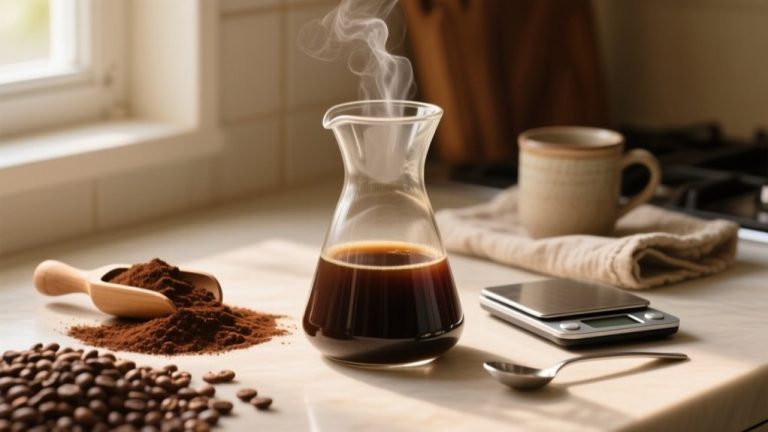
When you use a timer for grinding coffee, you get precise control over the duration. This helps make sure each batch is consistent and fits your brewing method perfectly. Start by figuring out the ideal grind time for your favorite coffee style, then set your timer to match.
This way, you skip the guesswork and cut down on mistakes that happen when you grind by feel. Keep in mind, grind time affects extraction, so even small changes can make a difference.
To keep things accurate, store your beans properly. Airtight containers protect coffee from air and moisture, which keeps your beans fresh longer. Fresh beans grind more evenly and react better to timing.
Tips for Maintaining Your Grinder to Keep Grind Times Accurate
To keep your grind times consistent, you’ll want to stick to a regular cleaning routine that gets rid of any coffee buildup in your grinder.
It’s a good idea to check the blades or burrs often to see if they’re wearing down or losing their sharpness. Dull parts can really mess with your grind size.
Regular Cleaning Routine
Although grinding times depend largely on your coffee bean type and grind size, keeping your grinder clean plays a huge role in making sure those times stay consistent. Residual oils and fine particles can mess with grind consistency and even make your grinder noisier. That’s a clear sign it’s time to give it a good clean.
Regular maintenance also helps with proper coffee storage by stopping stale buildup inside the grinder.
To keep your grinder working at its best, wipe down the external surfaces after each use to avoid oil buildup. Use a brush to clean the burrs or blades regularly. Running grinder-cleaning pellets once a month helps get rid of hidden residue.
Don’t forget to check and empty the grounds catcher often to prevent clogging. It’s a small step that makes a big difference!
Blade And Burr Inspection
Since your grinder’s blades and burrs play a crucial role in determining grind consistency, regular inspection is necessary for maintaining accurate grind times. Check for dullness, chips, or buildup that can affect performance.
If you notice increased grinder noise or uneven particle size, it’s a sign your blades or burrs need attention. Remove any residual coffee oils or grounds, especially if your coffee storage method allows moisture or odor transfer, as these can gum up the mechanism.
Use a brush or soft cloth for cleaning, avoiding harsh abrasives. Keeping blades and burrs sharp and clean ensures you get consistent grinds every time, which directly impacts extraction quality.
Regular inspection not only preserves grind accuracy but also extends your grinder’s lifespan, making each cup better and your routine smoother. It’s a simple step that really makes a difference!
Frequently Asked Questions
How Does Humidity Affect Coffee Grinding Time?
Humidity levels directly affect your coffee grinding time because higher moisture content makes beans softer and stickier. When humidity rises, your grinder may work harder or slower since the beans clump together more easily.
You’ll notice you might need to grind a bit longer or adjust your settings to get a consistent grind size.
Keeping an eye on humidity and moisture content helps you maintain the perfect grind for balanced flavor every time.
Can Grind Time Impact Coffee Bean Freshness?
When you grind your coffee beans, you’re basically opening a delicate treasure chest. Grind time itself doesn’t directly affect freshness, but it does influence how consistent your grind is. And that consistency? It’s key for good flavor extraction.
If you grind too long, heat can gently whisk away some of those aromatic oils. So, it’s best to store your coffee properly to keep those precious notes intact.
Grinding just before brewing helps lock in that freshness. Your careful timing makes sure each cup bursts with vibrant character. You don’t want those flavors lost to time or temperature.
What Is the Best Grind Time for Cold Brew Coffee?
For cold brew coffee, you want a coarse grind that takes about 15-20 seconds with a burr grinder.
This grind consistency guarantees slow, even flavor extraction during the long steeping process.
If you grind too fine or grind too long, you risk over-extraction and bitterness.
So, keep your grind coarse and consistent to extract smooth, rich flavors.
This way, you’ll get that perfect cold brew taste every time.
Does Altitude Influence Coffee Grinding Duration?
You might be surprised that at higher altitudes, air pressure drops about 12% for every 1,000 meters you ascend. This can subtly affect grinding consistency.
Because of these altitude effects, your grinder may perform a bit differently. You might need to adjust your grind time to keep the particle size uniform.
How Do Grind Times Vary for Decaffeinated Beans?
You’ll find that grind times for decaffeinated beans often need slight adjustments to achieve ideal decaf grind consistency.
Since decaf beans are usually softer, you might grind them a bit faster or use a gentler setting to avoid over-grinding.
Paying attention to this helps preserve decaffeinated flavor, ensuring your brew remains smooth and balanced without bitterness.
Experiment a little to match your grinder and taste preferences perfectly.
Conclusion
Getting your grind time right is essential. Did you know over 60% of home brewers admit inconsistent grind size ruins their coffee’s flavor? By understanding how grind time affects extraction and adjusting it based on your grinder type and brew method, you’ll consistently discover the best taste.
Use a timer, pay attention to grind size, and maintain your grinder regularly to avoid common mistakes. Mastering grind time turns good coffee into great coffee every time. It’s easier than you think once you get the hang of it.