Why Is My Espresso Sour – Causes And Solutions Explained
Your espresso tastes sour because it’s under-extracted, often due to a grind that’s too coarse, brewing with water below 90°C, or pulling your shot too fast (under 25 seconds).
Uneven tamping and stale beans can also cause channeling, leading to sour notes. Adjusting grind size finer, ensuring proper tamping, using fresh beans, and keeping water temperature between 92°C and 96°C will help balance flavors.
Keep exploring to fine-tune your espresso technique for the perfect shot.
What Causes Sour Espresso?
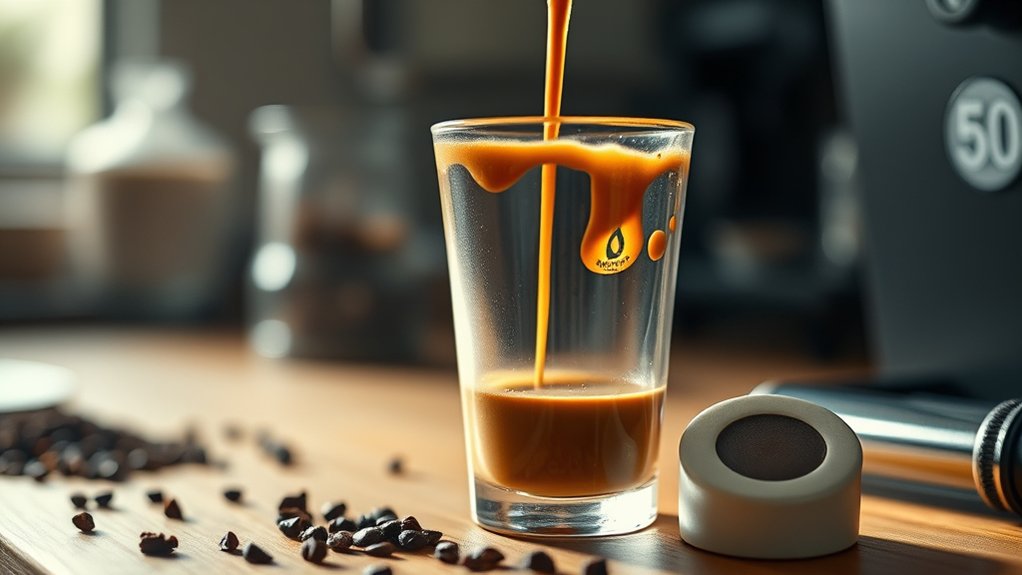
If your espresso tastes sour, it’s usually because it’s under-extracted. Under-extraction happens when water doesn’t fully pull the coffee’s flavors, often due to a grind size that’s too coarse.
When the grind is too large, water rushes through the grounds quickly, leading to weak flavor and a sour taste. But grind size isn’t the only factor. Brewing water that’s too cool, below 90°C, can also cause under-extraction.
If your shot pulls too fast, say under 25 seconds, you’re not giving the water enough time to extract those rich flavors, resulting in sourness.
Moreover, stale beans or uneven tamping can cause channeling, making some grounds under-extract and produce sour notes.
How Grind Size Affects Sour Espresso
Your grind size has a big impact on how your espresso tastes, especially when it comes to sourness.
If your grind is too coarse, water will pass through too quickly. This leads to under-extraction and that sharp, sour flavor you might notice.
So, by adjusting how fine or coarse your grind is, you can control the extraction time.
This helps balance out the taste and gives you a smoother espresso.
Grind Size Impact
Because grind size directly controls extraction, it plays an essential role in preventing sour espresso. If your grind size is too coarse, water flows through too quickly, causing under-extraction and a pronounced sour taste.
On the other hand, a finer grind increases the coffee’s surface area, allowing better extraction and a balanced flavor profile. You need to adjust grind size carefully to hit the ideal brew ratio of 18 grams of coffee to 36 grams of espresso.
Also, make certain your grind consistency is spot on. Uneven particles cause channelling, leading to uneven water flow and sourness.
Pair the right grind size with a proper brew time of 25-30 seconds, and you’ll avoid the sour flavors linked to under-extraction every time.
Under-Extraction Causes
When the grind size is too coarse, water rushes through the coffee grounds too quickly, causing under-extraction and a sour, weak espresso. This happens because the water doesn’t spend enough brewing time in contact with the coffee to extract balanced flavors.
To avoid under-extraction, keep these points in mind:
- Coarser grind size lets water bypass grounds too fast
- Fine grind increases surface area for better extraction
- Proper brewing time (25-30 seconds) is essential
- Under-extracted espresso tastes sour and lacks body
- Even small grind size tweaks change extraction quality
Adjusting Grind Fineness
Adjusting grind fineness plays a key role in fixing sour espresso caused by under-extraction. If your grind size is too coarse, water passes through too quickly, leading to insufficient extraction and that unpleasant sour taste.
By making your grind finer, you increase the surface area exposed during the brewing process. This allows water to extract more flavors effectively.
Aim for a grind size that helps you achieve an extraction time between 25 to 30 seconds using about 18 grams of coffee per shot.
Small, consistent adjustments in grind size can dramatically improve flavor balance and prevent sourness.
Keep tweaking until you find the sweet spot where your espresso tastes rich and well-extracted, not sharp or underdeveloped.
Why Correct Brew Ratio Prevents Sour Espresso
If you want to prevent sour espresso, you need to pay close attention to your brew ratio. Getting this right guarantees balanced extraction and avoids sour coffee flavors.
Here’s why the correct brew ratio matters:
Using about 18 grams of coffee per shot helps water interact effectively with grounds. Too much coffee can cause under-extraction, resulting in sour notes.
Using around 18 grams of coffee per shot ensures proper extraction and prevents sour flavors from too much coffee.
Small tweaks in brew ratio let you personalize flavor and reduce sourness.
Consistent brew ratio makes replicating great shots easier.
Double extraction methods rely heavily on an accurate brew ratio for complexity.
How Extraction Time Influences Espresso Sourness
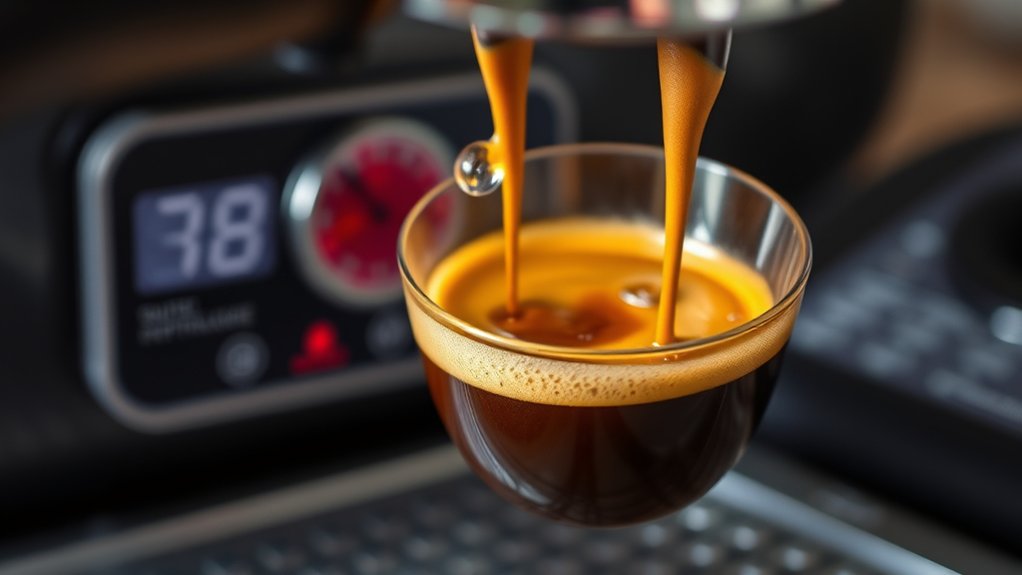
Because extraction time directly affects flavor balance, you’ll notice sourness creeping in if your espresso shot pulls too quickly.
When brew time falls below the ideal 25 to 30 seconds, under-extraction occurs, causing water to rush through the grounds without fully extracting sugars and balanced acids.
This under-extraction results in a sharp, sour taste.
To fix this, focus on extending your extraction time by adjusting grind size or tamping pressure, which slows water flow and guarantees a more complete flavor profile.
Even a few seconds difference in brew time can shift your espresso from sour to sweet.
How Water Temperature Affects Sour Espresso
Extraction time isn’t the only factor that can cause sourness in your espresso; water temperature plays a big role too.
If your espresso tastes sour, it might be due to under-extraction caused by water that’s too cool. Here’s what to keep in mind:
Use water temperature between 92°C and 96°C (195°F to 205°F) for maximum extraction.
Maintain water temperature between 92°C and 96°C for optimal espresso extraction and flavor balance.
Lower temperatures lead to under-extraction, making your espresso taste sour.
Temperatures above 96°C risk over-extraction, introducing bitterness instead of balance.
Consistently monitor water temperature to maintain flavor balance.
Employ a reliable thermometer to verify your water stays in the ideal range.
How Water Quality Impacts Espresso Flavor
While water temperature plays a key role in espresso flavor, the quality of the water you use matters just as much.
The hardness of your water directly affects extraction and the balance of acids from the coffee beans.
Ideally, water with a hardness around 5° dH enhances flavor, while softer water can cause your espresso to taste overly sour.
Using low-quality or contaminated water introduces off-flavors that mask the natural profile of your coffee.
Filtering your water removes impurities and unwanted minerals, ensuring a cleaner extraction.
Regularly descaling your espresso machine prevents mineral buildup that can alter water flow and extraction efficiency.
How Equipment Cleanliness Leads to Sour Espresso
If you don’t keep your espresso equipment clean, old coffee oils and residue build up quickly, ruining the flavor and often causing your espresso to taste sour.
Coffee grounds trapped in your espresso machine can lead to unpleasant acidity and off-notes.
Proper cleaning prevents this by flushing the group head with water after each shot to remove leftover grounds.
You should also regularly clean the portafilter to avoid stale residue buildup.
Backflushing the espresso machine with a cleaner every 4-6 months helps maintain performance.
It also prevents channeling by keeping group heads spotless for even water flow.
Avoiding stale coffee remnants is key because they impart sour flavors.
Maintaining your espresso machine’s cleanliness guarantees each shot is fresh and balanced, eliminating unwanted sourness caused by old coffee oils and residues.
How to Adjust Grind, Dose, and Tamping to Fix Sour Espresso
To fix sour espresso, start by making your grind size a bit finer. This helps pull out more flavor from the coffee.
Next, double-check that you’re using the right amount of coffee—usually between 18 and 20 grams for a single shot. Getting the dose right is key to keeping things balanced.
Finally, be sure to tamp with firm and even pressure, about 30 pounds or so. This makes sure the water flows evenly through the coffee, giving you a better extraction overall.
Grind Size Adjustment
Because grind size directly affects extraction, dialing it in is key to fixing sour espresso. If your espresso tastes sour, it’s likely due to under-extraction caused by too coarse a grind.
Here’s how to adjust:
Make the grind size finer to increase surface area and improve extraction. Tamp firmly and evenly to create proper resistance against water flow.
Aim for an extraction time between 25-30 seconds; adjust grind size accordingly. Experiment with small grind adjustments to find the sweet spot.
Consistently measure your coffee dose to maintain balance (covered in the next section).
Coffee Dose Measurement
Although adjusting grind size plays a major role, measuring your coffee dose accurately is just as important for fixing sour espresso. Using the right coffee dose measurement, typically 18-20 grams for a single shot, helps avoid under-extraction, which often causes that sharp sourness.
If your espresso tastes sour, it might mean you’re using too little coffee or the grind is too coarse, letting water flow through too quickly. Adjusting the grind size finer increases extraction by slowing water flow, but if the dose is off, you won’t get the balanced flavor you want.
Keep your dose consistent and pair it with the right grind size to guarantee a smooth, well-extracted shot. Precision here makes a big difference in taming sour notes and achieving espresso perfection.
Proper Tamping Technique
Getting your coffee dose right sets the stage, but how you tamp those grounds can make or break your espresso’s flavor.
Proper tamping pressure guarantees even extraction and prevents sourness caused by under-extraction.
Here’s how to fine-tune your tamping technique:
Apply about 30 pounds of tamping pressure for consistent puck density.
Distribute coffee grounds evenly in the portafilter to avoid channeling.
Use a digital scale to measure around 18 grams for a balanced dose.
Adjust the coffee grind finer if your espresso tastes sour, improving extraction time.
Clean the portafilter and group head regularly to prevent residue buildup affecting extraction.
How Roast Level Impacts Espresso Sourness
When you choose a lighter roast for your espresso, expect a higher acidity that can make the shot taste sour if you don’t extract it carefully.
Lighter roasts naturally have more brightness, so managing your grind size and extraction time is essential to avoid over-extracting those sharp acidic notes.
Lighter roasts bring brightness, so carefully adjust grind and extraction to keep acidity balanced.
A finer grind or longer extraction time can intensify sourness, while a coarser grind or shorter extraction may under-extract flavors.
Conversely, darker roast levels tend to reduce acidity, offering smoother, roasted aromas that help balance sourness.
Ultimately, your roast level choice depends on your taste preferences.
Experiment with different roasts, adjusting grind and extraction time, to find the right balance that minimizes sourness and highlights the complexity you enjoy in your espresso.
Best Coffee Beans to Avoid Sour Espresso
If you want to avoid sour espresso, go for coffee beans that naturally have low acidity, like those from Brazil or Sumatra.
The origin of your beans really makes a difference in flavor. So, picking beans grown at lower altitudes can actually help cut down on those sour notes.
Keeping an eye on where your beans come from is a smart move—it sets you up for a smoother, more balanced shot every time.
Low Acidity Beans
Although acidity can add brightness to espresso, choosing low acidity beans like those from Brazil or Sumatra helps you avoid sour flavors and enjoy a smoother cup.
When your espresso tastes too sour, switching to low acidity coffee beans can balance your flavor profile.
Consider these tips:
- Pick Brazilian beans for chocolate and caramel notes that soften acidity.
- Opt for Sumatran beans known for earthy, mellow flavors.
- Avoid high-altitude Arabica beans, which increase acidity and sourness.
- Try blends like Brazil-Ethiopia for rich flavor without excessive acidity.
- Stay away from beans with sharp citrus or fruity acidity if sourness bothers you.
Selecting the right low acidity beans guarantees your espresso stays smooth, rich, and never too sour.
Bean Origin Influence
Bean origin plays an essential role in determining the acidity and overall flavor of your espresso. Beans from high-altitude regions, like Guatemala and Kenya, often have higher acidity, which can make your espresso taste sour if you’re not careful with extraction.
To avoid this, consider beans from lower altitudes, such as Brazil or Sumatra, which typically offer a smoother, less acidic flavor profile. Look for beans with notes of caramel, chocolate, or hazelnut. They usually have lower acidity and help reduce sourness.
Experimenting with blends, like Brazil-Ethiopia mixes, can also balance acidity and enrich the flavor profile.
Frequently Asked Questions
Can Milk or Cream Affect the Sourness of My Espresso?
Yes, milk or cream can affect the sourness of your espresso. Different milk types, like whole or oat milk, add sweetness and fats that smooth out acidity.
Cream quality matters too; richer cream balances sour notes better.
Temperature effects also play a role. Warm milk blends well, reducing perceived sourness, while cold milk might highlight it.
Still, milk can mask sourness but won’t fix brewing issues causing it.
Does the Type of Espresso Machine Influence Sour Taste?
Yes, the type of espresso machine definitely influences sour taste. If your machine lacks temperature stability or precise pressure control, it can cause under-extraction, leading to sourness.
You’ll want a machine that lets you adjust grind size and control extraction time accurately. Pair that with fresh beans, and you’ll avoid sour flavors.
Plus, regular cleaning keeps water flow consistent, ensuring better extraction and a balanced espresso shot every time.
How Does Humidity Impact Espresso Extraction and Sourness?
Humidity affects your espresso extraction by changing how your grind size interacts with water.
In high humidity, your grounds may clump or swell, causing uneven extraction and a sour taste.
You’ll often need a finer grind size and possibly a longer brew time to balance this.
Also, beans from different coffee origins react differently to moisture, so adjusting your grind and brew based on both humidity and origin helps prevent sourness.
Can Water Hardness Change the Flavor of My Espresso?
Think of water hardness as the invisible spice in your espresso recipe.
Yes, it can change your espresso’s flavor by affecting how water temperature, grind size, and extraction time interact.
Softer water may highlight sour notes, while harder water can mute acidity but cause buildup in your machine.
Tweak these variables alongside water hardness, and you’ll reveal a balanced, flavorful shot every time you pull espresso.
Does Espresso Sourness Vary With Different Cup Materials?
Yes, espresso sourness can vary with different cup materials because cup temperature affects how your coffee cools and tastes.
Ceramic cups keep your espresso warmer longer, helping balance acidity, especially if your brewing time or grind size isn’t perfect.
Glass cools faster, which might highlight sour notes.
Metal cups retain heat differently, which can mask sourness but risk bitterness.
Try switching cups to see how temperature influences your espresso’s flavor.
Conclusion
If your espresso tastes sour, don’t let it rain on your coffee parade. Think of your grind size, brew ratio, and water temperature as the orchestra tuning up for a perfect symphony.
Clean your equipment and choose the right roast to harmonize flavors. With a few simple tweaks, you’ll turn that puckering sour note into a smooth, rich melody that dances on your taste buds every time you sip.