Why Are Espresso Machines So Expensive – Cost Factors Explained
You’ll find espresso machines expensive because they combine precise engineering, high-quality steel and brass materials, and advanced pressure and temperature controls to brew café-quality coffee consistently.
Skilled craftsmanship and rigorous testing add to the cost, especially in commercial models built for durability and heavy use.
Premium features like built-in grinders and programmable settings push prices higher, but they improve your daily coffee experience and long-term value. Keep exploring to discover how these factors come together to justify the price.
What Makes an Espresso Machine Different?
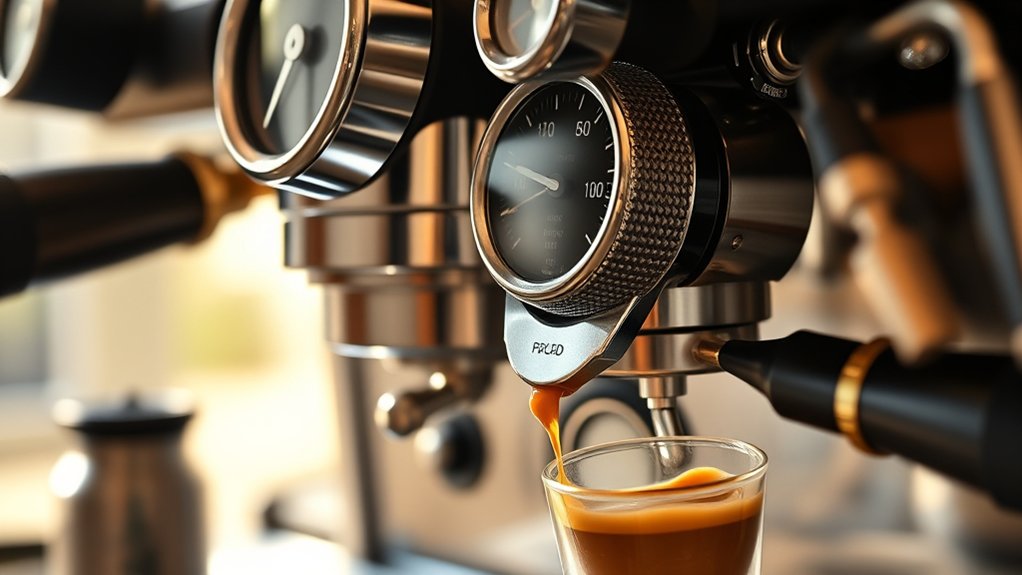
Although many coffee makers exist, espresso machines stand out because they brew coffee under high pressure, usually around 9 bars, to deliver a rich flavor and creamy texture you won’t get from regular drip machines.
When you look at espresso machines, the components used like pressure sensors and regulators play an essential role in extracting the perfect shot.
These specialized parts guarantee consistent pressure and temperature control, directly affecting taste quality.
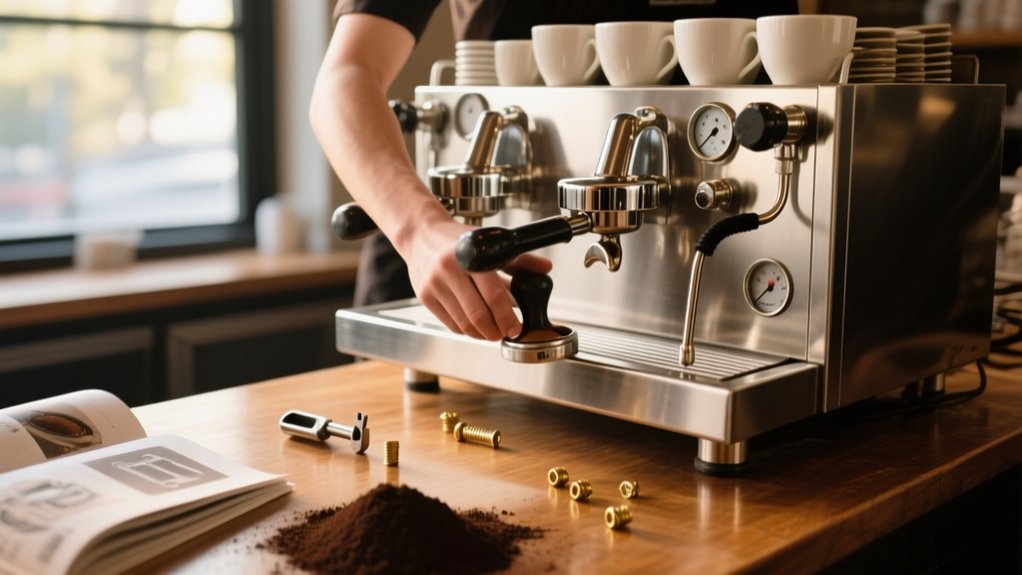
You’ll also notice durable materials such as stainless steel and brass, which add to both longevity and reliability.
The price point varies widely depending on the type, whether manual, semi-automatic, or fully automatic, and the features included.
High-end models often combine these components with extras like built-in grinders and programmable settings, catering to your specific coffee preferences.
How Precision Engineering Raises Espresso Machine Costs
When you invest in a high-quality espresso machine, precision engineering plays a crucial role in driving up its cost. Espresso machines rely on precise components like pressure sensors and regulators to deliver consistent flavor, but these add to manufacturing expenses.
Advanced temperature and pressure control systems in premium models increase design complexity and cost factors. Skilled artisans meticulously assemble many machines by hand, raising labor costs to guarantee flawless performance.
Moreover, commercial espresso machines undergo rigorous testing and validation, causing non-recurring engineering costs to soar.
These combined precision engineering efforts ensure durability and reliability but make espresso machines pricier than simpler consumer models.
Understanding how precision engineering influences espresso machines helps you see why quality and performance come at a higher price.
Why Steel and Brass Improve Espresso Machines
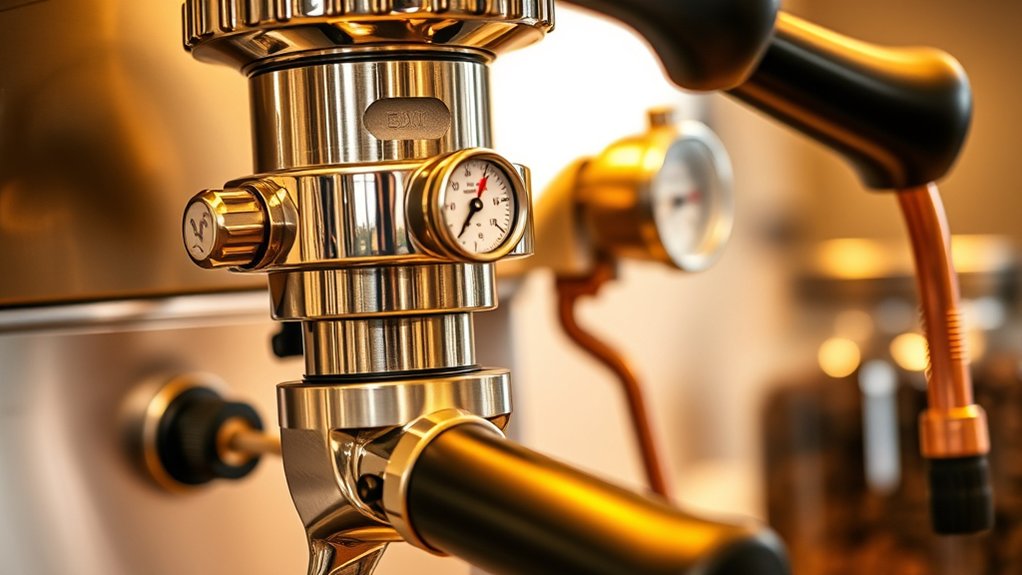
Because steel and brass offer exceptional durability and resistance to corrosion, they play an essential role in enhancing espresso machines’ performance and lifespan.
When you invest in an espresso machine with steel and brass components, you get reliability and quality that last.
Brass, especially in boilers and group heads, guarantees consistent water temperature thanks to its excellent thermal conductivity.
Steel’s strength and wear resistance make it ideal for housing and internal parts, boosting longevity and style.
Here’s why steel and brass matter in espresso machines:
- Brass fittings maintain stable pressure for perfect extraction.
- Steel parts resist wear and corrosion over time.
- Both materials justify higher prices through superior craftsmanship.
Choosing steel and brass means you’re getting a machine built to perform and endure.
Pressure and Temperature Controls in Espresso Machines
To extract the perfect espresso shot, your machine must maintain precise pressure and temperature controls. Espresso machines rely on pressure control, typically around 9 bars, to pull rich flavors from coffee grounds without under- or over-extracting.
Precise pressure and temperature control are essential for pulling rich, balanced espresso shots without extraction errors.
At the same time, temperature control keeps water between 190°F and 205°F, preventing bitterness and ensuring balance. High-quality pressure regulators and sensors play a key role in this process, directly impacting both taste and machine cost.
Many premium models use microcontrollers to monitor and adjust these variables in real time, adding complexity and price.
When you invest in espresso machines with advanced pressure and temperature controls, you’re paying for consistent, café-quality shots that make every cup worth it.
Commercial vs. Home Espresso Machines
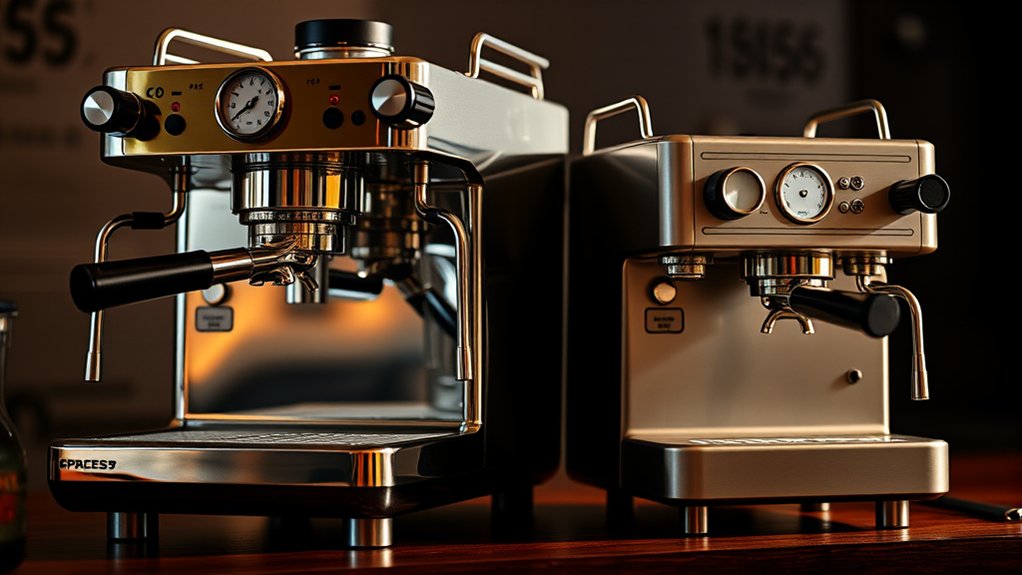
Although both commercial and home espresso machines aim to deliver great coffee, they serve very different needs and come with distinct features that affect their cost.
When choosing between commercial espresso machines and home espresso machines, consider how their pricing structures reflect their intended use.
Commercial machines handle heavy use, brewing multiple cups simultaneously with durable, high-quality materials.
Home machines focus on single-cup extraction, prioritizing ease of use and affordability with simpler components.
Price ranges differ considerably.
Commercial machines often cost between $6,000 and $10,000, while home machines start around $120 and go up to $2,000.
Understanding these differences helps you decide which machine fits your needs and budget without compromising on coffee quality.
How Specialized Parts Increase Espresso Machine Costs
When comparing commercial and home espresso machines, you’ll notice that the price gap isn’t just about size or capacity. It often comes down to the specialized parts inside.
Espresso machines rely on high-pressure pumps to extract rich flavors, and these pumps require precision engineering and durable materials like stainless steel and brass, which increase costs.
Advanced features such as built-in grinders and programmable settings add complexity, demanding sophisticated technology and design.
Commercial-grade machines need components that can withstand heavy use and prolonged operation. So manufacturers invest in robust parts tested rigorously for reliability.
These specialized parts guarantee consistent performance but also drive up production expenses, making espresso machines pricier.
When you choose a machine with these advanced features and high-quality components, you’re paying for durability and precision brewing every time.
How R&D Drives Espresso Machine Prices
You’ll notice that the innovation behind espresso machines comes with a cost. Manufacturers invest heavily in research and development, which isn’t cheap.
Testing and tweaking prototypes takes both time and money, and that all adds up to the final price you see.
But the good news is these efforts pay off — they ensure better performance and reliability, making that higher price tag totally worth it.
Innovation Costs Impact
Since manufacturers pour significant resources into research and development, the price you pay for an espresso machine reflects more than just materials and labor.
Innovation costs play a major role in driving up the price of coffee makers, especially as companies aim to push technological boundaries.
When you buy an espresso machine, you’re also investing in cutting-edge features that improve your brewing experience.
These innovations demand advanced technology and skilled expertise, which increase production costs.
Key factors behind innovation costs include:
- Developing precise temperature control and pressure regulation systems
- Incorporating sophisticated electronics and software for consistency
- Funding ongoing research to enhance performance and reliability
Testing And Modifications
Although developing innovative espresso machines demands significant investment, manufacturers don’t stop at design. They rigorously test and refine every feature to guarantee top performance. You’ll find that testing and modifications play an essential role in perfecting these machines.
Each new function undergoes repeated trials to confirm it enhances espresso extraction without compromising quality or reliability. This process requires advanced technology and expert knowledge, which adds to the development costs. As a result, those expenses are reflected in the final price you pay.
By investing heavily in testing and modifications, manufacturers make certain their espresso machines meet high standards and consumer expectations.
How Brand Reputation Affects Espresso Machine Prices
When you shop for an espresso machine, the brand’s reputation often plays a big role in the price you pay. Established brands command higher prices because consumer perception links their history and reliability to superior quality.
You’ll find that brand reputation influences your willingness to pay more, trusting these names to deliver consistent performance. Marketing efforts also add to the cost, reflecting the investment in maintaining a strong image.
Here’s how brand reputation affects espresso machine prices:
- Trusted brands justify higher prices through proven quality and reliability
- Marketing and promotion costs are built into the price
- Brand loyalty drives consumers to choose familiar names over lesser-known options
Understanding this helps you see why brand reputation matters in your purchase decision.
Why Durability Matters for Espresso Machines
Beyond brand reputation, the durability of an espresso machine plays a big role in its price and value. When you invest in coffee machines, especially those built for professional coffee environments, durability guarantees they withstand continuous use and high demand.
Manufacturers use high-quality materials like stainless steel and brass to boost longevity and reliability. Key components such as pressure sensors and regulators are crafted for durability, maintaining consistent performance over time.
Commercial espresso machines undergo rigorous testing to handle intense flow rates and pressures, which explains their higher cost. Choosing durable machines means you’ll face fewer repairs and replacements, saving you money and hassle in the long run.
Is an Expensive Espresso Machine Worth It?
You might wonder if spending more on an espresso machine really pays off.
Well, investing in a high-quality model often means better durability and features that save you money over time.
Value For Money
Investing in an expensive espresso machine means getting more than just a coffee maker. You’re paying for durability, advanced features, and superior craftsmanship that elevate your coffee experience.
While an entry-level espresso machine might seem like a budget-friendly choice, the value for money in higher-end models often outweighs the initial cost. You’ll enjoy high-quality materials like stainless steel and brass that outlast cheaper plastics.
You also get features such as programmable settings and precise temperature control for better coffee. Plus, exceptional engineering guarantees superior extraction and flavor.
If you’re serious about your coffee, this investment reduces replacements and lets you brew café-quality espresso at home.
Long-Term Benefits
Although the upfront cost of a high-quality espresso machine might seem steep, it pays off in the long run by saving you money on café visits. By investing in a durable, well-crafted machine, you enjoy significant long-term savings as it consistently delivers café-quality coffee at home.
These machines often require fewer repairs and last longer, making your initial investment worthwhile within about two years.
Beyond savings, a premium espresso machine enhances your coffee experience with advanced technology and superior components, letting you tailor each cup to your taste.
For regular coffee drinkers, this convenience and control over brewing not only justifies the cost but also elevates daily coffee rituals, proving that an expensive machine can truly be worth it.
Frequently Asked Questions
How Does Water Quality Affect Espresso Machine Performance?
Water quality directly affects your espresso machine’s performance by influencing taste quality and causing mineral buildup.
If your water has high hardness, it leads to scale and mineral buildup inside the machine. This reduces efficiency and can cause damage over time.
Using water with balanced minerals helps maintain consistent flavor and protects your machine.
Can Espresso Machines Be Repaired or Upgraded Over Time?
You know what they say: a stitch in time saves nine. You can definitely repair espresso machines by replacing worn components, which helps keep maintenance costs down.
Many models come with upgrade parts, so you can enhance features without buying new machines.
Regular maintenance is key to avoiding expensive breakdowns.
What Maintenance Is Required to Keep an Espresso Machine Running Well?
To keep your espresso machine running well, you’ll need regular cleaning techniques like wiping the brew group and steam wand to prevent buildup.
Stick to maintenance schedules by descaling every 1-3 months and replacing water filters as needed.
Don’t forget to inspect and clean key parts frequently.
Over time, you might also need replacement parts to maintain performance.
Following these steps helps your machine deliver great coffee consistently.
How Do Built-In Grinders Impact the Price of Espresso Machines?
About 70% of espresso machines with built-in grinders cost considerably more because of added grinder types like burr grinders. These grinders guarantee consistent grind size for the best espresso.
You’ll find durability factors like stainless steel components raise the price but improve longevity.
These precise, high-quality grinders increase manufacturing complexity, so you’re paying for convenience, performance, and durability all in one machine.
Are There Energy Efficiency Differences Between Espresso Machine Models?
Yes, you’ll notice energy efficiency differences between espresso machine models. Machines with advanced heating technology and better design materials often consume less energy, helping you save on energy consumption.
Fully automatic models usually use more power due to extra features, while commercial machines focus on efficiency for heavy use.
Look for machines with good insulation and programmable sleep modes. They retain heat longer and reduce unnecessary energy use, making your espresso routine more eco-friendly and cost-effective.
Conclusion
When it comes to espresso machines, you get what you pay for. Precision engineering, high-quality materials, and advanced controls all add up, making these machines pricey but reliable. Whether for home or commercial use, investing in a reputable brand means fewer headaches down the road.
Remember, sometimes you have to break a few eggs to make the perfect espresso. Spending a bit more upfront often leads to richer, more consistent coffee experiences.