How Fine To Grind Espresso – Grind Size Guide And Tips
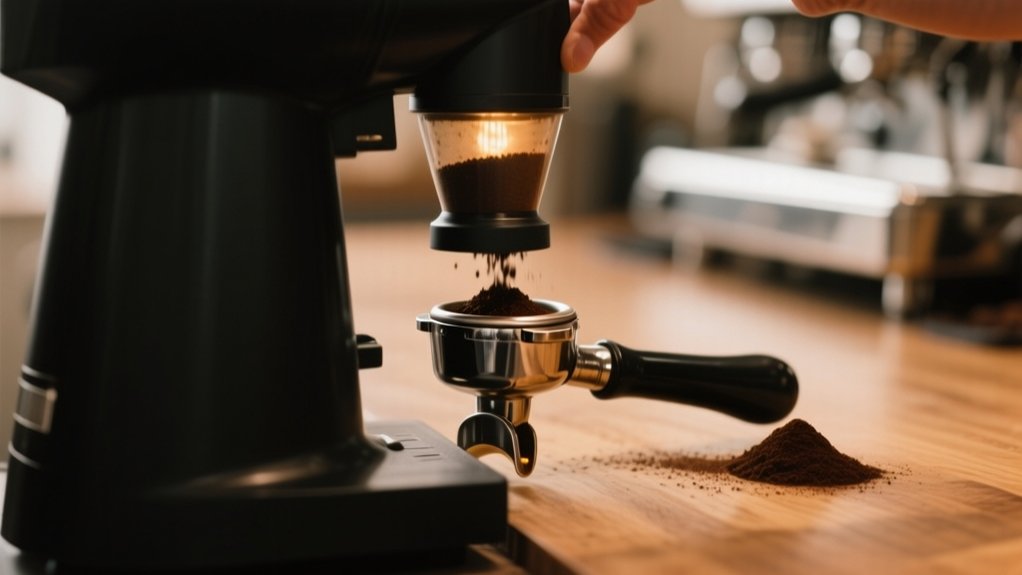
You should grind your espresso beans very fine, like flour or fine table salt, to achieve ideal extraction in about 25-30 seconds. Too coarse a grind leads to fast, weak shots with thin crema, while too fine causes slow, bitter extractions with dark crema.
Consistency is key, so adjust your grind size slowly and use the pinch test to check fineness. Keeping beans fresh and your grinder clean also helps.
There’s more to perfecting your grind size beyond just texture and timing.
How Fine Should Espresso Grounds Be
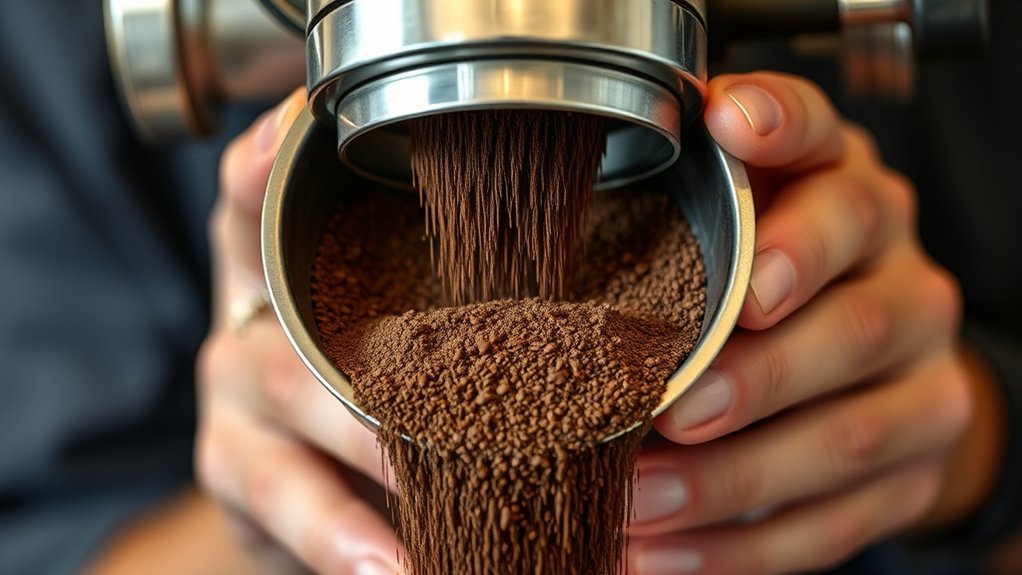
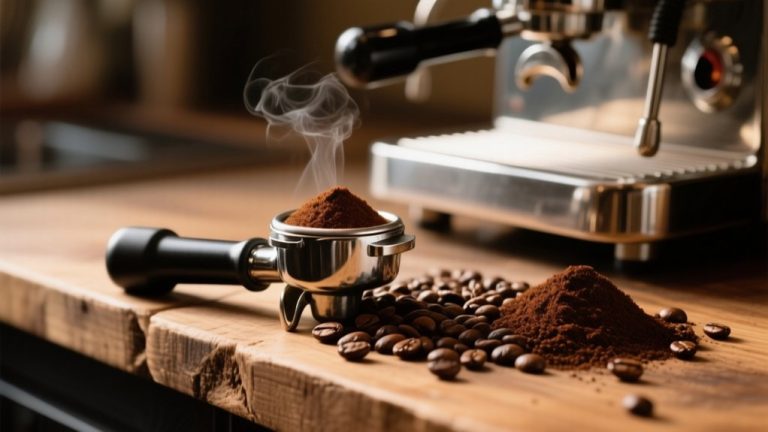
How fine should you grind espresso beans to get the perfect shot? For espresso, your grind size should be very fine, similar to flour or fine table salt. This fine grind guarantees ideal extraction within the typical 25-30 second brew time, allowing water to flow efficiently through the coffee grounds.
Grind espresso beans very fine, like flour or fine salt, for perfect extraction in 25-30 seconds.
Consistent coffee grind is essential because uneven particles cause channeling, leading to uneven extraction and off flavors. Fine grinds increase surface area, boosting extraction efficiency, but be careful, not too fine or you risk over-extraction and bitterness.
Since brewing methods vary, you should adjust your grind size incrementally, about 50 microns at a time, to dial in the perfect balance.
Mastering this fine grind will elevate your espresso’s taste and texture every time.
Signs Your Espresso Grind Is Too Coarse or Too Fine
If your espresso shots pull too fast or taste weak, it probably means your grind is too coarse. You know, that quick shot can be a sign that the water’s rushing through without extracting enough flavor.
On the flip side, if your extraction is super slow and the coffee tastes bitter, that usually points to a grind that’s too fine.
Getting the hang of these little clues is key. Once you can spot whether your grind is off, adjusting it becomes way easier.
And that’s how you nail the perfect shot every time!
Coarse Grind Symptoms
Anyone dialing in their espresso grind quickly notices that a grind that’s too coarse causes under-extraction, producing weak, watery shots with sour flavors.
A coarse grind leads to fast extraction times, often under 25 seconds, and a lack of crema, signaling poor flavor development.
If your espresso puck feels loose and the coffee flows too quickly, it’s a clear sign your grind size needs adjustment.
You might also notice your espresso puck doesn’t hold together well during a pinch test, indicating the particles are too large.
To fix this, grind finer to increase surface area and slow the brew time, aiming for a balanced extraction within the ideal 25-30 seconds.
Adjusting the grind size guarantees you avoid under-extraction and achieve richer, fuller espresso shots.
Fine Grind Indicators
Wondering how to tell if your espresso grind is off? Fine grind indicators help you spot when your grind size isn’t quite right, affecting ideal extraction and flavor.
Watch for these signs:
Extraction time under 25 seconds signals too coarse a grind, causing weak, sour espresso.
Extraction longer than 30 seconds points to a grind that’s too fine, yielding bitter, over-extracted shots.
Thin or absent crema suggests coarse grind settings need adjustment.
Use the pinch test: grounds clumping means a fine grind; loose, sandy texture means it’s too coarse.
Aim for consistent particle sizes, resembling fine table salt, to guarantee even extraction and better espresso quality.
Monitoring these indicators helps you dial in your grind size with precision and consistency.
Adjusting Grind Size
When your espresso shot extracts too quickly or drips slowly, it’s a clear sign to adjust your grind size.
Using your espresso grinder, fine-tune the grind sizes to achieve ideal extraction.
Too coarse, and your shot finishes under 25 seconds with weak flavor; too fine, and it drips past 30 seconds, tasting bitter.
Aim for a grind like fine table salt for balanced coffee extraction.
Why Espresso Grind Size Impacts Flavor and Extraction
Because grind size directly controls how water interacts with coffee grounds, it plays a critical role in shaping your espresso’s flavor and extraction. The right espresso grind size, very fine and uniform, maximizes extraction efficiency by increasing surface area.
Grind size crucially influences water flow and flavor, with fine, uniform grounds maximizing espresso extraction.
If your grind is too coarse, water passes too quickly, causing under-extraction and weak flavors. Too fine, and you risk over-extraction with bitterness.
Using freshly ground coffee guarantees vibrant aromas, as oxidation quickly dulls pre-ground beans. Achieving balanced extraction depends on maintaining a consistent, uniform particle size.
Keep in mind:
- Finer grind increases surface area for better extraction
- Uniform particle size prevents channeling
- Over-extraction leads to bitterness
- Under-extraction results in sourness
- Freshly ground coffee preserves flavor best
Why Consistency Matters for Your Espresso Grind
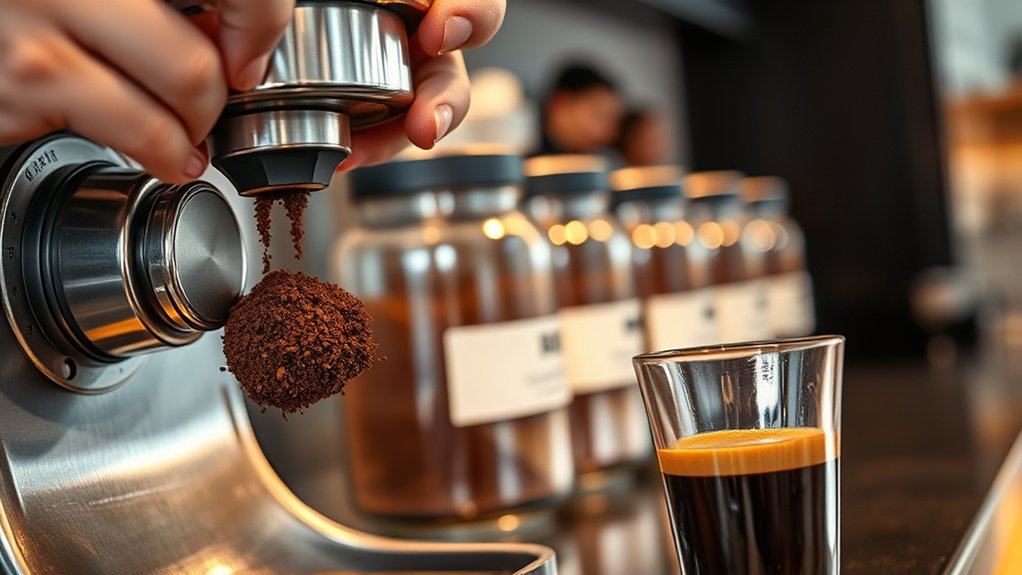
Achieving the right espresso grind size is only part of the equation. Maintaining consistency in that grind makes all the difference in your shot’s quality.
When your coffee grind size has a uniform particle size, water flows evenly through the coffee bed, avoiding channeling that leads to bitter or weak flavors.
Consistency is key because even slight changes in grind setting can drastically alter extraction time and taste. Using quality burr grinders helps you attain this precision, unlike blade grinders that produce uneven particles.
Since espresso machines rely on steady extraction, keeping your grind size consistent guarantees each shot tastes balanced and flavorful.
Adjusting Grind Size for Different Espresso Machines
Although most espresso machines demand a very fine grind between 200-300 microns, you’ll often need to tweak the grind size to match your specific machine’s pressure and performance.
Most espresso machines require a fine grind of 200-300 microns, adjusted to your machine’s pressure and performance.
Different espresso machines vary in pressure, so adjusting grind size guarantees ideal extraction. Use a quality burr grinder to maintain consistent particle size, which prevents uneven flow and channeling.
Keep these grind size recommendations in mind:
- High-pressure machines usually require a finer grind
- Low-pressure models may need a slightly coarser grind
- Monitor flow rate: fast extraction calls for a finer grind
- Adjust grind based on the roast profile and bean freshness
- Recalibrate regularly to match changing bean characteristics
Fine-tuning grind size helps you get the best shot from your espresso machine every time.
How to Test and Calibrate Your Espresso Grinder
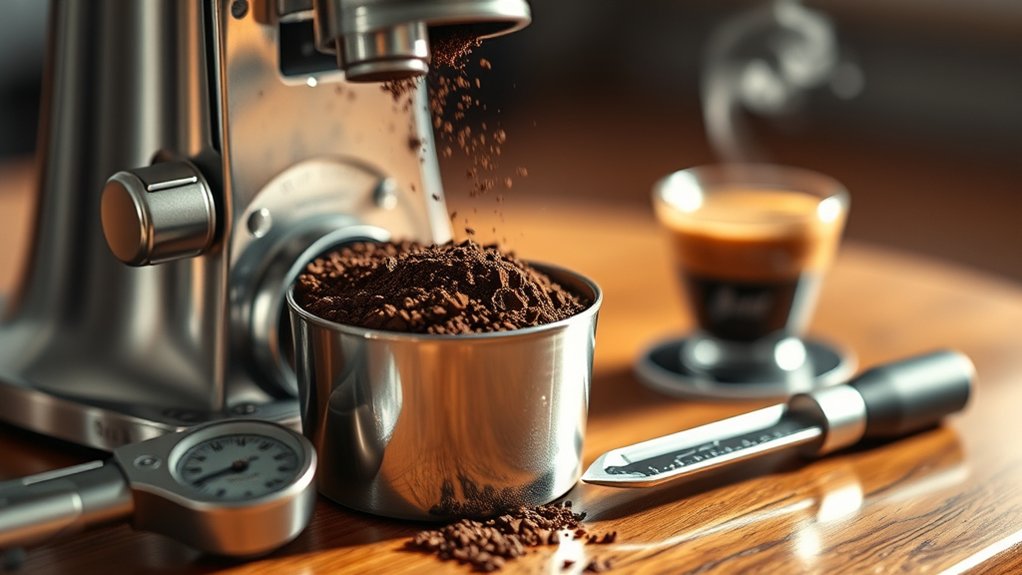
When you want the perfect espresso shot, testing and calibrating your grinder is crucial. Start by checking the grind size for espresso using the pinch test. If the grounds clump, they’re fine enough; if they fall apart, make adjustments to a finer setting.
Always calibrate your grinder while it’s running, making small incremental changes for accuracy. Monitor the extraction time closely. Aim for 25-30 seconds to guarantee peak flavor.
After brewing, inspect the coffee puck. A flat, even surface means good grind distribution, while holes or unevenness can signal channeling issues.
Remember to recalibrate your grinder with each new bag of beans, as roast variations affect grind settings. Consistent testing and adjustments keep your espresso shots balanced and flavorful.
The Pinch Test for Espresso Grind Fineness
Since grind size directly impacts your espresso’s flavor, using the pinch test helps you quickly gauge whether your coffee grounds are fine enough. The pinch test involves taking a small amount of coffee grinds and pinching them between your fingers.
The pinch test quickly shows if your espresso grind is fine enough for optimal flavor.
A proper fine grind should clump slightly without falling apart. Here’s what to look for:
- Coffee grinds stick together, forming a cohesive lump
- Texture resembles fine table salt
- Grounds aren’t powdery or loose
- Consistency remains stable across batches
- Suitable for balanced espresso extraction
If your grounds fail the pinch test, adjust your grinder. Maintaining consistent grind size guarantees your espresso extracts evenly, avoiding weak or bitter shots.
Regularly performing the pinch test helps you nail the perfect fine grind every time for rich, flavorful espresso.
Common Espresso Extraction Problems and Grind Size
If your espresso tastes weak or sour, you’re probably dealing with under-extraction. That usually happens when your grind is too coarse.
On the flip side, if your espresso comes out bitter or harsh, it’s often a sign of over-extraction, which means your grind might be too fine.
Under-Extraction Indicators
How can you tell if your espresso is under-extracted? Espresso requires a precise grind size to avoid sour, hollow flavors caused by under-extraction. If your extraction time is considerably shorter than the ideal 25-30 seconds, your grind size might be too coarse.
To fix this, grind finer to increase the coffee’s surface area for better extraction. Remember, grind size for different espresso machines can vary, so adjustments are key.
Here are common under-extraction indicators:
- Sour or acidic coffee tastes
- Short extraction time (under 25 seconds)
- Thin, watery espresso body
- Grounds fall apart easily in a pinch test
- Lack of crema or pale crema on top
If you spot these signs, try adjusting to a finer grind size to improve your espresso.
Over-Extraction Solutions
While dialing in your espresso grind, you’ll want to watch for signs of over-extraction, which often happens when your grind is too fine. Over-extraction results in bitter flavors, astringency, and a dry, harsh taste.
If your extraction time exceeds 30 seconds or your crema looks overly dark, it’s a clear signal to try a coarser grind. Aim for a grind size resembling fine table salt to help maintain flavor balance and prevent these issues.
Regular adjustments to your grind size, especially considering the roast profile and bean age, are essential for ideal espresso extraction.
Bean Freshness and Roast Effects on Grind Settings
Because coffee beans change over time and with roasting level, you’ll need to adjust your grind settings to get the best espresso. Bean freshness plays a crucial role. Use beans within 2-3 weeks post-roast for peak flavor and aroma.
The darker the roast, the finer your grind should be since darker beans are less dense and extract faster. As coffee beans age, they lose CO₂ and oils, meaning you’ll want to coarsen your grind to balance extraction dynamics.
Environmental factors like humidity also influence grind size. When adjusting grind size, keep these in mind:
- Freshness affects flavor extraction
- Darker roasts need finer grinds
- Older beans require coarser grinds
- Humidity may call for finer adjustments
- Test grind settings with each new bag
Using your coffee grinders thoughtfully guarantees the best espresso shot every time.
Maintaining Your Espresso Grinder for Perfect Shots
Adjusting your grind settings based on bean freshness and roast is just one part of pulling a perfect espresso shot. Maintaining your grinder is equally essential for consistent espresso quality.
Regularly clean your burr grinder to remove stale coffee residues that can taint fresh grounds and disrupt flavor. Use a brush or vacuum designed for grinders to clear trapped coffee particles.
Keep your burr grinder clean with a brush or vacuum to prevent stale coffee residues from affecting flavor.
Inspect your burrs every few months and replace them if worn, as dull burrs cause uneven grind size, affecting extraction. After switching beans or roast profiles, recalibrate your grinder to match the new coffee’s needs.
Also, keep your grinder in a stable environment to prevent temperature and humidity changes that impact grind consistency.
Proper grinder care guarantees every espresso shot tastes just right.
Frequently Asked Questions
What Type of Burr Grinder Is Best for Espresso?
For the best espresso, you’ll want flat burr grinder types because they provide superior grind consistency, which directly impacts espresso flavor.
You can make precise grind adjustments to achieve that ideal fine texture.
While burr material varies, steel burrs often balance durability and cost within a reasonable price range.
Don’t forget maintenance tips like regular cleaning and burr replacement to keep your grinder performing well and preserving your espresso’s quality.
Can Water Temperature Affect Espresso Extraction?
Of course, water temperature affects espresso extraction unless you enjoy guessing your flavor profile like a caffeine-fueled game show.
You’ve got to take into account water chemistry alongside machine pressure and grind uniformity to nail extraction time and brew ratio.
Too cold, and your espresso’s sour; too hot, it’s bitter. Balancing these with espresso freshness will make your shot sing.
How Does Tamping Pressure Influence Espresso Taste?
Tamping pressure directly influences flavor extraction by controlling puck density and water flow.
Using proper tamping techniques with ideal pressure, usually around 30 pounds, ensures even extraction and consistent espresso recipes.
Too much pressure can over-compact the puck, causing bitterness, while too little leads to weak flavors.
Mastering tamping as a key consistency factor helps you maintain the ideal brew ratio and access balanced, flavorful shots every time.
Is Pre-Infusion Necessary for Finer Espresso Grinds?
Oh, who needs pre-infusion techniques with finer grinds, right?
Actually, you do because grind size impact on espresso extraction is huge. Pre-infusion wets those fine grounds gently, preventing channeling and balancing flavor development.
Depending on your brewing methods and machine compatibility, skipping it could mean bitterness or under-extracted shots.
Plus, coffee freshness plays a role; fresher beans respond better to pre-infusion, helping you pull a smoother, richer espresso every time.
How Do Different Coffee Beans Alter Grind Size Preferences?
You’ll find that bean origin and roast level heavily influence your grind size preferences.
For example, lighter roasts from high-altitude origins often need a slightly coarser grind to balance acidity levels and highlight the flavor profile.
Conversely, darker roasts usually require a finer grind.
The processing method and freshness date also matter. Fresher beans might allow a standard fine grind, while older ones may need finer adjustment.
Always match grind size to your brewing method for best results.
Conclusion
Now that you know how essential grind size is for your espresso, are you ready to reveal the perfect shot? One simple tweak could transform your brew from bitter to brilliant, but getting it just right takes a bit of patience and practice.
Keep experimenting, listen to your machine, and watch how your coffee evolves. The next great cup is waiting. Will you discover it today?